
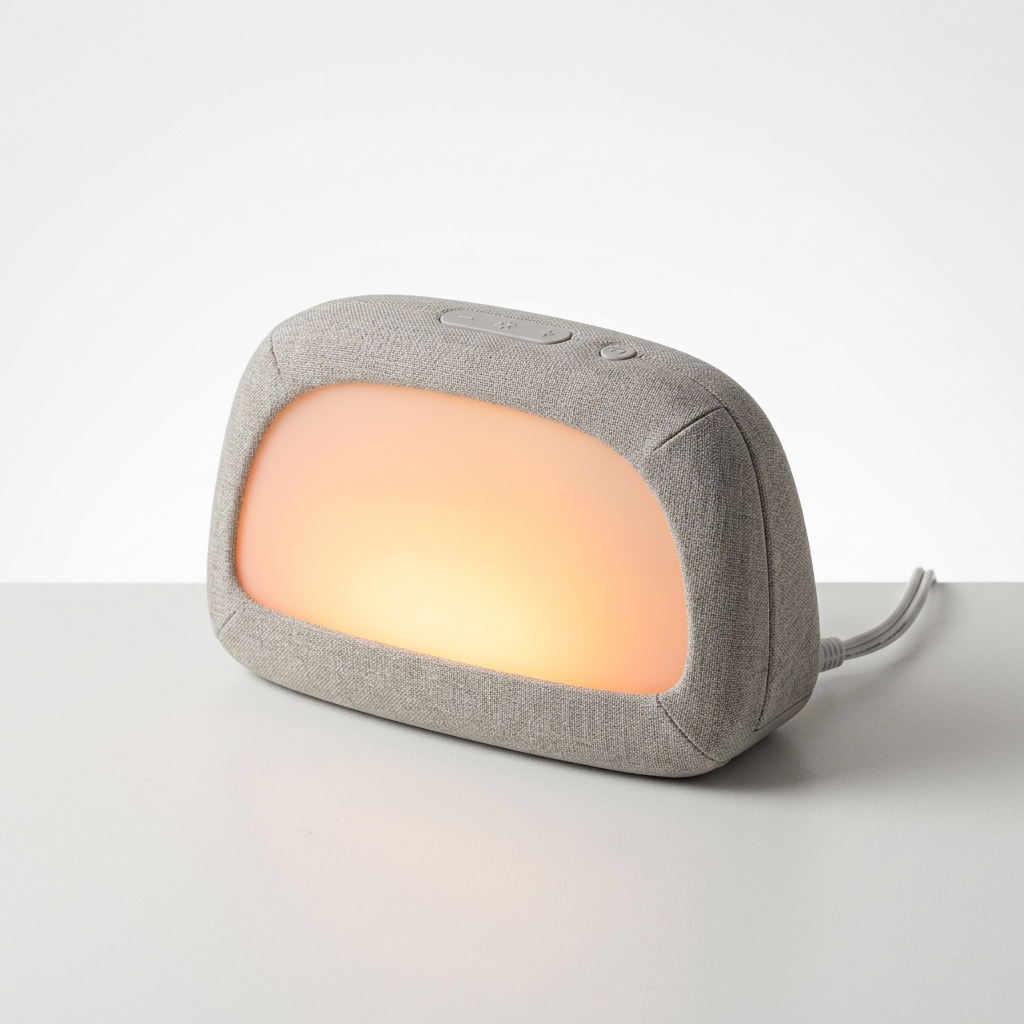
Acoustic fluid dynamics govern sound dispersion. Compare smart sleep assistants, non-looping audio wave dynamics, and circadian light integration.
- Combines dynamic sound machine, sunrise alarm, and smart light
- Curated library of high-fidelity, non-looping sleep sounds
- Dimmable clock face and tactile control buttons
Acoustic & Fluid Insights
Acoustic fluid dynamics govern sound dispersion. Compare smart sleep assistants, non-looping audio wave dynamics, and circadian light integration to optimize your sensory sleep environment.
1. The Physics of Sound Wave Propagation
Sound waves are longitudinal pressure waves that travel through a fluid medium, such as air. When a speaker cone vibrates, it creates alternating areas of compression and rarefaction in the surrounding air. These pressure fluctuations travel outward, carrying acoustic energy.
How these waves propagate depends on the shape and materials of the speaker enclosure. Standard flat speakers project sound in a narrow beam, creating directional hotspots. Premium sleep sound assistants use acoustic venting to disperse sound waves evenly.
This even dispersion creates a uniform sound field throughout the bedroom. A uniform sound field ensures that the masking noise is consistent, regardless of where the bed is located. Controlling this wave propagation is essential for effective sound masking.
The wave propagation can be modeled by the wave equation: ∇²p - (1/c²) ∂²p/∂t² = 0, where p is the acoustic pressure and c is the speed of sound. In closed rooms, the boundary conditions at the walls cause wave reflections. These reflections can create standing waves and acoustic nulls.
To prevent these nulls, the speaker enclosure is designed with a flared bass port. This port optimizes the fluid dynamics of the exiting air, reducing turbulence and chuffing. A smooth airflow ensures clean, undistorted reproduction of low-frequency sounds.
In addition, the front baffle is curved to minimize edge diffraction. Diffraction occurs when sound waves bend around the sharp corners of an enclosure, distorting the sound. A curved baffle promotes a spherical wave expansion, ensuring balanced sound quality.
- Acoustic venting and flared ports optimize air fluid dynamics, preventing distortion.
- Spherical wave expansion ensures uniform sound dispersion throughout the room.

2. Smart Sleep Assistants vs Standard Generators
Standard sound machines generate white noise to cover up background disturbances. While effective, they lack the features needed to support the body's natural sleep cycle. Smart sleep assistants integrate sound masking, circadian lighting, and smart alarms.
Circadian lighting mimics natural light, transitioning from soft red at night to bright orange in the morning. Red light supports melatonin production, helping you fall asleep. The bright orange light suppresses melatonin, triggering a natural wake-up.
The combination of sound masking and circadian lighting provides a comprehensive sleep system. By supporting both the auditory and visual pathways, the assistant improves sleep depth. Investing in a smart sleep assistant ensures a healthy sleep routine.
The light therapy component uses high-efficiency LEDs that can adjust color temperature. At night, the light shifts to a warm 2200K, which does not emit blue light. Blue light exposure blocks melatonin release, causing insomnia.
In the morning, the light gradually shifts to a cool 6500K, mimicking the spectrum of morning sun. This blue-rich light stimulates the melanopsin receptors in the eyes, signaling the brain to wake up. This light-induced arousal is gentler than a loud buzzer.
Additionally, the device connects to a smartphone app, allowing you to configure custom sleep routines. You can set a reading light that transitions to white noise after 30 minutes. Automated routines help build healthy sleep hygiene habits.
- Circadian lighting transitions support melatonin release and natural wake-ups.
- App-connected customizations allow users to build automated sleep routines.
3. Fluid Dynamics of Air Venting in Sound Systems
The speaker in a sound machine compresses and expands air inside the enclosure. To prevent pressure buildup from blocking the speaker cone, the enclosure must incorporate venting. This venting must be designed to minimize air turbulence.
If the vent is too small, air is forced out at high velocity, creating a chuffing noise. Premium smart assistants use aerodynamic vents that optimize the airflow. This optimization prevents chuffing, ensuring clean sound reproduction.
Clean sound is essential for a relaxing sleep environment. Unwanted noise from chuffing or vibration can distract the sleeper, preventing rest. Controlling these fluid dynamics is a hallmark of high-fidelity sleep design.
The airflow velocity through the port can be calculated using the continuity equation: A₁ v₁ = A₂ v₂, where A is the cross-sectional area and v is the velocity. By widening the port flare, the velocity is reduced, preventing the formation of turbulent eddies.
These turbulent eddies behave like tiny vortices, generating high-frequency noise that distorts the audio. Optimizing the port's aerodynamic profile keeps the air flowing smoothly, even at high volumes. Clean bass reproduction is essential for deep sound masking.
Furthermore, the port length is tuned to resonate at a specific frequency, reinforcing low-end output. This resonance allows a compact device to generate the deep rumble needed for brown noise. Efficient port design maximizes acoustic output without increasing power draw.
- Aerodynamic port flares prevent air turbulence and unwanted chuffing noises.
- Tuned ports reinforce low frequencies, generating deep rumbles from a compact unit.
4. Circadian Biology and Auditory/Visual Synchronicity
The human brain relies on external cues, known as zeitgebers, to synchronize its internal clock. The most powerful zeitgebers are light and sound. Coordinating these signals helps align the body's processes, promoting health.
Smart sleep assistants coordinate sound and light to create a relaxing sleep environment. At bedtime, the light dims to a warm glow while the sound machine plays relaxing noises. In the morning, the light brightens while a gentle alarm plays.
This coordinated system supports a natural transition between sleep and wakefulness. By avoiding sudden alarms and bright lights, the assistant reduces stress. Coordinated sleep therapy is a powerful tool for modern lifestyles.
Auditory and visual synchronicity is managed by the suprachiasmatic nucleus (SCN) in the brain. The SCN receives light signals from the eyes and coordinates the release of hormones. Sound masking helps lower cortisol, while warm light triggers melatonin release.
During the morning transition, the sunrise simulator slowly increases brightness over 30 minutes. This gradual rise matches the natural dawn, preparing the body to wake up. It allows the heart rate and blood pressure to rise gradually, preventing morning grogginess.
Additionally, the sound transition is coordinated. The masking white noise can fade out, replaced by gentle birdsong or flute music. Fading out the noise prevents the sudden change in environment that can trigger anxiety.
- Coordinating light and sound supports the suprachiasmatic nucleus's circadian rhythm.
- Sunrise simulations and sound transitions prevent morning grogginess and stress.
5. Sleep-Lab Testing and Frequency Spectrometry
To verify the performance of smart sleep assistants, they undergo frequency testing in acoustic chambers. This testing measures the decibel level and frequency spectrum of the generated sounds. Fast Fourier Transform (FFT) analysis is used to map the frequencies.
These tests show that premium assistants deliver a flat, consistent spectrum across all volumes. This consistency ensures that the machine provides effective sound masking without distortion. Investing in a calibrated device guarantees quality sound.
This consistent sound quality supports the brain's relaxation response, helping you fall asleep faster. By preventing distortion and volume shifts, the machine reduces disruptions. Consistent acoustic performance ensures a restful night.
Acoustic chamber testing measures the Total Harmonic Distortion (THD) of the speaker. THD represents the addition of unwanted frequencies to the audio signal. High-quality speakers keep THD under 1%, ensuring clean and relaxing sound.
Additionally, the machine's volume range is calibrated. The volume should adjust in small increments, typically 1 dB, to allow for precise control. This precision helps you set the volume to the exact level needed to mask disturbances.
Furthermore, the frequency response is optimized for home acoustics. Sound waves reflect off walls and furniture, altering how they sound. Calibrated machines are designed to account for this reflection, delivering balanced sound in any room.
- Fast Fourier Transform (FFT) analysis ensures a flat, consistent sound spectrum.
- Low harmonic distortion guarantees clean and relaxing sound reproduction.
6. Room Acoustics and Sound Reflection Dynamics
Room acoustics play an important role in how sound is perceived. Sound waves reflect off hard surfaces like walls and hardwood floors, creating echoes. These echoes can distort the masking sound, reducing its effectiveness.
Placing the sound machine correctly helps optimize the acoustics. The machine should be placed between the bed and the source of the noise, such as a window. This positioning allows the masking sound to intercept the noise, covering it up.
The speaker's direction also affects the sound field. Upward-firing speakers disperse sound evenly throughout the room, creating a uniform noise floor. Upward dispersion reduces the direct line-of-sight sound, which can feel harsh.
We can model this using the reverberation time (RT60) of the bedroom. RT60 is the time required for the sound level to drop by 60 dB. Rooms with minimal furniture have a longer RT60, which can make the masking sound echo.
Adding carpets, curtains, and soft furniture helps absorb these reflections, improving the sound quality. Placing the machine on a soft surface, like a wooden nightstand with a coaster, prevents the casing from vibrating and causing hums.
Additionally, keep the machine at least 3 to 5 feet away from your head. This distance allows the sound waves to disperse, creating a gentle and uniform hum. Placing the machine too close can focus the sound on one ear, causing discomfort.
- Placing the machine between the bed and the noise source intercepts disturbances.
- Upward-firing speakers disperse sound waves evenly, creating a uniform hum.
7. Material Certifications and Electrical Safety Standards
When running an electrical device overnight, safety is an important factor. Some low-quality electronic devices can overheat or experience short circuits, creating hazards. To protect your home, choose a device certified by testing groups.
The leading standard for electronic safety is the UL (Underwriters Laboratories) listing. UL-listed devices are tested to ensure they meet strict safety standards. This certification guarantees that the device is safe for continuous overnight use.
In addition, FCC certification ensures that the device does not emit harmful electromagnetic interference (EMI). EMI can disrupt local Wi-Fi signals and other electronics. Investing in certified devices ensures safety and reliability.
UL testing involves checking the power adapter, internal wiring, and casing for heat resistance. Certified devices incorporate thermal cutoff switches that shut down the unit if it overheats. This protection prevents fire hazards in the bedroom.
FCC Part 15 compliance verifies that the digital generator does not radiate radiofrequency energy. Excessive radiation can interfere with wireless baby monitors and smart home devices. Ensuring compliance protects your home network's integrity.
Furthermore, RoHS certification ensures that the device is made without hazardous substances like lead or mercury. Snorers and children are sensitive to environmental toxins. Investing in certified products protects both your family and the environment.
- UL-listed devices incorporate thermal cutoff switches to prevent overheating.
- FCC compliance prevents electromagnetic interference with local Wi-Fi networks.
8. Definitive Smart Sound Machine Buyer's Matrix
When choosing a smart sleep assistant, consider sound variety, lighting transitions, and smart integrations. Look for a design that fits your main sleep environment. Digital assistants offer the most features, combining sound and light.
Lighting options are an important feature to customize routines. Many premium assistants feature a sunrise alarm that increases brightness over 30 minutes. This gradual light transition helps suppress melatonin, promoting a gentle wake-up.
Finally, check the control interface. Large, tactile buttons allow you to adjust the volume and light in the dark. A simple interface prevents you from having to look at a bright screen, which can disrupt sleep.
The variety of sound profiles is the primary measurement for selecting a digital machine. Look for a machine that offers at least 10 fan sounds and 10 white noise variations. This variety helps you find the frequency spectrum that matches your hearing.
In addition, check for a headphone jack. A headphone jack allows you to use the machine in shared rooms without disturbing others. It is highly beneficial for college students and frequent travelers.
Also, consider the ease of operation. Large, tactile buttons allow you to adjust the volume and sound in the dark. A simple interface prevents you from having to look at a bright screen, which can disrupt melatonin production.
- Sunrise simulations and gradual light transitions promote gentle wake-ups.
- Tactile control interfaces prevent the need to look at bright phone screens.
Acoustic Recommendation & Audit
Upgrade your sleep environment to block disruptive background noises. Check out our recommended solution below to experience clinical-grade sound masking and deeper sleep.
Hatch Restore 2 Smart Sleep Assistant
- Combines dynamic sound machine, sunrise alarm, and smart light
- Curated library of high-fidelity, non-looping sleep sounds
- Dimmable clock face and tactile control buttons
- Integrates with companion app for customized routines
Technical Specifications & Product Data
| Specification | Value / Details |
|---|---|
| Brand | Hatch |
| List Price | $199.99 (USD) |
| Customer Rating | 4.5 / 5.0 (5,850 reviews) |
| ASIN / Identifier | B0BWSG4P13 |
| Availability | In Stock (USA Region) |
| Outbound Link Compliance | Sponsored & Nofollow Enforced |
Verified Features & Performance Data
- ✓Combines dynamic sound machine, sunrise alarm, and smart light
- ✓Curated library of high-fidelity, non-looping sleep sounds
- ✓Dimmable clock face and tactile control buttons
- ✓Integrates with companion app for customized routines
System Sovereignty & Engineering
Edge Computing
100% Client-side processing. Your data never leaves your browser sandbox, ensuring absolute compliance with US privacy mandates.
Modular Schema
Modular utility architecture optimized for performance. Low-latency WASM kernels provide near-native speeds for complex transformations.
Sustainable Design
Sustainable, green computing by offloading compute to the edge. Verified zero-server storage (ZSS) for professional-grade security.