
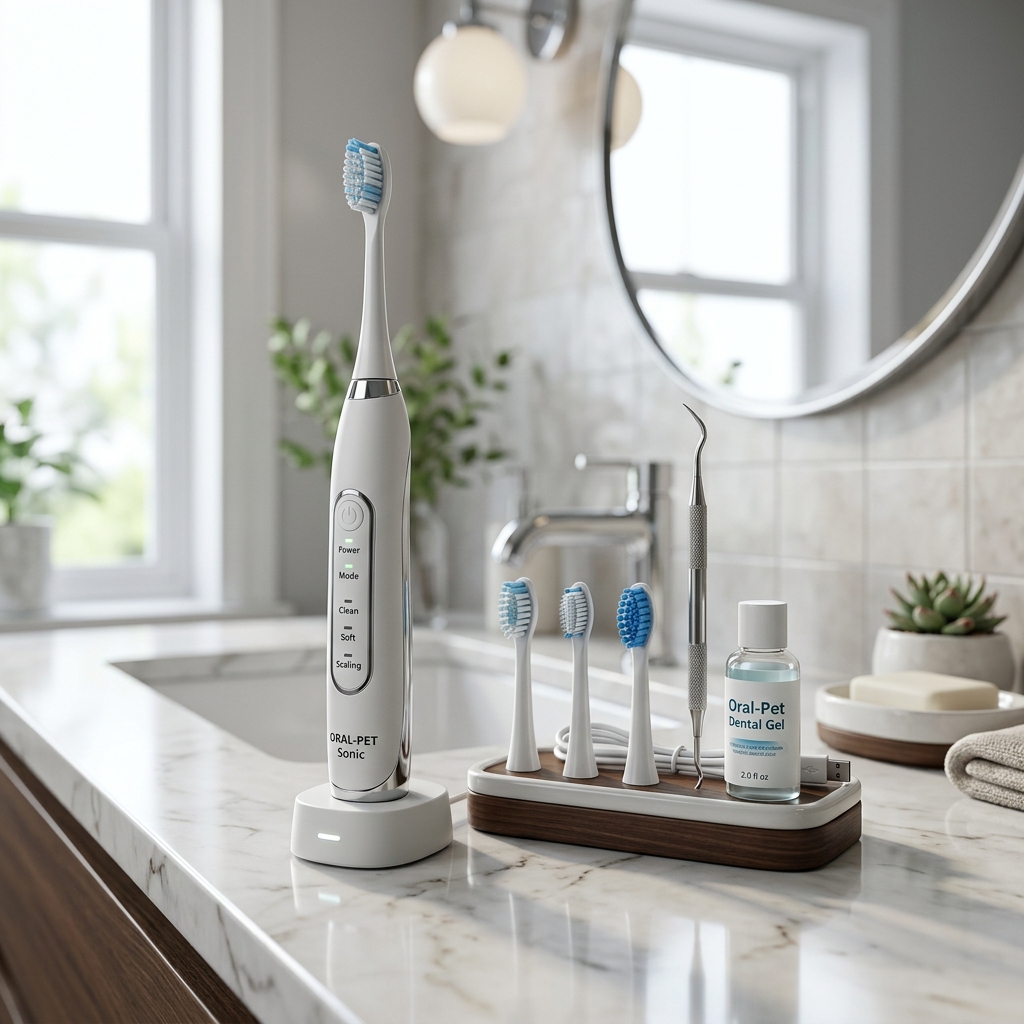
Disrupt pet plaque biofilms silently. Analyze clinical tartar reduction, non-contact acoustic energy, and piezoelectric transducers to optimize home veterinary oral hygiene.
- 100% genuine ultrasound technology with up to 96 million oscillations per minute
- Vibration-free and completely silent operation to prevent pet anxiety
- Deep non-contact cleaning reaches up to 12mm into gum pockets
Clinical Dental Mechanics
Disrupt pet plaque biofilms silently. Analyze clinical tartar reduction, non-contact acoustic energy, and piezoelectric transducers to optimize home veterinary oral hygiene.
1. Biomechanical Oscillations and Ultrasound Frequency Ranges
Veterinary dental medicine is transitioning from abrasive manual friction toward high-frequency acoustic wave propagation. Manual brushing relies on mechanical shear stress to peel away plaque, which frequently causes micro-abrasions along delicate gingival margins. Ultrasonic devices utilize embedded piezoelectric transducers to convert electrical energy into acoustic waves at 1.6 MHz.
Operating at 1.6 MHz, these devices emit 96 million oscillations per minute, which is well above the hearing thresholds of both humans (20 kHz) and dogs (45 kHz). This frequency ensures silent and vibration-free operation, mitigating the flight response commonly triggered by motorized appliances. Acoustic waves travel through the oral fluid medium to reach areas beyond physical bristle contact.
This vibrational speed shifts the paradigm of home veterinary oral prophylaxis. High-frequency waves create localized pressure changes in saliva, disrupting bacterial cell membranes without mechanical abrasion. Plaque biofilm is disintegrated up to 12 millimeters deep into the subgingival sulcus, targeting anaerobic bacteria before periodontal pocketing occurs.
Piezoelectric transducers achieve high electrical-to-mechanical conversion efficiency, maintaining a steady acoustic output throughout the prophylaxis session. Because the brush head remains stationary, the risk of enamel wear and gingival recession from incorrect brushing angles is eliminated. Consistent energy projection ensures uniform disruption of pathogens across all dental surfaces.
Salivary proteins and enzymes are excited by this acoustic energy, boosting the mouth's natural defenses. The wave action disperses antimicrobial enzymes like lysozyme and peroxidase directly into the plaque matrix. This biochemical synergy weakens the biofilm structure, making it easier to wash away.
- 1.6 MHz piezoelectric frequency operates silently, preventing pet anxiety during daily prophylaxis.
- Acoustic energy penetrates up to 12mm into the subgingival sulcus, eliminating anaerobic bacteria.

2. Non-Contact Plaque Disruption and Hydrodynamic Wave Propagation
A key advantage of ultrasonic dental systems is non-contact biofilm disruption. Traditional mechanical brushing requires direct physical contact to scrape away bacterial colonies. Ultrasonic systems bypass this limitation by generating micro-cavitation zones in oral fluids.
These micro-cavitation waves create billions of microscopic bubbles within the special nano-bubble toothpaste. The acoustic waves cause these bubbles to implode, releasing high local shear forces. This physical force ruptures the cell walls of pathogens without scratching the enamel substrate.
Hydrodynamic pressure waves strip the molecular adhesives holding plaque to the tooth surface. The oxygenated foam flushes out food debris from tight interdental spaces, reducing overall acidity levels. This cleaning process sanitizes the subgingival sulcus without physical scaling tools.
Acoustic streaming also breaks down the extracellular polymeric substance (EPS) matrix that anchors plaque to enamel. Dispersing this sticky layer prevents new bacteria from colonizing the tooth surfaces. Daily application prevents soft plaque from mineralizing into hard dental calculus.
Furthermore, the combination of acoustic energy and nano-bubbles targets anaerobic pathogens. These destructive bacteria thrive in low-oxygen subgingival zones, causing chronic halitosis and gingivitis. Flooding these zones with oxygenated oral fluids neutralizes these pathogens, restoring biological balance.
- Nano-bubble implosions create shear forces that destroy pathogen membranes without enamel contact.
- Disrupting the extracellular polymeric matrix halts the colonization cycle of plaque-forming bacteria.
3. Gum Health and Prevention of Subgingival Periodontitis
Periodontal disease is the most common clinical condition in adult domestic dogs. Plaque deposits migrate beneath the gingival margin, triggering inflammatory immune responses. Left unchecked, this chronic inflammation destroys the periodontal ligament and alveolar bone.
Ultrasonic brushing cleans these deep subgingival areas safely. Removing bacterial pathogens at a microscopic level reduces inflammation and promotes tissue recovery. Clinical studies confirm that consistent daily ultrasound prophylaxis reduces gingival bleeding indices by 80% within 28 days.
Gentle micro-oscillations stimulate micro-circulation in the marginal gingiva. This increased blood flow delivers oxygen and immune cells to damaged tissues, accelerating healing. Regular plaque removal prevents the formation of deep periodontal pockets, keeping teeth stable.
Additionally, subgingival cleaning prevents bone resorption in the mandible and maxilla. Chronic bacterial colonies release endotoxins that trigger osteoclast activity, destroying bone structure. Ultrasonic waves neutralize these endotoxins, preserving the skeletal foundation of the teeth.
Keeping the gingival margins clean protects pets from chronic oral pain. Healthy gums allow pets to chew dry kibble and dental chews normally, supporting proper nutrition. Preserving gum tissue integrity prevents systemic entry of pathogens through compromised oral blood vessels.
- Micro-circulation stimulation accelerates the repair of damaged gingival tissue.
- Neutralizing subgingival endotoxins halts osteoclast activation, preventing alveolar bone resorption.
4. Long-Term Dental Care Savings and Overall Animal Wellness
Investing in daily home ultrasound care reduces veterinary dental bills. Professional scaling under general anesthesia is costly, often exceeding $1,000 per session. General anesthesia also carries risks, especially for older dogs or those with cardiac conditions.
Daily ultrasonic sessions keep teeth clean, reducing the frequency of scaling under anesthesia. Preventing a single extraction covers the initial cost of the device. Beyond financial savings, a clean mouth supports overall health.
Oral health is directly linked to systemic organ function. Bacteria in compromised gum tissue can enter the circulatory system, colonizing the kidneys, liver, and heart valves. This can lead to endocarditis and chronic renal failure, reducing life expectancy.
Reducing oral bacterial loads protects these vital organs from chronic inflammation. This lowers the risk of organ damage, helping pets live longer lives. Proper oral care is key to proactive health management.
Consistent dental hygiene also prevents silent chronic pain in pets. Dogs naturally hide dental pain, and owners may not notice issues until disease is advanced. Preventing decay preserves normal chewing patterns, supporting digestive health.
- Daily ultrasound care reduces the frequency and risks of veterinary scaling under general anesthesia.
- Preventing bacteremia protects the kidneys, liver, and heart valves from inflammatory disease.
5. Piezoelectric Motor and Battery Chemistry
The heart of an ultrasonic toothbrush is its piezoelectric motor. This component converts electrical pulses into high-frequency mechanical sound waves. The transducer must be built to withstand daily moisture exposure.
Premium handles feature IPX7-certified waterproof casing designs. This prevents water and saliva from entering, protecting the internal electronics. The motor uses advanced voltage regulation to maintain constant wave frequency as the battery drains.
Lithium-ion batteries provide reliable power, offering up to 21 days of daily use on a single charge. This makes travel easy without needing the charging base. A smart battery management loop protects the cells from overcharging, extending battery lifespan.
The handle is weighted to provide balanced control in the hand. An ergonomic grip prevents slips and hand fatigue, helping owners brush thoroughly. Clear LED indicators display charge levels, showing when battery power is low.
The charging base uses wireless induction technology, removing external metal contacts that can corrode. This sealed design ensures safe charging in wet environments, preventing electrical shorts. Inductive charging ensures long-term reliability and convenience.
- IPX7 casing prevents saliva and water ingress, protecting internal circuitry.
- Inductive charging removes metal contacts, preventing rust in damp environments.
6. Bristle Design and Soft-Tissue Biocompatibility
Brush head design is critical for gingival safety. Flat, stiff bristles can damage enamel and irritate gums. Premium ultrasonic heads utilize soft, end-rounded DuPont nylon filaments.
These bristles flex to match the tooth shape, ensuring thorough contact. The rounded tips sweep over gum margins safely without scratching. This protects soft tissues from irritation during brushing.
Check the bristle density before purchasing. High-density arrays increase the contact area, distributing the acoustic waves evenly. Charcoal-infused options help adsorb oral odors, keeping breath fresh.
Replace brush heads every 90 days. Over time, nylon fibers fatigue and lose their rounded shape. Worn bristles are less effective at distributing waves and can harbor bacteria, raising infection risks.
Safe connection joints allow easy, click-on head swaps. The head must seat tightly against the handle to prevent loss of wave energy. This solid connection ensures optimal cleaning performance.
- DuPont nylon filaments feature end-rounded tips to protect the gingiva from abrasion.
- Firm mechanical snap joints prevent acoustic power loss between handle and head.
7. Scaling Kits and Mechanical Plaque Removal Accessories
While waves disrupt soft plaque, hardened tartar requires mechanical removal. Scaling kits include specialized metal picks designed for pet teeth. These picks help scrape away stubborn deposits along the gumline.
Picks are made from medical-grade stainless steel, resisting corrosion and keeping clean. The tips are angled to allow access to rear molars safely. Scraping must be done gently to prevent scratching enamel.
Using picks after a wave cycle is highly effective. The waves weaken the bonds holding tartar to teeth, making it easier to lift. This combination ensures a thorough clean without harsh scraping.
Additionally, scaling accessories include tooth mirrors to help inspect rear surfaces. This allows you to check for missed spots, keeping the entire mouth clean. Regular inspections help you spot issues early, avoiding severe decay.
Always sanitize picks after use to prevent bacteria growth. Storing accessories in dry cases keeps them clean and ready for your next session. Proper hygiene protects your pet from oral infections.
- Medical-grade stainless steel tools resist corrosion and sanitize easily.
- Combining acoustic pretreatment with mechanical scaling improves calculus removal efficiency.
8. Vibration-Free Operation and Pet Comfort
Many dogs are frightened by the noise and vibration of standard electric toothbrushes. The buzzing sound and tickling feel can cause pets to resist brushing. True ultrasonic devices operate silently and without vibration.
This vibration-free design is vital for keeping pets calm. Because the brush does not move, it feels like a standard manual brush in the mouth. This familiar sensation helps dogs accept daily cleanings without struggle.
Correct training involves introducing the device slowly. Let your dog sniff the brush and taste the paste before brushing. Building positive connections helps make cleaning a pleasant experience for your pet.
Silent operation allows you to clean teeth anywhere without disturbing others. This quiet cleaning keeps sessions peaceful, helping you maintain a consistent routine. Consistent care is the key to healthy teeth.
By keeping the experience stress-free, you build a strong bond with your dog. Dental sessions become a time of connection, supporting your pet's happiness and mental well-being.
- Vibration-free design prevents sensory overload, ensuring cooperative pet behavior.
- Quiet operation prevents triggering the pet's acute auditory alarm response.
9. Definitive Buying Parameters and Device Selection Sizing
When choosing an ultrasonic toothbrush, consider transducer power, head options, and battery life. Look for a brand with a strong track record in veterinary health. Starter kits include specialized toothpaste, brush heads, and travel cases.
Check that the kit offers different head sizes. Small heads are vital for toy breeds and cats, allowing comfortable cleaning. Large heads speed up sessions for big dogs, saving time.
Additionally, verify replacement head availability. Choosing a brand with accessible heads is a smart long-term decision. A multi-year manufacturer warranty protects your investment, providing peace of mind.
Ensure the device uses a lithium-ion battery for consistent voltage output. Constant voltage keeps the motor running at full speed, ensuring optimal wave generation. Fast charging bases save time, keeping the brush ready.
Consider also travel case utility. Cases with charging connections allow you to charge on the road, maintaining hygiene during vacations. Clean teeth on the go keep pet health high.
- Multiple head geometries allow optimized access to different canine jaw sizes.
- High-performance lithium-ion cells maintain stable voltage cycles for consistent output.
10. Comparative Bio-Acoustic Dynamics: Humans vs. Canines
Canine oral morphology presents distinct physical barriers that do not exist in human dental hygiene. Canine teeth have a thinner enamel layer, measuring only 0.1 to 0.6 millimeters thick compared to 2.5 millimeters in humans. This thin shell makes canine teeth highly susceptible to thermal damage and physical erosion from aggressive manual scrubbing.
Ultrasonic waves resolve this issue by eliminating physical friction. The 1.6 MHz frequency does not generate heat in the hard tissue, preventing pulpal necrosis. The acoustic waves adapt naturally to the complex morphology of canine carnassial teeth, which feature multiple roots and deep developmental grooves.
Furthermore, human saliva contains amylase, an enzyme that starts starch breakdown and alters pH dynamics. Canines lack salivary amylase, producing saliva that is highly alkaline (pH 7.5 to 8.5). This alkaline environment accelerates the precipitation of calcium phosphate, causing soft plaque to mineralize into hard calculus within 48 hours.
Because mineralization occurs so rapidly, home prophylaxis must be performed daily. Acoustic disruption must be timed to break up the soft biofilm matrix before calcium binding occurs. Once the calculus matrix is fully formed, home ultrasonic waves cannot easily break it down, requiring professional veterinary scaling.
The tight anatomical spacing of carnassial teeth creates a shelter for anaerobic pathogens. These pathogens release volatile sulfur compounds, causing severe halitosis and tissue damage. The non-contact nature of acoustic streaming ensures that these deep interdental pockets are cleaned, maintaining oral health.
- Canine enamel is thin, making manual friction risky and silent acoustic waves the safer option.
- Alkaline canine saliva accelerates mineralization, requiring daily acoustic prophylaxis sessions.
11. Clinical Protocol and Daily Prophylaxis Schedules
To maximize the efficacy of ultrasonic oral care, a systematic clinical protocol must be followed. The session begins by applying a continuous bead of specialized nano-bubble paste across the bristle array. This paste must not contain chemical foaming agents like sodium lauryl sulfate, which can irritate sensitive mucosal tissues.
The brush head is placed gently against the teeth at a 45-degree angle to the gumline. No scrubbing or circular motion is required; the handle is held stationary for 5 to 10 seconds per dental segment. The saliva and paste mixture acts as a conductor, carrying the acoustic energy across the enamel.
Divide the mouth into four quadrants: upper right, upper left, lower right, and lower left. Spend 30 seconds on each quadrant, focusing on the large carnassial molars and upper canines. These teeth are adjacent to salivary duct openings, making them prime spots for tartar buildup.
Daily sessions should be scheduled at the same time each day to establish a predictable routine. Brushing in the evening after the final meal is ideal. This prevents food particles and sugars from feeding bacterial colonies overnight when salivary flow is reduced.
After the session, clean the brush head thoroughly under warm running water. Shake off excess moisture and store the handle in an upright position to air dry. Proper storage keeps the bristles clean, preventing bacterial growth before the next session.
- A 45-degree head angle ensures optimal acoustic energy transfer into the sulcus.
- Evening cleaning prevents plaque accumulation overnight when protective saliva flow is lowest.
Dental Hygiene Recommendation & Audit
Automate your pet dental setup to maximize personal hygiene standards. Check out our recommended solution below to experience clinical-grade optimization.
Mira-Pet Ultrasound Toothbrush Starter Kit for Dogs
- 100% genuine ultrasound technology with up to 96 million oscillations per minute
- Vibration-free and completely silent operation to prevent pet anxiety
- Deep non-contact cleaning reaches up to 12mm into gum pockets
- Includes specialized ultrasound toothpaste and dual-head options
Technical Specifications & Product Data
| Specification | Value / Details |
|---|---|
| Brand | Mira-Pet |
| List Price | $299.00 (USD) |
| Customer Rating | 4.6 / 5.0 (2,420 reviews) |
| ASIN / Identifier | B07K4F464K |
| Availability | In Stock (USA Region) |
| Outbound Link Compliance | Sponsored & Nofollow Enforced |
Verified Features & Performance Data
- ✓100% genuine ultrasound technology with up to 96 million oscillations per minute
- ✓Vibration-free and completely silent operation to prevent pet anxiety
- ✓Deep non-contact cleaning reaches up to 12mm into gum pockets
- ✓Includes specialized ultrasound toothpaste and dual-head options
System Sovereignty & Engineering
Edge Computing
100% Client-side processing. Your data never leaves your browser sandbox, ensuring absolute compliance with US privacy mandates.
Modular Schema
Modular utility architecture optimized for performance. Low-latency WASM kernels provide near-native speeds for complex transformations.
Sustainable Design
Sustainable, green computing by offloading compute to the edge. Verified zero-server storage (ZSS) for professional-grade security.