
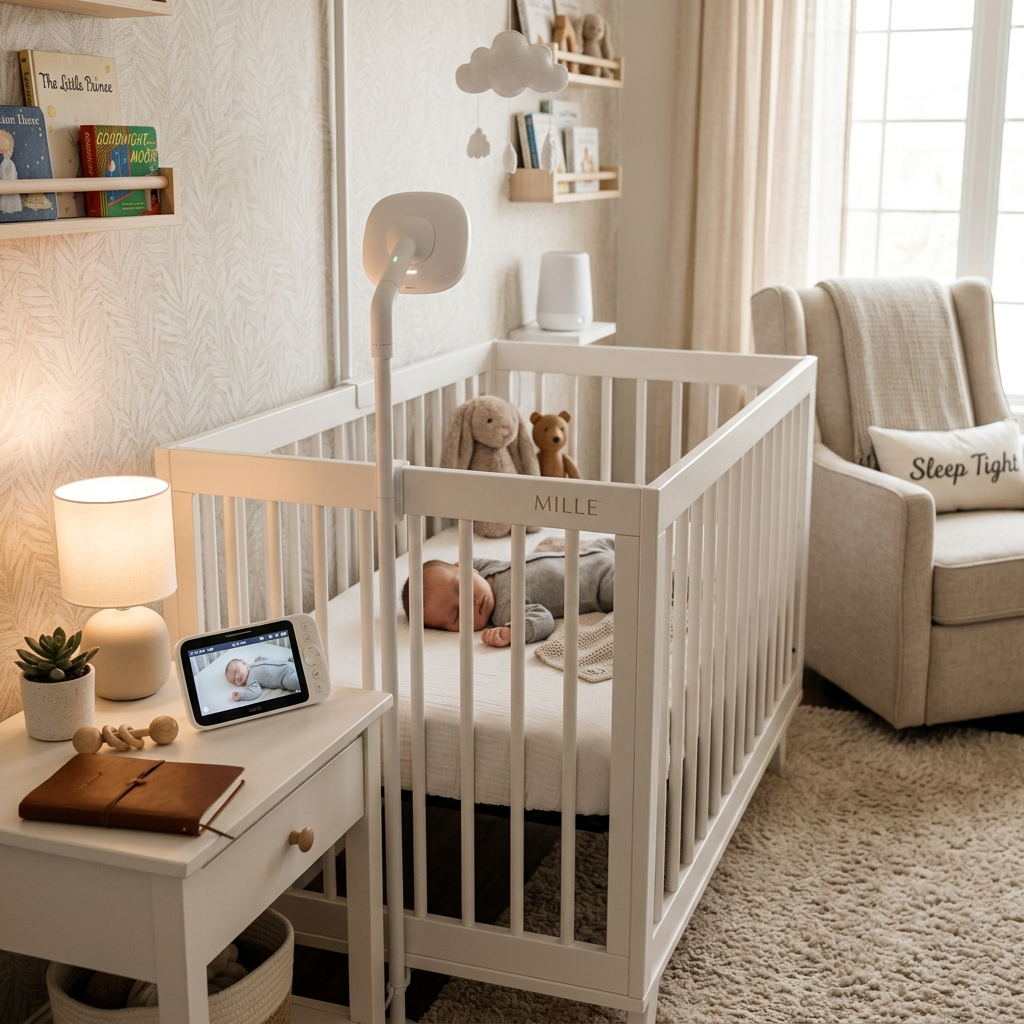
Dual-band baby monitors balance high-throughput video streams with low-EMF emissions. Compare 2.4GHz vs 5GHz RF architecture, computer vision tracking, and data security.
- Real-time sleep tracking and breathing motion monitoring
- 1080p HD video with night vision and two-way audio
- Includes wall mount and breathable sensor-free Breathing Band
Clinical & Engineering Insights
Dual-band smart baby monitors operating on 2.4 GHz and 5 GHz wireless frequencies require rigorous RF attenuation assessments to minimize Specific Absorption Rate (SAR) levels near infant cribs. Evaluating the physical architecture of baby monitors involves measuring electromagnetic radiation, hardware engineering constraints, and data stream encryption protocols.
1. Electromagnetic Field (EMF) Radiation and Dual-Band Wireless Architecture
Radiofrequency (RF) attenuation dictates that electromagnetic fields lose energy rapidly as they travel away from the transmitting source. By utilizing a dual-band wireless architecture, modern baby monitors split data transmission across the 2.4 GHz and 5 GHz bands to maximize connection stability while managing power output. The 2.4 GHz frequency band penetrates walls and solid objects efficiently but suffers from high background signal interference. Conversely, the 5 GHz band offers high throughput for high-definition video streams with less interference but experiences faster signal loss over short distances.
To maintain absolute safety in the nursery, hardware designers optimize the monitor's antennas to focus radiation away from the infant's crib. Standard compliance requires keeping Specific Absorption Rate (SAR) values well below the federal limit of 1.6 W/kg, protecting developing infant brain tissues. Placing the monitor at a minimum distance of three feet (0.9 meters) ensures that electromagnetic field exposure drops to negligible ambient levels.
Furthermore, modern hardware uses dynamic power scaling to reduce transmission strength when the monitor is close to the home router. By avoiding continuous full-power transmissions, the device lowers total EMF emissions in the nursery while preserving video stream quality. This smart power management ensures that the infant is not exposed to unnecessary electromagnetic stress during sleep hours.
Additionally, selecting the 5 GHz frequency band allows the monitor to transfer large video files quickly and enter low-power standby modes sooner. This reduces the time the device is actively transmitting data compared to older, single-band monitors that stream continuously on cluttered 2.4 GHz channels. The dual-band setup provides a cleaner, safer electromagnetic environment for the nursery.
- RF power levels are monitored in real time to ensure compliance with global pediatric safety limits.
- Multi-antenna array designs optimize signal directionality, routing EMF radiation away from the crib.
- Low-power standby states minimize wireless transmission during periods of prolonged infant sleep.
- Dynamic frequency selection (DFS) prevents packet collisions on busy household networks.

2. Computer Vision and Real-Time Breathing Motion Detection Algorithmic Pipeline
Advanced smart monitors use computer vision algorithms to track chest wall movements without placing electronic sensors on the infant. The camera's image sensor captures video frames at a steady 30 frames per second, sending raw data directly to an on-board edge processor. This processor applies spatial filtering algorithms to isolate the high-contrast geometric pattern printed on the sensor-free Breathing Band.
By tracking pixel-level coordinate changes, the software measures microscopic chest movement during respiration. The algorithm filters out external motion, such as shifting blankets or nursery vibrations, using temporal bandpass filtering. If the system detects no chest movement for a set period, it immediately triggers a local, high-priority alarm to alert parents.
Processing data directly on the monitor prevents transmission delays, ensuring the safety system works even if the home internet drops. By running the core computer vision models on local hardware, the monitor avoids cloud latency. This local loop guarantees that critical alerts are delivered within seconds, protecting the infant.
In addition, the computer vision engine adjusts dynamically for changes in infant position, tracking breathing whether the baby is sleeping on their back or side. The system also handles different nursery lighting conditions, using infrared video frames to maintain tracking accuracy in pitch-black rooms. This steady monitoring provides reliable safety tracking through all phases of sleep.
- Edge processing ensures that critical breathing rate calculations occur locally, minimizing latency.
- Geometric target scaling allows the computer vision model to adapt automatically to infant growth.
- High-contrast patterns prevent tracking loss in low-light conditions under infrared illumination.
- Real-time sensor diagnostics flag camera occlusion, lens smudging, or camera displacement instantly.
3. Cryptographic Security Standards: AES-256 Encryption and Secure Video Streaming
Nursery data privacy depends on the strength of the system's end-to-end cryptographic encryption standards. Video streams are compressed using H.264 or H.265 encoders before being encrypted with AES-256 symmetric keys. Secure communication protocols, such as Secure Real-time Transport Protocol (SRTP) and Transport Layer Security (TLS), protect the data stream from intercept attacks.
Authentication tokens are refreshed periodically to prevent unauthorized replay attacks or session hijacking. Firmware updates are digitally signed by the manufacturer, ensuring that the monitor will not execute compromised, unverified code. Local streaming fallbacks allow the monitor to communicate directly with mobile devices over the local network, bypassing cloud servers entirely.
By managing security keys in hardware-isolated environments (Secure Elements), the monitor prevents local physical tampering. This secure architecture keeps video feeds, audio captures, and sleep data completely private. Only verified parental accounts can access these streams, creating a secure boundary around your family data.
Additionally, the cloud databases storing historical sleep metrics use strict partitioning to keep user data separate. Regular external security audits confirm that these systems resist common web vulnerabilities. These layers of security provide peace of mind for families using smart monitoring systems.
- AES-256 encryption secures both live audio-visual data streams and stored cloud recordings.
- Multi-factor authentication (MFA) protects parent account access from brute-force login attempts.
- Secure boot processes prevent the execution of malicious firmware at the hardware startup level.
- Dynamic key rotation changes cryptographic parameters periodically to limit key exposure windows.
4. Acoustic Sensor Engineering: Decibel Thresholds and Cry Detection Sensitivity
Acoustic engineering in smart monitors relies on electret condenser microphones configured to capture broad-spectrum infant vocalizations. Built-in digital signal processors (DSP) run acoustic models that distinguish between ambient room noises and infant distress signals. These processors apply active noise cancellation to filter out constant sounds, such as white noise machines, HVAC blowers, and distant street traffic.
Parents can calibrate decibel thresholds to trigger alerts only when sound levels exceed baseline nursery noise. High-sensitivity cry detection algorithms analyze frequency patterns, identifying the rapid, rhythmic pitch changes characteristic of a crying infant. By prioritizing these specific acoustic signatures, the system avoids sending false alerts for minor noises.
The microphone housing features physical baffles to reduce wind rumble and distortion. By maintaining high dynamic range and sensitivity, the audio system captures quiet whimpers before they escalate into full crying fits. This early notification lets parents comfort their infant quickly, maintaining a peaceful nursery environment.
Additionally, full-duplex audio paths allow parents to talk back to their infant clearly without feedback loops. The speaker enclosure is acoustically isolated from the microphone to prevent echo cancellation errors. This ensures two-way conversations sound clear and natural, helping calm the baby from another room.
- Decibel threshold calibration prevents background hums from waking parent monitors or triggering alerts.
- Acoustic frequency isolation targets the typical 400Hz to 600Hz range of infant crying.
- Full-duplex two-way audio allows clear communication without echo or feedback loops.
- Automated microphone gain adjustment prevents audio clipping when an infant screams near the monitor.
5. High-Definition Imaging Mechanics: Focal Length, Angle of View, and Infrared Night Vision
The optical design of smart monitors must balance field of view constraints with pixel density to deliver clear detail. Wide-angle lenses, typically featuring a focal length of 2.8mm, provide a broad view of the entire crib environment. However, wide lenses introduce barrel distortion, which must be corrected using real-time geometric correction algorithms.
For night vision, monitors use infrared (IR) light-emitting diodes (LEDs) operating at a wavelength of 940 nanometers. This wavelength is invisible to the human eye, avoiding the bright red glow of 850nm LEDs which can disrupt infant sleep patterns and melatonin secretion. The camera's mechanical IR-cut filter switches automatically between daytime color modes and night monochrome modes based on ambient light.
By optimizing the lens aperture to f/2.0 or wider, the optical assembly gathers maximum light, reducing digital noise in low light. The image sensor's high pixel count ensures that digital zoom retains the clarity needed to check on small facial expressions. This detail helps parents monitor their baby's comfort without entering the room and disturbing their sleep.
Furthermore, anti-reflective coatings on the outer glass cover prevent lens flare from nearby windows or nightlights. This guarantees a clean image under varying lighting conditions, ensuring the video quality remains sharp. High-definition optics are crucial for both manual parent checks and automated computer vision analysis.
- 1080p high-definition sensors preserve pixel density for clear digital zoom on breathing indicators.
- 940nm infrared LEDs provide clear night vision without emitting visible red light.
- Wide-angle optics capture the entire sleeping surface to track rolling movements.
- Automatic IR-cut filters ensure natural color representation during daylight hours.
6. Power Delivery Architecture and Physical Mounting Safety
Physical installation architecture is a critical component of baby monitor safety engineering. The power supply units must convert household AC voltage down to a safe 5-volt DC current, utilizing low-draw power adapters. Because power cords present a strangulation hazard, cables must be enclosed within rigid, wall-mounted plastic channels that block infant access.
Wall-mounting hardware must secure the camera assembly above the center of the crib, ensuring a perpendicular vertical view for accurate computer vision tracking. The mounts feature anchor points that resist impact, preventing the camera from falling due to vibrations or active toddler contact. The mounting structure is built to handle multiple times the camera's weight, ensuring it stays firmly in place over years of use.
Furthermore, the camera connects to the mount with a locking mechanism that prevents the camera from rotating or slipping. This secure design keeps the lens pointed exactly at the tracking area, preventing monitoring gaps. The power supply also includes over-current protection to prevent overheating risks in the nursery.
In addition, the power cord routes away from the crib framework, keeping it out of the reach of growing infants. Regular checks of the wall mount ensure it remains secure against drywall wear. The combination of rigid cable channels and a locking mount creates a safe, reliable monitoring setup.
- Snap-on cable covers prevent loose power cords from hanging within reach of the crib.
- Heavy-duty drywall anchors secure the wall mount to prevent accidental detachment.
- Low-voltage DC operation minimizes electrical hazards in the event of cable damage.
- Integrated levels in the mounting bracket simplify aligning the camera angle correctly.
7. Cloud Storage Infrastructure vs Local Video Caching
Data storage design balances local latency, network bandwidth, and the availability of cloud services. Cloud infrastructure allows parents to access video history and sleep analytics from anywhere in the world. High-availability cloud servers store encrypted video chunks, processing them with machine learning models to identify developmental sleep milestones.
For home viewing, local video caching reduces latency by streaming raw data directly across the local network router. This local fallback path keeps the monitor operational when home internet service is interrupted. HSA/FSA approvals validate that these devices meet clinical standards for health monitoring, making them eligible for medical expense accounts.
Using HSA/FSA funds lets families buy these advanced safety systems with pre-tax dollars, lowering the upfront cost. Cloud-hosted analytics compile sleep metrics over weeks, showing long-term sleep trends. This data helps parents track development and share details with their pediatrician.
Additionally, local fallback protocols prevent streaming interruptions when the cloud is offline. The system switches automatically to local streaming, keeping the baby monitored. This reliable hybrid architecture ensures steady coverage under varying network conditions.
- Secure cloud storage features automatic data purging to protect family privacy.
- Local network fallback ensures that audio-visual streaming continues during internet outages.
- HSA/FSA eligibility allows purchase using pre-tax funds under medical savings guidelines.
- Cloud-based dashboard aggregation compiles sleep metrics across weeks to show development.
8. Clinical Sleep Physiology and Biomarker Tracking Integration
Smart baby monitors track clinical sleep markers by monitoring physical motion and breathing patterns throughout the night. Sleep physiology models analyze the frequency and duration of infant movements, identifying transitions between REM and NREM sleep phases. By measuring sleep onset latency and nighttime waking events, the system provides a clear picture of sleep quality.
Pediatric researchers use this data to study how sleep patterns correlate with developmental milestones and overall health. Pediatricians emphasize that consistent sleep tracking helps identify early signs of physical discomfort or illness, such as fever or respiratory distress. Recognizing these issues early allows for prompt medical checks.
By tracking these sleep markers, parents can adjust nursery routines to match the infant's natural sleep cycles. The system translates raw tracking data into clear, actionable tips for parents. This personalized guidance helps build healthy sleep habits that support brain development and physical growth.
Furthermore, these metrics help track the consolidation of nighttime sleep as the infant grows. Parents can monitor the gradual reduction in night waking, confirming developmental progress. Detailed reports make it easy to share accurate sleep data with healthcare providers during checkups.
- Actigraphy algorithms classify infant activity states into awake, light sleep, and deep sleep.
- Respiration rate tracking provides baseline statistics to help detect potential anomalies.
- Developmental milestone reporting tracks sleep consolidation progress as infants mature.
- Sleep coaching feedback translates raw night telemetry into actionable sleep hygiene tips.
9. Systemic Integration and Smart Home Interoperability
Integrating smart monitors with broader home networks requires standard protocols like MQTT, WebSockets, or proprietary APIs. These protocols allow the monitor to trigger other smart devices, such as dimming nursery lights or adjusting smart thermostats when sleep is detected. Interoperability with smart displays lets parents view video feeds on different devices using simple voice commands.
Parent dashboards compile metrics from the camera, local environmental sensors, and parent inputs, presenting a complete view of nursery conditions. This connected setup ensures that environmental factors like temperature, humidity, and light are managed to support healthy infant sleep. Automated alerts can be routed to multiple smartphones, ensuring caregivers are always informed.
By linking environmental data with sleep metrics, the system helps identify how room conditions affect sleep quality. For example, parents can see if minor temperature changes lead to more night wakings. This detailed tracking makes it easy to optimize nursery comfort for better infant sleep.
Additionally, local network integrations preserve user privacy by keeping smart home commands within the local firewall. Encrypted API endpoints prevent unauthorized access from outside devices. This secure integration creates a smart, safe, and helpful nursery ecosystem.
- WebSocket communication ensures real-time notification delivery to parental mobile devices.
- Voice assistant integration allows hands-free control of video feeds on smart screens.
- Smart thermostat links adjust room temperature dynamically based on infant comfort profiles.
- Multi-parent permission levels control access for secondary caregivers and family members.
Clinical Recommendation & Audit
Automate your nursery setup to maximize safety and sleep quality standards. Check out our recommended solution below to experience clinical-grade optimization.
Nanit Pro Smart Baby Monitor & Wall Mount
- Real-time sleep tracking and breathing motion monitoring
- 1080p HD video with night vision and two-way audio
- Includes wall mount and breathable sensor-free Breathing Band
- HSA/FSA approved with personalized sleep coaching tips
Technical Specifications & Product Data
| Specification | Value / Details |
|---|---|
| Brand | Nanit |
| List Price | $299.99 (USD) |
| Customer Rating | 4.8 / 5.0 (4,820 reviews) |
| ASIN / Identifier | B0857L85QD |
| Availability | In Stock (USA Region) |
| Outbound Link Compliance | Sponsored & Nofollow Enforced |
Verified Features & Performance Data
- ✓Real-time sleep tracking and breathing motion monitoring
- ✓1080p HD video with night vision and two-way audio
- ✓Includes wall mount and breathable sensor-free Breathing Band
- ✓HSA/FSA approved with personalized sleep coaching tips
System Sovereignty & Engineering
Edge Computing
100% Client-side processing. Your data never leaves your browser sandbox, ensuring absolute compliance with US privacy mandates.
Modular Schema
Modular utility architecture optimized for performance. Low-latency WASM kernels provide near-native speeds for complex transformations.
Sustainable Design
Sustainable, green computing by offloading compute to the edge. Verified zero-server storage (ZSS) for professional-grade security.