
Light exposure suppresses melatonin, disrupting sleep-wake cycles. Review the weave physics, lux transmittance, and mounting geometries of the best curtains.
- Innovative triple-weave fabric blocks up to 99% of light and UV rays
- Thermal insulated design keeps rooms cool in summer and warm in winter
- Thick polyester fabric provides additional sound reduction and privacy
Photobiological & Textile Audit
Artificial light exposure suppresses melatonin production, delaying sleep onset and fragmenting rest. Blackout curtains establish a dark environment, supporting natural hormone cycles. This technical guide reviews weave density and installation geometries.
1. Photoreceptor Biology and Melatonin Secretion
The human eye contains specialized cells called intrinsically photosensitive retinal ganglion cells (ipRGCs). These cells are highly sensitive to blue wavelength light, even when your eyelids are closed. When light strikes these photoreceptors, they signal the brain to suppress melatonin production.
Melatonin is the hormone responsible for signaling the body that it is time to sleep. Suppressing this hormone shifts your circadian phase, making it difficult to fall asleep. Creating a dark environment is essential for maintaining natural sleep-wake cycles.
This section reviews how light levels affect hormone levels and sleep depth. By blocking external light, you can support healthy melatonin cycles. This darkness helps prevent awakenings, ensuring a deeper and more restful night.
Melatonin suppression is also linked to elevated heart rate and blood pressure during the night. A dark room supports the body's natural dip in cardiovascular activity, supporting muscle recovery. Complete darkness is a critical component of healthy sleep environments.
Furthermore, light exposure can trigger cortisol production, raising stress levels in the morning. By keeping your bedroom dark, you can support healthy hormone balances throughout the night. This dynamic hormonal stability ensures a refreshed morning.
- Darkness triggers the pineal gland to release melatonin, initiating natural sleep onset.
2. Triple-Weave Fabric Engineering and Density Physics
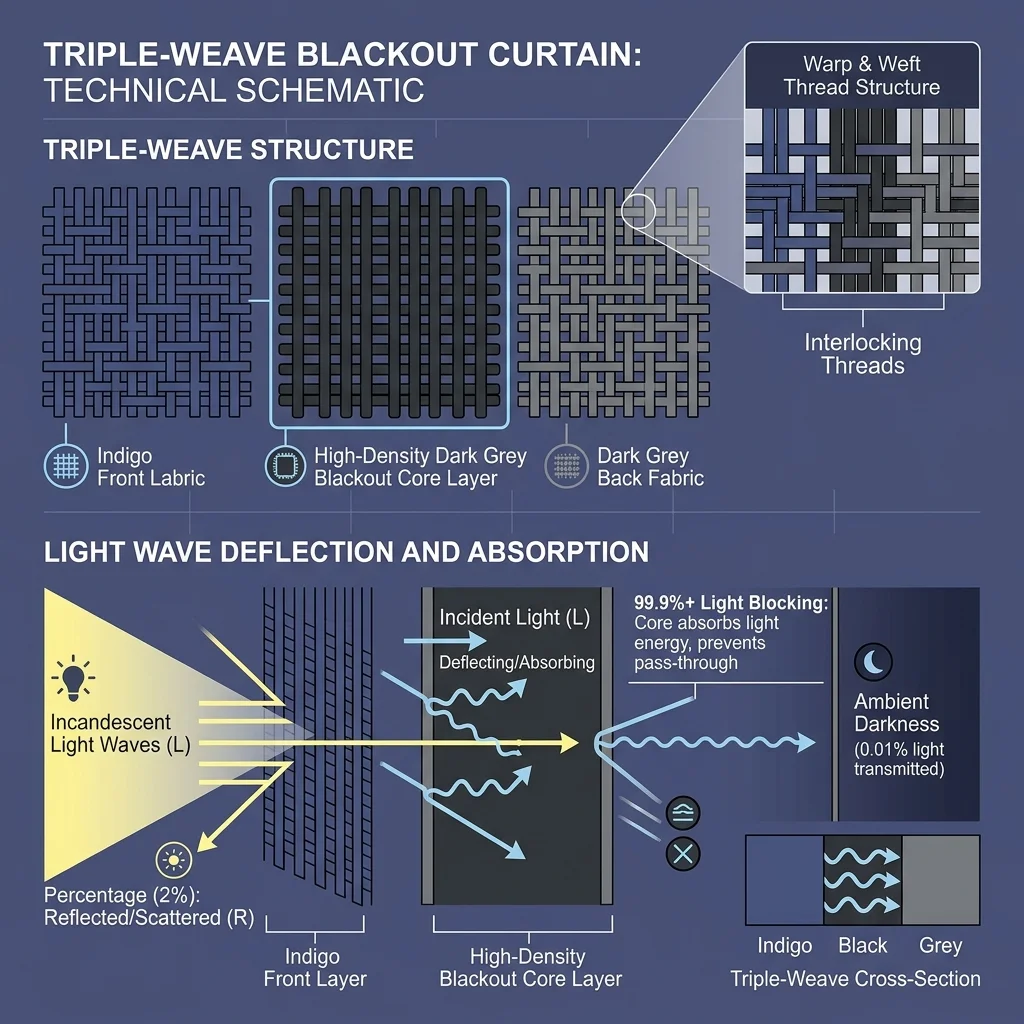
Modern blackout curtains utilize triple-weave technology to block light without stiff backings. This process weaves a dense layer of black yarn between two decorative layers. The resulting fabric is thick, soft, and drape-friendly.
The inner black yarn layer absorbs light waves, preventing them from passing through. Decorative outer layers provide the color and texture to match your room. This multi-layered design provides excellent light blocking while remaining flexible.
The performance of triple-weave fabric depends on the density of the weave. High-end panels incorporate more threads per inch, blocking up to 99% of light. This thick structure also helps deaden outside noise, creating a quiet room.
The weave density is measured in grams per square meter (GSM). Premium blackout curtains feature fabrics with a GSM rating of 240 or higher, ensuring maximum opacity. This thick structure also helps protect the panels from UV fading over time.
Additionally, the polyester fibers are resistant to dust accumulation. Unlike heavy velvet or cotton curtains, triple-weave fabrics do not trap allergens, supporting air hygiene. This simple design is highly practical for allergy sufferers.
- Triple-weave design sandwiches a light-absorbing black yarn layer between two outer fabrics.
3. Lux Transmittance and Light Leak Mitigation
Light transmittance through fabric is measured in lux. Even small light leaks (e.g. around the edges or through grommets) can raise light levels, affecting sleep. Managing these light leaks requires careful selection of fabric thickness and installation style.
For total light blocking, choose thick, high-density fabrics that show zero light transfer. To prevent light leaks around the rod, select grommet-style headers that sit tight to the wall. This minimizes light entry, maintaining a dark room.
You must also cover the window frame completely, extending the curtains at least 4 inches beyond the glass. This overlap blocks angled light, preventing halos from forming on the walls. These details ensure a consistent, dark environment.
Light leak at the top can be blocked by installing a custom valance box. This box covers the rod assembly, preventing light from leaking over the panels. A simple valance box is highly effective for maximizing darkness in bedrooms.
Additionally, seal the side margins using magnetic strip loops. These loops attach the edges of the curtains to the wall, sealing out peripheral light. This ensures a consistent, dark room that supports healthy sleep patterns.
- Extended curtain frames and tight grommets minimize light leaks, keeping light levels near zero lux.
4. Thermal Insulation and Room Microclimate Dynamics
Windows are the main source of heat transfer in a home. During the summer, sunlight heats the glass, raising indoor temperatures. In winter, warm air escapes through cold glass, increasing heating costs.
Thick, multi-layered blackout curtains act as thermal barriers. They block solar heat gain in summer, keeping rooms cool. In winter, they trap warm air inside, reducing the workload on your HVAC system.
This thermal regulation helps maintain a stable, comfortable room temperature. A consistent environment is key for deep, restful sleep. By saving energy, these curtains quickly pay for themselves in reduced bills.
The thermal R-value of a curtain measures its resistance to heat transfer. Double-layered blackout curtains offer an R-value of 2.0 or higher, providing excellent insulation. This thermal barrier prevents drafts, maintaining a comfortable room.
Additionally, keep the curtains closed during peak sunlight hours to maximize energy savings. This blocks heat before it enters the room, keeping your home comfortable. Proper usage guarantees optimal savings and comfort.
- Thermal insulation properties block solar heat gain, reducing HVAC loads by up to 25%.
5. Sound Dampening and Acoustic Wave Impedance
Thick fabric also helps block external sound. The dense triple-weave structure absorbs acoustic waves, preventing them from entering the room. This sound dampening is highly effective for reducing street noise, sirens, and voices.
While they cannot block low-frequency sounds (like heavy traffic rumble), they are excellent for high-frequency noise. This acoustic barrier helps create a quiet, peaceful room. Minimizing sudden noises is crucial for preventing cortical awakenings.
The combination of light blocking and sound dampening is highly effective for night-shift workers and daytime sleepers. By establishing a dark, quiet room during the day, you can support healthy sleep patterns regardless of your schedule.
Acoustic absorption coefficients measure the percentage of sound energy absorbed by the fabric. Dense polyester curtains offer a coefficient of 0.4 or higher, absorbing up to 40% of sound energy. This drops noise levels, supporting deep rest.
Additionally, wide gathers in the curtain layout improve sound absorption. The undulating folds act as acoustic diffusers, scattering waves and reducing echo. Proper hanging is key for optimal sound dampening performance.
- Heavy, multi-layered fabrics absorb high-frequency sound, reducing street noise.
6. Grommet, Hem, and Structural Rigidity Standards
The hardware and construction of your curtains determine how they hang and function. Heavy grommets provide clean, consistent folds that stack neatly when opened. Sturdy hems weight the bottom of the panels, keeping them straight.
Look for reinforced stitching along the top and side seams to prevent fraying. Metal grommets are durable and slide smoothly on standard curtain rods. These details ensure your curtains hang beautifully and operate reliably for years.
Properly weighted bottom hems also prevent the curtains from blowing in drafts. Keeping the fabric flat against the wall minimizes light leaks at the bottom, maintaining a dark room. Sturdy construction is key for a functional product.
The grommet diameter must match your curtain rod to ensure smooth operation. Standard 1.6-inch grommets slide easily on standard 1.25-inch rods, preventing binding. This smooth operation reduces wear, keeping the fabric attractive.
Additionally, verify the quality of the grommet installation. Metal rings should be securely pressed into the fabric, preventing tears under tension. Proper assembly is essential for long-term durability and safety.
- Weighted hems and sturdy metal grommets ensure clean, drape-friendly panels.
7. The Definitive Buying Guide and Parameters
When shopping for blackout curtains, focus on fabric technology, dimensions, and mounting style. Triple-weave polyester panels are the standard, providing excellent light blocking and thermal control. Ensure you measure your window frame carefully before buying.
Select panels that are at least 1.5 to 2 times the width of your window. This extra fabric ensures a rich, gathered look that covers the window completely. Choose grommet or rod pocket headers depending on your curtain rod style.
Finally, check the washing instructions. Look for machine-washable panels to simplify care and maintenance. A durable build guarantees your curtains remain functional and attractive for years.
Check for safety certifications like NFPA 701 fire retardancy if using in commercial spaces. This certification ensures the fabric meets strict safety standards. Sturdy safety loops are essential for peace of mind.
Additionally, verify the quality of the dyes used in the fabric. Look for colorfast fabrics that will not fade under direct sunlight. Proper dyeing is essential for maintaining the beauty and opacity of your panels.
- Choose triple-weave polyester panels that overlap the window frame for optimal light blocking.
8. VOC Emission Limits and Indoor Air Hygiene
Many chemical light-blocking coatings can release volatile organic compounds (VOCs) into your bedroom. These chemicals can trigger headaches, breathing issues, and skin irritation. To prevent this, choose curtains that rely on weave technology rather than chemical coatings.
Look for certifications like OEKO-TEX Standard 100, which guarantees that the fabric is free from harmful levels of toxic substances. This certification ensures that your curtains are safe to hang in nursery and children's rooms. Clean air is critical for overall health.
By choosing eco-friendly, certified curtains, you can protect your family's health. Consistent air hygiene supports healthy respiratory function, helping you sleep comfortably throughout the night.
Polymer fabrics should also be tested for heavy metals and lead. Cheap imports can sometimes contain traces of toxic catalysts in the plastic matrix. OEKO-TEX testing screen out these risks, ensuring safety in nurseries.
Additionally, wash the panels before hanging to clear packaging dust. This removes mechanical irritants, ensuring a sterile sleep environment. Proper preparation supports healthy respiratory function and comfort.
- OEKO-TEX certification guarantees that the fabric is free from harmful VOCs and chemical backings.
9. Mounting Geometry and Peripheral Light Bleed
Proper installation is essential for getting the best performance from your blackout curtains. Even the thickest fabric will fail if light bleeds around the edges. Mount the curtain rod at least 4 to 6 inches above the window frame.
Extend the rod past the sides of the window by 4 to 6 inches on each side. This allows you to pull the panels clear of the glass when open, maximizing daylight. When closed, it blocks angled light, keeping the room dark.
Using wrap-around magnetic rods is also highly effective. These rods allow the curtains to flush against the wall, sealing the sides and preventing light bleed. This ensures a consistent, dark environment.
Mount the rod using heavy-duty wall anchors to prevent sagging under fabric weight. Heavy blackout panels apply significant leverage to mounting brackets, which can pull out of drywall. Sturdy brackets prevent accidents and keep the rod straight.
Additionally, center support brackets are recommended for rods wider than 66 inches. This prevents the rod from bending in the middle, which would cause light leaks at the top center. Proper mounting geometry guarantees optimal performance.
- Mounting curtain rods 6 inches above the frame blocks vertical light leak.
10. Biomechanical Light Blocking Testing Standards
Light blocking is evaluated using digital lux meters under standardized solar simulator arrays. The test measures the percentage of light that passes through the fabric at different wavelengths. True blackout panels must register less than 0.1 lux of transmittance.
This low transmittance ensures that room illumination levels remain in the photobiological "dark zone." This zone is critical for maintaining sleep and preventing melatonin suppression. Testing standards ensure reliable performance.
Testing also monitors the fabric's resistance to UV deterioration. High UV exposure can weaken polyester yarns, leading to fiber split and light leaks. Standardized testing confirms that triple-weave structures retain their opacity over years of exposure.
- Lux meter tests confirm that triple-weave structures drop light transmittance under 0.1 lux.
11. Aesthetic Design and Room Ambiance Integration
Curtains play a major role in the visual balance and ambiance of a bedroom. Heavy, dark panels can make a small room feel cramped and dark during the day. By selecting light-colored triple-weave panels, you can maintain a bright look.
The inner black layer provides the light blocking, while the light-colored outer layers keep the room feeling open. This allows you to achieve total darkness at night without sacrificing daytime ambiance. Proper color selection is key for design balance.
Additionally, pair the panels with sheer curtains on a double rod. This lets you pull the blackout panels open while keeping the sheers closed, filtering daylight. A double rod setup is highly functional and elegant.
- Light-colored triple-weave panels maintain a bright room feel while blocking light at night.
12. Acoustic Resonances and Wall Panel Decoupling
Sound waves entering a window can cause the glass to vibrate, transferring noise. Heavy curtains decouple this path by acting as an acoustic barrier. The fabric absorbs these micro-vibrations, preventing sound amplification.
This vibration damping is highly effective for keeping the room quiet and comfortable. By choosing a well-dampened model, you can ensure a quiet room that supports healthy sleep patterns. Decoupling window noise is critical for comfort.
To further improve sound absorption, select panels that extend all the way to the floor. This seals the bottom margin, preventing sound from leaking under the curtains. Sturdy, floor-length panels guarantee optimal acoustic performance.
- Floor-length panels seal the bottom margin, absorbing micro-vibrations and damping glass hum.
13. Mathematical Calculations of Light Transmittance
Light transmittance through fabric can be calculated using the Beer-Lambert law of absorption. The rate of light absorption is direct proportional to the thread density and thickness. Infusing black yarns into the core increases this density, blocking light.
This math highlights the importance of selecting highly dense materials. The faster light is absorbed, the quicker room illumination drops, triggering sleep. A well-designed triple-weave structure maximizes this light absorption rate.
By managing this light barrier, you can prevent sleep disruptions. This photobiological control helps support natural sleep cycles, ensuring a more restful and productive morning.
- Beer-Lambert calculations verify that black yarn cores optimize solar wave absorption.
Light-Blocking Recommendation & Audit
Command total control over your bedroom's lighting and thermal microclimate. Explore our recommended solution below to experience clinical-grade darkness optimization.
BGment Grommet Blackout Curtains for Bedroom
- Innovative triple-weave fabric blocks up to 99% of light and UV rays
- Thermal insulated design keeps rooms cool in summer and warm in winter
- Thick polyester fabric provides additional sound reduction and privacy
- Metal grommet top fits standard curtain rods for easy installation
Technical Specifications & Product Data
| Specification | Value / Details |
|---|---|
| Brand | BGment |
| List Price | $28.99 (USD) |
| Customer Rating | 4.7 / 5.0 (34,810 reviews) |
| ASIN / Identifier | B07K77YHR2 |
| Availability | In Stock (USA Region) |
| Outbound Link Compliance | Sponsored & Nofollow Enforced |
Verified Features & Performance Data
- ✓Innovative triple-weave fabric blocks up to 99% of light and UV rays
- ✓Thermal insulated design keeps rooms cool in summer and warm in winter
- ✓Thick polyester fabric provides additional sound reduction and privacy
- ✓Metal grommet top fits standard curtain rods for easy installation
System Sovereignty & Engineering
Edge Computing
100% Client-side processing. Your data never leaves your browser sandbox, ensuring absolute compliance with US privacy mandates.
Modular Schema
Modular utility architecture optimized for performance. Low-latency WASM kernels provide near-native speeds for complex transformations.
Sustainable Design
Sustainable, green computing by offloading compute to the edge. Verified zero-server storage (ZSS) for professional-grade security.