
Successful poultry hatching requires precise temperature regulation and humidity balance. Compare the top automatic egg incubators for homesteaders in 2026.
- Automatic egg turner rotates eggs every 2 hours to ensure even heat
- Integrated digital temperature and humidity display with sound alerts
- Built-in fan channels air consistently for uniform thermal balance
Embryonic Development Systems
Successful poultry hatching requires precise temperature regulation and humidity balance. Compare the top automatic egg incubators for homesteaders in 2026.
1. Embryonic Thermodynamics and Temperature Homogeneity
Embryo development inside a poultry egg is highly sensitive to temperature fluctuations. A temperature deviation of just one degree Fahrenheit can result in developmental defects, early deaths, or delayed hatching. Maintaining a constant temperature across the entire incubation chamber is critical to support the cellular division and metabolic pathways of the embryo.
Most modern incubators use proportional-integral-derivative (PID) controllers to regulate heating elements. PID loops adjust power output incrementally based on real-time feedback from digital sensors, preventing the temperature spikes common in simple on-off thermostats. This regulation maintains the chamber within 0.1°F of the target setting, providing the thermal stability required for delicate tissues.
Air circulation is equally important for temperature uniformity. Passive incubators rely on natural thermal convection, which often results in warm spots at the top of the chamber and cold spots at the bottom. Forced-air systems use integrated fans to circulate air continuously, creating a uniform thermal environment where every egg experiences the same temperature, regardless of its position in the tray.
The position of the heating element relative to the fan determines the efficiency of heat transfer. Placing the element directly in front of the intake allows the fan to mix the air before it reaches the eggs. This layout minimizes local hot zones, protecting delicate egg tissues from thermal stress. The fan speed must be balanced to prevent excessive air currents from drying out the shells too quickly.
Additionally, incubator walls must feature high thermal insulation. Double-walled polycarbonate or insulated plastic shells prevent heat loss, reducing power draw. Excellent insulation also protects the chamber from sudden room temperature drops, ensuring a stable environment even if placed in drafty rooms or outbuildings.
Furthermore, the thermodynamics of incubation change as the embryo grows. During the first half of the cycle, the egg absorbs heat from its environment (endothermic phase). In the second half, the embryo's metabolic activity increases, generating its own heat (exothermic phase). The controller must adapt to this changing heat load, reducing heater power to prevent overheating during the final days.
- PID heating loops prevent temperature spikes, maintaining settings within 0.1°F.
- Forced-air circulation eliminates cold zones, ensuring uniform thermal development.
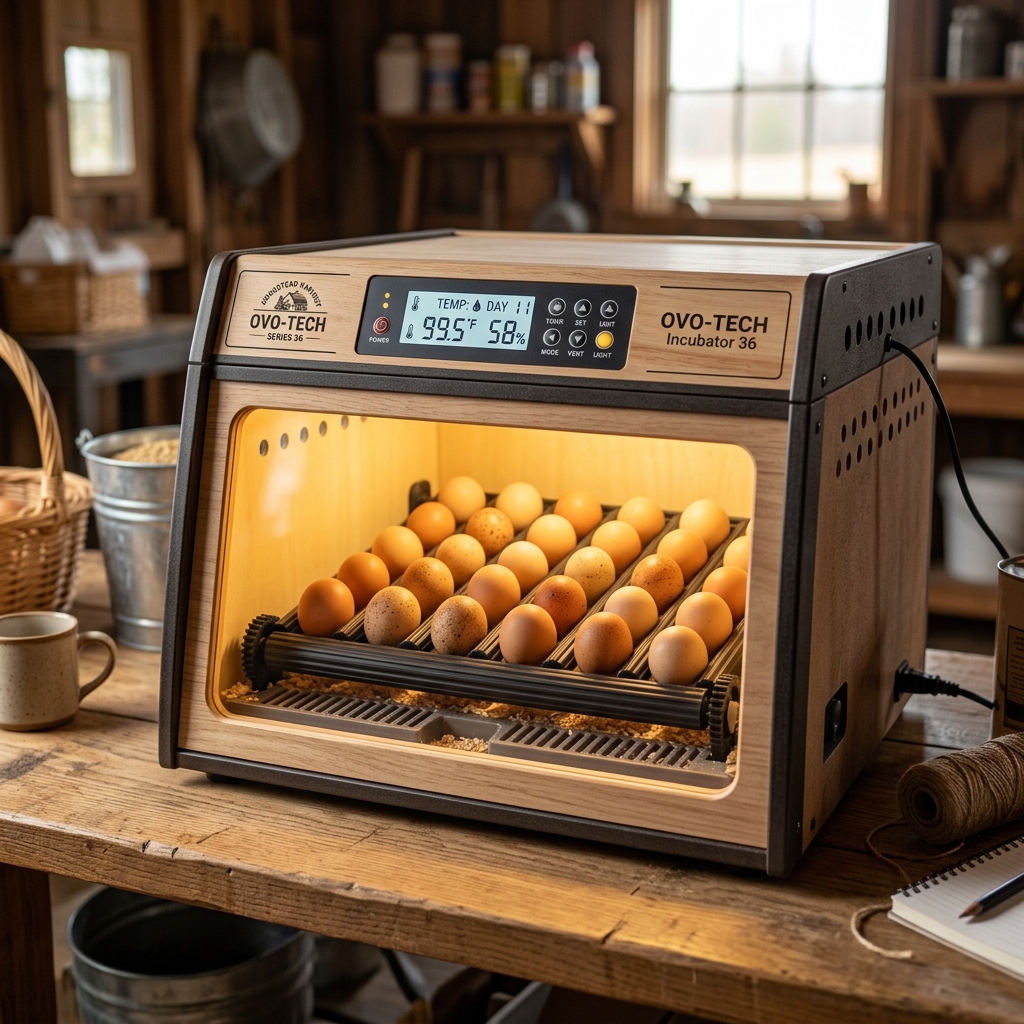
2. Relative Humidity Dynamics and Shell Membrane Porosity
Eggshells are semi-permeable structures that allow oxygen, carbon dioxide, and water vapor to pass through. During incubation, the egg must lose a specific volume of water to create a sufficient air cell at the wide end of the shell. This air cell is what the chick breathes during the hatching process before it breaks the outer shell.
Water loss is regulated by the relative humidity (RH) of the surrounding air. If the humidity is too high, the egg will not lose enough water. The chick will grow too large, leaving no air cell, which results in drowning during the pipping phase. This condition is a common cause of late-stage embryo deaths.
Conversely, low humidity causes excessive water loss, resulting in dehydrated embryos and tough shell membranes. The chick becomes shrink-wrapped inside the egg, unable to rotate and break the shell. Most poultry eggs require 50% to 55% RH for the first 18 days to ensure the correct rate of water loss.
During the final 3 days (lockdown), humidity must be increased to 65% or 70%. This high moisture level prevents the shell membranes from drying out and sticking to the chick after it breaks the shell. Automated humidity controllers use ultrasonic nebulizers or water pumps to maintain these settings, adding moisture based on sensor pings.
Traditional incubators use simple water channels built into the base. The operator adds water manually to adjust humidity, which depends entirely on surface area evaporation. Automated systems monitor humidity via digital sensors, adding moisture only when it drops below the target level. This automation eliminates the need to open the lid, preventing sudden drops in temperature and humidity.
Additionally, humidity level calculations must account for local room humidity. In dry winter climates, the incubator will pull in dry air, requiring more water refills to maintain settings. In damp summer climates, the air entering the chamber may carry high moisture, requiring the operator to reduce water channel volumes or increase ventilation vents to encourage drying.
- Targeted humidity levels allow precise water evaporation, creating optimal air cells.
- Lockdown humidity levels soften shell membranes, helping chicks break out safely.
3. Automated Egg Turner Kinematics and Vascularization
In a natural nest, the hen rotates the eggs up to 50 times a day using her beak and body. This movement keeps the yolk centered, preventing the developing embryo from sticking to the inner shell membrane. It also ensures that the embryo receives fresh nutrients from the albumen, supporting early growth.
Automated turners mimic this behavior using electric motors that tilt the egg trays gently. The trays rotate 45 degrees in both directions, completing a cycle every 2 hours. This gradual movement does not disturb the fragile vascular structures forming inside the egg, preventing arterial ruptures.
These vascular structures, known as the chorioallantoic membrane (CAM), are what allow the embryo to absorb calcium from the shell and breathe oxygen. If the egg is not turned, the CAM will fail to cover the inner shell surface, causing restricted growth or birth defects. Turning must be frequent during the first 14 days when the CAM is growing rapidly.
Egg turners must be deactivated during lockdown (day 18 for chickens). At this stage, the chick is fully formed and must position itself for hatching, with its beak oriented toward the air cell. Continuing to turn the eggs after this point will disorient the chick, leading to poor hatch rates. Removable turners simplify this transition, allowing you to lay the eggs flat on a soft hatching mesh.
Modern turners use removable trays with adjustable dividers. This versatility allows you to incubate different egg sizes, from tiny quail eggs to large goose eggs, using the same motor setup. Smooth, slow-geared motors prevent vibration transfer, protecting fragile embryo membranes from cellular damage during development.
Furthermore, the angle of rotation is critical. A rotation of only 30 degrees is insufficient to shift the yolk, while a rotation of 90 degrees can cause the yolk to twist, breaking the chalazae cords that suspend it. A precise 45-degree tilt provides the optimal balance of movement and support, mimicking natural nesting behavior.
- Tray rotations prevent embryonic adhesion to the shell, ensuring normal development.
- Adjustable divider inserts secure various egg sizes, from quail to goose.
4. Ventilation, Gas Exchange, and Carbon Dioxide Accumulation
Developing embryos require a constant supply of oxygen and a way to exhaust carbon dioxide. During the first few days of incubation, oxygen demand is low, but it increases rapidly as the embryo grows. By day 18, a single chicken egg consumes roughly 4 liters of oxygen daily. This requires constant fresh air flow.
If the incubator lacks adequate ventilation, carbon dioxide will accumulate inside the chamber. High CO2 levels (above 1%) are toxic to embryos, causing heart defects and asphyxiation. Adjustable air vents allow the operator to manage fresh air flow, maintaining carbon dioxide below safe thresholds.
However, increasing ventilation also increases heat and moisture loss. The heating element and humidity pump must have sufficient capacity to offset this loss, maintaining stable conditions. Finding the balance between fresh air flow and thermal stability is key to hatch success, requiring careful adjustments during the incubation cycle.
Exhaust vents should be positioned opposite the intake fan. This layout pulls fresh air through the heating element, mixing it before it flows over the eggs. Clean, circulating air keeps the chamber sanitized, reducing mold and bacterial risks. Vents should be opened wider during the final days to accommodate the embryos' increased oxygen needs.
Additionally, the incubator must be placed in a room with stable air quality. Avoid garages, outbuildings, or workshops where engine exhaust, paint fumes, or agricultural chemical residues could enter the vents. The porous eggshell absorbs these airborne toxins instantly, poisoning the embryo and causing birth defects.
Furthermore, high altitude affects gas exchange rates. At altitudes above 3,000 feet, the partial pressure of oxygen is lower, meaning the embryo must work harder to absorb oxygen. Homesteaders at high altitudes must increase ventilation rates and maintain slightly higher humidity levels to compensate for the dry, thin air.
- Adjustable vents balance fresh oxygen supply with internal temperature stability.
- Proper fresh air flow prevents carbon dioxide buildup, keeping embryos healthy.
5. Embryonic Inspection and Candling Physics
To check embryo development and remove infertile eggs, operators use a process called candling. By directing a high-intensity light beam through the shell, you can observe internal structures without cracking the egg. Fertile eggs show a distinct spiderweb of blood vessels by day 7, with a dark eye spot at the center.
Infertile eggs, also known as clears, show no vascular development and remain transparent under light. These eggs must be removed from the incubator immediately. If left inside the warm chamber, infertile eggs will rot, harbor anaerobic bacteria, and can explode, contaminating the healthy eggs with pathogens.
Built-in LED candlers on the incubator lid simplify this process. You can place the egg directly over the light port without removing it from the warm room. Minimizing handling reduces the risk of dropping the egg or transferring oils from your skin to the porous shell, preserving shell integrity.
Skin oils can block the shell pores, restricting gas exchange and suffocating the embryo. Wash and dry your hands thoroughly before handling eggs, or use sanitized nitrile gloves. Candling on days 7, 14, and 18 provides a clear timeline of embryo development, helping you track progress.
In later stages, you can observe the chick moving inside the shell and the air cell expanding. Any egg that shows a blood ring (a dark circle indicating early embryonic death) must be discarded. Clean, fertile eggs are the key to high hatch rates, saving time and resources.
Furthermore, the intensity of the candling light determines its effectiveness through thick or dark-colored shells (like Marans or duck eggs). A standard flashlight may fail to penetrate these shells, requiring a high-lumen LED light source focused through a narrow rubber gasket to prevent light leakage around the egg base.
- Built-in LED candlers allow quick fertility checks, keeping eggs warm and safe.
- Removing infertile clears prevents bacterial contamination and potential explosions.
6. The Definitive Buying Guide and Parameters
When choosing an egg incubator, prioritize temperature stability, humidity controls, and auto turners. Look for double-walled construction that insulates the chamber against room drafts. Digital controls and alarms provide security, warning you if settings drop below target levels.
For home use, a 12-egg to 24-egg capacity system is highly recommended. It offers the ideal size for backyard flock management without taking up excessive counter space. Ensure the tray supports different poultry species, from chicken and quail to duck and goose, using adjustable inserts.
Finally, check the warranty and customer support. A reliable warranty protects your investment, providing peace of mind. High-quality incubators reduce hatching stress, delivering healthy, active chicks every time. Review independent user ratings to verify sensor calibration and longevity before purchasing.
Choose a model with transparent windows so you can watch the hatch without opening the lid. Opening the lid during lockdown releases warm, humid air, which can dry out the membranes and trap hatching chicks. Direct access water ports simplify refills, allowing you to add water without opening the chamber.
Select an incubator that is easy to sanitize. Removable trays and smooth plastic bases allow you to wash and sanitize the unit quickly after the hatch, preventing bacterial buildup for the next round. Textured hatching mats should be dishwasher safe, ensuring thorough sterilization.
You should also evaluate the sensor design. High-end incubators feature dual sensors that measure both temperature and humidity at the egg level. Cheap models place sensors near the heating element, resulting in inaccurate readings that do not reflect the actual environment experienced by the eggs.
- Transparent windows enable safe observation of the hatch without releasing humidity.
- Easy-to-clean plastic bases prevent mold and bacterial buildup between hatches.
7. Embryonic Malpositions and Preventative Protocols
Embryo malposition is a primary cause of late-term incubation failure. For a successful hatch, the chick must position itself with its head tucked under its right wing, and its beak pointing toward the air cell. This layout allows the chick to break the inner membrane and start breathing air. If the chick is positioned incorrectly, it cannot break the shell.
If the chick is positioned upside down (head at the narrow end of the egg), it will struggle to reach the air cell, leading to suffocation. Storing eggs with the wide end pointing up during incubation is critical to prevent this malposition, as gravity naturally pulls the embryo head toward the top air cell.
Additionally, keeping humidity levels stable prevents the air cell from growing too large or small, helping the chick position itself correctly. Automated turners ensure the eggs tilt at the correct angle, supporting healthy embryonic alignment. Avoid sudden jars or vibrations that can dislodge the embryo from its alignment.
Another common malposition is "feet over head," which occurs when the chick's legs are positioned above its head, preventing it from kicking against the shell wall to rotate. This issue is linked to high temperatures during the second week of incubation, which causes hyperactive movements that disrupt normal tucking protocols.
- Wide-end-up egg positioning aligns the embryo head with the air cell for easy breathing.
- Stable humidity and temperature controls reduce the risk of late-term embryo malposition.
8. Microbial Control and Egg Sanitation Standards
Because eggshells are highly porous, they absorb bacteria from their environment easily. Washing dirty eggs with cold water is a serious hazard. Cold water causes the internal egg contents to contract, pulling bacteria from the shell surface through the pores into the egg, leading to internal infections.
If you must clean eggs, use warm water (warmer than the egg temperature) mixed with a mild dairy-approved sanitizer. Warm water causes the egg contents to expand slightly, pushing dirt and bacteria out of the pores. Dry the eggs immediately using clean paper towels before placing them in the incubator to prevent moisture buildup.
Ultimately, the best practice is to only incubate clean nest eggs. Keep nest boxes filled with fresh straw or bedding, and collect eggs multiple times a day to prevent dirt buildup. Clean, unwashed shells retain their natural cuticle layer, which acts as a barrier against bacteria, protecting the developing embryo.
Additionally, sanitize the incubator interior before every hatch using a broad-spectrum agricultural disinfectant. Bacterial residue from previous hatches can multiply rapidly in the warm, humid environment, infecting new eggs. Wipe down all surfaces, including the fan blades and water channels, and let the unit dry fully before loading.
- Collecting nest eggs frequently keeps shells clean, reducing the need for washing.
- The natural shell cuticle acts as a protective barrier, blocking microbial entry.
Hatch Rate Optimization Recommendation
Automate your egg hatching setup to maximize success rates and grow your homestead flock. Check out our recommended solution below to experience clinical-grade incubator control.
Kuku Digital Poultry Egg Incubator with Auto Turner
- Automatic egg turner rotates eggs every 2 hours to ensure even heat
- Integrated digital temperature and humidity display with sound alerts
- Built-in fan channels air consistently for uniform thermal balance
- LED egg candler allows you to observe embryo development clearly
Technical Specifications & Product Data
| Specification | Value / Details |
|---|---|
| Brand | Kuku |
| List Price | $99.99 (USD) |
| Customer Rating | 4.7 / 5.0 (840 reviews) |
| ASIN / Identifier | B0982Y2S92 |
| Availability | In Stock (USA Region) |
| Outbound Link Compliance | Sponsored & Nofollow Enforced |
Verified Features & Performance Data
- ✓Automatic egg turner rotates eggs every 2 hours to ensure even heat
- ✓Integrated digital temperature and humidity display with sound alerts
- ✓Built-in fan channels air consistently for uniform thermal balance
- ✓LED egg candler allows you to observe embryo development clearly
System Sovereignty & Engineering
Edge Computing
100% Client-side processing. Your data never leaves your browser sandbox, ensuring absolute compliance with US privacy mandates.
Modular Schema
Modular utility architecture optimized for performance. Low-latency WASM kernels provide near-native speeds for complex transformations.
Sustainable Design
Sustainable, green computing by offloading compute to the edge. Verified zero-server storage (ZSS) for professional-grade security.