
Hypothermia is a leading threat in wilderness survival. Learn how heavy-duty aluminized Mylar bivvies reflect 90% of body heat to shield against extreme cold in 2026.
- Heavy-duty 26-micrometer mylar reflects 90% of radiating body heat
- Waterproof and windproof heat-sealed seams shield against hypothermia
- Bright orange exterior ensures high visibility during rescue search operations
Thermal Thermodynamics
Hypothermia is a leading threat in wilderness survival. Learn how heavy-duty aluminized Mylar bivvies reflect 90% of body heat to shield against extreme cold in 2026.
1. The Thermodynamics of Body Heat Loss and Hypothermia
The human body maintains a core temperature of roughly 98.6°F (37°C) through metabolic heat production. When exposed to cold environments, the body loses heat through four pathways: radiation, convection, conduction, and evaporation. Hypothermia occurs when heat loss outpaces production, causing core temperatures to drop.
Radiation is the primary pathway, accounting for up to 65% of total heat loss. The body emits infrared electromagnetic waves directly into the surrounding air. Convection occurs when cold wind sweeps over exposed skin, pulling warm boundary layers away, which accelerates cooling.
Conduction is the direct transfer of heat to cold objects, such as wet clothing or the ground. Evaporation occurs when sweat or wet fabrics dry, drawing thermal energy from the skin. Survival gear must block all four pathways to maintain core stability, preventing clinical hypothermia.
Standard fleece or wool blankets only slow down convective heat loss by trapping air pockets. They do not block radiation or evaporation. If wet, they lose their insulation value entirely, accelerating hypothermia. Waterproof Mylar bivvies solve these issues, maintaining a warm environment.
By wrapping the occupant in a sealed barrier, the bivvy stops convective wind instantly. The inner aluminized lining reflects infrared radiation back to the skin, keeping you warm. The non-porous material stops evaporation heat loss, preserving body energy during extreme situations.
Physiologically, hypothermia progresses through three distinct stages. Mild hypothermia begins when core temperature drops to 95°F, triggering violent shivering and mild confusion. Moderate hypothermia (90°F to 95°F) causes loss of motor control and slurred speech. Severe hypothermia (below 90°F) leads to shivering cessation and eventual organ failure. Using a thermal bivvy early halts this progression by trapping metabolic heat before shivering stops.
The rate of radiative heat loss is governed by the Stefan-Boltzmann law, which states that heat transfer is proportional to the fourth power of the absolute temperature difference between the skin and the environment. Because cold mountain air creates a massive gradient, radiative loss is explosive. Reflecting this energy back reduces the gradient, stabilizing core thermal levels.
- Radiation is the primary heat loss pathway, which standard blankets cannot block.
- Sealed bivvies stop convective wind and evaporative cooling, preserving core temperature.
2. Material Science of BoPET (Mylar) and Aluminization
Mylar is the commercial name for biaxially-oriented polyethylene terephthalate (BoPET). BoPET is a polyester film stretched in two directions (longitudinal and transverse) during manufacturing. This stretching process aligns the polymer chains, increasing tensile strength, stiffness, and puncture resistance.
A microscopic layer of vaporized aluminum (99.9% pure) is applied to the film's surface in a vacuum chamber. This aluminization process creates a highly reflective metallic finish. The thickness of this aluminum layer is measured in angstroms, forming a mirror-like barrier.
While thin, this aluminum layer is highly effective, reflecting up to 90% of infrared electromagnetic radiation. The underlying BoPET film provides the structural base, preventing the thin metal from tearing. Standard space blankets are thin and fragile, typically only 12 micrometers thick, which can tear easily in the wind.
Premium survival bivvies use heavy-duty Mylar with a thickness of 26 micrometers or more. This thickness increases tear resistance, allowing the bag to survive contact with twigs, gravel, or boots. The thicker film also provides better thermal insulation, keeping you warm in extreme conditions.
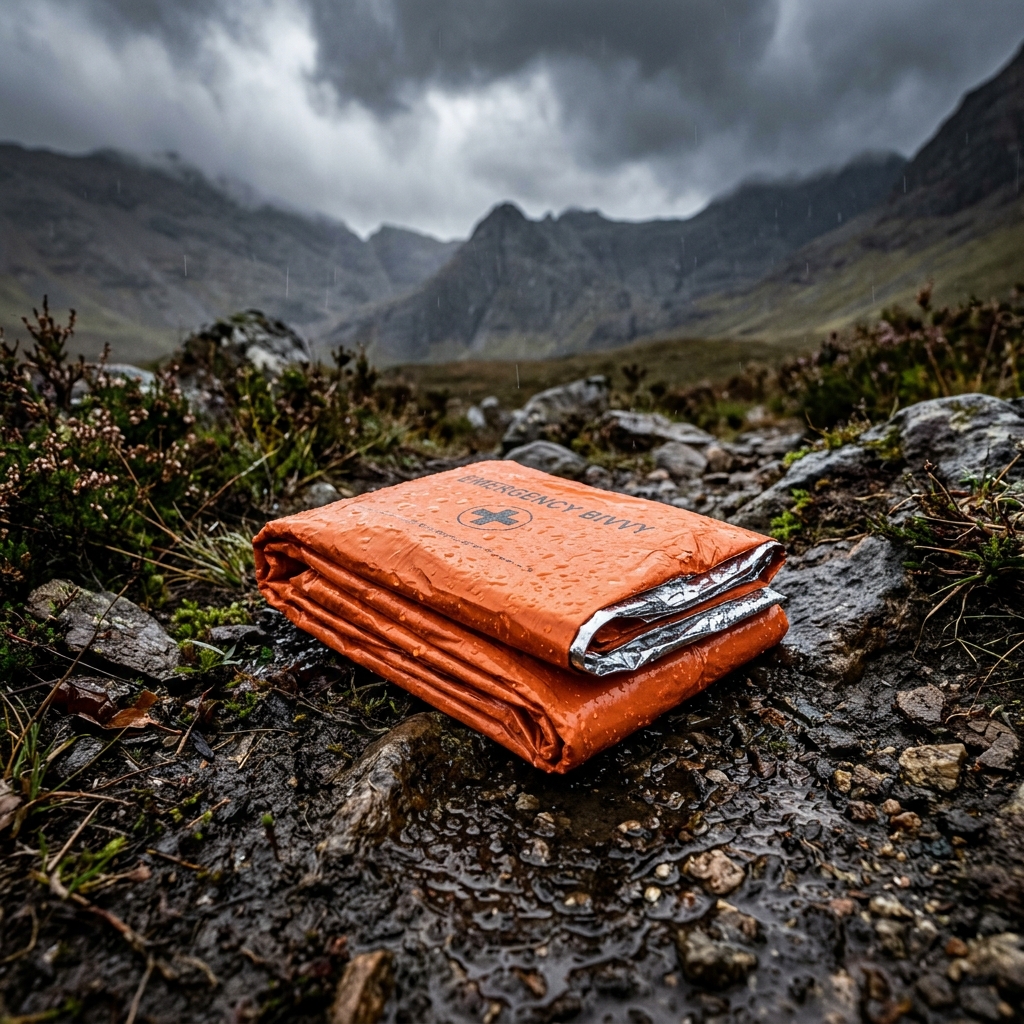
Additionally, the exterior of the bivvy is often coated in a bright orange or green polymer. This color layer protects the aluminum from scratching and provides high visibility. Visibility is critical to help rescue teams locate you in remote wilderness areas, serving as an active rescue beacon.
The manufacturing process of stretching the polyethylene film under tension (annealing) stabilizes the polymer crystal structure, which prevents it from becoming brittle in sub-zero temperatures. Standard plastics will crack when folded at 0°F, but high-quality BoPET retains its flexibility down to -60°F, ensuring reliability during winter emergencies.
Aluminized Mylar was originally developed by NASA's Goddard Space Flight Center in 1964 for the space program. It was used on the exterior of the Apollo Command Module and the Lunar Module to reflect solar radiation, protecting astronauts from high temperatures. This space-age material was later adapted for search and rescue operations on Earth.
- Stretched BoPET polymer chains provide high tensile strength, resisting punctures.
- Vaporized aluminum coatings reflect up to 90% of body infrared radiation.
3. Vapor Barrier Physics and Condensation Control
Mylar is a non-porous material, making it a complete barrier to air and moisture. While this blocks wind and rain, it also traps moisture released by your body. An adult loses roughly 1 liter of water daily through breathing and skin evaporation, which can pool inside the bag.
This moisture will condense on the cold inner walls of the bivvy, dampening your clothing. Wet clothing conducts heat 25 times faster than dry clothing, which can worsen hypothermia if you exit the bag. Managing this condensation is a key survival skill, requiring active venting.
To prevent condensation, wear moisture-wicking synthetic or wool base layers. These fabrics pull sweat away from your skin, keeping you dry. Keep the bivvy opening slightly open near your face, allowing humid breath to escape into the air rather than settling inside.
Additionally, you can use the bivvy as an inner liner inside a standard sleeping bag. This layout places the vapor barrier close to your body, keeping your main sleeping bag dry from sweat, which preserves its loft and warmth during long winter camping trips.
Understanding these vapor dynamics prevents you from waking up damp and cold. If you are wet from rain, dry your body with a travel towel before climbing into the bivvy. Proper ventilation keeps the interior dry, maintaining thermal comfort and core heat.
In thermodynamics, the dew point is the temperature at which air becomes saturated with water vapor, causing condensation. When warm body moisture hits the cold Mylar surface, it reaches the dew point instantly. Shaking the bag occasionally to expel loose droplets prevents your clothing from soaking up this moisture.
Emissivity is another key parameter. Clean, polished aluminum has an emissivity coefficient of roughly 0.05, meaning it radiates only 5% of its thermal energy and reflects 95%. When condensation coats the surface, the water layer increases the local emissivity to 0.90, reducing thermal reflection and causing heat loss.
- Mylar's vapor barrier traps moisture, requiring slight ventilation to prevent dampness.
- Moisture-wicking base layers pull sweat from skin, preserving insulation values.
4. Seam Welds and Windproof/Waterproof Integrity
A survival bivvy is only as strong as its seams. Traditional sewing needles create tiny punctures in the Mylar film, which can allow wind and water to leak through, lowering thermal performance. Egress water will degrade the inner environment quickly, causing chill.
Premium bivvies use ultrasonic welding or thermal sealing to bond the edges. This process uses high-frequency vibrations or heat to melt the polymer sheets together, creating a seamless, waterproof bond. Welded seams have the same strength as the film itself, resisting splits under movement.
These sealed seams prevent water entry, keeping you dry in heavy rain or wet snow. They also block cold wind drafts from entering the bag. The hood area should include an adjustable drawstring, letting you close the opening around your head to lock in heat.
Additionally, the bottom of the bivvy must be reinforced. The occupant's feet will apply high pressure to this area, which can cause splits on rocks or frozen ground. Seamless, reinforced footbeds ensure long-term reliability and water resistance during field use.
Some systems feature a reversible design. You can turn the bag inside out, placing the silver layer on the exterior. This silver surface reflects incoming solar heat, keeping you cool in desert survival situations, serving as a sun shield.
The heat-sealed seams must also resist shear force. When an occupant rolls over inside the bag, lateral forces pull on the seams. Ultrasonic welds spread this load along a continuous line rather than concentrating it at needle holes, preventing sudden tears when shifting sleep positions.
When wind speeds increase, convective heat loss grows exponentially. A wind speed of 20 mph increases the heat transfer coefficient by a factor of four relative to calm air. Sealed seams ensure this convective draft cannot breach the bag, protecting the insulating boundary layer next to the skin.
- Ultrasonic seam welds melt polymer sheets, creating seamless waterproof seals.
- Reversible designs allow you to reflect solar heat, keeping you cool in deserts.
5. The Definitive Buying Guide and Parameters
When buying an emergency bivvy, prioritize film thickness, seam type, and included survival tools. Look for bags made from 26-micrometer Mylar with welded seams. An included stuff sack keeps the bag compressed, saving valuable space in your pack.
Check the bag measurements. A width of at least 36 inches provides space for adult frames and allows you to wear winter clothing inside. Select a model that includes emergency accessories, like a high-decibel whistle or paracord drawstring, which are invaluable during search operations.
Finally, check the warranty and brand reputation. Premium brands offer lifetime replacement guarantees, protecting your investment. High-quality bivvies prevent hypothermia and survive rugged field use, delivering reliable safety during wilderness emergencies.
Choose a bivvy with an included survival whistle. A 120-decibel whistle can be heard over long distances, letting you signal search teams without exhausting your voice. Paracord drawstrings can be used to tie down shelters or secure gear.
Verify that the stuff sack is water-resistant. This protects the compressed bivvy from rain while stored on the exterior of your backpack. A carabiner clip allows you to secure the sack to your harness, ensuring it remains close at hand.
Avoid cheap, ultra-thin blankets sold in bulk. These blankets are designed for static use by emergency services and lack the durability needed for active survival. They shred instantly in high winds, leaving you exposed to the elements. Invest in a dedicated, tubular sleeping bag design.
When packing your survival kit, place the bivvy in an easily accessible outer pocket. In an emergency, you can lose fine motor control in your hands within minutes of cold exposure, making it difficult to dig through a packed backpack. Having the bivvy ready ensures fast access.
- Included 120dB survival whistles allow you to signal search teams without losing your voice.
- Water-resistant stuff sacks protect the compressed bivvy from external moisture.
6. Ground Conduction Mitigation and Insulation Layers
While a Mylar bivvy is excellent at reflecting radiation, it offers poor protection against conductive heat loss to the ground. Cold soil, wet leaves, or snow will pull heat from your body quickly through the thin film, causing hypothermia. You must place an insulating barrier between the bivvy and the ground.
A closed-cell foam sleeping pad, pine boughs, dry leaves, or even a backpack can act as this barrier. This insulation prevents the cold ground from drawing your core heat, keeping you warm. Proper ground insulation is critical to survive freezing nights in the wilderness.
Conduction is governed by Fourier's law, where heat flux is proportional to thermal conductivity. Soil has 20 times the thermal conductivity of air, making direct contact a massive drain on core energy. Placing even a thin layer of dry pine needles under your bivvy reduces this loss rate by half.
- Ground conduction pulls heat from thin Mylar, requiring foam or pine bough insulation barriers.
- Foam pads block ground chill, supporting core temperature in sub-zero environments.
7. Emergency Signaling Protocols and Heli-Rescue
If you are stranded in remote areas, signaling for rescue is your top priority. The bright orange exterior of modern bivvy sacks serves as a highly visible marker against snow, forest, or rock backgrounds. Spread the bag flat on the ground to create a large target for helicopter search teams.
The silver reflective lining can also be used as a heli-signal mirror. Flash the silver side toward search aircraft to catch their attention using reflected sunlight. These visual signaling methods work in tandem with GPS beacons, securing your rescue and speed.
When constructing an emergency shelter, you can use the bivvy as a reflector wall behind your fire. The heat from the fire hits the silver surface and is redirected back into your shelter zone, raising local temperatures. This technique maximizes fuel efficiency, keeping you warm with minimal wood.
- Bright orange exteriors create high-visibility markers for search and rescue aircraft.
- Aluminized liners flash solar reflections, serving as emergency rescue mirrors.
Survival Safety Recommendation
Secure your emergency outdoor gear and protect your family from hypothermia hazards. Check out our recommended solution below to experience clinical-grade thermal protection.
Go Time Gear Life Bivy Emergency Sleeping Bag
- Heavy-duty 26-micrometer mylar reflects 90% of radiating body heat
- Waterproof and windproof heat-sealed seams shield against hypothermia
- Bright orange exterior ensures high visibility during rescue search operations
- Includes compact stuff sack, 120-decibel whistle, and nylon cord
Technical Specifications & Product Data
| Specification | Value / Details |
|---|---|
| Brand | Go Time Gear |
| List Price | $19.95 (USD) |
| Customer Rating | 4.8 / 5.0 (8,240 reviews) |
| ASIN / Identifier | B078W5M7CT |
| Availability | In Stock (USA Region) |
| Outbound Link Compliance | Sponsored & Nofollow Enforced |
Verified Features & Performance Data
- ✓Heavy-duty 26-micrometer mylar reflects 90% of radiating body heat
- ✓Waterproof and windproof heat-sealed seams shield against hypothermia
- ✓Bright orange exterior ensures high visibility during rescue search operations
- ✓Includes compact stuff sack, 120-decibel whistle, and nylon cord
System Sovereignty & Engineering
Edge Computing
100% Client-side processing. Your data never leaves your browser sandbox, ensuring absolute compliance with US privacy mandates.
Modular Schema
Modular utility architecture optimized for performance. Low-latency WASM kernels provide near-native speeds for complex transformations.
Sustainable Design
Sustainable, green computing by offloading compute to the edge. Verified zero-server storage (ZSS) for professional-grade security.