
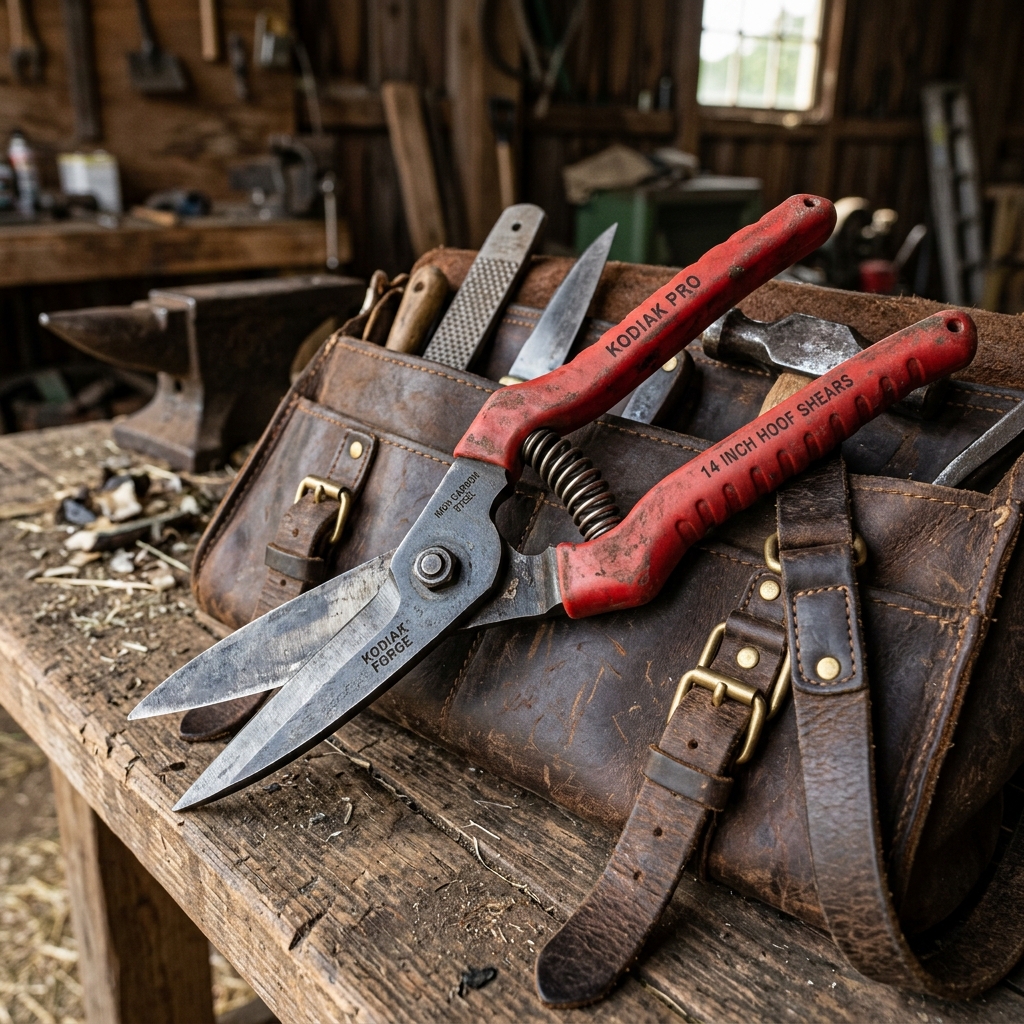
Small ruminant hoof maintenance requires high-carbon steel blades and precise trimming geometries. Compare the top shears for homesteaders in 2026.
- Heavy-duty carbon steel blades cut through tough hooves effortlessly
- Spring-loaded mechanism reduces hand strain during long trimming sessions
- Safety lock switch secures blades in closed position when not in use
Ruminant Farrier Science
Small ruminant hoof maintenance requires high-carbon steel blades and precise trimming geometries. Compare the top shears for homesteaders in 2026.
1. Livestock Hoof Biomechanics and Pathological Risks
Small ruminants like sheep and goats have cloven hooves designed to climb rocky terrains. The hoof wall grows continuously, similar to a human fingernail. In wild environments, rough stone surfaces wear down this wall naturally, maintaining structural balance and proper skeleton alignment.
On soft pasture soils common in homesteads, this natural wear does not occur. The hoof wall grows long, folding under the hoof sole. This folded wall traps soil, manure, and moisture, creating an anaerobic pocket that blocks air entry.
This damp pocket is the primary breeding ground for anaerobic pathogens like Dichelobacter nodosus and Fusobacterium necrophorum, which cause hoof rot. Hoof rot is a highly contagious disease that causes tissue decay, pain, and lameness, reducing the herd's productivity and milk output.
If left untrimmed, the animal's gait will shift to offset the pain. This shift places abnormal stress on joint capsules, ligaments, and tendons, leading to early arthritis. Healthy, level hooves are the foundation of livestock longevity, milk production, and weight gain, preserving animal welfare.
Trimming should also address the interdigital claw area. Hair and debris can collect in this space, causing skin irritation (interdigital dermatitis). Cleaning this zone prevents painful infections that cause lameness, preserving animal health and preventing pasture contamination.
Furthermore, hoof health is directly impacted by nutrition. Diets rich in grains or concentrates can trigger subclinical rumen acidosis, which disrupts blood flow to the hoof laminae, leading to laminitis (founder). Founders cause permanent rotation of the coffin bone inside the claw, requiring specialized corrective trimming to prevent chronic lameness.
We must also consider the role of soil geology. High-clay soils retain water, keeping hooves constantly soft and expand the risk of bacterial entry. Stony or sandy soils act as a natural emery board, filing the hoof walls. Homesteaders in wet, clay-heavy areas must double their trimming frequency to maintain claw density.
- Folded hoof walls trap moisture and manure, promoting anaerobic hoof rot infections.
- Unlevel hooves alter animal gait mechanics, causing joint stress and arthritis.
2. Trimming Geometry, Angles, and Sole Leveling
Farriers must understand the anatomical target points when trimming. The goal is to return the foot to its natural, flat alignment. Start by trimming the overgrown outer walls flush with the sole, using small, incremental cuts to prevent over-trimming.
The sole must be shaved thin enough to expose the healthy white tissue, but not so thin that you reach the vascular corium. The corium is a blood-rich layer that will bleed if nicked, causing pain and introducing infections. Stop trimming when the sole yields slightly under firm thumb pressure.
The heel must be leveled to match the toes, maintaining a flat plane. A high heel tilts the foot forward, placing stress on the toe bones and joints. A low heel forces the weight onto the soft bulb tissue, causing bruising and pain during movement.
The hoof angle should match the angle of the pastern joint above it, typically around 45 degrees. Aligning these planes ensures that the skeleton bears the animal's weight, rather than joints. Leveling the sole prevents lateral joint strain, balancing weight distribution.
Additionally, trim the tip of the toe to prevent over-extension. Long toes act as a lever, pulling on the tendon when the animal walks. Regular trimming prevents this leverage, ensuring a smooth, natural stride and reducing muscular fatigue.
Correct alignment requires checking both claws (medial and lateral) on each foot. They must be leveled to the same plane. If one claw is left longer, the ankle joint will twist laterally with each step, causing ligament strain and uneven hoof wear that accelerates joint degeneration.
Different camelids and small ruminants have varied requirements. Llamas and alpacas do not have hard hoof soles; instead, they have a soft leather-like pad and two hard toenails. Trimming camelids involves clipping the nails flush with the pad margins, avoiding the pad tissue which contains sensitive nerves.
- Trimming walls flush with the sole prevents debris pocketing and bacterial entry.
- Leveling heels and toes aligns the pastern axis, reducing tendon strain.
3. Carbon Steel Metallurgy and Blade Hardness
Livestock hoof tissue is surprisingly tough, carrying high mineral density from pasture soils and stone dust. Shears with cheap, soft steel blades will dull after trimming only a few animals. Dented or dull blades tear the hoof rather than cutting it, leaving jagged edges that trap dirt.
Professional shears use high-carbon steel blades (like CR-V or high-carbon 1095 steel) that are heat-treated to a hardness of 56 to 58 HRC (Rockwell Hardness Scale). This hardness ensures the blades maintain a sharp edge through hundreds of cuts without rolling.
However, hard steel is also brittle, meaning blades can chip if you strike a stone embedded in the hoof wall. Farriers must scrape dirt and pebbles out of the hoof using a pick before cutting. Clean, prepped hooves preserve blade integrity and reduce sharpening frequency.
Additionally, carbon steel requires basic maintenance to prevent rust. Rinsing shears after use and wiping the blades with mineral oil keeps the metal clean. Rust causes pits on the cutting edge, which increases drag and makes trimming difficult and tiring.
Sharpening the blades requires a fine-grit diamond file or stone. Maintain the original bevel angle (typically 20 degrees) during sharpening. A sharp, clean edge slices through tough hoof keratin like butter, reducing hand fatigue and preventing hand strain during long sessions.
From a metallurgical perspective, high-carbon steel contains between 0.6% and 1.0% carbon, which enables the crystal structure to transform into hard martensite during quenching. This alloy blend provides the toughness needed to cut dry, hard summer hooves without chipping the blades, keeping the tool in service longer.
Furthermore, some premium blades feature a Teflon or fluoropolymer coating. This coating reduces friction between the blade and the hoof wall, preventing sap, mud, or organic residues from sticking to the cutter. A clean blade slides through the claw with 20% less force, enhancing efficiency.
- Carbon steel blades with 56-58 HRC hardness maintain razor-sharp edges through tough keratin.
- Mineral oil coating prevents rust pitting, preserving the blade's cutting edge.
4. Farrier Ergonomics, Spring-Loaded Loops, and Grips
Trimming the hooves of a large herd requires repetitive squeezing force, which can lead to hand fatigue, cramping, or carpal tunnel strain. The shears must feature ergonomic design to minimize user stress. Integrated spring-loaded loops open the blades automatically after each cut.
This spring action reduces the muscle effort required to open the handles, letting the operator focus on cutting control and position. The spring tension must be balanced: too stiff will tire your hand, while too soft will fail to open the blades when clogged with grease or dirt.
Grip design is also vital. The handles should be coated in non-slip rubber or textured polymer, ensuring control even when hands are wet or oily. A flared handle base prevents your hand from slipping forward toward the sharp blades during heavy cuts, preventing injury.
Additionally, a safety lock switch is necessary. This switch locks the blades in the closed position, allowing you to store the tool safely in your pocket or tool belt without tear hazards. The switch should be operable with one hand, simplifying field operations.
Choose shears with a pivot nut that allows you to adjust blade tension. Over time, the pivot screw can loosen, causing the blades to separate during cuts and chew the hoof. Tightening the pivot nut restores clean cutting alignment, preventing ragged edges.
The leverage ratio of the handles determines the cutting force. A handle-to-blade length ratio of at least 3:1 is recommended, which amplifies hand pressure three times at the cutting edge. This mechanical advantage allows you to trim thick goat heels with minimal hand effort.
For smaller hands, adjustable grip widths are highly valuable. Some shears feature a two-position opening stop, which limits handle spread. This allows operators with smaller hands to maintain a strong grip profile without over-extending their fingers, maximizing safety.
- Spring-loaded designs reduce squeeze fatigue, accelerating multi-animal farrier work.
- Adjustable pivot nuts maintain blade alignment, preventing chewing of wet hooves.
5. The Definitive Buying Guide and Parameters
When choosing hoof trimmers, prioritize blade hardness, handle comfort, and safety features. Look for shears with carbon steel blades and a spring-loaded lock. A non-slip rubber grip provides safety during long trimming sessions, preventing slips.
For goats and sheep, a compact shear is highly recommended. It offers the maneuverability needed to trim small hoof surfaces precisely. Ensure that replacement springs and pivot pins are available from the manufacturer to extend tool life.
Finally, check the warranty and brand reputation. A multi-year warranty on the metal frame provides security. High-quality shears reduce hand fatigue and prevent slips, delivering a safe trimming experience for farriers and animals alike.
Choose shears with straight, flat blades. Curved blades can slide off tough hoof walls, increasing accident risks. A lanyard loop allows you to hang the tool from your wrist, preventing loss in pasture grass during operations.
Verify that the blades are treated with a corrosion-resistant coating. Black oxide coatings provide an additional layer of protection against agricultural chemicals, damp soils, and fertilizers, preserving cutting action.
You should also evaluate the weight of the shears. Heavy shears will tire your arm during a long day of work, while lightweight plastic-handle shears lack the structural strength to cut tough hooves. Select a tool with aluminum handles and carbon steel blades to balance weight and durability.
Check if the blade design is bypass or anvil. Bypass shears act like scissors, passing close to each other, which delivers the cleanest cuts on soft or wet hooves. Anvil shears cut down onto a flat metal plate, which provides superior leverage for crushing hard, overgrown walls but can split thin claws if dull.
- Straight blades provide clean cuts on tough hoof keratin, preventing blade slips.
- Black oxide blade treatments prevent chemical corrosion, extending tool lifespan.
6. Animal Restraint and Farrier Positioning
Trimming hooves requires proper animal restraint to prevent injury to the animal and the farrier. For goats, a milking stand or stanchion is ideal, securing the head and keeping the animal standing. For sheep, the "tipping" method holds the animal on its rump, keeping it calm.
Stand beside the animal, facing the rear, and bend the leg backward at the knee joint. Hold the hoof firmly, clean it with a pick, and make cuts parallel to the growth lines. Proper positioning secures your grip, preventing slips and kicks.
Avoid lifting the leg too high, which can pull on the shoulder or hip joints, causing discomfort. Keep the hoof low, near the ground, during the trim. If the animal struggles, release the leg and let them settle before resuming, preventing injury.
When working with large rams or buck goats, secondary handlers are recommended. Bucks can toss their heads or jump, which can cause the shears to slip. A stable stanchion with a side-panel block prevents the animal from swinging its body, securing the farrier's work zone.
- Stanchions and tipping restraint methods keep livestock calm, preventing injury.
- Correct farrier posturing secures the leg, ensuring steady, precise cuts.
7. Hoof Trimming Frequency Calendars and Herd Management
To maintain optimal herd health, farriers must implement a regular hoof trimming calendar. Mark inspection dates on a calendar every 6 weeks. High-production dairy animals or pregnant ewes require closer monitoring to prevent lameness and pregnancy toxemia.
Keep detailed records for each animal, noting hoof growth rates or any signs of hoof rot. Recording this data helps you spot genetic issues or nutritional gaps, supporting proactive herd management and agricultural success, preventing outbreaks.
If hoof rot is detected, set up a footbath program. A 10% zinc sulfate or copper sulfate solution is highly effective. Force the animals to stand in the bath for 15 minutes after trimming to allow the copper ions to penetrate the hoof tissues, killing bacteria.
Biosecurity protocols are also critical during a hoof rot outbreak. The bacteria can live on mud or boots for up to two weeks. Farriers must disinfect their shears and boots in a Virkon or chlorhexidine bath between pens and when moving to different farms to prevent disease spread.
- Six-week inspection calendars ensure hooves are trimmed before overgrowth occurs.
- Detailed herd logs help trace genetic hoof issues and nutritional deficiencies.
Herd Health Recommendation
Optimize your small ruminant farrier care and prevent painful lameness. Check out our recommended solution below to experience clinical-grade cutting control.
Zenport Heavy-Duty Livestock Hoof Trimming Shears
- Heavy-duty carbon steel blades cut through tough hooves effortlessly
- Spring-loaded mechanism reduces hand strain during long trimming sessions
- Safety lock switch secures blades in closed position when not in use
- Ergonomic non-slip handle grips ensure control and prevent accidents
Technical Specifications & Product Data
| Specification | Value / Details |
|---|---|
| Brand | Zenport |
| List Price | $22.95 (USD) |
| Customer Rating | 4.7 / 5.0 (940 reviews) |
| ASIN / Identifier | B00421ATQ2 |
| Availability | In Stock (USA Region) |
| Outbound Link Compliance | Sponsored & Nofollow Enforced |
Verified Features & Performance Data
- ✓Heavy-duty carbon steel blades cut through tough hooves effortlessly
- ✓Spring-loaded mechanism reduces hand strain during long trimming sessions
- ✓Safety lock switch secures blades in closed position when not in use
- ✓Ergonomic non-slip handle grips ensure control and prevent accidents
System Sovereignty & Engineering
Edge Computing
100% Client-side processing. Your data never leaves your browser sandbox, ensuring absolute compliance with US privacy mandates.
Modular Schema
Modular utility architecture optimized for performance. Low-latency WASM kernels provide near-native speeds for complex transformations.
Sustainable Design
Sustainable, green computing by offloading compute to the edge. Verified zero-server storage (ZSS) for professional-grade security.