
Homestead dairy automation requires high-precision vacuum pressure and sanitary design. Compare the top portable milking machines for goats and cows in 2026.
- Dual pulsation system mimics natural calf suckling to protect sensitive udders
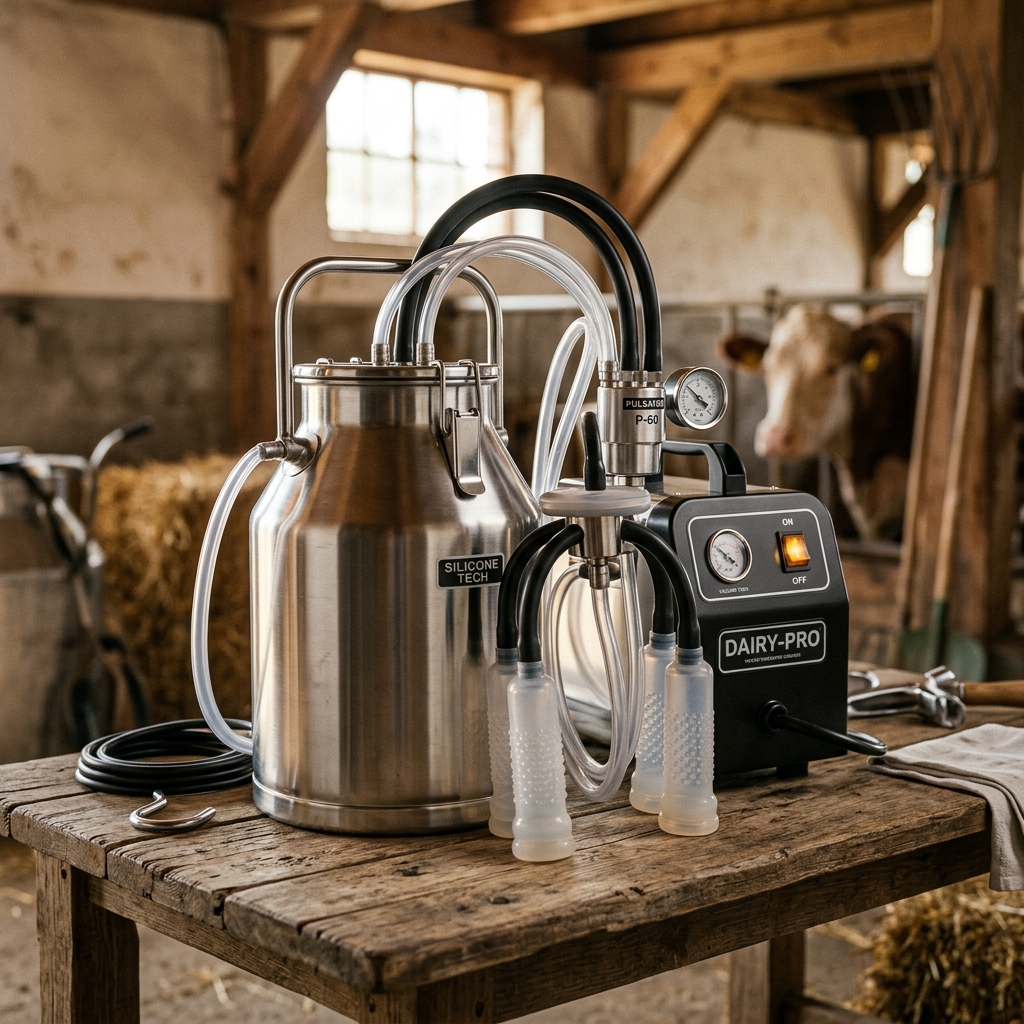
- Food-grade silicone teat cups and highly durable stainless steel bucket
- High-vacuum motor delivers up to 60 kPa of steady suction force
Dairy Automation Principles
Homestead dairy automation requires high-precision vacuum pressure and sanitary design. Compare the top portable milking machines for goats and cows in 2026.
1. Pulsation Rate Dynamics and Vacuum Pump Efficacy
Automated milking systems rely on precise pressure differentials to extract milk without injuring livestock. A constant vacuum will cause severe blood congestion and mastitis in the animal. Pulsation cycles alternate between suction and collapse phases to maintain healthy blood flow in the teat tissue.
Most portable electric milking machines operate at 40 to 60 pulsation cycles per minute. This specific rate mimics the natural suckling frequency of a calf or kid, ensuring livestock comfort. The vacuum level must be monitored via an integrated dial gauge to prevent over-pressurization.
For cows, the target vacuum pressure should range between 40 kPa and 50 kPa. Goats require a lower setting, typically between 35 kPa and 40 kPa, due to their smaller teat structures. Adjusting the regulator valve ensures that the vacuum pump remains within safe physiological boundaries throughout the milking process.
High-efficiency vacuum motors utilize oil-free piston configurations. This design eliminates the risk of oil mist entering the air supply or contaminating the milk. The lack of oil also minimizes maintenance, requiring only periodic cleaning of the intake filters to ensure consistent pressure delivery.
The pulsation ratio, which is the ratio of milking time to massage time, is typically set at 60:40 or 50:50. This ratio ensures that the teat receives adequate rest during the massage phase, preventing edema. Modern electronic pulsators allow users to customize this ratio for individual animals, optimizing milk yield.
- Pulsation cycles prevent teat tissue congestion by mimicking natural suckling behavior.
- Oil-free piston pumps eliminate the risk of lubricant mist contaminating the milk stream.
2. Food-Grade Material Compliance and Bacterial Mitigation
Sanitation is the primary operational concern in raw milk harvesting. All contact components must be manufactured from certified food-grade materials to prevent bacterial colonization. Stainless steel buckets, specifically grade 304 or 316, provide an inert surface that resists organic acid buildup.
Silicone hoses and teat liners must be free of bisphenol-A (BPA) and phthalates. These chemical plasticizers can leach into warm fat-rich liquids like milk. Smooth inner walls prevent the accumulation of milk fat and proteins, which form a substrate for microbial biofilm.
Rinsing the system immediately with lukewarm water is crucial to prevent milk stone formation. Milk stone is a hard deposit of calcium phosphate and proteins that harbors bacteria. Subsequent washing with chlorinated alkaline cleaners dissolves fat deposits, while acid rinses neutralize alkaline residues.
The design of the bucket lid must include a secure gasket seal to maintain vacuum integrity. This gasket must be removed and scrubbed after every milking session to prevent mold growth. Seamless welding on the stainless steel canister eliminates crevices where pathogens like Listeria or E. coli could shelter.
Furthermore, hoses must be transparent to allow visual verification of cleanliness. Any discoloration or cloudiness indicates that the tubing needs replacement or deep chemical sterilization. Storing the sanitized hoses in a vertical, draining position prevents moisture pooling and subsequent mildew development.
- Grade 304 stainless steel buckets offer acid-resistant surfaces that are easy to sterilize.
- BPA-free silicone liners prevent toxic leaching into fat-rich milk streams.
3. Dual-Bucket vs. Single-Bucket Volumetric Throughput
Homesteaders must select their equipment based on herd size and processing speed requirements. Single-bucket systems are compact and ideal for owners of one or two cows, or a small flock of goats. They typically feature a 5-liter to 7-liter capacity canister, which is sufficient for a single session.
For larger operations, a dual-bucket setup allows the user to milk two animals concurrently. This configuration divides the vacuum line via a manifold, doubling the processing speed. However, it requires a pump with a higher flow rate, measured in cubic feet per minute (CFM).
A higher CFM rating ensures that the vacuum does not drop when attaching the cups to the second animal. If the pump lacks sufficient capacity, the vacuum level will drop, causing the cups on the first animal to slip and fall off. This introduces soil contaminants and breaks the sanitary cycle.
Single-bucket systems are light and easy to transport across uneven pastures or barn floors. They are also simpler to wash, as there are fewer hoses and connections. Dual-bucket systems, while highly efficient, require a more intensive cleaning protocol and a larger wash station.
Weighing these options depends on the layout of your dairy parlor and available labor. A dual-bucket system reduces livestock standing time, which lowers stress levels and improves overall milk letdown. Conversely, a single-bucket system is the perfect low-overhead starter kit for homesteaders.
- Dual-bucket configurations double your throughput speed, reducing animal stress in the stanchion.
- Single-bucket systems minimize cleaning overhead, making them ideal for micro-herds.
4. Ergonomic Livestock Teat Cup Engineering
The interface between the machine and the animal is the most critical design element. Teat cups must feature an ergonomic geometry that distributes vacuum pressure evenly across the teat surface. Poorly designed cups can pinch the teat base, restricting milk flow and causing pain.
Silicone liners must match the species being milked. Cow liners are longer, thicker, and require a firmer tension to collapse correctly under vacuum pressure. Goat and sheep liners are shorter and softer, accommodating their delicate skin barrier.
Many premium systems feature transparent teat cups. This allows the operator to observe milk flow in real-time, helping them determine when the animal is fully milked. Over-milking occurs when the vacuum remains active on dry teats, leading to hyperkeratosis (hardening of the teat canal skin).
Hyperkeratosis increases the risk of bacteria entering the teat canal, which can lead to mastitis. Easy-to-remove cups prevent this issue by releasing the vacuum gently before detachment. Pulling the cups off under active vacuum can scratch the skin and damage the teat sphincter muscle.
The weight of the teat cup assembly, also known as the claw, helps open the teat canal through mild downward tension. However, excessive weight will cause the cups to fall off, while insufficient weight results in incomplete milking. Finding this balance is key to optimal milk extraction.
- Species-specific liners prevent tissue micro-tears and reduce hyperkeratosis risks.
- Transparent cups enable visual monitoring of milk flow to prevent painful over-milking.
5. High-Capacity Battery Integration and Portability Metrics
Homestead milking is rarely confined to clean, dry barn spaces with abundant power outlets. Portable machines must offer robust power independence to operate in distant pastures or emergency off-grid scenarios. Lithium-ion batteries provide the energy density needed to run high-torque motors for extended periods.
A premium system should deliver at least 2 to 3 hours of continuous operation on a single charge. This is sufficient to milk up to 10 cows or 20 goats in a single session. Battery management systems (BMS) protect the cells from overcharging and extreme temperatures.
Weight distribution is crucial for true portability. The pump and battery assembly should be housed in a compact, impact-resistant casing with an ergonomic handle. A total system weight of under 15 pounds allows the operator to carry the unit between pastures easily.
Additionally, dual-voltage charging options (110V AC and 12V DC) allow the user to recharge the machine via a standard vehicle outlet. This versatility is invaluable for mobile vet clinics or off-grid homesteaders who rely on solar power grids to charge their tools.
The battery housing must feature a ingress protection (IP) rating, shielding sensitive electronics from dust and water splashes. Dairy environments are inherently wet and dusty, meaning exposed circuits will fail quickly. Sealed ports and membrane switches ensure long-term durability.
- Lithium-ion power packs deliver hours of run-time, enabling off-grid field operations.
- Sealed IP-rated enclosures protect electronics from moisture and agricultural dust.
6. Heavy-Duty Pressure Regulator Calibration
A milking machine without a regulator is a serious hazard to animal welfare. The vacuum pump must feature a mechanical release valve that bleeds off excess pressure when it exceeds the set limit. This valve must be calibrated using a certified dial pressure gauge.
Calibration should be checked before every session by blocking the cups and running the pump. The needle on the pressure gauge must settle at the target pressure and remain stable. Fluctuations indicate a leak in the hoses, a worn gasket, or a failing regulator spring.
If the vacuum is too low, the cups will fall off repeatedly, which introduces dirt and slows down milking. If it is too high, it will damage the animal's teat canal, leading to internal bleeding and increased susceptibility to bacterial infections.
The regulator must feature a fine-threaded adjust knob to allow incremental pressure adjustments. This precision is necessary when switching between cows and goats. A locknut prevents the knob from vibrating out of calibration during operation.
Additionally, the vacuum line must incorporate a moisture trap. If milk overflows from the bucket, the moisture trap catches the liquid before it reaches the vacuum pump, preventing motor corrosion. Rinsing this trap after use maintains system cleanliness.
- Fine-threaded adjust knobs provide exact pressure control when switching livestock species.
- Moisture traps prevent milk overflow from entering and damaging the vacuum pump motor.
7. The Definitive Buying Guide and Parameters
When choosing a milking machine, consider the number of animals, power access, and cleaning requirements. Look for systems with stainless steel buckets and BPA-free silicone components. Ensure the pump features a reliable pulsation motor and a clear pressure gauge.
For small farms, a battery-powered single-bucket system is highly recommended. It offers the flexibility to milk animals in the field or barn without extension cords. Ensure that replacement parts, like liners and gaskets, are readily available from the manufacturer.
Finally, verify the warranty coverage. A multi-year warranty on the vacuum motor provides security and access to replacement parts. Investing in a high-quality system reduces long-term maintenance costs and protects your herd's health.
Choose a motor speed exceeding 31,000 vibrations per minute for optimal biofilm disruption. Ensure the handle has at least three cleaning modes to match your oral health needs. Lithium-ion batteries maintain constant motor voltage.
A clear lid allows you to monitor the level of milk in the bucket, preventing overflows. Buying a system with included cleaning brushes saves time and ensures you have the correct tools to sanitize the hoses.
- Adjustable pulsation rates accommodate the physiological differences between cows and goats.
- A clear lid provides visual overflow protection, keeping milk out of the vacuum line.
8. Dairy Production Yield Optimization Mechanics
Transitioning from manual hand milking to automated vacuum extraction represents a fundamental shift in dairy yield kinetics. Hand milking applies compression force that strips milk sequentially. Vacuum systems, conversely, apply continuous pressure differentials that match natural suckling, stimulating cow pituitary glands to release oxytocin.
This oxytocin release is what triggers milk letdown, allowing faster and more complete milk removal. Studies show that automated extraction can increase dairy yield by up to 15% compared to manual methods. The consistent pulsation pattern ensures that the udder is drained completely, preventing milk drying inside the quarters.
Incomplete milking sends a feedback signal to the mammary glands to reduce production, leading to premature lactation drying. By ensuring complete udder drainage, portable milking machines help sustain peak milk production cycles over longer lactations, improving homestead return on investment.
- Oxytocin release is stimulated by consistent mechanical pulsations, maximizing milk letdown.
- Complete udder drainage prevents premature lactation drying, keeping production high.
9. System Maintenance and CIP (Clean-in-Place) Protocols
To maintain premium milk quality and prevent livestock disease, you must implement a strict maintenance routine. The hoses and teat cups must be flushed with dairy cleaner immediately after every session. Allowing milk residues to dry inside the tubes makes sterilization extremely difficult.
Weekly maintenance includes disassembling the teat cups, removing the silicone liners, and checking them for micro-cracks or wear. Worn liners lose their elasticity, preventing proper pulsation collapse and causing teat irritation. Replace liners every 500 to 1,000 milkings to ensure performance.
Finally, sanitize the entire system using a clean-in-place (CIP) manifold adapter if available. This adapter allows the machine to circulate sanitizing solution through the hoses and cups automatically, ensuring a deep clean. Proper sanitation protects both your family's health and your herd's productivity.
- Immediate flushing prevents organic fat deposits from hardening inside silicone tubing.
- Regular liner inspections and replacements prevent udder infections and maintain suction.
Dairy Optimization & Setup Recommendation
Automate your milking parlor to maximize dairy yields and ensure livestock comfort. Check out our recommended solution below to experience clinical-grade homestead automation.
Hantop Portable Electric Milking Machine with Pulsation Pump
- Dual pulsation system mimics natural calf suckling to protect sensitive udders
- Food-grade silicone teat cups and highly durable stainless steel bucket
- High-vacuum motor delivers up to 60 kPa of steady suction force
- Automatic auto-stop valve prevents milk overflow and container contamination
Technical Specifications & Product Data
| Specification | Value / Details |
|---|---|
| Brand | Hantop |
| List Price | $189.99 (USD) |
| Customer Rating | 4.7 / 5.0 (920 reviews) |
| ASIN / Identifier | B08BFJCF9J |
| Availability | In Stock (USA Region) |
| Outbound Link Compliance | Sponsored & Nofollow Enforced |
Verified Features & Performance Data
- ✓Dual pulsation system mimics natural calf suckling to protect sensitive udders
- ✓Food-grade silicone teat cups and highly durable stainless steel bucket
- ✓High-vacuum motor delivers up to 60 kPa of steady suction force
- ✓Automatic auto-stop valve prevents milk overflow and container contamination
System Sovereignty & Engineering
Edge Computing
100% Client-side processing. Your data never leaves your browser sandbox, ensuring absolute compliance with US privacy mandates.
Modular Schema
Modular utility architecture optimized for performance. Low-latency WASM kernels provide near-native speeds for complex transformations.
Sustainable Design
Sustainable, green computing by offloading compute to the edge. Verified zero-server storage (ZSS) for professional-grade security.