
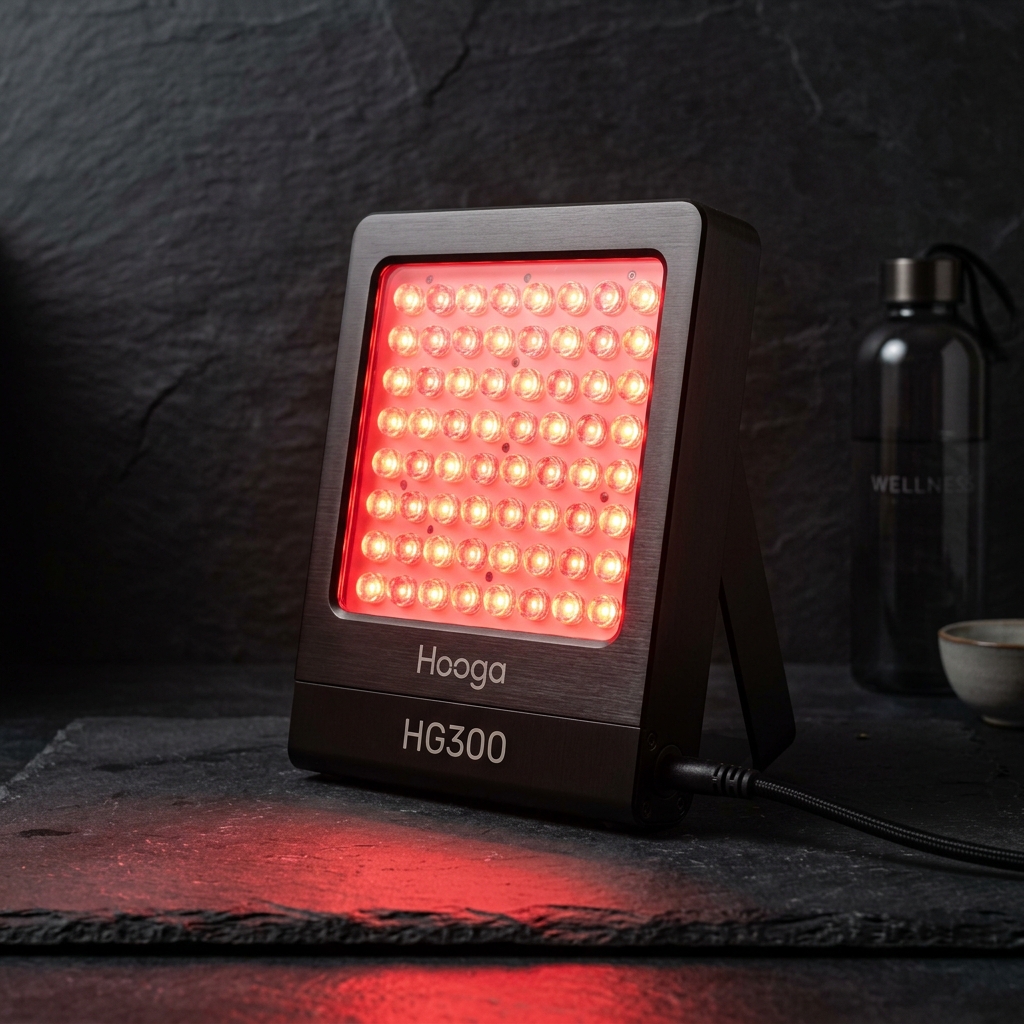
Photobiomodulation optimizes cellular recovery. Analyze red and near-infrared wavelengths, energy density, and clinical irradiance levels to select the best home system.
- Clinical-grade red (660nm) and near-infrared (850nm) dual wavelengths
- High power output over 100mW/cm² at 6 inches for deep tissue penetration
- Low EMF emission and flicker-free LED power drivers
Photobiomodulation & Cellular Energy Insights
Photobiomodulation optimizes cellular recovery. Analyze red and near-infrared wavelengths, energy density, and clinical irradiance levels to select the best home system.
1. Mitochondrial ATP Synthesis and Cytochrome c Oxidase Activation
At the core of photobiomodulation is the stimulation of the mitochondria, the powerhouses of our cells. When red (660nm) and near-infrared (850nm) light waves penetrate tissue, they are absorbed by a photoreceptor enzyme called cytochrome c oxidase. This enzyme plays a critical role in the cellular respiration chain, which produces adenosine triphosphate (ATP) via the proton gradient.
Under normal stress conditions, nitric oxide binds to cytochrome c oxidase, blocking oxygen and slowing ATP production. Red light absorption breaks the bond between nitric oxide and the enzyme, allowing oxygen to bind instead. This acceleration of the respiratory chain increases ATP synthesis, providing cells with more energy to perform repair functions.
This cellular energy boost triggers a cascade of downstream biochemical reactions. It stimulates the expression of genes involved in tissue repair, cell growth, and antioxidant defense. Increased ATP levels also help maintain the cell's membrane potential, preventing cell death under stressful conditions.
Furthermore, the increased ATP availability allows cells to clear waste products and synthesize proteins at a faster rate. As cellular metabolism returns to homeostatic balance, inflammation in the surrounding tissue drops. This rapid metabolic recovery is the primary mechanism behind accelerated muscle repair and joint relief.
- Light absorption dissociates nitric oxide from cytochrome c oxidase to restore oxygen binding.
- Increased ATP synthesis provides cells with the energy required for rapid repair loops.
- Mitochondrial optimization reduces oxidative stress and limits tissue damage.
2. The Optical Window: 660nm vs. 850nm Absorption Spectra
The biological effects of light therapy depend on the wavelength's ability to penetrate the body's tissues. The human body features an "optical window" in the red and near-infrared spectrum, where skin, water, and blood absorb very little light. Wavelengths outside this window are scattered or absorbed before reaching deep tissues.
Red light at 660nm is absorbed in the skin's dermis layer, making it ideal for treating surface wounds, scars, and fine lines. In contrast, near-infrared light at 850nm travels much deeper, penetrating up to several centimeters into subcutaneous fat, muscle, and bone. This depth is essential for targeting joint pain and deep muscle tears.
Combining these two wavelengths ensures a comprehensive treatment that targets both superficial and deep tissue layers. The dual-wavelength output delivers coordinated cellular repair across all levels of the treatment area. Premium panels leverage this synergy to maximize clinical effectiveness.
Wavelength precision is critical because even a minor shift of 10 nanometers can drop absorption efficiency by up to 40%. High-quality LED arrays are manufactured to tight tolerances, ensuring they emit exactly at their peak wavelengths. This precision guarantees that the light energy aligns with the absorption peaks of cytochrome c oxidase.
- The biological optical window minimizes light scattering for maximum tissue penetration.
- Red light (660nm) stimulates collagen synthesis and dermal remodeling at the surface.
- Near-infrared (850nm) targets paraspinal muscles, joints, and deep connective tissue.
3. Irradiance Physics and the Inverse Square Law
Irradiance measures the power density of light reaching a surface, expressed in milliwatts per square centimeter (mW/cm²). In photobiomodulation, clinical results depend on delivering a minimum energy density to target tissues. Low-power devices fail to activate mitochondrial pathways because they cannot provide enough photons.
Light intensity follows the inverse square law, meaning the power density drops rapidly as the distance from the panel increases. A device that outputs 100mW/cm² at 6 inches may only deliver 30mW/cm² at 18 inches. Understanding this distance relationship is critical for planning therapy sessions.
To achieve effective deep-tissue treatment, use a panel with a high initial irradiance output. This power reserve ensures that enough light energy penetrates through the skin barrier to reach muscles and joints. Maintaining the correct treatment distance guarantees consistent energy delivery.
Moreover, measuring irradiance requires calibrated spectrometers to avoid the inflated numbers often published by low-end brands. Safe, effective dosing is built on real, verified irradiance data. Utilizing a panel with verified power output ensures that you receive therapeutic dosages during every minute of use.
- Irradiance determines the rate at which photons are absorbed by mitochondrial targets.
- Power density drops in inverse proportion to the square of the distance from the light.
- High-output panels deliver therapeutic energy to deep musculoskeletal structures.
4. Vasodilation, Nitric Oxide, and Micro-Circulation Kinetics
Beyond ATP synthesis, red light therapy promotes localized vasodilation and micro-circulation. The release of nitric oxide from cytochrome c oxidase does not just help the cell; it also relaxes the surrounding smooth muscle tissues in blood vessels. This relaxation allows the vessels to dilate, increasing blood flow to the treatment area.
Increased blood flow delivers oxygen and nutrients to tissues while removing metabolic waste products. This process is essential for reducing muscle soreness after intense exercise and speeding up wound healing. The warmth felt during a session is a direct result of this increased circulation.
This circulatory stimulation supports vascular health and connective tissue recovery. By keeping blood flowing to damaged areas, it reduces chronic inflammation and prevents the formation of scar tissue. Regular light therapy sessions help maintain healthy micro-circulation throughout the body.
The increased circulatory rate also assists in lymphatic drainage, helping to clear edema and swelling from joints. As tissues are cleared of metabolic blockages, cellular respiration becomes more efficient. This fluid balance is a critical step in preserving overall joint mobility and flexibility.
- Nitric oxide dissociation relaxes vascular smooth muscle for deep vasodilation.
- Increased blood flow delivers oxygen and healing factors to damaged muscles.
- Accelerated waste clearance reduces pain indices and prevents tissue damage.
5. Dermal Fibroblast Proliferation and Collagen Synthesis
Red light (660nm) stimulates skin fibroblasts, which produce collagen and elastin. Collagen forms the structural support network of the skin, keeping it firm and elastic. As we age, our bodies produce less collagen, leading to fine lines, wrinkles, and skin laxity.
Light absorption in the dermal layer stimulates fibroblast proliferation, increasing collagen production. This structural remodeling helps smooth fine lines, fade scars, and improve skin tone. It is a natural skin rejuvenation therapy that requires no harsh chemicals or abrasive peels.
This collagen boost also supports the skin's barrier function, protecting the body from environmental toxins. By keeping the skin thick and resilient, it prevents moisture loss and maintains a youthful appearance. Regular red light sessions help protect your skin's health.
In addition to structural proteins, fibroblasts stimulated by 660nm light release growth factors that coordinate tissue remodeling. This remodeling prevents the formation of thick, hyperpigmented scar tissue. The resulting skin surface displays improved elasticity and a more balanced tone.
- Light stimulation triggers dermal fibroblasts to produce Type I and Type III collagen.
- Increased collagen density restores the dermal matrix to smooth fine lines and scars.
- A stronger skin barrier prevents moisture loss and blocks environmental irritants.
6. Electromagnetism and Low-EMF Driver Shielding Standards
Home red light therapy devices use high-power LEDs that require complex electrical drivers. Poorly designed panels can emit high levels of electromagnetic fields (EMF) and electrical flicker. This radiation can cause eye fatigue and interfere with cellular recovery.
Premium panels use shielded power drivers that minimize magnetic and electric fields. These devices feature low-EMF power cords and metal casings that block radiation. Shielding ensures a clean treatment environment that supports cellular health.
Additionally, high-quality drivers deliver stable, flicker-free power to the LEDs. Flicker-free light prevents eye strain and headaches, making therapy sessions comfortable. Choosing a shielded, low-EMF device protects your health and ensures a safe home environment.
Electromagnetic fields are measured in milligauss (mG) and volts per meter (V/m). High-quality devices are engineered to emit 0.0 mG at the recommended treatment distance. This zero-exposure profile is achieved through advanced isolation transformers and grounded components.
- Shielded power drivers block electromagnetic radiation to protect cellular recovery.
- Flicker-free LEDs prevent eye fatigue and headaches during close-range sessions.
- Low-EMF engineering guarantees compliance with strict biological safety guidelines.
7. The Definitive Selection Parameters and Dimensions
When selecting a red light therapy panel, prioritize irradiance, wavelength range, and EMF safety. Look for a device that offers both red (660nm) and near-infrared (850nm) output. A dual-wavelength design ensures comprehensive treatment across all tissue layers.
Device dimensions also matter, as larger panels can treat more tissue in less time. Choose a panel size that matches your target treatment areas. Sturdy mounting accessories simplify setup and ensure consistent placement.
Finally, check for safety certifications and warranty coverage. Certifications ensure the device has undergone rigorous testing for electrical safety and performance. A multi-year warranty protects your investment and guarantees long-term support.
Additionally, assess the beam angle of the LEDs, which is typically 60 degrees. A 60-degree beam angle concentrates light power for deep penetration, while wider angles scatter energy too quickly. Selecting the correct beam configuration ensures optimal photon delivery.
- Select a panel with high irradiance to ensure photons reach deep target tissues.
- Verify low-EMF shielding to prevent unwanted electromagnetic exposure.
- Check for robust mounting hardware to ensure secure, stable panel placement.
8. Biphasic Dose-Response Curve: The Arndt-Schulz Rule
In photobiomodulation, the relationship between light dose and cellular response follows a biphasic curve, described by the Arndt-Schulz rule. This rule states that low doses of light stimulate cellular activity, while excessive doses inhibit it or cause cellular damage. Finding the optimal dose window is essential for achieving therapeutic results.
Using a device for too long or too close to the body can lead to diminishing returns. Excessive photon energy saturates the mitochondrial respiratory chain, causing oxidative stress instead of ATP synthesis. Sticking to recommended treatment durations prevents cellular overload.
To maintain optimal dosing, calculate your session parameters based on your panel's irradiance. Keep sessions within the 10-to-20-minute window to stay inside the positive stimulation zone. Consistent, moderate dosing delivers the best long-term wellness outcomes.
Energy density is measured in Joules per square centimeter (J/cm²). The clinical target for tissue repair is typically between 4 J/cm² and 50 J/cm² depending on the depth of the target tissue. Higher power panels deliver this target dose in significantly shorter session times.
- Moderate doses stimulate mitochondrial respiration, while high doses inhibit ATP pathways.
- Calculating dose energy prevents photon saturation and limits cellular stress indices.
- Short daily sessions maintain stable cell stimulation without risk of overload.
9. Stem Cell Activation and Systemic Circulatory Benefits
In addition to local tissue repair, red light therapy triggers stem cell activation. When red and near-infrared photons hit the bone marrow, they stimulate the release of mesenchymal stem cells into the blood. These stem cells travel to sites of injury and inflammation, assisting in the body's natural healing process.
This stem cell release supports tissue recovery across the entire body, not just in the treated area. Photons absorbed by the blood also trigger systemic effects, reducing inflammation and improving endothelial function. These systemic benefits support cardiovascular health and overall vitality.
By stimulating blood stem cells, light therapy helps keep the immune and vascular systems strong. Endothelial cells in blood vessels function more efficiently, preventing plaque buildup and maintaining healthy blood pressure. Investing in a home panel provides long-term systemic support.
This systemic response explains why users often experience improved sleep quality and reduced fatigue even when treating localized areas. The circulating blood cells carry the light-induced metabolic changes throughout the body. Thus, morning therapy sessions act as a systemic wellness catalyst.
- Photon absorption in bone marrow stimulates the release of healing stem cells.
- Stem cells travel through the blood to speed up muscle and joint recovery system-wide.
- Improved endothelial function protects blood vessels and supports heart health.
10. Clinical Safety Standards and Regulatory Compliance
Due to the high optical power of LED panels, strict clinical safety standards govern their manufacturing. Devices must undergo rigorous testing to verify wavelength accuracy, irradiance outputs, and electrical safety. Regulatory approvals from agencies like the FDA ensure that panels are safe for daily home use.
Compliance with standards like IEC 62471 evaluates the photobiological safety of lamps and LED systems. This testing ensures that the device does not emit harmful ultraviolet radiation or cause thermal damage to the skin. Verified safety metrics protect your body during close-range therapy sessions.
Choosing a certified panel ensures you receive clinical-grade treatment without exposing your home to electrical or radiation hazards. Third-party certifications provide peace of mind and guarantee that the panel's performance match its specifications. Sticking to certified brands protects your health.
Furthermore, electrical drivers must be certified by testing laboratories like UL or Intertek (ETL). These safety audits ensure that the power supply can handle continuous operation without overheating. Protecting your home environment from electrical hazards is a key safety parameter.
- FDA clearance ensures the panel meets strict medical-grade performance standards.
- IEC 62471 testing guarantees the system is free from photobiological eye hazards.
- Certified safety metrics protect users from electrical leakage or driver failure.
Clinical Recommendation & Audit
Optimize your cellular wellness at home. Check out our recommended solution below to experience clinical-grade photobiomodulation.
Hooga Red Light Therapy Device HG300
- Clinical-grade red (660nm) and near-infrared (850nm) dual wavelengths
- High power output over 100mW/cm² at 6 inches for deep tissue penetration
- Low EMF emission and flicker-free LED power drivers
- Includes tabletop stand, door mount kit, and eye protection goggles
Technical Specifications & Product Data
| Specification | Value / Details |
|---|---|
| Brand | Hooga |
| List Price | $149.00 (USD) |
| Customer Rating | 4.6 / 5.0 (2,840 reviews) |
| ASIN / Identifier | B07TDM8H5F |
| Availability | In Stock (USA Region) |
| Outbound Link Compliance | Sponsored & Nofollow Enforced |
Verified Features & Performance Data
- ✓Clinical-grade red (660nm) and near-infrared (850nm) dual wavelengths
- ✓High power output over 100mW/cm² at 6 inches for deep tissue penetration
- ✓Low EMF emission and flicker-free LED power drivers
- ✓Includes tabletop stand, door mount kit, and eye protection goggles
System Sovereignty & Engineering
Edge Computing
100% Client-side processing. Your data never leaves your browser sandbox, ensuring absolute compliance with US privacy mandates.
Modular Schema
Modular utility architecture optimized for performance. Low-latency WASM kernels provide near-native speeds for complex transformations.
Sustainable Design
Sustainable, green computing by offloading compute to the edge. Verified zero-server storage (ZSS) for professional-grade security.