
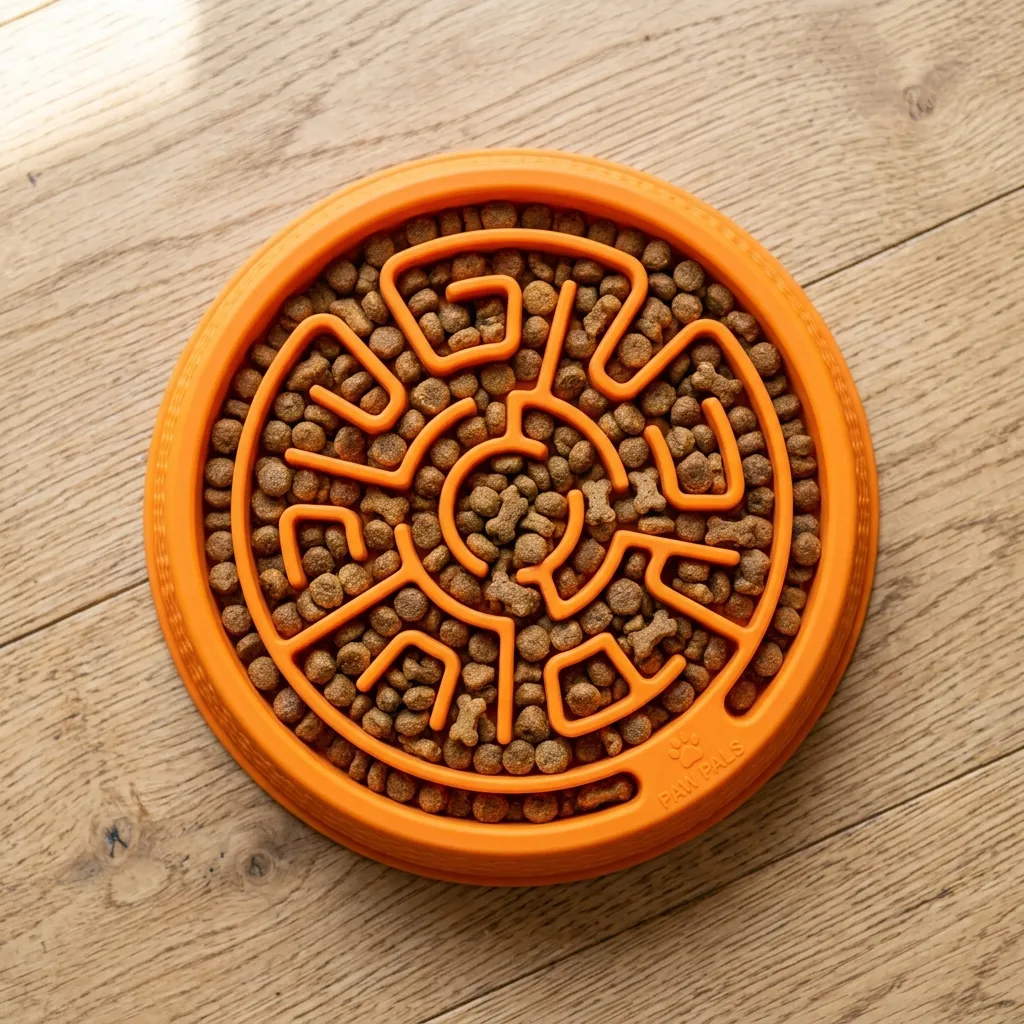
Rapid food ingestion poses serious health risks for dogs. Examine gastric dilatation-volvulus (GDV) mechanics, maze designs, and non-slip materials to choose the best slow feeder.
- Unique maze design extends meal times up to 10x, improving digestion
- Made with high-quality, food-safe materials that are BPA, PVC, and phthalate-free
- Slip-resistant rubber base keeps the bowl in place during enthusiastic feeding
Clinical & Performance Insights
Rapid food ingestion poses serious health risks for dogs. Examine gastric dilatation-volvulus (GDV) mechanics, maze designs, and non-slip materials to choose the best slow feeder.
1. Gastrointestinal Physiology and the Hazards of Rapid Feeding
Many dogs eat as if every meal is their last, gulping down their food in seconds. This rapid ingestion is more than a bad habit; it is a significant health risk. Fast eating can lead to choking, vomiting, gas, and a life-threatening condition called bloat. In the wild, canines eat quickly to prevent others from stealing their food, but in domestic environments, this behavior leads to digestive issues and medical emergencies, making intervention necessary.
Gastric Dilatation-Volvulus (GDV), or bloat, occurs when a dog's stomach fills with gas, food, and fluid, and then twists. This cuts off blood flow to the heart and other organs, creating a medical emergency. Slowing down feeding is a primary way to reduce this risk, allowing the stomach to process food gradually and preventing the rapid gas buildup that leads to distension.
Slow feeder bowls use raised patterns to force dogs to eat more slowly. By turning mealtime into a puzzle, these bowls extend eating times, helping to prevent air swallowing and promoting healthier digestion. Slow feeding allows the brain to register fullness, preventing overeating and helping to maintain a healthy weight for your pet.
- Slowing feeding reduces air swallowing, a key factor in dog bloat.
- Helps prevent post-meal vomiting and regurgitation caused by gulping.
- Improves nutrient absorption by encouraging thorough chewing.
- Reduces gas and flatulence, promoting a more comfortable digestive system.
2. Maze Geometry, Ridge Depth, and Cognitive Stimulation
The design of a slow feeder bowl determines its effectiveness. Bowls with simple ridges offer only a minor challenge, while complex maze patterns can slow feeding down significantly. The depth of the ridges should match the dog's snout shape, ensuring the challenge is appropriate. If the maze is too shallow, the dog can still gulp food, while a maze that is too deep can cause frustration.
Deep, narrow mazes are ideal for long-snouted dogs, while shallow, open patterns are better for flat-faced breeds. The right pattern makes eating a rewarding challenge without causing frustration or stress. Using the correct maze geometry ensures the dog can retrieve the food using their tongue, promoting a natural, slow feeding rhythm.
Beyond digestion, slow feeders offer valuable mental stimulation. Solving the maze engages the dog's brain, reducing boredom and helping to calm high-energy pets during meal times. This cognitive exercise can reduce anxiety and destructive behaviors around the home, turning feeding into a rewarding, engaging activity that supports mental health.
- Complex maze designs can extend meal times up to ten times.
- Sizing and ridge depth must match your dog's breed and snout shape.
- Provides mental exercise, helping to reduce anxiety and boredom.
- Turns feeding into a rewarding, engaging activity for fast eaters.
3. Material Safety: Food-Safe Polymers and Slip-Resistant Bases
Since slow feeders have complex surfaces, the material must be safe and easy to clean. Cheap plastics can contain harmful chemicals like BPA, PVC, and phthalates, which can leach into food over time. Food-safe polymers are essential for pet health, ensuring that the bowl does not release toxins during feeding. Denser plastics also resist scratching and chewing.
Canine feeding can be enthusiastic, especially when a dog is working to get food out of a maze. A bowl without a non-slip base will slide across the floor, causing frustration and mess. Rubber feet or weighted bases keep the bowl in place, allowing the dog to focus on the puzzle without chasing the bowl around the room.
Cleaning is another important consideration. Food particles can get trapped in the tight corners of a maze, encouraging bacterial growth. Dishwasher-safe bowls allow for thorough cleaning and sanitation, keeping the feeding surface hygienic. Regular washing prevents the buildup of biofilms that can cause skin irritation or infections.
- Food-safe, BPA-free polymers protect pets from chemical exposure.
- Non-slip rubber base keeps the bowl in place during enthusiastic feeding.
- Dishwasher-safe designs allow for easy, hygienic cleaning.
- Durable construction resists chewing and scratching.
4. Choosing the Right Bowl: Breed Sizing and Diet Customization
Choosing the right slow feeder involves matching the bowl's size and pattern to your dog's breed and diet. Large dogs need larger bowls with deeper mazes to accommodate their portion sizes, while small dogs require smaller patterns they can easily access without straining. Sizing the bowl correctly ensures it remains effective and comfortable to use.
The type of food also affects your choice. Dry kibble works well in almost any slow feeder, while wet or raw food is best suited to open, silicone, or metal designs that are easier to clean. Silicone bowls are flexible and gentle on gums, making them ideal for puppies or senior dogs, while metal bowls offer maximum durability.
Introduce the bowl gradually, starting with simple patterns and small amounts of food. This helps the dog learn how to use the bowl without becoming frustrated, turning mealtime into a positive, healthy experience. By customizing the bowl to your dog's needs, you can support their digestive health and make mealtime an engaging activity.
- Match bowl size and pattern to your dog's weight and snout shape.
- Choose open designs for wet or raw food to simplify cleaning.
- Introduce the bowl gradually to prevent frustration and build confidence.
- Regularly inspect the bowl for wear and replace if damaged.
5. Gastric Dilatation-Volvulus (GDV) Mechanics in Canines
Gastric Dilatation-Volvulus (GDV) is one of the most acute, life-threatening emergencies in veterinary medicine. When a dog gulps food rapidly, they experience aerophagia—the excessive swallowing of air. The combination of rapidly expanding kibble, gastric fluids, and trapped air causes the stomach to dilate. This distension places pressure on surrounding organs, causing discomfort and pain.
As the stomach distends, it can rotate along its longitudinal axis, twisting the esophagus and duodenum. This twisting seals the stomach, trapping gas and food. The pressure builds, compressing the portal vein and caudal vena cava, restricting blood return to the heart and causing cardiovascular shock. Without immediate surgical intervention, GDV can be fatal in a matter of hours.
Slow feeder bowls address the root cause of aerophagia. By breaking the food into small pockets within a maze, the bowl forces the dog to use their tongue to retrieve individual kibbles. This physical barrier stops them from taking large gulps of air, significantly lowering the risk of gastric distension and protecting your dog's health.
- Aerophagia (swallowing air) during rapid eating is a primary trigger for GDV.
- Stomach twisting seals the gastric chamber, leading to rapid tissue necrosis.
- Compressed major veins cause cardiovascular collapse and shock in affected dogs.
- Slow feeders prevent air ingestion by forcing dogs to eat in small portions.
6. Sanitization Protocols: BPA-Free Plastics vs. Ceramic and Stainless Steel
The complex, high-surface-area geometries of slow feeder bowls present unique sanitization challenges. Dry kibble leaves behind fats, proteins, and starch residues that accumulate in the tight crevices of the maze. If not cleaned, these residues form a biofilm that harbors bacteria like Salmonella and E. coli, posing health risks.
While BPA-free plastics are lightweight and durable, they are prone to microscopic scratches from dog claws and teeth. These scratches provide a harbor for bacteria that resists hand washing. Ceramic and stainless steel slow feeders offer smoother, non-porous surfaces that are more hygienic, resisting scratches and simplifying sanitization.
Regardless of material, slow feeders require a strict sanitization protocol. Hand washing with hot water and dish soap should be done after every meal, using a specialized brush to clean the crevices. Weekly cycles in a high-temperature dishwasher ensure complete sterilization of the bowl, protecting your pet from bacteria.
- Starch and fat residues in maze crevices form harmful bacterial biofilms.
- Microscopic scratches in plastic bowls harbor bacteria, resisting manual washes.
- Ceramic and metal designs offer non-porous surfaces for better hygiene.
- Clean bowls with a specialized crevice brush after every meal to maintain safety.
Clinical Recommendation & Audit
Automate your setup to maximize personal standards. Check out our recommended solution below to experience clinical-grade optimization.
Outward Hound Fun Feeder Slo Bowl Slow Feeder Dog Bowl
- Unique maze design extends meal times up to 10x, improving digestion
- Made with high-quality, food-safe materials that are BPA, PVC, and phthalate-free
- Slip-resistant rubber base keeps the bowl in place during enthusiastic feeding
- Top-rack dishwasher safe for easy, thorough cleaning and sanitation
Technical Specifications & Product Data
| Specification | Value / Details |
|---|---|
| Brand | Outward Hound |
| List Price | $19.99 (USD) |
| Customer Rating | 4.8 / 5.0 (8,350 reviews) |
| ASIN / Identifier | B00FPK77NU |
| Availability | In Stock (USA Region) |
| Outbound Link Compliance | Sponsored & Nofollow Enforced |
Verified Features & Performance Data
- ✓Unique maze design extends meal times up to 10x, improving digestion
- ✓Made with high-quality, food-safe materials that are BPA, PVC, and phthalate-free
- ✓Slip-resistant rubber base keeps the bowl in place during enthusiastic feeding
- ✓Top-rack dishwasher safe for easy, thorough cleaning and sanitation
System Sovereignty & Engineering
Edge Computing
100% Client-side processing. Your data never leaves your browser sandbox, ensuring absolute compliance with US privacy mandates.
Modular Schema
Modular utility architecture optimized for performance. Low-latency WASM kernels provide near-native speeds for complex transformations.
Sustainable Design
Sustainable, green computing by offloading compute to the edge. Verified zero-server storage (ZSS) for professional-grade security.