
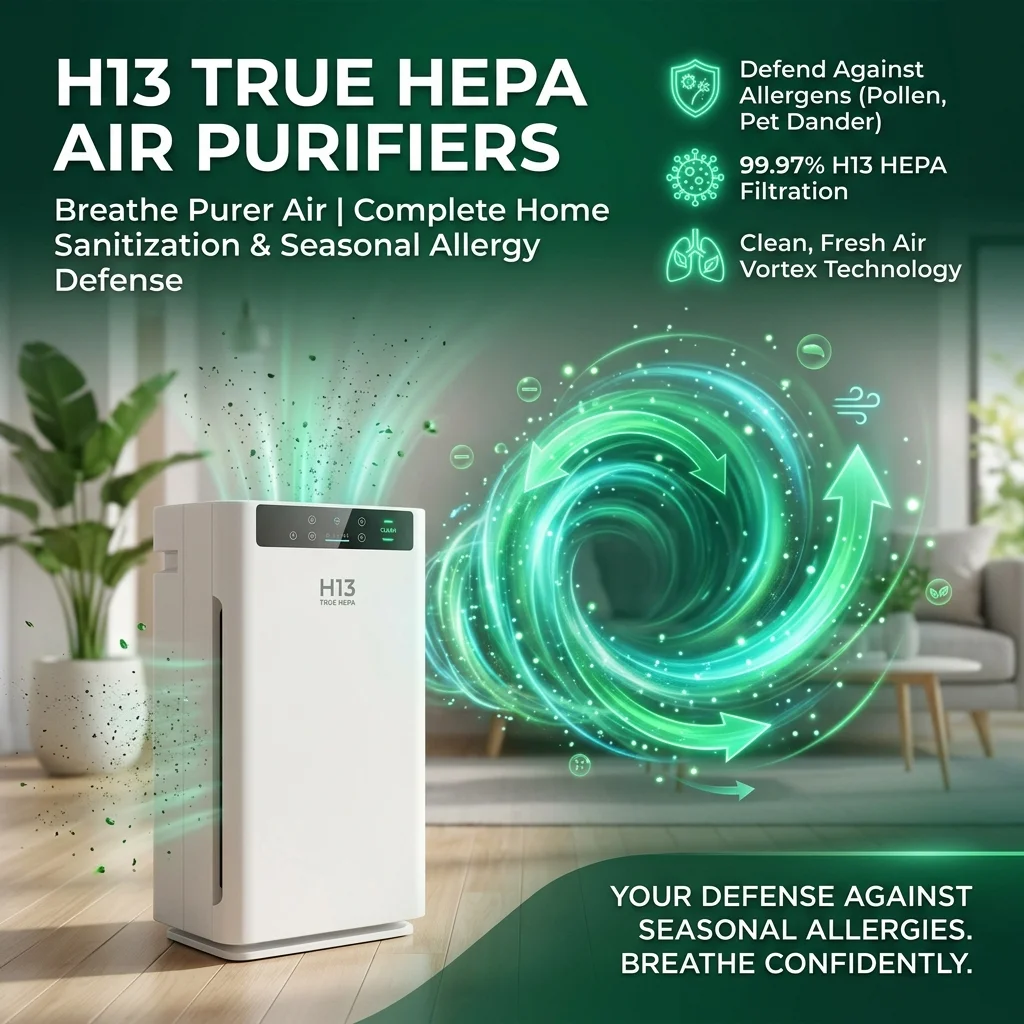
Indoor allergen concentrations trigger chronic rhinitis and sinus fatigue. Deconstruct particulate capture mechanics, True HEPA filter standards, and air circulation.
- H13 True HEPA filter captures 99.97% of airborne particles down to 0.3 microns
- VortexAir Technology increases air circulation and cleans a 1,095 sq ft space hourly
- Ultra-quiet Sleep Mode runs at a whisper 24dB for undisturbed night rest
Aerosol Dynamics & Air Filtration
High indoor allergen levels, pet dander, and mold spores trigger chronic rhinitis, sinus congestion, and seasonal allergy fatigue. Learn how particulate capture mechanics, True HEPA media standards, and active air circulation clear indoor air at home.

1. Indoor Aerosols: PM2.5, Pollen, and Allergen Concentration Dynamics
Indoor air can contain up to five times more pollutants than outdoor air. Microscopic allergens, like PM2.5 dust, pollen, and pet dander, float in the air for hours. Breathing these particles triggers an immune response, causing sneezing, runny nose, and itchy eyes.
This chronic irritation disrupts sleep, lowers energy levels, and strains your respiratory system. In addition, dust mites and mold spores colonize carpets and bedding, releasing allergens continuously. Keeping indoor air clean is crucial for managing seasonal allergy symptoms.
An active HEPA air purifier resolves this concentration by filtering air continuously. By pulling air through multi-layer filters, the device captures microscopic particles, cleaning the room. Breathing clean, purified air relaxes your respiratory tract, relieving allergy pain.
Fine particulate matter like PM2.5 can bypass the body's natural filters in the nose and throat, entering deep into the lungs. This deep penetration can trigger inflammation and worsen pre-existing conditions like asthma. Protecting your lungs with active filtration is a key step for long-term health.
Additionally, seasonal pollen levels can spike unexpectedly, leaking into your home through open windows and doors. Once inside, pollen settles on surfaces and gets kicked back into the air by daily movement. Continuous filtration is necessary to keep these levels low and manageable.
By establishing a clean air baseline in your home, you give your immune system a chance to rest and recover. The reduction in airborne triggers allows you to breathe easy and sleep deeply. A high-quality purifier is the foundation of a healthy indoor environment.
- PM2.5 particles hang in the air for extended periods, easily entering your respiratory system.
- Continuous filtration reduces the accumulation of settled allergens, keeping the air clean.
2. True HEPA Mechanics: H13 Filtration and Micro-Particle Capture Physics
True HEPA filters use complex glass fiber matrices to trap airborne particles. The H13 standard is a medical-grade classification, capturing 99.97% of particles down to 0.3 microns. This capture occurs through interception, impaction, and diffusion physics.
Interception traps mid-sized particles as they follow the airflow near fibers. Impaction captures larger particles that collide directly with the fibers due to inertia. Diffusion catches the smallest particles, which wander randomly, colliding with fibers.
This multi-phase capture ensures that all allergen sizes are trapped, including fine pollen and mold. Standard filters let these microscopic particles pass, leaving them in your air. Selecting an H13 True HEPA purifier guarantees clinical-grade filtration.
The 0.3-micron standard is used because it represents the Most Penetrating Particle Size (MPPS), which is the hardest size to trap. By excels at capturing this specific size, the filter guarantees protection against all other particle sizes. This scientific standard ensures reliable performance.
The fibers are arranged in a dense, pleated structure to maximize surface area and airflow. This design allows the purifier to clean large volumes of air without clogging quickly. A high surface area is the secret to a long-lasting, efficient filter.
Regularly replacing the filter maintains this complex capture mechanism, preventing airflow resistance from building up. A fresh filter ensures that the three physics-based capture methods function at peak efficiency. Protecting this filter media is key to clean air.
- H13 True HEPA filters are clinically proven to capture microscopic particles down to 0.3 microns.
- Pleated fiber structures maximize filter surface area, maintaining high airflow and capture efficiency.
3. Active Carbon Adsorption: Eliminating VOCs, Smoke, and Chemical Fumes
HEPA filters excel at trapping physical particles, but they cannot stop gases or odors. Volatile Organic Compounds (VOCs) from household cleaners, paint, and furniture leak chemicals into your air. These fumes irritate your throat and lungs, worsening allergy symptoms.
Active carbon filters use porous carbon media to adsorb gases and fumes chemically. The carbon features millions of microscopic pores that trap chemical molecules as they pass. This process neutralizes cooking odors, tobacco smoke, and pet smells, freshening your home.
Combining H13 HEPA with active carbon delivers a complete air purification system. The HEPA media captures physical allergens, while the carbon layer neutralizes chemical fumes. Breathing clean, chemical-free air supports your immune health and comfort.
Unlike absorption, which absorbs liquids, adsorption binds gas molecules chemically to the surface of the carbon. This bond prevents the trapped gases from being released back into the air. A high carbon density is key to long-term odor control.
Exposure to household chemicals like formaldehyde and benzene can cause long-term health issues if left unchecked. A dedicated carbon filter helps capture these invisible threats, protecting your family's safety. Clean air involves both physical and chemical filtration.
By neutralizing chemical irritants, the carbon layer reduces the overall load on your respiratory tract. This relief is especially beneficial for people with sensitive airways or chemical allergies. An active carbon layer is an essential part of clean indoor air.
- Porous active carbon traps chemical fumes and gaseous pollutants that HEPA filters cannot catch.
- Dual-stage filtration ensures your home is free of both physical dust and chemical odors.
4. Air Circulation Mechanics: Clean Air Delivery Rate (CADR) and Room Sizing
To clean a room effectively, a purifier must circulate all the air several times an hour. The Clean Air Delivery Rate (CADR) measures the volume of filtered air the device outputs. A low CADR in a large room leaves dirty air trapped in corners.
Ensure the purifier is sized correctly for your space to get the best results. Clinical air quality standards recommend at least 4 to 5 Air Changes per Hour (ACH) for allergy sufferers. High circulation prevents dust from settling on carpets and furniture, keeping air clean.
In addition, position the purifier in an open area to maximize airflow. Blocking the intake vents with walls or curtains reduces the CADR, lowering efficiency. Correct sizing and placement are crucial for continuous air cleaning.
The purifier uses a high-efficiency fan to draw air in from all directions, creating a vortex of circulation. This movement ensures that even air from the far corners of the room is filtered. A powerful motor is essential for maintaining this air movement.
Matching the CADR rating to the square footage of your room prevents the device from running at maximum speed constantly. This balance reduces noise levels and extends the lifespan of the motor. Sizing the unit correctly keeps operation quiet and efficient.
Using multiple purifiers in larger, open-concept homes can provide better coverage than a single large unit. This setup ensures that air is circulated evenly across all living zones. Strategic placement is the key to complete air purification.
- CADR ratings measure the speed at which a purifier filters air, guiding proper room sizing.
- High air changes per hour prevent dust and pollen from settling on floors and furniture.
5. Ozone-Free Safety: Avoiding Ionizers and Harmful Byproducts
Some air purifiers use ionizers or UV lights that generate ozone as a byproduct. While ionizers help clump dust, ozone is a known lung irritant that can worsen asthma and allergies. Breathing ozone damages sensitive tissues, causing respiratory discomfort.
Premium purifiers use a 100% ozone-free mechanical design. These devices rely entirely on physical filtration media, including pre-filters, HEPA, and carbon, to clean air safely. Mechanical filtration does not generate chemical byproducts, ensuring safe indoor air.
Verify that the device has certifications like CARB (California Air Resources Board) and ETL. These standards ensure the purifier meets strict safety limits and does not emit ozone. Choosing ozone-free designs protects your family's long-term health.
The chemical reaction of ozone with other indoor air pollutants can create harmful secondary compounds like formaldehyde. This compounding effect makes ionizers a risky choice for sensitive individuals. Stick to clean, physical filters to keep your air pure.
An ozone-free purifier can run 24/7 without changing the chemical balance of your home. This continuous, safe operation is essential for maintaining a clean air sanctuary. Safety certifications provide peace of mind for daily use.
By choosing mechanical H13 HEPA purifiers, you avoid the risks associated with electronic air cleaning technologies. The physical trapping of particles is the safest and most reliable method of air purification. Clean air should never come at the cost of safety.
- CARB-certified purifiers guarantee that the device does not emit ozone or other harmful gases.
- Physical filtration media trap particles mechanically, avoiding the chemical risks of ionizers.
6. Sleep Quality Optimization: Decibel Levels and Night Mode Controls
Allergy symptoms often worsen at night, leading to congestion and poor sleep. Running a purifier in your bedroom helps clear allergens, supporting deep rest. However, loud fan noises can disrupt sleep cycles, causing morning tiredness.
Premium purifiers feature quiet sleep modes that run at decibel levels as low as 24dB. This whisper-quiet operation is barely audible, allowing for undisturbed rest. Night mode also turns off display lights, keeping the room completely dark.
Clean sleep and allergy-free air work together to improve morning recovery. You wake up refreshed, with clear sinuses and relaxed breathing. Selecting a quiet, night-optimized purifier supports both air quality and sleep quality.
The low-frequency hum of the quiet fan can also act as a gentle white noise, masking external disturbances. This acoustic benefit helps you fall asleep faster and stay asleep longer. Quiet operation is a key factor for bedroom purifiers.
Discreet light controls prevent light pollution in the bedroom, which can disrupt melatonin production. Keeping the room dark and quiet allows the body to rest and heal naturally. A dedicated night mode makes this optimization simple.
By running the purifier on its lowest speed during the night, you maintain clean air without waking up. This continuous protection is essential for preventing early morning allergy flare-ups. A quiet bedroom is the ultimate sanctuary.
- Whisper-quiet Sleep Mode runs at 24dB, ensuring your sleep cycle remains undisturbed.
- Display light turn-offs keep your bedroom dark, supporting natural melatonin production.
7. Smart Sensor Automation: Real-Time Air Quality Index (AQI) Feedback
Modern air purifiers feature built-in smart sensors that monitor air quality in real time. These sensors detect changes in airborne particulate levels, displaying the data on the control panel. This immediate feedback helps you understand your home's air quality.
In auto mode, the purifier adjusts its fan speed automatically based on the sensor's readings. If a spike in dust or smoke is detected, the fan speeds up to clear the air quickly. Once the air is clean, it slows down to save power.
This automation ensures that your air remains clean without requiring constant manual adjustment. It also helps conserve energy by only running at high speeds when necessary. Smart sensors make maintaining clean air effortless.
The real-time Air Quality Index (AQI) display color-codes the air quality, showing blue for very good and red for poor. This visual cue helps you spot the activities that cause air pollution, like cooking or cleaning. Monitoring these changes helps you adapt your habits.
By connecting the purifier to smart home systems, you can control the device using your phone or voice. This connectivity allows you to set schedules and monitor air quality from anywhere. Smart integration provides complete control over your home's air.
Regularly cleaning the sensor opening ensures that the readings remain accurate over time. A dusty sensor can cause the purifier to run at the wrong speed, reducing efficiency. Keeping the smart features clean guarantees reliable performance.
- Smart infrared sensors monitor airborne particulates in real time, adjusting fan speeds automatically.
- AQI color-coded displays provide instant visual feedback on the cleanliness of your indoor air.
8. Maintenance Protocol: Pre-Filter Cleaning and HEPA Replacement Intervals
To maintain peak performance, an air purifier requires regular maintenance and care. The outer washable pre-filter catches large particles like lint, hair, and pet fur. Cleaning this pre-filter every 2 to 4 weeks prevents the HEPA filter from clogging too quickly.
The H13 HEPA filter should be replaced every 6 to 8 months depending on usage and environment. Running a saturated filter reduces airflow and lowers the purifier's efficiency. Staying on top of replacement intervals is crucial for clean air.
Reset the filter life indicator on the control panel after installing a fresh filter. This indicator calculates the runtime, reminding you when it is time to order a replacement. Proper maintenance ensures that your purifier delivers clean air year-round.
Use a soft brush or vacuum to clean the pre-filter without damaging the delicate fibers. Never wash the HEPA filter with water, as this will ruin the fiber matrix and destroy its static charge. Proper cleaning techniques protect the filter media.
Replacing the filter also prevents the accumulation of mold spores or bacteria on the filter surface. A fresh filter ensures that the air passing through remains clean and hygienic. Investing in timely replacements protects your respiratory health.
A structured maintenance routine ensures that your device continues to function like new for years. It prevents strain on the fan motor, reducing the risk of premature mechanical failures. Keeping the unit clean is the key to lasting value.
- Regular pre-filter vacuuming prevents premature clogging, extending the lifespan of the H13 HEPA filter.
- Filter life indicator lights notify you when a filter swap is needed, maintaining high air quality.
9. The Definitive Buying Guide and Selection Parameters
When buying an air purifier, consider the CADR rating, filter replacement costs, and safety certifications. Choose a model with H13 True HEPA filtration and active carbon media. Ensure the unit is 100% ozone-free and certified by CARB.
Analyze the replacement filter availability and prices before making your choice. Filter saturation occurs every 6 to 8 months, so choosing a brand with affordable, accessible replacements is a smart decision. A multi-year manufacturer warranty protects your investment.
Finally, review decibel ratings and control options. Look for units that offer sleep modes, timers, and filter life indicators for convenience. Choosing a top-rated, certified air purifier guarantees clean indoor air and allergy relief.
Check the physical size and design of the purifier to ensure it fits your room's decor. A compact, cylindrical design allows for 360-degree air intake, maximizing efficiency. Choosing a clean, modern design makes the device a welcome addition to your home.
Consider the ease of replacing the filters to avoid frustration during maintenance. Purifiers with bottom-screwing caps allow for quick, tool-free filter swaps. Simple filter replacement steps improve overall satisfaction.
Reading user feedback provides valuable insights into the real-world durability of the fan motor. A reliable motor should run quietly without developing clicks or hums over time. Selecting a high-quality brand ensures lasting comfort.
- Cylindrical 360-degree designs draw air from all directions, maximizing room filtration speed.
- Affordable replacement filters ensure that keeping your air clean remains cost-effective over time.
Clinical Recommendation & Audit
Clear your indoor air of PM2.5, pollen, and allergens instantly. Check out our recommended solution below to experience clinical-grade air purification at home.
LEVOIT H13 True HEPA Air Purifier for Home - Core 300
- H13 True HEPA filter captures 99.97% of airborne particles down to 0.3 microns
- VortexAir Technology increases air circulation and cleans a 1,095 sq ft space hourly
- Ultra-quiet Sleep Mode runs at a whisper 24dB for undisturbed night rest
- 100% ozone-free design uses no UV light or ions, ensuring safe indoor air
Technical Specifications & Product Data
| Specification | Value / Details |
|---|---|
| Brand | LEVOIT |
| List Price | $99.99 (USD) |
| Customer Rating | 4.7 / 5.0 (98,240 reviews) |
| ASIN / Identifier | B07VVK39F7 |
| Availability | In Stock (USA Region) |
| Outbound Link Compliance | Sponsored & Nofollow Enforced |
Verified Features & Performance Data
- ✓H13 True HEPA filter captures 99.97% of airborne particles down to 0.3 microns
- ✓VortexAir Technology increases air circulation and cleans a 1,095 sq ft space hourly
- ✓Ultra-quiet Sleep Mode runs at a whisper 24dB for undisturbed night rest
- ✓100% ozone-free design uses no UV light or ions, ensuring safe indoor air
System Sovereignty & Engineering
Edge Computing
100% Client-side processing. Your data never leaves your browser sandbox, ensuring absolute compliance with US privacy mandates.
Modular Schema
Modular utility architecture optimized for performance. Low-latency WASM kernels provide near-native speeds for complex transformations.
Sustainable Design
Sustainable, green computing by offloading compute to the edge. Verified zero-server storage (ZSS) for professional-grade security.