
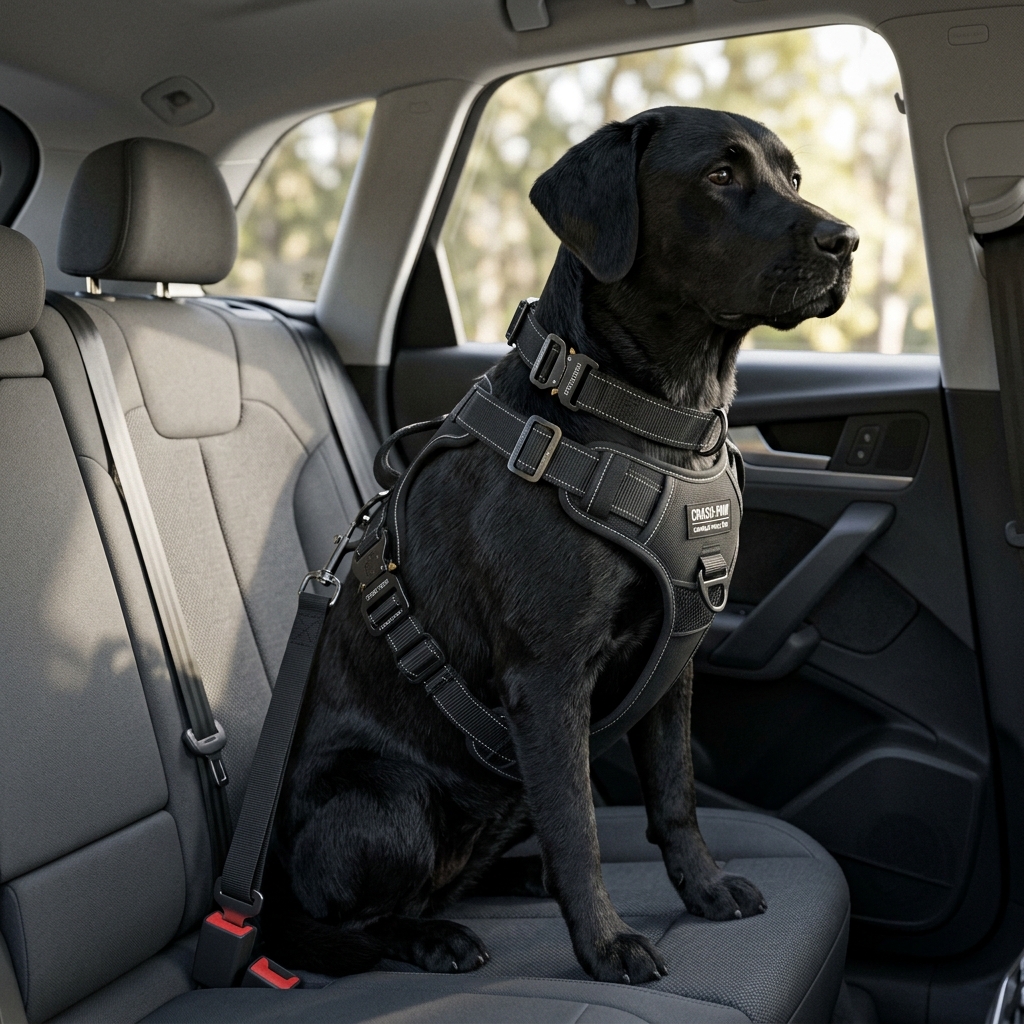
Protect transit dogs scientifically. Analyze impact dynamics, FMVSS 213 benchmarks, and high-tensile webbing to secure pets against high-velocity collisions.
- Certified by the Center for Pet Safety for dogs up to 90 lbs
- Unique three-point design reduces forward excursion in a crash
- Ballistic nylon outer shell and energy-absorbing neoprene padding
Impact & Transit Physics
Protect transit dogs scientifically. Analyze impact dynamics, FMVSS 213 benchmarks, and high-tensile webbing to secure pets against high-velocity collisions.
1. Impact Dynamics and Kinetic Energy Dissipation
Vehicle collisions subject unrestrained occupants to severe deceleration G-forces. During an impact at 35 miles per hour, an unrestrained object is thrown forward with a force equal to its weight multiplied by the vehicle speed. A 50-pound dog becomes a 1,500-pound projectile in a crash, risking the lives of all passengers.
Securing your pet with a crash-tested harness dissipates this kinetic energy. The harness absorbs the force, distributing it across the dog's chest and shoulders. This decelerates the pet at the same rate as the car, preventing forward impacts.
Dynamic testing shows that reducing forward movement prevents contact with seats. Safe harnesses limit forward movement to under 36 inches, keeping the dog on the seat. Keeping the pet contained is key to preventing head and spinal injuries.
Kinetic energy is converted into slight strap stretch, lowering peak impact forces. This controlled stretch acts as a shock absorber, protecting the skeletal frame. The harness must remain intact throughout the collision, maintaining containment.
Unrestrained pets can also face secondary impacts if they are ejected from the car. Ejection rates are high in side-impact crashes, making containment critical. A strong safety harness keeps pets inside the vehicle frame during collisions.
- Decelerating the pet at the vehicle's rate prevents high-velocity collisions with the interior.
- Controlled webbing stretch acts as a shock absorber, reducing peak deceleration forces on the skeleton.

2. Certification Standards and FMVSS 213 Benchmarks
There are currently no federal safety standards for pet transit harnesses in the United States. Many manufacturers claim their products are crash-tested without providing proof or using realistic benchmarks. Premium brands test their products against child safety seat standards (FMVSS 213).
FMVSS 213 testing involves a 30-mph crash simulation using specialized dummy models. The models are weighted and built to mimic canine proportions, providing accurate force measurements. The harness must hold the dummy securely without any strap or buckle failures.
Additionally, verify that the harness is certified by the Center for Pet Safety (CPS). The CPS is an independent testing group that checks pet safety gear. Their certification is the gold standard for pet safety, ensuring real crash protection.
Crash testing uses high-speed cameras to check for strap slip and stretch. Slip can cause the harness to shift, increasing the risk of neck injuries. Certified harnesses prevent slippage, keeping the pet secure throughout the impact.
Look for brands that publish their crash test videos and data. Transparent testing gives you confidence that the harness will protect your pet in a real crash. Independent verification is key when buying safety equipment.
- FMVSS 213 benchmarks test harnesses at 30 mph to verify structural integrity.
- Center for Pet Safety certification verifies real-world containment and safety.
3. Three-Point vs. Two-Point Attachment Mechanics
The connection style determines how well a harness controls movement during a crash. Cheap setups use a simple tether that clips to the seat belt or female buckle. This two-point connection allows excessive movement during a crash.
Long tethers can allow the dog to fly off the seat, striking the front seats. A three-point harness routes the actual car seat belt through the back loops of the harness. This keeps the dog snug against the seat back, reducing movement.
Additionally, three-point connections prevent rotation during side impacts. Rotation can cause the dog to hit the doors or windows, raising injury risks. Controlling rotation keeps your pet centered on the seat bench.
The car's seat belt pretensioner locks instantly in a crash, securing the harness. This utilizes the car's built-in safety systems to protect your pet. Direct integration ensures fast response during collisions.
Avoid using leash extension tethers during travel. These straps are built for walking, not crash loads, and can fail under impact. Direct routing is the safest connection method.
- Three-point routing holds the dog against the seat back, reducing forward travel.
- Direct seat belt integration utilizes the vehicle's automatic pretensioners.
4. Material Tensile Strength and Webbing Durability
The fabric webbing must withstand extreme forces without tearing during a crash. Cheap harnesses use standard nylon straps that can break under high loads. Premium harnesses utilize military-grade ballistic nylon or high-tensile polyester.
Webbing tensile strength must exceed 5,000 pounds to handle heavy loads. High-tensile thread in box-stitch patterns keeps all connection points secure. This heavy stitching prevents tearing under impact.
Additionally, check the strap width before buying. Wide straps distribute the load across a larger area, reducing pressure points. This reduces the risk of bruising and tissue damage during stops.
Ballistic nylon is resistant to abrasion and canine chewing. Nicks or scratches can weaken straps, raising failure risks. Durable materials keep the harness reliable for years.
Inspect the webbing monthly, checking for signs of fraying or wear. Frayed straps should be replaced immediately to ensure safety. Keeping materials clean helps preserve their strength.
- Ballistic nylon webbing resists chewing and withstands extreme crash forces.
- Wide strap designs distribute impact forces across a larger surface area on the dog.
5. Harness Hardware and Metal Alloy Engineering
Metal buckles and rings are common failure points in safety harnesses. Plastic buckles can shatter under impact, causing the harness to release. Safety harnesses use heavy-duty steel or aluminum hardware.
Premium harnesses use nesting steel buckles modeled after rock climbing gear. These buckles lock under tension, preventing accidental opening during a crash. The rings are welded steel to prevent bending under load.
Additionally, verify the corrosion resistance of the hardware. Anodized aluminum and stainless steel resist rust, keeping the hardware functional. High-quality metals extend harness life and reliability.
Metal hardware is load-rated to verify its break strength. Look for hardware rated for over 2,000 pounds of force. High-load hardware ensures the harness handles the extreme forces of a crash.
Check that the buckles click securely into place. A positive connection prevents fitting errors, keeping the harness secure. Simple hardware design helps you fit the harness quickly.
- Nesting steel buckles lock under tension, preventing release during collisions.
- Anodized alloys resist rust, ensuring the hardware remains strong over years of use.
6. Physiological Stress and Canine Skeletal Anatomy
Collisions apply extreme force to the dog's body. Harnesses that press on the neck can cause windpipe collapse or neck fractures during stops. Safety harnesses must distribute forces across the skeletal frame.
The breastplate wraps the sternum and ribcage, avoiding soft neck areas. This pectoral shield protects vital organs from direct pressure. The design allows the ribcage to absorb the impact forces safely.
Additionally, verify the padding thickness on the breastplate. Energy-absorbing neoprene padding cushions the chest, reducing bruising. High-end padding keeps your pet comfortable during sudden stops.
A correct cut keeps the shoulder blades free, allowing natural movement. Restricting shoulder movement can cause gait changes and joint pain over time. Safe harnesses keep the joints free while maintaining safety.
The back connection point prevents neck loading, protecting the cervical spine. This alignment keeps the spine straight during stops, reducing rotation. Protecting the skeletal frame is key to minimizing injuries.
- Pectoral shield designs distribute impact forces across the sternum, avoiding the trachea.
- Energy-absorbing neoprene padding reduces tissue trauma during sudden stops.
7. Dynamic Sizing Guides and Fit Calibrations
A safety harness must fit perfectly to work correctly. A loose harness can allow the dog to slip out during a crash. A tight harness can restrict breathing and cause painful skin chafing.
Measure the chest girth behind the front legs at the widest part. Match this measurement to the manufacturer's size chart. Sizing is based on girth rather than weight to ensure a correct fit.
Additionally, check that the neck straps are adjustable. Dogs have varying neck widths, requiring custom adjustments. The straps must fit snug, allowing you to slide two fingers flat under them.
Check the fit while the dog is sitting and standing. The harness should not slide or twist during movement. A stable fit ensures that the padding remains centered on the chest during stops.
Adjust the fit weekly on growing dogs or after weight changes. Adjusting the straps keeps your pet safe and comfortable. Correct fit is key to long-term safety.
- Sizing by chest girth is vital to ensure optimal containment during a collision.
- Adjusting straps should allow two fingers to slide underneath to prevent chafing.
8. Behavioral Acclimation and Transit Safety Protocols
Some dogs dislike wearing harnesses or being restricted in the car. They may whine, scratch at the straps, or resist getting in. Acclimatizing your dog to the harness prevents distractions while driving.
Start by letting your dog wear the harness inside the house for short periods. Use treats to build positive connections with the gear. Gradually transition to short car rides, keeping sessions stress-free.
Additionally, ensure the harness is fitted correctly before the ride. A comfortable fit helps your dog relax, reducing travel anxiety. Keep drives calm, avoiding sudden acceleration or braking.
Always buckle your pet in the back seat to prevent airbag injuries. Front seat airbags deploy with extreme force, posing risks to pets. The back seat is the safest location for your dog.
By training your dog to ride buckled, you protect your entire family. A calm pet allows you to focus on the road, reducing driving hazards. Safe habits protect lives on every journey.
- Behavioral conditioning builds positive associations, reducing travel anxiety.
- Rear-seat buckling prevents injury from deploying front seat passenger airbags.
9. Comparative Analysis: Cages, Boosters, and Seat Belts
Pet owners have several containment options: crates, booster seats, and harnesses. Crates offer good containment, but they must be strapped down to prevent movement. Unsecured crates can slide during crashes, raising injury risks.
Booster seats elevate small dogs, letting them look out the windows. However, boosters do not offer crash protection, acting only as containment. They are best for small dogs, under 15 pounds, in calm driving conditions.
Additionally, crash-tested harnesses offer the best safety for large dogs. They keep the dog anchored to the seat bench, preventing forward movement. Harnesses use the car's seat belt system, keeping setup simple.
Crates are a good choice for cargo areas in SUVs if anchored securely. Large crates can restrict rear visibility, demanding care. Harnesses keep the back seat clear, preserving your view.
Consider your pet's size and vehicle layout when choosing containment. For large dogs in sedan back seats, a safety harness is the safest option. Prioritize certified gear to protect your pet.
- Harnesses provide superior containment for large dogs without blocking rear visibility.
- Unsecured travel crates can slide, creating secondary interior collision hazards.
10. Multi-Vehicle Anchor Configurations: LATCH vs. Cargo Tie-Downs
Vehicle interiors feature several structural anchoring points, including Lower Anchors and Tethers for Children (LATCH) loops and cargo tie-downs. LATCH anchor loops are welded directly to the vehicle chassis, providing a strong connection point. However, these loops have strict weight limits.
LATCH systems are rated for a combined occupant and seat weight of 65 pounds. Using LATCH anchors for a large dog harness can exceed these limits during a crash. The extreme forces can rip the anchors out of the chassis, causing harness failure.
Cargo tie-down loops in SUVs are designed for securing light luggage, not crash loads. Many loops are mounted in plastic panels rather than metal frames. These loops can tear away in a crash, making them unsafe for pet containment.
The vehicle's three-point seat belt is the safest anchor for large dogs. Seat belts are rated for loads over 5,000 pounds, ensuring they handle crash forces. Seat belts also feature load limiters to ease peak forces, protecting your pet.
For dogs weighing over 40 pounds, routing the seat belt is the recommended setup. This utilizes the car's strongest anchors, keeping your pet secure. Always check manual anchor ratings before securing a harness.
Automatic pretensioners represent a critical electronic interface during high-speed transit. When sensors detect deceleration rates exceeding 0.4 Gs, pyrotechnic pretensioners lock the spool within 15 milliseconds. This immediate lock eliminates strap slack, ensuring that the safety harness remains snug against the rear seat before the pet's mass begins forward travel.
- Vehicle three-point seat belts are rated for loads over 5,000 pounds, providing the safest anchor.
- LATCH anchors have a 65-pound combined limit, making them unsafe for large breed restraints.
11. Post-Collision Inspection Protocol and Hardware Retirement Criteria
After any vehicle collision above 10 mph, the safety harness must be inspected. Even if the harness looks fine, the extreme forces can cause hidden damage. Inspecting the gear helps ensure it is safe for future use.
Check the polymer webbing for micro-fractures and thread elongation. Some harnesses feature built-in stretch indicator threads that break under high tension. If these indicator threads are broken, the harness must be retired immediately.
Additionally, inspect the metal hardware for bends or deformation. Use slide calipers to check buckle dimensions, looking for sub-millimeter changes. Deformed hardware can jam or release unexpectedly, making it unsafe.
Webbing fibers can melt under friction heating during a crash. Look for glazed or stiff areas along the straps, showing heat damage. Melted fibers lose their strength, raising failure risks in future stops.
Never reuse a harness that has been in a major collision. Retiring damaged gear protects your pet from future risks. Replacing the harness is a smart choice for safety.
Webbing constructed from nylon-6,6 undergoes irreversible crystalline elongation when subjected to high dynamic loads. This molecular stretch reduces the polymer's ultimate tensile strength by up to 40%, increasing the risk of failure during a subsequent collision. Even without visible wear, structural fatigue renders the harness unsafe for transit support.
- Stretch indicator threads reveal hidden webbing damage, showing when to retire the harness.
- Inspect buckles for sub-millimeter bends using slide calipers to identify dynamic deformation.
Transit Safety Recommendation & Audit
Automate your pet transit safety to maximize personal protection standards. Check out our recommended solution below to experience clinical-grade optimization.
Sleepypod Clickit Sport Crash-Tested Car Safety Harness
- Certified by the Center for Pet Safety for dogs up to 90 lbs
- Unique three-point design reduces forward excursion in a crash
- Ballistic nylon outer shell and energy-absorbing neoprene padding
- Doubles as a walking harness with reflective safety strips
Technical Specifications & Product Data
| Specification | Value / Details |
|---|---|
| Brand | Sleepypod |
| List Price | $89.99 (USD) |
| Customer Rating | 4.8 / 5.0 (1,940 reviews) |
| ASIN / Identifier | B00NMINK2O |
| Availability | In Stock (USA Region) |
| Outbound Link Compliance | Sponsored & Nofollow Enforced |
Verified Features & Performance Data
- ✓Certified by the Center for Pet Safety for dogs up to 90 lbs
- ✓Unique three-point design reduces forward excursion in a crash
- ✓Ballistic nylon outer shell and energy-absorbing neoprene padding
- ✓Doubles as a walking harness with reflective safety strips
System Sovereignty & Engineering
Edge Computing
100% Client-side processing. Your data never leaves your browser sandbox, ensuring absolute compliance with US privacy mandates.
Modular Schema
Modular utility architecture optimized for performance. Low-latency WASM kernels provide near-native speeds for complex transformations.
Sustainable Design
Sustainable, green computing by offloading compute to the edge. Verified zero-server storage (ZSS) for professional-grade security.