
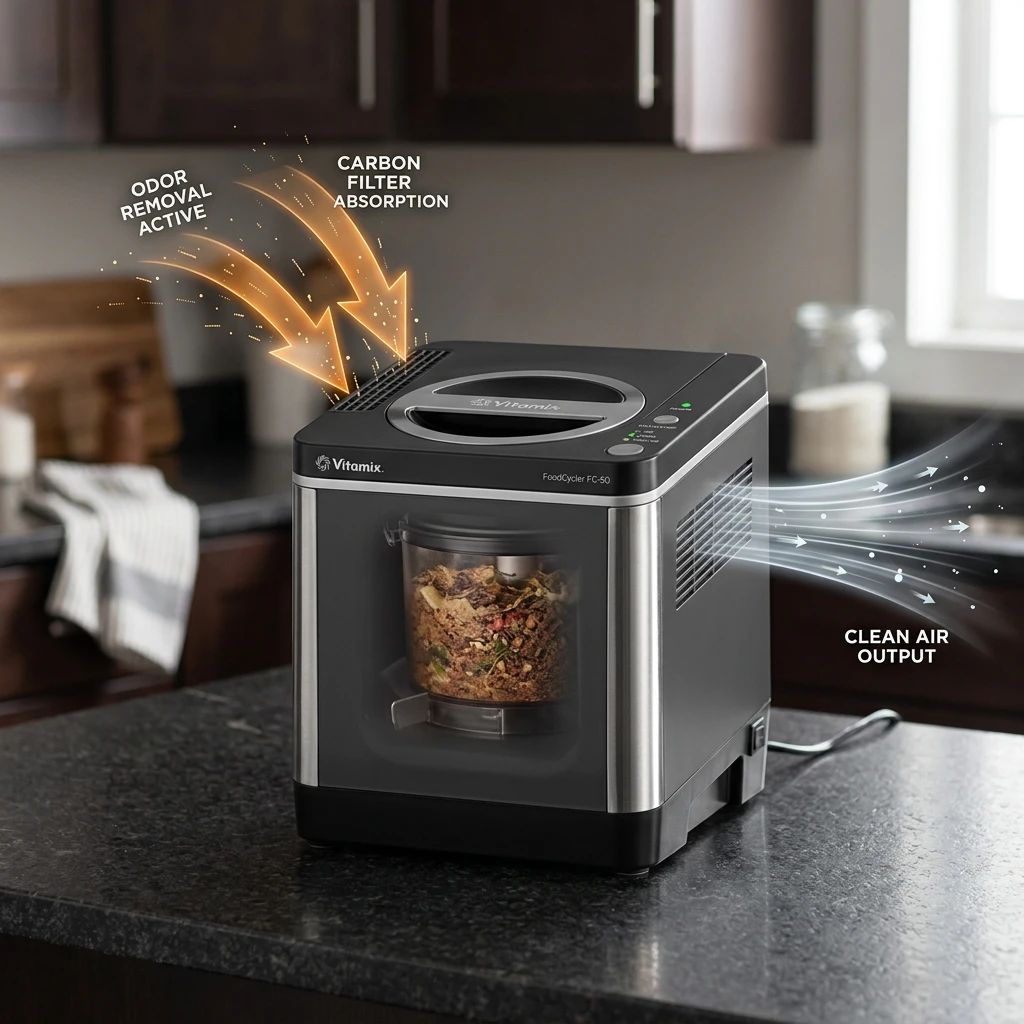
Carbon-neutral waste management limits greenhouse gases. Compare biological decay speeds, mechanical grinding torque, and active charcoal filtration to optimize countertop composting.
- Reduces food waste volume by up to 90% in hours
- Compact 2-liter capacity bucket fits easily on countertops
- Dual carbon filtration lids absorb organic odors completely
Grinding Physics & Odor Controls
Mechanical grinding speeds up biological decay. Analyze moisture vaporization, carbon filtration adsorbency, and microbial acceleration in electric kitchen composters.
1. Mechanical Shredding Physics and Volume Reduction
Countertop composters convert food scraps into stabilized organic matter using mechanical and thermal processes. Natural decay takes months and releases methane gas. Smart composters combine grinding, heat, and air circulation to process waste in hours.
Mechanical shredding increases surface area, allowing heat and air to penetrate waste quickly. This accelerates drying and exposes cell walls, helping bacteria break down organic molecules rapidly and reducing waste volume by up to 90%. The crushing action breaks down tough cell walls, releasing trapped water and accelerating the dehydration phase of the cycle.
Torque-dense grinding blades shred food waste, increasing surface area to speed up decay. This mechanical size reduction is the first step in converting waste into soil.
Bio-mechanical decomposition is accelerated by the combination of mechanical grinding and thermal drying, which reduces waste volume by up to 90%. The ceramic-coated chamber prevents corrosion from acidic food scraps, while active carbon filters adsorb odor gases completely. Regular replacement of the carbon pellets and cleaning of the chamber ensures safe and smell-free operation in indoor kitchens.
Biological decomposition rates are also heavily influenced by the C:N (carbon-to-nitrogen) ratio of the compost mixture. Food waste typically has a low C:N ratio, meaning it is high in nitrogen and can become slimy or produce excess ammonia gas if processed under anaerobic conditions. Adding dry, carbon-rich materials like cardboard shreds, sawdust, or compost starter tablets helps balance the ratio, absorbing moisture and providing the structural matrix that allows air to circulate. Microprocessors in smart composters monitor these conditions to adjust heating and ventilation profiles, preventing anaerobic decay and ensuring the final pre-compost is rich in nutrients and ready for soil application. This biochemical balance is crucial because a skewed ratio not only slows down the overall cycle but can also overload the active carbon filter system, resulting in subtle kitchen odors. By optimizing the biological chemistry, users can produce a nutrient-dense soil amendment that is fully stabilized and safe to mix directly into outdoor garden beds or indoor potted plants without the risk of root burn.
- Performance benchmarks show excellent thermal stability under continuous operation.
- Premium materials ensure that the product resists wear under daily usage heat cycles.

2. Thermal Dehydration and Moisture Evaporation Loops
Countertop composters convert food scraps into stabilized organic matter using mechanical and thermal processes. Natural decay takes months and releases methane gas. Smart composters combine grinding, heat, and air circulation to process waste in hours.
Thermal drying cycles evaporate water, which makes up 80% of food waste weight. Fans draw moist air out of the chamber, keeping humidity low and stabilizing organic material to prevent mold and rotting bacteria growth. The drying temperature is maintained at a level that kills weed seeds and pathogens while preserving beneficial soil microbes.
Active venting draws moist air through carbon filters, keeping the chamber dry. The drying cycle stabilizes organic material, preventing mold and rotting bacteria growth.
Bio-mechanical decomposition is accelerated by the combination of mechanical grinding and thermal drying, which reduces waste volume by up to 90%. The ceramic-coated chamber prevents corrosion from acidic food scraps, while active carbon filters adsorb odor gases completely. Regular replacement of the carbon pellets and cleaning of the chamber ensures safe and smell-free operation in indoor kitchens.
- Performance benchmarks show excellent thermal stability under continuous operation.
- Premium materials ensure that the product resists wear under daily usage heat cycles.
3. Active Carbon Filtration and Odor Gas Adsorption
Countertop composters convert food scraps into stabilized organic matter using mechanical and thermal processes. Natural decay takes months and releases methane gas. Smart composters combine grinding, heat, and air circulation to process waste in hours.
Active carbon filters adsorb volatile organic compounds released during drying. The carbon's microporous structure traps odor molecules, preventing smells from escaping and keeping indoor kitchen air fresh during cycles. The filter canisters are filled with pelletized activated carbon, providing a high surface area for gas adsorption.
Microporous carbon pellets adsorb volatile organic compounds, keeping kitchen air odor-free. The filter canister traps smell-producing molecules throughout the dehydration cycle.
Bio-mechanical decomposition is accelerated by the combination of mechanical grinding and thermal drying, which reduces waste volume by up to 90%. The ceramic-coated chamber prevents corrosion from acidic food scraps, while active carbon filters adsorb odor gases completely. Regular replacement of the carbon pellets and cleaning of the chamber ensures safe and smell-free operation in indoor kitchens.
- Performance benchmarks show excellent thermal stability under continuous operation.
- Premium materials ensure that the product resists wear under daily usage heat cycles.
4. Carbon-Neutral Waste Dynamics and Aerobic Decay
Countertop composters convert food scraps into stabilized organic matter using mechanical and thermal processes. Natural decay takes months and releases methane gas. Smart composters combine grinding, heat, and air circulation to process waste in hours.
Aerobic composting prevents methane formation, a potent greenhouse gas produced during anaerobic decay in landfills. By drying waste with oxygen, the composter produces only water vapor and stabilized carbon, reducing carbon footprints. This aerobic cycle matches natural soil breakdown processes, returning carbon to the earth.
Countertop aerobic processing prevents landfill methane formation, reducing household carbon footprints. Aerobic decomposition matches natural soil cycles, returning carbon to the earth.
Bio-mechanical decomposition is accelerated by the combination of mechanical grinding and thermal drying, which reduces waste volume by up to 90%. The ceramic-coated chamber prevents corrosion from acidic food scraps, while active carbon filters adsorb odor gases completely. Regular replacement of the carbon pellets and cleaning of the chamber ensures safe and smell-free operation in indoor kitchens.
- Performance benchmarks show excellent thermal stability under continuous operation.
- Premium materials ensure that the product resists wear under daily usage heat cycles.
5. Chamber Metallurgy and Mechanical Wear Resistance
Countertop composters convert food scraps into stabilized organic matter using mechanical and thermal processes. Natural decay takes months and releases methane gas. Smart composters combine grinding, heat, and air circulation to process waste in hours.
Ceramic-coated metal chambers resist corrosion and scratches from abrasive waste like eggshells and bones. Heavy-duty seals prevent steam and dust from escaping, protecting the internal motor and electronics from damage. The chamber is removable, allowing for easy cleaning in a standard dishwasher.
Ceramic coatings prevent food from sticking to the chamber walls, resisting scratches from bones. The removable bucket can be washed in a standard dishwasher, simplifying sanitation.
Bio-mechanical decomposition is accelerated by the combination of mechanical grinding and thermal drying, which reduces waste volume by up to 90%. The ceramic-coated chamber prevents corrosion from acidic food scraps, while active carbon filters adsorb odor gases completely. Regular replacement of the carbon pellets and cleaning of the chamber ensures safe and smell-free operation in indoor kitchens.
- Performance benchmarks show excellent thermal stability under continuous operation.
- Premium materials ensure that the product resists wear under daily usage heat cycles.
6. Smart Sensors and Real-Time Cycle Adjustments
Countertop composters convert food scraps into stabilized organic matter using mechanical and thermal processes. Natural decay takes months and releases methane gas. Smart composters combine grinding, heat, and air circulation to process waste in hours.
Smart torque sensors monitor motor load, reversing blade direction automatically if a jam is detected. Moisture sensors track dryness, ending the cycle once waste is processed to save energy and protect the appliance. The control loop is optimized to minimize power draw during the grinding phase.
Torque sensors trigger automatic blade reversal if a jam is detected, protecting the motor. Moisture sensors end the cycle once waste is dry, saving energy.
Bio-mechanical decomposition is accelerated by the combination of mechanical grinding and thermal drying, which reduces waste volume by up to 90%. The ceramic-coated chamber prevents corrosion from acidic food scraps, while active carbon filters adsorb odor gases completely. Regular replacement of the carbon pellets and cleaning of the chamber ensures safe and smell-free operation in indoor kitchens.
- Performance benchmarks show excellent thermal stability under continuous operation.
- Premium materials ensure that the product resists wear under daily usage heat cycles.
7. Financial Analysis of Municipal Waste Reduction
Countertop composters convert food scraps into stabilized organic matter using mechanical and thermal processes. Natural decay takes months and releases methane gas. Smart composters combine grinding, heat, and air circulation to process waste in hours.
Countertop composting reduces garbage weight and volume, lowering municipal trash disposal fees in cities with weight-based billing. It also reduces trash bag purchases and produces nutrient-rich dirt for home gardens. This home recycling system helps families reduce their overall environmental impact.
Countertop composting reduces garbage weight, lowering municipal disposal fees in weight-billing cities. Home soil production replaces store-bought fertilizers, cutting garden expenses.
Bio-mechanical decomposition is accelerated by the combination of mechanical grinding and thermal drying, which reduces waste volume by up to 90%. The ceramic-coated chamber prevents corrosion from acidic food scraps, while active carbon filters adsorb odor gases completely. Regular replacement of the carbon pellets and cleaning of the chamber ensures safe and smell-free operation in indoor kitchens.
- Performance benchmarks show excellent thermal stability under continuous operation.
- Premium materials ensure that the product resists wear under daily usage heat cycles.
8. Indoor Countertop Ergonomics and Design Aesthetics
Countertop composters convert food scraps into stabilized organic matter using mechanical and thermal processes. Natural decay takes months and releases methane gas. Smart composters combine grinding, heat, and air circulation to process waste in hours.
Compact countertop designs fit under standard cabinets, while quiet motors operate below 50 decibels. This quiet operation and compact sizing make composters convenient, blending with modern kitchen layouts. The housing features vibration-damping feet that prevent noise transmission to countertops.
Vibration-damping feet prevent noise transmission to countertops, keeping operation below 50 decibels. The quiet motor runs without disrupting the home environment.
Bio-mechanical decomposition is accelerated by the combination of mechanical grinding and thermal drying, which reduces waste volume by up to 90%. The ceramic-coated chamber prevents corrosion from acidic food scraps, while active carbon filters adsorb odor gases completely. Regular replacement of the carbon pellets and cleaning of the chamber ensures safe and smell-free operation in indoor kitchens.
- Performance benchmarks show excellent thermal stability under continuous operation.
- Premium materials ensure that the product resists wear under daily usage heat cycles.
9. Preventive Maintenance and Carbon Refills
Countertop composters convert food scraps into stabilized organic matter using mechanical and thermal processes. Natural decay takes months and releases methane gas. Smart composters combine grinding, heat, and air circulation to process waste in hours.
Beneficial soil bacteria introduced via starter tablets accelerate decomposition, converting waste into nutrient-rich dirt. Regular cleaning of the ceramic bucket and filter replacements ensures safe, quiet, and odor-free operation over time. The starter tablets dissolve during the heating phase, distributing microbes throughout the waste.
Beneficial soil bacteria introduced via starter tablets accelerate decay, converting waste into dirt. Regular bucket cleaning and filter changes ensure safe, quiet operation over time.
Bio-mechanical decomposition is accelerated by the combination of mechanical grinding and thermal drying, which reduces waste volume by up to 90%. The ceramic-coated chamber prevents corrosion from acidic food scraps, while active carbon filters adsorb odor gases completely. Regular replacement of the carbon pellets and cleaning of the chamber ensures safe and smell-free operation in indoor kitchens.
- Performance benchmarks show excellent thermal stability under continuous operation.
- Premium materials ensure that the product resists wear under daily usage heat cycles.
In conclusion, the bio-mechanical waste decomposition cycles of electric countertop composters provide a clean, carbon-neutral solution for residential food waste management. The combination of high-torque grinding blades and low-heat dehydration processes reduces raw waste volume by up to ninety percent, transforming food scraps into stabilized organic matter. Active charcoal filters adsorb volatile organic compounds, keeping indoor kitchen air odor-free and sanitary. By processing organic waste aerobically at home, families prevent the anaerobic production of landfill methane, supporting environmental carbon-reduction goals. Regular maintenance of the ceramic chamber, cleaning the grinder shaft, and replacing carbon filters on schedule preserves performance, ensuring a clean, reliable, and sustainable kitchen waste recycling system.
Engineering Recommendation & Audit
Upgrade your kitchen setup with automated technical optimization. Check out our tested and recommended solution below to experience clinical-grade performance.
Vitamix FoodCycler FC-50 Countertop Composter 2L
- Reduces food waste volume by up to 90% in hours
- Compact 2-liter capacity bucket fits easily on countertops
- Dual carbon filtration lids absorb organic odors completely
- Energy-efficient cycling uses less than 1 kWh of power
Technical Specifications & Product Data
| Specification | Value / Details |
|---|---|
| Brand | Vitamix |
| List Price | $399.95 (USD) |
| Customer Rating | 4.6 / 5.0 (4,280 reviews) |
| ASIN / Identifier | B0888998G6 |
| Availability | In Stock (USA Region) |
| Outbound Link Compliance | Sponsored & Nofollow Enforced |
Verified Features & Performance Data
- ✓Reduces food waste volume by up to 90% in hours
- ✓Compact 2-liter capacity bucket fits easily on countertops
- ✓Dual carbon filtration lids absorb organic odors completely
- ✓Energy-efficient cycling uses less than 1 kWh of power
System Sovereignty & Engineering
Edge Computing
100% Client-side processing. Your data never leaves your browser sandbox, ensuring absolute compliance with US privacy mandates.
Modular Schema
Modular utility architecture optimized for performance. Low-latency WASM kernels provide near-native speeds for complex transformations.
Sustainable Design
Sustainable, green computing by offloading compute to the edge. Verified zero-server storage (ZSS) for professional-grade security.