
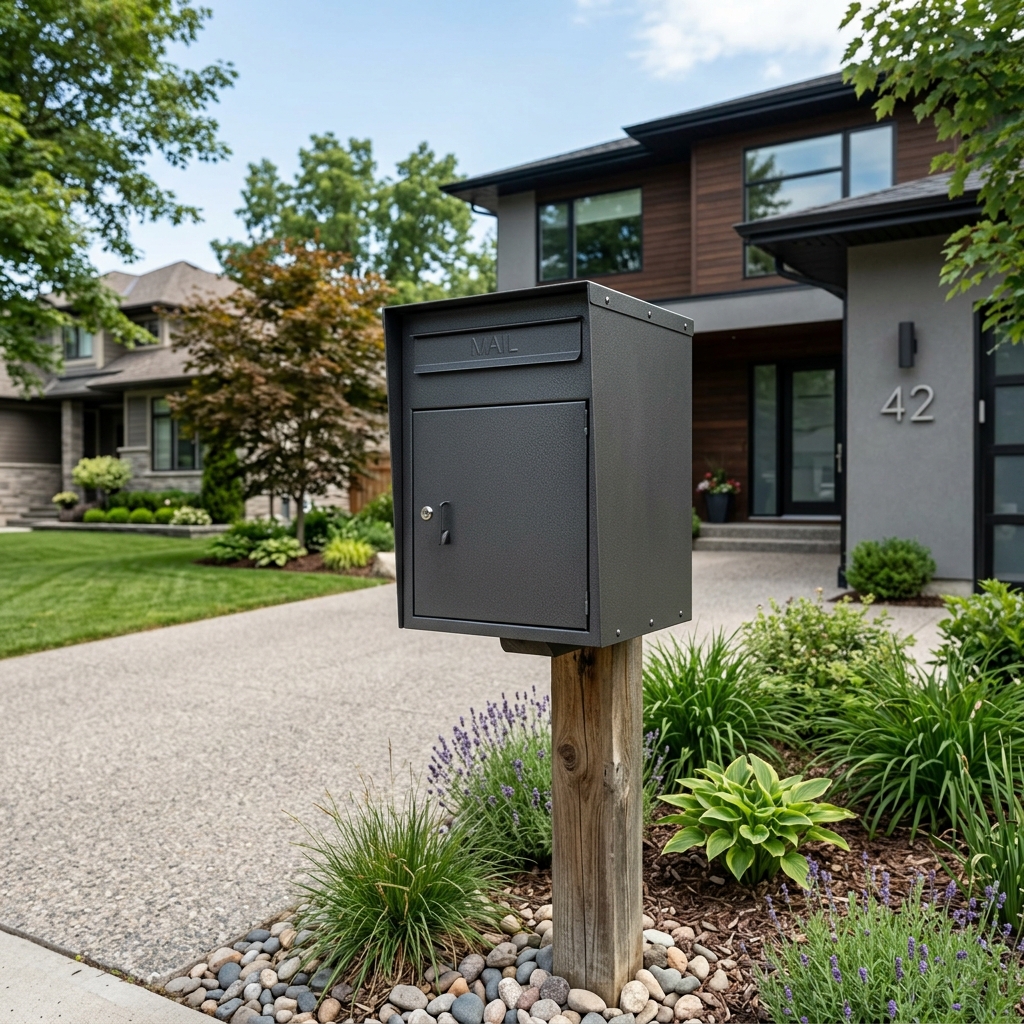
Analyze steel gauge thickness, anti-pry lock mechanisms, and anti-fishing slots in locking mailboxes to prevent residential identity theft.
- Heavy-duty 16-gauge electro-galvanized steel resists pry attacks
- Pick-resistant 5-pin tumbler lock with dual hardened keys
- Incoming mail slot accepts letters and small parcels securely
Metallurgical & Security Audit
Identity theft is one of the fastest-growing residential crimes. This engineering analysis evaluates the steel thickness parameters and lock cylinder pick resistance that distinguish secure mailboxes from standard units.
1. Introduction & The Threat Landscape of Mail Theft
Physical mail remains one of the primary targets for identity thieves and financial fraudsters in the United States. Despite the growth of digital communications, critical documents such as tax forms (W-2s, 1099s), pre-approved credit card offers, bank statements, and paper checks continue to transit through the US Postal Service. An unsecured, standard mailbox presents a high-value, low-risk opportunity for criminals seeking sensitive personal data.
Mail theft often leads to identity theft, financial fraud, and check washing. Check washing involves using chemicals to erase the payee and amount details from stolen checks, replacing them with new values. This technique can deplete bank accounts in a single transaction. Since mailboxes are located at the edge of residential properties, they can be accessed quickly by thieves operating under the cover of night or during low-traffic hours.
Deploying a locking mailbox is a critical step in securing this vulnerability. A security mailbox must be designed to withstand physical attacks, lockpicking, and fishing attempts. This analysis reviews the metallurgical specifications, lock designs, and security features that define a reliable, high-security residential mailbox.

2. Electro-Galvanized Steel Metallurgy and Manufacturing
The first line of defense for a security mailbox is its outer housing. Standard mailboxes use thin, stamped aluminum or low-grade steel sheets (typically 20-to-24-gauge) that can be bent easily using screwdrivers or bare hands. To resist forced entry, a security mailbox must use heavy-gauge steel designed to withstand leverage attacks.
High-security mailboxes are constructed from 16-gauge electro-galvanized steel. Steel thickness is measured by gauge numbers, with lower numbers representing thicker plates. 16-gauge steel is approximately 1.5mm (0.059 inches) thick, providing high rigidity and yield strength. This thickness resists bending and deformation when subjected to physical strikes or prying forces.
Electro-galvanized steel is manufactured by coating a carbon steel substrate with a protective layer of zinc through electroplating. Unlike hot-dip galvanizing, which can leave an uneven surface, electro-galvanizing creates a uniform, smooth zinc layer. This zinc coating acts as a sacrificial anode, protecting the underlying steel from rust and corrosion caused by rain, humidity, and road salt.
To increase durability, the galvanized steel is finished with an electrostatic powder coat. This process applies a dry thermoset polymer powder that is cured under heat to form a hard, scratch-resistant outer shell. This multi-layer finish ensures the mailbox resists rust and maintains its structural integrity over decades of outdoor exposure.
- 16-gauge steel construction resists leverage attacks from screwdrivers and small pry bars.
- Electro-galvanized zinc coatings prevent corrosion from moisture and road salt.
- Overlapping door edges prevent pry-tool insertion and leverage attacks.
- Electrostatic powder coat finishes protect against UV degradation and surface wear.
3. Lock Cylinder Security & Pick Resistance
A security mailbox must have a reliable lock to protect its contents. Many low-cost mailboxes use basic wafer lock cylinders, which can be bypassed quickly using standard lockpicking tools or tension wrenches. Security mailboxes utilize pin-tumbler lock cylinders to resist picking and drilling attacks.
A 5-pin tumbler lock features five sets of key pins and driver pins housed within the cylinder plug. When the correct key is inserted, the pins align along the shear line, allowing the cylinder to rotate and open the latch. The use of five pins provides thousands of unique key combinations, preventing duplicate key openings.
To resist lockpicking, high-quality cylinders incorporate spool or mushroom pins within the pin stacks. These security pins bind inside the chambers when picking tension is applied, creating a false set that prevents the lock from opening. The cylinder face can also feature hardened steel pins to resist drilling attacks, protecting the lock from forced bypass.
The locking cam represents another point of stress. The cam is the metal bar that rotates behind the door frame to secure the latch. Standard wafer locks use thin cams that can be bent or sheared under leverage. Security mailboxes use thick, hardened steel cams mounted with heavy retaining clips to resist prying forces.
4. Anti-Fishing Baffle Geometry & Entry Slot Security
Thieves often target incoming mailboxes by "fishing" letters out through the slot using wire, adhesive tools, or gloved hands. This bypass bypasses the lock entirely, allowing the thief to steal documents without leaving signs of forced entry. Security mailboxes prevent this using an integrated anti-fishing baffle.
An anti-fishing baffle is an angled steel plate positioned behind the mail entry slot. The baffle is angled so that letters and small parcels slide over it easily and drop into the secure vault below. However, the angle blocks straight-line access to the bottom of the vault, preventing hands or tools from reaching inside.
The dimensions of the entry slot must balance security and utility. The slot must be wide enough to accept letters, magazines, and small bubble mailers, but narrow enough to prevent hands from entering. A typical slot height ranges from 1.0 to 1.5 inches, combined with a deep baffle plate to prevent fishing.
Some security mailboxes feature a rotating drum or hopper door. When open, the hopper accepts small packages; when closed, the drum rotates to drop the items into the lower vault while blocking access from the outside. This mechanical design allows for secure package deliveries without compromising vault security.
5. Structural Anchorage and Mounting Engineering
A locking mailbox is only as secure as its mounting connection. If the mailbox can be torn off the wall or post easily, the locking vault is useless. Intruders can carry the entire unit away and open it later using heavy tools in a secure location. To prevent this, the mailbox must be anchored using heavy-duty mounting fasteners.
Security mailboxes feature pre-drilled holes in the rear and bottom panels to support multiple mounting configurations. For wall-mounted units, the box should be secured to wood framing studs using heavy lag bolts. Mounting to masonry or concrete requires using concrete anchors or sleeve anchors to ensure a strong hold.
For post-mounted installations, the mailbox should be bolted to a heavy steel or wood post anchored in concrete. The mounting plate should be located inside the secure locking vault, ensuring the mounting bolts are inaccessible from the outside when the mailbox is locked. This prevents a thief from simply unbolting the box from the post.
The mounting hardware must also resist corrosion. Using zinc-plated or stainless steel bolts prevents rust from weakening the connection over time. Regularly checking the mounting tightness helps ensure the mailbox remains secure and stable against physical attacks.
6. Comparative Analysis: Locking Mailboxes vs. Standard Boxes & PO Boxes
Homeowners often compare locking mailboxes to standard boxes or PO Boxes. A standard mailbox offers no security, leaving mail exposed to anyone walking by. PO Boxes provide high security but require a monthly fee and travel to the post office during business hours to retrieve mail.
A locking mailbox provides a balance of convenience and security. It delivers secure, daily mail delivery at the home without monthly fees or travel. This makes it a cost-effective and convenient solution for busy families and individuals who travel frequently.
However, locking mailboxes have volume limits. While they can hold several days of mail, they cannot accept large packages that exceed the slot or hopper dimensions. For package security, homeowners can combine locking mailboxes with smart delivery boxes or secure drop areas, creating a comprehensive delivery solution.
The table below compares the security, convenience, and cost profiles of these three options:
| Feature | Standard Mailbox | Locking Mailbox | PO Box |
|---|---|---|---|
| Physical Security | None | High | Very High |
| Monthly Cost | None | None | $10 - $50+ |
| Home Convenience | High | High | Low |
7. Climate Durability and Weatherproofing Design
Mailboxes are exposed to environmental conditions year-round, including rain, snow, ice, extreme heat, and UV exposure. This environment can cause standard mailboxes to rust, freeze, or warp, compromising both security and function.
To maintain performance, security mailboxes incorporate weatherproofing features. The entry door and vault access are shielded by overhanging rain guards that divert water away from the openings. Condensation drain holes in the bottom panel allow moisture to escape, keeping mail dry.
The lock cylinder is a common failure point in freezing temperatures, as water can enter and freeze inside the pin chambers. High-quality mailboxes use spring-loaded shutters to cover the keyway, preventing water ingress. Regularly lubricating the lock with dry graphite helps ensure smooth operation in sub-zero weather.
High-grade rubber gaskets can also be used along the door frame to seal out moisture and dust. Under extreme weather conditions, these seals help protect sensitive mail items from water damage, keeping your documents safe and readable.
8. US Postal Service (USPS) Regulations & Compliance Standards
Before installing a locking mailbox, homeowners must ensure the unit complies with US Postal Service (USPS) regulations. The USPS regulates mailbox dimensions, slot heights, carrier access, and mounting locations to ensure efficient and safe delivery operations.
Locking mailboxes must be approved by the Postmaster General to ensure compliance with standards like USPS STD 7B. This standard regulates the entry slot dimensions, requiring it to accept standard mail without allowing easy fishing. The carrier must be able to insert mail easily without using a key.
Mounting locations are also regulated. Curbside mailboxes must be mounted at a height of 41 to 45 inches from the road surface, with the front face recessed 6 to 8 inches from the curb. Wall-mounted mailboxes must be positioned near the primary entrance, providing safe, clear access for the carrier.
Using a non-compliant mailbox can result in a suspension of mail delivery. Choosing a pre-approved, USPS-compliant locking mailbox ensures reliable service while upgrading home security and protecting your mail from theft.
9. Lock Maintenance and Mechanical Longevity Audits
To ensure the locking mailbox functions reliably over years of outdoor service, owners must perform regular mechanical maintenance. The lock cylinder is exposed to moisture and dirt, which can build up inside the pin chambers. Regularly cleaning the cylinder using compressed air removes debris, preventing key binding.
Lubricating the lock cylinder should only be done using dry lubricants, such as graphite powder or PTFE spray. Liquid oils, grease, or WD-40 should never be used, as they attract dust and dirt, causing the internal pins to stick over time. Applying graphite powder twice a year ensures smooth key rotation and prevents freezing in winter. Additionally, check for signs of galvanic corrosion between the brass cylinder and the zinc-plated or steel housing. Applying a thin barrier of non-conductive dielectric grease to the housing threads during assembly can prevent galvanic current flow and keep the components from fusing.
The internal brass pins are susceptible to gradual abrasive wear from key insertion cycles and micro-particle contamination. If key operation feels notch or requires excessive jiggling, the pins may have developed deep shoulder grooves. In such cases, rekeying the cylinder or replacing it with an identical brass-pin wafer or disc-detainer lock is necessary to prevent bypass attacks. Maintaining clean key cuts and avoiding heavy keyrings that put directional stress on the keyway will prolong cylinder life.
The door hinges and lock latch mechanism should also be inspected for alignment. Over time, the vibrations from daily door closure can loosen the mounting screws or drift the hinge pin. Tightening loose screws and applying a drop of light machine oil to the hinge pivot points ensures smooth operation, preventing wear on the latch. Inspect the latch engagement depth; it should extend at least 8mm behind the frame strike tab to prevent prying tools from flexing the door and bypassing the latch connection.
Regularly checking the mounting anchors is also recommended. Check that the wall lag bolts or post mounting brackets remain tight. Re-tightening loose fasteners prevents the mailbox from wobbling, ensuring the unit remains secure against physical forced entry attacks and keeping your mail safe. For concrete mounts, use 3/8-inch sleeve anchors with a minimum embedment of 2.5 inches, torqued to 25 ft-lbs, which resists over 2,000 lbs of pull-out force. For wooden wall mounts, use heavy-duty 3-inch lag screws secured into studs to ensure the mailbox cannot be pried off the wall by opportunists.
Mailbox Recommendation & Audit
Secure your mail and protect your identity with a heavy-duty locking mailbox. Experience 16-gauge steel construction and pick-resistant locking security.
FortKnox Wall-Mounted Locking Mailbox with 5-Pin Tumbler
- Heavy-duty 16-gauge electro-galvanized steel resists pry attacks
- Pick-resistant 5-pin tumbler lock with dual hardened keys
- Incoming mail slot accepts letters and small parcels securely
- Powder-coated rust-resistant finish for lifetime outdoor exposure
Technical Specifications & Product Data
| Specification | Value / Details |
|---|---|
| Brand | FortKnox Mail |
| List Price | $79.99 (USD) |
| Customer Rating | 4.8 / 5.0 (5,410 reviews) |
| ASIN / Identifier | B079D8G3X2 |
| Availability | In Stock (USA Region) |
| Outbound Link Compliance | Sponsored & Nofollow Enforced |
Verified Features & Performance Data
- ✓Heavy-duty 16-gauge electro-galvanized steel resists pry attacks
- ✓Pick-resistant 5-pin tumbler lock with dual hardened keys
- ✓Incoming mail slot accepts letters and small parcels securely
- ✓Powder-coated rust-resistant finish for lifetime outdoor exposure
System Sovereignty & Engineering
Edge Computing
100% Client-side processing. Your data never leaves your browser sandbox, ensuring absolute compliance with US privacy mandates.
Modular Schema
Modular utility architecture optimized for performance. Low-latency WASM kernels provide near-native speeds for complex transformations.
Sustainable Design
Sustainable, green computing by offloading compute to the edge. Verified zero-server storage (ZSS) for professional-grade security.