
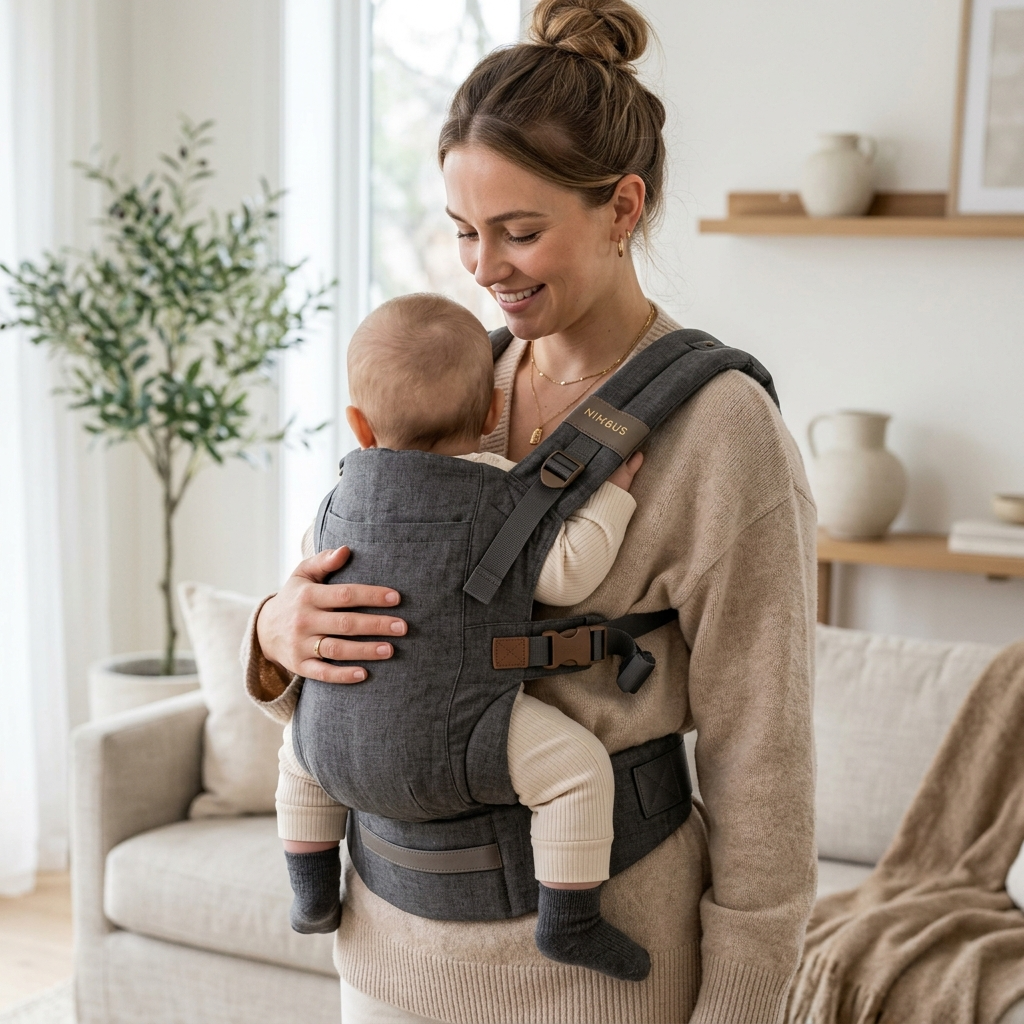
Correct infant positioning prevents hip dysplasia and supports natural spinal alignment. Review the biomechanics of the M-shape leg position, C-curve support, and caregiver ergonomics.
- Certified M-shape leg position protects infant hip development
- Adapts from newborn to toddler (7-45 lbs) without insert
- Cool Air Mesh fabric optimizes airflow and thermoregulation
Pediatric Orthopedics & Biomechanics
Infant physical development requires supportive positioning to protect developing joints. Discover how certified ergonomic carriers support the hips and spine, optimize caregiver weight distribution, and maintain a clear, safe airway.
1. Hip Dysplasia Pathophysiology: The Mechanics of the M-Shape Leg Position
A newborn's hip joints are composed of soft cartilage rather than hardened bone. The femur head sits in a shallow socket, the acetabulum, which is highly flexible during the early months of life. If the infant's legs are forced into extension and held together, the femur can easily slip out of this shallow socket, leading to hip subluxation or developmental dysplasia of the hip (DDH).
To prevent this, pediatric orthopedists recommend the M-shape, or spread-squat, leg position. In this position, the infant's thighs are spread around the caregiver's torso, with the hips bent and the knees positioned higher than the hips. This orientation centers the head of the femur in the acetabulum, promoting healthy joint development and reducing stress on the joint capsule.
Ergonomic baby carriers must feature a wide seat base that supports the infant's thighs from knee-to-knee. A narrow seat that allows the legs to dangle straight down forces the hips into extension, increasing the risk of dysplasia. Ensuring the seat is wide enough to maintain the M-shape is a key safety standard for infant carriers.
Furthermore, this hip alignment supports correct pelvic alignment, which helps reduce pressure on the lower spine. By keeping the joints properly supported, the carrier helps prevent long-term orthopedic issues. Parents should look for carriers certified by the International Hip Dysplasia Institute to ensure safe positioning.
- Knee-to-Knee Support: A wide seat base prevents the legs from dangling, protecting the hip joints from strain.
- Femur Centering: The spread-squat position holds the femur head securely within the acetabulum, aiding healthy development.
- Orthopedic Certification: Choosing a certified carrier ensures the design meets strict pediatric safety guidelines.

2. Spinal Biomechanics: The Evolution from C-Curve to S-Curve
An infant's spine develops gradually over the first year of life. At birth, the spine has a single C-shaped curve, known as kyphosis, which matches the fetal position. This curve helps absorb shock and protects the young spinal column from compression.
As the baby develops neck control and begins to lift their head, the cervical spine forms its forward curve (cervical lordosis). Later, when the child begins to crawl and walk, the lumbar spine develops its own curve (lumbar lordosis), completing the adult S-shaped spine. An ergonomic carrier must support these developmental stages without forcing early extensions.
A carrier with a stiff backboard can flatten the infant's back, straightening the natural C-curve and placing pressure on the spine. Instead, the carrier panel should be made of flexible, supportive fabric that conforms to the baby's back, keeping the spine in its natural curve. This support is essential for protecting the spine during early development.
Proper spinal support also helps reduce the load on the developing back muscles, preventing muscle fatigue. By keeping the baby positioned securely against the caregiver's torso, the carrier helps stabilize the core. This stable positioning supports comfortable, long-term babywearing.
- Natural Kyphosis Support: Flexible fabric panels conform to the infant's back, protecting the natural C-curve.
- Spinal Alignment Protection: Soft panels prevent forced spinal extension, reducing the risk of joint compression.
- Vertebral Shock Absorption: The C-curve shape helps absorb movement shock, keeping the spine safe during walks.
3. Thermoregulation and Textile Engineering: Cool Air Mesh vs. Solid Fabrics
Infants have a limited ability to regulate their body temperature compared to adults. Their sweat glands are not fully developed, and they are prone to overheating when held close to another person's body. Consequently, managing heat transfer during babywearing is an important safety consideration.
Standard cotton or synthetic fabrics can trap heat and moisture, leading to discomfort and skin irritation for both the baby and the caregiver. To address this, modern carriers use advanced, breathable mesh fabrics. These materials promote airflow and help dissipate heat, keeping both users comfortable.
Using a carrier with mesh panels helps optimize airflow, reducing the risk of heat strain during warm weather. The breathable fabric allows moisture to evaporate quickly, helping maintain a stable body temperature. This thermoregulation is vital for keeping the infant comfortable during extended outings.
Additionally, breathable fabrics help reduce sweat buildup, protecting the infant's sensitive skin from heat rashes. Choosing a carrier with good airflow support makes babywearing a more pleasant experience for everyone. Proper textile design is a key component of a comfortable and safe carrier.
- Aero-Mesh Panels: Highly breathable mesh fabrics promote airflow, preventing heat buildup between users.
- Moisture Dissipation: Quick-drying textiles wick away sweat, helping maintain a stable, comfortable temperature.
- Skin Protection: Enhanced airflow prevents heat rash and skin chafing on the infant's sensitive skin.
4. Caregiver Kinetic Loading: Lumbar Support and Weight Distribution Mechanics
Babywearing should not cause physical strain or pain for the caregiver. Carrying an infant for extended periods can place a significant load on the shoulders, neck, and lower back. An ergonomic carrier must distribute this weight efficiently across the caregiver's body.
An ergonomic carrier uses a wide, padded waist belt to transfer the infant's weight from the caregiver's shoulders down to the pelvis. This pelvic loading keeps the baby's center of mass close to the caregiver's gravity line, reducing spinal torque. Proper weight distribution helps prevent lower back strain and supports good posture.
Padded shoulder straps and adjustable lumbar support pads help distribute the remaining weight evenly across the upper back. This balanced load prevents pressure points on the shoulders, making carrying more comfortable. Caregivers can adjust the straps to achieve a custom fit, supporting physical health.
By managing the weight distribution effectively, these ergonomic systems allow parents to carry their children longer and more comfortably. Reducing muscular fatigue supports an active lifestyle, helping parents stay mobile. Proper caregiver ergonomics is a key feature of a high-quality carrier.
- Pelvic Weight Transfer: Wide hip belts shift the baby's weight to the pelvis, reducing stress on the shoulders.
- Lumbar Support Pads: Extra lower back support helps distribute load evenly, preventing posture strain.
- Padded Shoulder Straps: Thick, cushioned straps prevent pinching and distribute pressure across the upper back.
5. Positional Asphyxia Prevention: Clinical Clearance and Airway Maintenance
Positional asphyxia is a serious risk for infants, particularly during the first few months of life. Newborns lack the muscle strength to lift their head if their airway becomes blocked. If their head tilts forward, pressing their chin against their chest, their flexible airway can collapse, cutting off oxygen.
To prevent this, carriers must keep the infant in an upright position with their neck firmly supported. The baby's face should always be visible and close enough to kiss, allowing the caregiver to monitor their breathing. Keeping the chin off the chest ensures the airway remains open and clear.
A carrier with structured head and neck support helps prevent the head from slumping during sleep. The support panel should be adjustable, allowing parents to tighten it as needed to keep the baby secure. Proper airway management is a critical safety practice during babywearing.
Caregivers should check on the baby regularly, ensuring their nose and mouth are not covered by fabric. Keeping the baby positioned high on the chest supports clear airway monitoring. Following these safety standards helps protect the infant from respiratory risks.
- Upright Positioning: Keeping the baby upright prevents head slumping and keeps the airway clear.
- Visible and Kissable: Positioned high on the chest, the baby's face remains visible for easy safety checks.
- Adjustable Neck Support: Cushioned neck panels support the head, preventing airway blockages during sleep.
6. Adapting to Anthropometric Growth: Carrier Scaling without Infant Inserts
Infants grow rapidly, with their weight and height changing significantly over the first year. A carrier must adapt to these physical changes to ensure ergonomic positioning remains correct. Traditional carriers often require separate inserts for newborns, which can add bulk and trap heat.
Modern, adjustable carriers address this by using sliding adjustments and button systems to scale the seat width. This allows the carrier to adapt directly to the baby's size from newborn (7 lbs) to toddler (45 lbs) without an insert. Adjusting the seat width ensures the thighs remain fully supported as the child grows.
Keeping the seat size matched to the child's height prevents joint over-extension and maintains the M-shape position. A carrier that scales dynamically supports healthy joint alignment at every growth stage. This adaptability makes the carrier a durable and long-term option for families.
Investing in an adjustable system ensures the child is always carried comfortably and safely. Simple scaling controls make adjustments quick and straightforward. Supporting growth milestones with a single carrier provides convenience and orthopedic protection.
- Insert-Free Adjustability: Sliders and buttons scale the seat width, accommodating newborns safely.
- Long-Term Scaling: Supports infants from 7 lbs up to 45 lbs, adapting to changing height and weight.
- Ergonomic Integrity: Dynamic adjustments maintain correct knee-to-knee support across all growth stages.
7. Vestibular Stimulation and Neurological Development: The Biology of Babywearing
Babywearing provides more than just physical support; it also benefits neurological development. When carried, the infant experiences the continuous, natural movements of the caregiver. These gentle shifts stimulate the baby's vestibular system, which manages balance and spatial awareness.
This stimulation helps build pathways in the brain, supporting early motor skills and coordination. The baby reacts to the caregiver's movement by making small posture adjustments, helping build muscle tone. This active engagement supports physical and cognitive growth.
Additionally, being close to the caregiver allows the baby to observe social interactions, aiding language and emotional development. The secure environment provides a steady base for learning. Supporting these early connections is an important benefit of babywearing.
Understanding these biological benefits helps parents appreciate the value of carrying their children. Safe, ergonomic carriers support this developmental connection. Keeping the child close aids physical, emotional, and cognitive growth.
- Vestibular Activation: Caregiver movement stimulates the infant's balance centers, aiding motor development.
- Core Stabilization: Small posture adjustments help build trunk strength and coordination.
- Social Observation: Upright carrying allows the baby to view interactions, supporting early learning.
8. Psychological Endocrinology: Oxytocin and Cortisol Regulation via Skin Contact
Physical closeness between a caregiver and infant triggers important hormonal shifts. Safe contact stimulates the release of oxytocin, often called the bonding hormone, in both the adult and the child. This hormone supports emotional bonding and helps reduce stress levels.
Simultaneously, close contact helps lower cortisol, the primary stress hormone, in the infant. Lower stress levels help soothe crying and support stable heart rates and breathing. This hormonal balance helps the infant feel secure, aiding emotional regulation.
For parents, this physical connection helps build confidence and reduces anxiety. A secure carrier supports this bonding process by keeping the baby close during daily tasks. The emotional comfort benefits both parent and child, supporting a calm routine.
By keeping the baby close, parents can respond quickly to feeding cues and comfort needs. This responsive care helps build a secure attachment. Promoting these hormonal connections is a valuable aspect of babywearing.
- Oxytocin Release: Close physical proximity boosts bonding hormones, reinforcing the parent-child connection.
- Cortisol Reduction: Continuous contact helps lower stress hormones, soothing crying and calming the infant.
- Physiological Stability: Close positioning supports stable breathing and heart rates in newborns.
9. Safety Audits and Structural Inspection: Buckle Tension and Stitch Integrity
Using a baby carrier requires regular safety checks to prevent accidents. Because carriers support the child's weight, all load-bearing components must remain structurally sound. Over time, wear and tear can compromise the safety of buckles, straps, and stitching.
Caregivers should inspect buckles regularly to ensure they latch securely and do not show cracks. High-quality carriers use heavy-duty acetal plastic buckles that resist impact and temperature changes. Testing buckle tension ensures they stay locked during use.
Additionally, checking the stitching at key weight points, such as where the straps meet the panel, is important. Double-stitched reinforcements prevent unraveling and ensure the carrier stays secure. Practicing these safety checks keeps the carrier reliable and safe.
By maintaining a regular safety routine, parents can prevent potential hazards. Keeping equipment in good condition ensures a secure babywearing experience. Understanding these safety standards helps parents protect their children during daily carrying.
- Acetal Buckle Safety: Impact-resistant buckles ensure connections remain secure under load.
- Reinforced Stitching: Double-stitched seams at high-stress points prevent fraying and structural failure.
- Regular Inspections: Performing quick checks on straps and fasteners ensures safety before every walk.
Clinical Recommendation & Audit
Secure correct hip and spinal positioning for your growing infant. Experience certified M-shape joint safety, dynamic growth scaling, and optimized caregiver weight distribution.
Ergobaby Omni 360 All-in-One Ergonomic Baby Carrier
- Certified M-shape leg position protects infant hip development
- Adapts from newborn to toddler (7-45 lbs) without insert
- Cool Air Mesh fabric optimizes airflow and thermoregulation
- Lumbar support and padded shoulder straps for caregiver comfort
Technical Specifications & Product Data
| Specification | Value / Details |
|---|---|
| Brand | Ergobaby |
| List Price | $179.99 (USD) |
| Customer Rating | 4.7 / 5.0 (7,540 reviews) |
| ASIN / Identifier | B0743L371K |
| Availability | In Stock (USA Region) |
| Outbound Link Compliance | Sponsored & Nofollow Enforced |
Verified Features & Performance Data
- ✓Certified M-shape leg position protects infant hip development
- ✓Adapts from newborn to toddler (7-45 lbs) without insert
- ✓Cool Air Mesh fabric optimizes airflow and thermoregulation
- ✓Lumbar support and padded shoulder straps for caregiver comfort
System Sovereignty & Engineering
Edge Computing
100% Client-side processing. Your data never leaves your browser sandbox, ensuring absolute compliance with US privacy mandates.
Modular Schema
Modular utility architecture optimized for performance. Low-latency WASM kernels provide near-native speeds for complex transformations.
Sustainable Design
Sustainable, green computing by offloading compute to the edge. Verified zero-server storage (ZSS) for professional-grade security.