
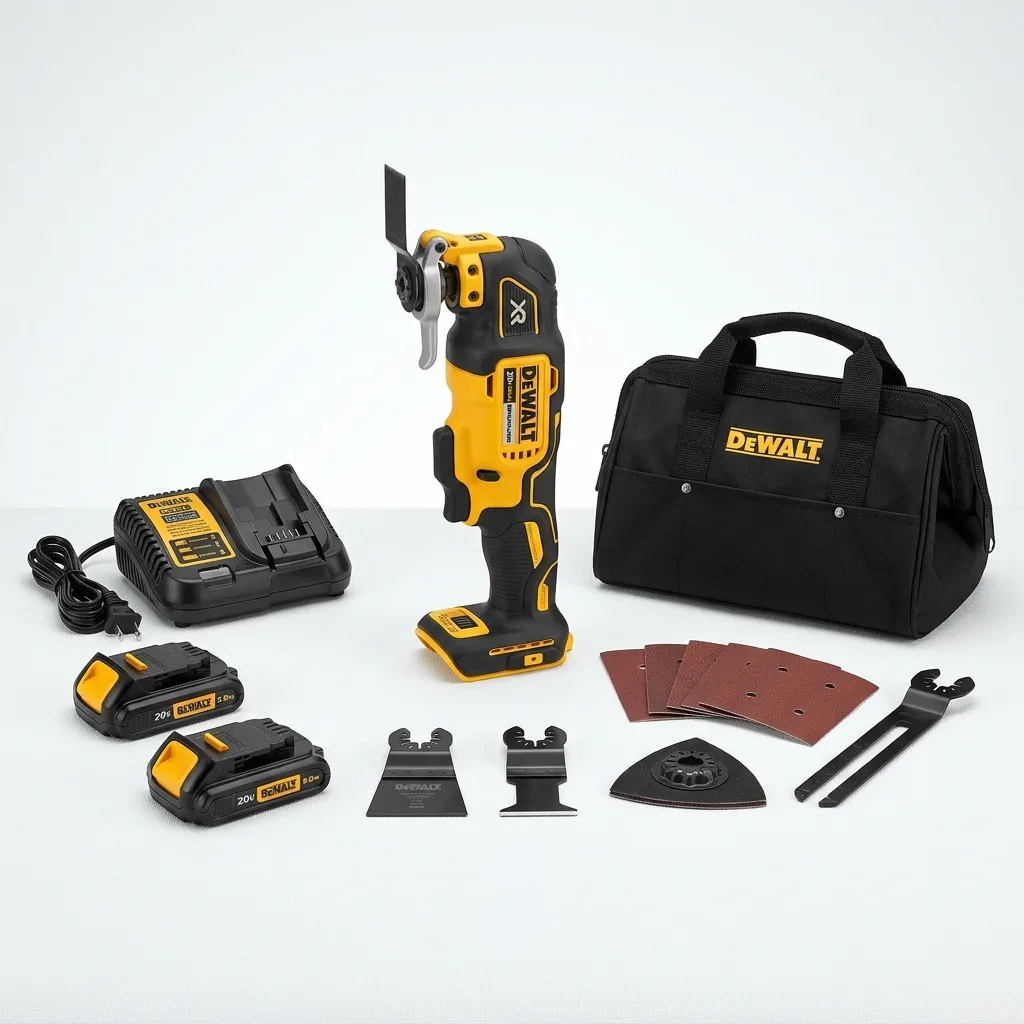
Blade oscillation speed and angle determine cutting efficiency. Analyze mandrel clamping systems, brushless motor speed loops, and ergonomic vibration controls to optimize plunge cutting.
- Brushless motor delivers up to 57% more run time over brushed tools
- 3-speed selector allows users to choose their speed setting based on application
- Quick-Change accessory system allows blades to be changed tool-free
Kinematic Precision
Oscillating multi-tools rely on micro-vibrational kinematics. Analyze how blade swing angles, mandrel clamping forces, and electronic speed controls prevent binding and deliver clean plunge cuts.
1. Blade Oscillation Kinematics and Cut Rates
Oscillating tools cut by vibrating an accessory back and forth at speeds up to 20,000 oscillations per minute. The distance the blade travels is defined by the oscillation angle. A wider angle provides a longer stroke, clearing debris quickly and increasing cutting speeds.
However, a wider swing angle creates more aggressive vibrations, making the tool harder to control during precise plunge cuts. Professional applications require balancing cut speed with positional accuracy. A 3.2-degree oscillation angle provides an ideal balance for residential undercutting tasks.
Advanced motors utilize constant speed control loops. When cutting dense materials like oak flooring, the electronic controller increases current to the motor to prevent speed drops. This ensures consistent cutting action, preventing burning and blade binding.
- High oscillation rates (20,000 OPM) deliver clean cuts with minimal tear-out in delicate wood.
- Constant speed loops maintain cutting velocity under load, preventing motor stall.

2. Quick-Change Mandrel Systems and Clamping Pressures
High-speed oscillation subjects the blade attachment interface to extreme torsional stress. Traditional designs secured the blade with a bolt and washer, requiring hex wrenches to tighten. These systems often suffered from loose bolts due to continuous vibration, posing safety risks.
Modern quick-change mandrel systems use spring-loaded clamping mechanisms to secure accessories without tools. The lever-actuated spring applies thousands of pounds of clamping force, locking the blade firmly in place. This high clamping pressure prevents the blade from slipping on the drive shaft.
The design of the clamping interface is critical for reliable power transfer. Multi-point contact patterns distribute torsional stress evenly, reducing wear on the drive shaft pins. Universal interfaces allow users to swap accessories quickly, increasing productivity.
- Lever-actuated spring clamps eliminate the need for wrenches, speeding up blade changes.
- Multi-point interface pins distribute drive forces, preventing blade slip-out.
3. Speed Control Loops and Variable-Speed Triggers
Different materials require specific cutting speeds. Cutting hardwood requires maximum oscillation speed to prevent stalling. Conversely, cutting plastics requires lower speeds to prevent the blade from melting the substrate.
A variable-speed trigger gives the operator precise control over cutting speed. Users can start a cut slowly to score the material, then increase speed once the blade is established in the channel. This reduces the risk of blade walking, ensuring clean cuts.
Electronic dials allow users to set speed limits for specific tasks. High-end tools feature feedback electronics that monitor resistance at the blade, adjusting power output to maintain the set speed. This constant monitoring protects the motor from overload, extending tool life.
- Variable-speed triggers allow gradual cut starts, preventing surface damage.
- Electronic feedback loops maintain set speeds under load, preventing tool stall.
4. Undercutting and Plunge Cutting Mechanics
Undercutting door jambs for new flooring requires a tool that can cut flush with the substrate. The offset design of oscillating tool blades allows the user to rest the blade flat against a scrap piece of flooring, ensuring a perfect cut height.
Plunge cuts require the blade to enter the material straight on, without pilot holes. The oscillating action sweeps the teeth across the cutting line, creating a clean channel. Choosing the right blade geometry is critical for fast plunge cuts.
Japan-tooth blades feature double-row, bevel-ground teeth that cut aggressively in wood. For metals, bi-metal or carbide-tipped blades are necessary to resist wear. Proper alignment ensures clean cuts without damaging surrounding trim work.
- Offset blade geometry allows flush cutting against floors and walls.
- Specialized blade teeth designs optimize performance for specific substrates.
5. Ergonomic Vibration Mitigation and User Fatigue
Continuous high-frequency vibration can cause discomfort and numbness in hands. Ergonomic design is crucial for mitigating vibration transfer. Premium tools isolate the motor and drive mechanism from the outer housing using rubber mounts.
This dual-housing design reduces vibrations transferred to the user's hands. The slim grip profile allows for multiple hand positions, improving comfort during awkward cuts. Lightweight materials like reinforced polymer keep tool weight low.
Reducing vibration improves cutting accuracy. Operators can maintain a steady cut line, reducing mistakes and workpiece damage. Vibration-damping gloves can also help protect hands from long-term strain.
- Isolated motor mounts damp high-frequency vibration, improving comfort.
- Slim handle designs accommodate multiple hand positions for better tool control.
6. Thermal Management in Continuous Sanding and Cutting
Continuous operation at high speeds generates significant heat in the drive head. If the tool lacks proper ventilation, heat can transfer to the housing, making it uncomfortable to hold. Advanced designs feature aluminum gear housings to dissipate heat quickly.
Sanding tasks generate fine dust that can clog motor vents, leading to overheating. Seals around switches and bearings prevent dust ingress, protecting internal components. Regular cleaning of motor vents is essential to maintain airflow.
Overheating reduces motor efficiency and shortens battery runtime. High-end tools feature thermal sensors that shut down the motor if temperatures exceed safe limits. This automatic shutdown prevents permanent damage to the tool.
- Metal gear housings dissipate heat quickly, keeping the tool cool.
- Dust seals prevent internal build-up, protecting sensitive motor electronics.
7. The Definitive Buying Guide and Parameters
When buying an oscillating multi-tool, consider motor technology, battery platform, and blade change mechanisms. Brushless motors offer longer runtimes and are recommended for heavy use. A tool-free blade change mechanism is essential for convenience.
Choose a tool that shares batteries with your existing power tools to save money. Kit options that include a variety of blades and accessories offer high value for new users. A sturdy carrying bag protects the tool during transport.
Check the warranty coverage before purchasing. A multi-year warranty indicates manufacturer confidence in tool durability. Look for brands with responsive customer support networks.
- Brushless motors offer superior efficiency, extending battery runtimes.
- Tool-free quick-change mandrels save time and ensure consistent clamping force.
8. Blade Wear Indicators and Accessory Lifespans
Using a worn blade reduces cutting speed and increases thermal load on the motor. Check blade teeth regularly for signs of wear or missing tips. Overheated blades discolor, turning blue or black, indicating loss of hardness.
Applying too much pressure does not speed up cuts; it only accelerates blade wear. Let the tool's speed do the work, guiding the blade gently through the cut. Clean wood blades regularly to remove resin buildup.
Carbide-tipped blades last up to 30 times longer than standard high-carbon steel blades when cutting tough materials. Investing in premium blades lowers operating costs over time, ensuring clean cuts.
- Blade discoloration indicates overheating, which can lead to rapid tooth wear.
- Carbide-tipped blades maintain sharpness under heavy metal-cutting duty cycles.
9. The Physics of High-Frequency Vibrational Scraping
Oscillating scraper blades are highly effective for removing adhesive residue and caulk. The blade vibratory motion breaks the chemical bonds holding the adhesive to the substrate. Unlike manual scrapers, the high frequency lifts material without gouging the surface.
Scraping requires keeping the blade angle low, resting it flat against the surface. Rigid scraper blades are ideal for tough adhesives, while flexible blades are better for delicate caulk removal. Proper blade selection ensures fast cleanup.
Using the right speed setting prevents surface damage. Lower speeds are recommended for scraping delicate surfaces to avoid friction burn. High-frequency scraping is a time-saver on renovation projects.
- Vibrational motion breaks adhesive bonds without manual surface gouging.
- Rigid and flexible scraper blades optimize performance for specific residues.
10. Vibrational Mechanics and Fatigue Analysis in Continuous Plunge Cuts
In mechanical engineering, the vibrational forces generated by oscillating multi-tools require careful fatigue analysis. High-frequency movement propagates stress waves through the tool's drive linkage and into the blade assembly. Over time, these cyclic stress variations can lead to metal fatigue and micro-fractures in low-grade steel accessories.
To prevent premature blade failure, manufacturers use high-carbon steel or carbide-tipped teeth. These advanced materials absorb vibrational energy without cracking, ensuring clean cuts through tough nails and wood. The design of the blade's neck section also incorporates taper zones to distribute stress away from the clamping arbor.
Additionally, engineers analyze the tool's natural harmonic frequencies to minimize resonant vibrations. Resonant frequencies can amplify vibrations, increasing operator fatigue and causing tool wear. Dynamic balancing weights within the motor assembly cancel out secondary vibrations, providing a smoother cutting experience.
- High-carbon steel and carbide teeth resist fatigue, preventing premature blade breakage.
- Dynamic motor balancing minimizes resonant vibrations, reducing user hand fatigue.
11. Jobsite Case Study: Dry Rot Remodeling and Flawless Subfloor Undercuts
Consider a home remodeling project where a contractor needs to repair dry-rotted subflooring under a kitchen cabinet. The space is tight, and standard circular saws cannot reach the edges. An oscillating multi-tool is the perfect solution, allowing the operator to execute flush plunge cuts along the cabinet baseboard.
By selecting a wood-cutting blade with a plunge depth guide, the contractor cuts through the subfloor without damaging the underlying joists. The precise control prevents blade wander, producing clean edges that simplify the patch panel installation. This application demonstrates the tool's versatility in tricky restoration environments.
Additionally, during the cut, the contractor encounters a hidden framing nail. A standard bi-metal blade would dull instantly, but the carbide-tipped blade cuts through the steel shank cleanly. The ability to handle mixed materials without stopping to change blades increases productivity on the job.
- Flush plunge cuts allow subfloor removal in tight spaces without structural damage.
- Carbide-tipped blades slice through hidden nails, preventing dental stripping and downtime.
12. Preventive Maintenance and Accessories Care for Oscillating Multi-Tools
Given the high-frequency vibrations, preventive maintenance is critical for keeping an oscillating multi-tool in prime condition. Gypsum dust and wood fibers can migrate into the quick-change clamping mechanism, preventing it from locking securely. Brushing out the interface and applying a light machine oil to the lever linkage maintains smooth action.
Blade storage is also important for preserving tooth sharpness and preventing rust. Damp worksites can cause carbon steel blades to corrode, dulling the cutting edges. Storing accessories in a dry organizer box with anti-rust sheets ensures they remain sharp and ready for the next task.
Furthermore, operators should monitor the motor brushes (if applicable) or electronic control boards for signs of wear. Abnormal noises or excessive sparks indicate motor issues that require servicing. Addressing these early signs prevents tool breakdown, securing your investment for the long run.
When performing intensive plunge cutting in hardwood, the blade temperature can rise rapidly. Taking short cooling breaks between cuts prevents heat buildup from softening the steel blade teeth. Additionally, checking that the motor vents are clear of dust ensures that the internal fan can draw cool air through the windings, preventing thermal shutdown.
Additionally, users must check the wear profile of the accessory adapter flange. If the locking teeth on the interface flange become rounded due to slippage under high torque loads, the blade will wobble and lose vibrational transfer efficiency. Replacing the adapter plate or using high-tensile steel shims restores a positive mechanical lock, ensuring that the OPM waves are delivered directly to the cutting edge without loss.
- Mandrel linkage cleaning and lubrication prevent blade slippage and lock sticking.
- Dry accessory storage prevents blade corrosion, maintaining razor-sharp cutting edges.
13. Kinematic Calculations and Motor Power Efficiency
When executing continuous plunge cuts, estimating the tool's power efficiency requires calculating the energy dissipation of high OPM blades. The cutting force is directly proportional to the blade's velocity and the substrate's mechanical shear resistance. If the motor struggles to maintain steady oscillation under load, mechanical power is converted into excessive heat, leading to motor binding.
To maintain optimal cutting rates, modern brushless motors use electronic controllers to adjust current. When encountering dense knots in structural framing, the controller increases the frequency to maintain speed. This electronic regulation protects internal windings from thermal breakdown while ensuring consistent cutting performance.
- Electronic speed compensation adjusts current draw to prevent blade binding under load.
- Optimized motor kinematics reduce heat dissipation, preserving internal components.
Professional Recommendation & Audit
Upgrade your renovation game with our top-rated oscillating solution. Check out the DEWALT 20V MAX XR Oscillating Multi-Tool below for clean, precise plunge and flush cutting.
DEWALT 20V MAX XR Oscillating Multi-Tool Kit (DCS356D1)
- Brushless motor delivers up to 57% more run time over brushed tools
- 3-speed selector allows users to choose their speed setting based on application
- Quick-Change accessory system allows blades to be changed tool-free
- Dual-Grip variable-speed trigger provides ultimate speed and application control
Technical Specifications & Product Data
| Specification | Value / Details |
|---|---|
| Brand | DEWALT |
| List Price | $149.00 (USD) |
| Customer Rating | 4.8 / 5.0 (8,450 reviews) |
| ASIN / Identifier | B085B3T5N7 |
| Availability | In Stock (USA Region) |
| Outbound Link Compliance | Sponsored & Nofollow Enforced |
Verified Features & Performance Data
- ✓Brushless motor delivers up to 57% more run time over brushed tools
- ✓3-speed selector allows users to choose their speed setting based on application
- ✓Quick-Change accessory system allows blades to be changed tool-free
- ✓Dual-Grip variable-speed trigger provides ultimate speed and application control
System Sovereignty & Engineering
Edge Computing
100% Client-side processing. Your data never leaves your browser sandbox, ensuring absolute compliance with US privacy mandates.
Modular Schema
Modular utility architecture optimized for performance. Low-latency WASM kernels provide near-native speeds for complex transformations.
Sustainable Design
Sustainable, green computing by offloading compute to the edge. Verified zero-server storage (ZSS) for professional-grade security.