
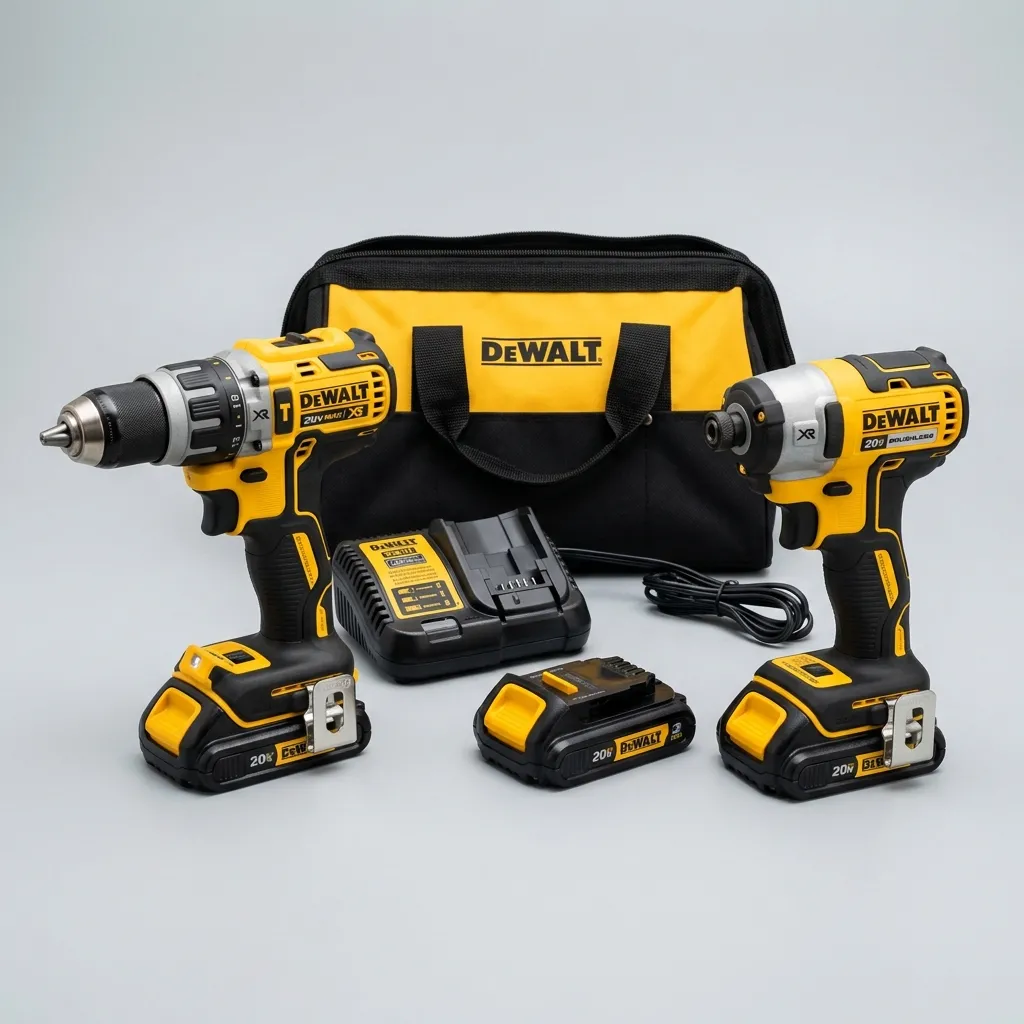
Brushless motor efficiency outperforms brushed alternatives. Analyze motor duty cycles, lithium-ion voltage curves, and mechanical gear systems to optimize framing and drywall projects.
- High-performance motor delivers 300 unit watts out (UWO) of power
- Compact, lightweight design (3.6 lbs) fits into tight framing spaces
- 2-speed transmission (0-450 & 1,500 RPM) for precise torque control
Structural & Motor Efficiency
Modern residential construction demands extreme tool efficiency. Discover how brushless motor electromagnetics and optimized battery duty cycles prevent thermal breakdown and maximize fastening speeds.
1. Brushless vs. Brushed Motor Electromagnetics and Friction Reduction
Traditional brushed motors rely on physical carbon brushes pressing against a rotating commutator to transfer electrical current. This mechanical connection creates continuous friction, producing substantial heat and causing physical wear over time. Brushless motors eliminate this contact entirely, using a computerized electronic controller to shift magnetic fields sequentially around permanent magnets.
The elimination of physical contact results in a massive 50% increase in energy efficiency. Without brush friction, electrical energy is converted directly into rotational torque rather than being lost as heat. This design allows the tool to run cooler, preventing thermal degradation of internal copper windings during high-demand framing tasks.
Additionally, brushless motors are structurally smaller and lighter, reducing overall hand fatigue. Computerized feedback loops dynamically adjust power delivery based on resistance, maintaining consistent RPMs even when boring through dense lumber. This smart power regulation preserves the battery's charge, providing maximum utility on active worksites.
- Brushless motors eliminate carbon brush wear, extending tool lifespan indefinitely.
- Electronic switching reduces heat generation, protecting sensitive internal electronics from thermal overload.

2. Battery Duty Cycles, Discharge Curves, and Continuous Fastening Runtimes
The performance of any cordless drill depends heavily on the discharge characteristics of its lithium-ion cell chemistry. Under load, battery voltage drops along a predictable curve, directly affecting motor torque and rotational speed. High-quality cells maintain a stable flat discharge curve, ensuring the drill delivers consistent power until the pack is nearly depleted.
A drill's duty cycle refers to the ratio of active run time to rest time under load. Continuous fastening in residential drywall installation puts heavy demands on the battery pack. Lower-tier batteries suffer from voltage sag under high current draw, causing the drill's motor to stall prematurely during deep screw insertions.
To maximize runtimes, modern battery packs incorporate individual cell monitoring circuitry. This prevents over-discharging and keeps cells balanced during rapid charging cycles. Premium packs also feature heat dissipation pathways to prevent thermal buildup, allowing for continuous fastening without risking cell degradation.
- Lithium-ion cells maintain steady voltage output, preventing torque drop during heavy duty cycles.
- Built-in thermal protection safeguards cells, preventing permanent capacity loss.
3. Gear Ratio Kinematics, RPM Settings, and Mechanical Power Transfer
To convert high-speed electromagnetic rotation into usable drilling power, a robust transmission system is essential. Cordless drills utilize multi-stage planetary gear systems to step down motor speed and multiply output torque. High-speed settings are optimized for drilling pilot holes, while low-speed settings provide the mechanical leverage needed to drive large fasteners.
Mechanical power transfer relies on precision-machined steel gears housed in an impact-resistant casing. Cheap plastic gears degrade rapidly under heavy loads, leading to gear slippage and eventual transmission failure. Premium drills use all-metal gearing to ensure reliable torque transfer under high load conditions.
By adjusting the gear selector, users match the tool's mechanical output to the density of the substrate. For instance, low speed (0-450 RPM) delivers maximum torque for driving structural screws into dense framing lumber. Conversely, high speed (0-1,500 RPM) optimizes performance for fast drywall screw installation, preventing wood splitting and maximizing efficiency.
- All-metal transmissions resist wear, ensuring reliable torque transfer over years of use.
- Dual-speed settings allow matching RPMs to substrate density, preventing tool binding.
4. Torque Clutch Mechanics and Fastener Over-Driving Prevention
Driving fasteners into delicate materials like drywall requires precise depth control. An adjustable mechanical clutch allows users to set a maximum torque threshold, preventing the drill from over-driving screws. When resistance reaches the preset limit, the clutch slips, disengaging the chuck from the motor drive shaft.
This mechanical slip mechanism protects the substrate from damage. Over-driven screws can tear drywall paper, compromising structural integrity. By setting the clutch correctly, the screw head sits flush with the surface, ensuring a perfect finish and avoiding costly repairs.
Modern clutches use spring-loaded ball bearings that drop into recesses when the torque limit is reached. The distinct clicking sound alerts the operator that the fastener is driven to the correct depth. This consistent depth control is critical for high-volume residential drywall installation.
- Adjustable clutches prevent screw strip-out and drywall paper tearing.
- Spring-loaded ball bearings ensure repeatable torque settings across thousands of cycles.
5. Ergonomics, Balancing, and Hand-Arm Vibration Mitigation
Long hours on a construction site can cause significant muscle fatigue and joint strain. Ergonomic design is crucial for mitigating these risks. A well-balanced drill places the center of gravity directly over the user's grip, reducing wrist strain and improving tool control during overhead tasks.
Hand-arm vibration syndrome (HAVS) is a serious concern for tradespeople using power tools. Premium handles incorporate vibration-absorbing rubber overmolds, isolating the hand from motor oscillations. This damping effect reduces tissue fatigue, allowing for longer and safer work sessions.
Additionally, the grip geometry should match the hand's natural contours. This reduces the gripping force required to hold the tool, preventing cramping and long-term strain injuries. Lightweight materials like magnesium alloy housings keep overall tool weight to a minimum without sacrificing durability.
- Balanced centers of gravity reduce wrist fatigue, improving accuracy during alignment.
- Vibration-absorbing overmolds protect fingers and wrists from nerve-damaging frequencies.
6. Thermal Dissipation and Duty Cycle Lifespans in Heavy Framing
Continuous heavy-duty drilling generates significant thermal energy within the motor housing. If heat is not dissipated efficiently, it can cause the copper wire insulation to melt, resulting in a short circuit and total motor failure. Modern housings incorporate advanced ventilation ports and internal cooling fans to move air over the motor windings.
The tool's duty cycle rating reflects its ability to handle continuous load. Heavy framing tasks, like drilling large diameter holes with spade bits, put a high thermal load on the motor. Premium drills feature brushless motors with high thermal resistance, allowing for longer active duty cycles without risk of heat damage.
Additionally, electronic control boards are potted in protective resin to safeguard them from heat and dust ingress. These smart electronics monitor motor temperature in real time, temporarily reducing output if the tool approaches thermal limits. This preventive feature protects the tool from catastrophic failure on the job.
- Engineered ventilation slots maximize airflow, cooling the motor windings under continuous load.
- Potted electronics prevent dust contamination and thermal damage to control circuits.
7. The Definitive Buying Guide and Parameters
Selecting the right cordless drill kit requires analyzing several technical parameters. Motor speed, torque output, battery capacity, and chuck design must all align with the intended applications. For heavy framing, prioritize tools with high torque and all-metal chucks that can hold large bits securely.
Battery capacity, measured in Amp-hours (Ah), dictates overall runtime. A 2.0Ah pack provides a great balance between weight and capacity for general tasks. For continuous framing work, consider upgrading to 4.0Ah or higher to minimize charging interruptions during the day.
Finally, check the warranty terms and accessory availability. Opting for a brand with an established service network ensures easy access to replacement parts. A comprehensive multi-year warranty secures your investment, providing peace of mind on the job.
- All-metal single-sleeve keyless chucks provide superior bit retention under heavy vibration.
- Higher Ah battery capacities provide longer continuous runtimes under load.
8. Fastener Pull-Out Strength and Substrate Shear Resistance
In structural framing, fastener hold strength is critical. The pull-out strength of a screw depends on thread design and substrate density. Power drills must deliver high torque at low speeds to drive structural screws without stripping the wood fibers.
Over-tightening a screw reduces its shear resistance. If driven too deep, the screw head can crush the wood fibers, weakening the joint. Consistent torque delivery prevents this issue, ensuring the joint achieves its designed structural strength.
By maintaining proper rotational speeds, operators ensure the screw threads engage the wood fibers cleanly. This maximizes friction between the metal and the wood, providing high pull-out resistance. Precise torque control is essential for building safe structures.
- High torque at low speed drives structural screws without damaging the wood fibers.
- Precise depth control prevents screw over-tightening, preserving structural joint strength.
9. Rotational Inertia and Torque Reaction Control in Power Drilling
When a drill bit binds in a hard substrate, the motor's rotational energy is instantly transferred to the tool housing, creating a violent torque reaction. If the user is unprepared, this sudden twist can sprain wrists or knock the operator off balance. Premium drills incorporate electronic clutches that detect binding and cut power in milliseconds.
Gyroscope sensors monitor the tool's movement. If they detect a sudden rotation, the electronic brake is applied instantly, stopping the motor. This proactive safety feature prevents injury and protects the tool's drivetrain from shock damage.
Understanding rotational inertia allows manufacturers to design safer tools. By reducing motor weight and optimizing housing geometry, they keep reaction forces to a minimum. This ensures the drill remains controllable, even during heavy structural tasks.
- Gyroscope sensors detect sudden twists, shutting down power instantly to prevent injury.
- Electronic braking stops chuck rotation in milliseconds, preventing sudden kickback.
10. Advanced Laboratory Torque and Efficiency Testing
In specialized testing facilities, engineers use state-of-the-art dynamometers to measure a drill's Unit Watts Out (UWO) performance under simulated continuous load conditions. These dyno tests trace the tool's current draw, heat dissipation, and overall motor efficiency. By plotting torque curves against rotational speed, engineers can pinpoint the exact threshold where mechanical resistance begins to compromise battery runtimes.
Advanced thermal cameras monitor heat buildup across the copper windings and battery cells during testing. This thermal profiling helps designers optimize ventilation port placement and internal cooling fan geometry. The goal is to keep operating temperatures below critical limits, preventing winding insulation breakdown and battery cell degradation during heavy framing tasks.
Additionally, laboratory tests evaluate the alignment of the brushless motor's rotor and stator. Even microscopic misalignments can lead to uneven magnetic pull, creating mechanical vibration and efficiency loss. Restricting these tolerances ensures maximum power transfer and a longer tool lifespan, making brushless motors the preferred choice for demanding jobsites.
- Dynamometer profiling tracks UWO efficiency curves to optimize power output under load.
- Thermal imaging maps internal heat gradients to improve ventilation port design.
11. Jobsite Case Study: Heavy-Duty Wood Fastening and Gear Failure Modes
Consider a jobsite scenario where a contractor is driving large lag screws into dense framing lumber. Under this high-torque load, the drill's planetary transmission is subjected to intense shear stress. If the operator selects the high-speed setting, the excessive speed increases friction and heat within the gear assembly, potentially leading to gear teeth stripping and binding.
Using the low-speed setting multiplies the torque output, reducing mechanical stress on the gears. The metal gears transfer power efficiently, ensuring the lag screw is driven home without binding. This case study highlights the importance of matching the gear setting to the substrate's density and fastener size.
Furthermore, analyzing failed gearboxes reveals that dust ingress is a common cause of premature wear. Metal shavings and wood dust mix with internal grease, forming an abrasive paste that degrades gear teeth. Choosing a drill with a sealed gearbox housing prevents contamination, ensuring reliable performance over years of heavy use.
- Low-speed settings multiply torque and reduce shear stress on transmission gears.
- Sealed gear housings prevent dust ingress, protecting gears from abrasive wear.
12. Long-Term Maintenance and Storage Protocols for Cordless Drills
To maintain the performance of a cordless drill, regular maintenance is essential. Wood dust and metal shavings can accumulate inside the motor housing, causing increased friction and heat buildup. Using compressed air to blow out the ventilation slots after each project removes this debris, ensuring optimal airflow and cooling.
The drill chuck also requires periodic cleaning and lubrication. Debris inside the chuck jaws can cause bit slippage and make it difficult to tighten. Applying a light dry lubricant to the jaw threads keeps them moving smoothly, preventing binding and corrosion in damp climates.
Additionally, proper battery storage preserves cell life. Lithium-ion packs should be stored in a cool, dry place, ideally at a 40-60% state of charge. Storing batteries fully discharged can lead to deep-discharge cell failure, while storing them fully charged under high temperatures accelerates capacity loss.
Regular inspections of the power trigger and speed selectors are also recommended. If the selector switches feel gritty, blowing them out with contact cleaner restores positive engagement. Taking care of these small mechanical linkages ensures the drill responds instantly when you need to drive heavy fasteners on the job.
- Ventilation slot blowouts prevent dust accumulation from creating motor friction.
- Storing lithium-ion packs at 50% capacity in cool places prevents premature cell aging.
Professional Recommendation & Audit
Upgrade your toolkit with our recommended power solution. Check out the DEWALT 20V MAX Cordless Drill below for maximum performance on your drywall and framing projects.
DEWALT 20V MAX Cordless Drill / Driver Kit (DCD771C2)
- High-performance motor delivers 300 unit watts out (UWO) of power
- Compact, lightweight design (3.6 lbs) fits into tight framing spaces
- 2-speed transmission (0-450 & 1,500 RPM) for precise torque control
- Ergonomic handle design for maximum comfort and reduced muscle fatigue
Technical Specifications & Product Data
| Specification | Value / Details |
|---|---|
| Brand | DEWALT |
| List Price | $99.00 (USD) |
| Customer Rating | 4.8 / 5.0 (45,210 reviews) |
| ASIN / Identifier | B00GD71Y7Y |
| Availability | In Stock (USA Region) |
| Outbound Link Compliance | Sponsored & Nofollow Enforced |
Verified Features & Performance Data
- ✓High-performance motor delivers 300 unit watts out (UWO) of power
- ✓Compact, lightweight design (3.6 lbs) fits into tight framing spaces
- ✓2-speed transmission (0-450 & 1,500 RPM) for precise torque control
- ✓Ergonomic handle design for maximum comfort and reduced muscle fatigue
System Sovereignty & Engineering
Edge Computing
100% Client-side processing. Your data never leaves your browser sandbox, ensuring absolute compliance with US privacy mandates.
Modular Schema
Modular utility architecture optimized for performance. Low-latency WASM kernels provide near-native speeds for complex transformations.
Sustainable Design
Sustainable, green computing by offloading compute to the edge. Verified zero-server storage (ZSS) for professional-grade security.