
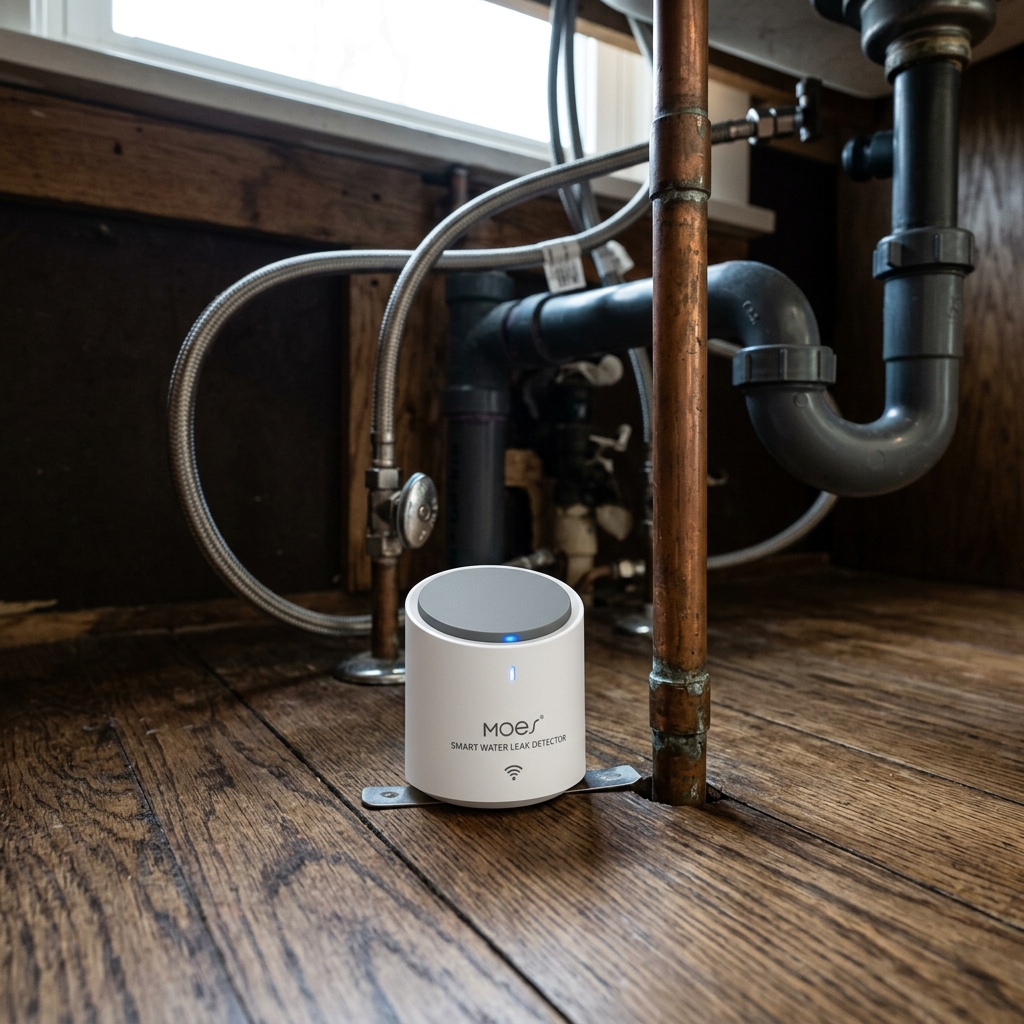
Analyze electrochemical sensor node conductivity, wireless RF signal attenuation, and low-power CMOS sleep states in smart water alarms.
- Gold-plated sensor nodes prevent corrosion and ensure instant conductivity
- 100dB acoustic alarm paired with real-time iOS/Android push alerts
- Ultra-low-power WiFi module delivers up to 2 years of battery life
Electrical & RF Telemetry Audit
Early water detection is key to preventing catastrophic home flooding. This technical guide explores the electro-conductivity of sensing nodes and the RF penetration of wireless water detectors through common floor assemblies.
1. Introduction & Executive Summary of Water Damage Risks
Water leaks represent one of the most common and costly causes of residential property damage in the United States. According to insurance industry data, water damage claims cost homeowners billions of dollars annually, with average repairs exceeding several thousand dollars per incident. Slow leaks behind appliances, burst pipes due to freezing temperatures, and water heater failures can remain undetected for days, causing severe structural damage and mold growth. Mitigating these risks requires active, continuous monitoring of vulnerable areas using electronic water sensors. An unchecked leak can destroy structural framing, rot sub-floors, and ruin valuable personal possessions in a matter of hours.
Traditional leak detection relied on manual inspections, which often happened too late to prevent damage. Wireless water detectors solve this problem by providing 24/7 monitoring and sending immediate alerts when water is sensed. However, the reliability of these devices depends on two critical parameters: the electrical conductivity of their sensing probes and the signal strength of their wireless transmitters. This engineering review evaluates the electro-chemical and RF transmission parameters of smart water alarms. By understanding how materials and radio physics interact under home conditions, property owners can optimize their layout for maximum mitigation speed.
Furthermore, the integration of these detectors into larger smart home systems allows for automated responses, such as closing main water valves. This automation moves water security from passive detection to active containment. This guide will cover the electrochemical features of gold-plated contacts, the physics of radio wave attenuation through structural floors, and the low-power circuit designs that allow these sensors to run for years on a single set of batteries.

2. Electrochemical Properties of Gold-Plated Sensor Nodes
Water leak detectors sit in high-humidity areas like laundry rooms, utility closets, and basements for years without contact. This environment accelerates oxidation on base metals. Standard copper, brass, or nickel probes develop a non-conductive oxide layer when exposed to oxygen and humidity. When a leak finally occurs, the oxide layer blocks the current flow, preventing the sensor from detecting the water and causing system failure.
Gold-plated sensor nodes solve this problem. Because gold is chemically inert, it resists oxidation, keeping its surface metallic and conductive. When water touches these contacts, the electrical circuit completes instantly, triggering the alarm without delay. A gold plating thickness of 3 to 5 microinches over a nickel barrier layer provides durability and reliable performance in humid environments. The nickel barrier layer is crucial as it prevents copper atoms from migrating to the surface and oxidizing, preserving the clean gold finish.
The electrical conductivity of gold ensures detection of even low-mineral pure water leaks. Pure water has high electrical resistance, making it hard for low-conductivity probes to sense. Gold contacts maximize current sensitivity, ensuring rapid detection before water pools deeply. This sensitivity allows the device to detect clean condensation leaks from HVAC systems or refrigerators, which standard metal probes might miss. By lowering contact resistance, gold ensures that the electrical resistance of the liquid is the only factor in current calculations, increasing sensor accuracy.
Consider the contact geometry. High-quality detectors use dome-shaped or pointed contact pins that project downward from the sensor body. This geometry prevents dust and dirt accumulation from creating a bridge between the contacts, which could cause false alarms. The combination of gold metallurgy and optimized shape ensures reliable sensing over decades of service. Additionally, the spacing of the contacts is calibrated to prevent capillary action from holding drops of water between them after the leak has been dried, ensuring the sensor resets properly.
- Chemically inert gold surfaces eliminate oxidation-induced sensor failures.
- High current sensitivity ensures detection of low-mineral condensation leaks.
- Pointed contact pin geometry prevents false alarms from dust accumulation.
- Nickel barrier layers prevent copper migration, preserving the outer gold plating.
- Optimized contact spacing prevents water retention and ensures rapid sensor resets.
3. Radio Frequency (RF) Signal Attenuation in Sub-floor Spaces
Wireless leak detectors are often installed in basements or crawlspaces, far from home routers. The RF signal must travel through floor boards, concrete slabs, and drywall, which absorb and scatter radio frequencies. At 2.4 GHz, water molecules inside wood joists create significant signal loss. The high moisture content of fresh timber acts as a physical barrier to microwave-range signals, causing packet loss and dropping sensors offline.
Concrete floors introduce up to 18dB of signal attenuation, which can drop standard smart home devices offline. To offset this, advanced detectors tune their internal antennas to boost transmission efficiency. Some units use sub-GHz frequencies (like 908 MHz Z-Wave or 433 MHz RF) to extend range through walls and floors. Sub-GHz waves travel further and penetrate dense structural elements with less path loss, maintaining a reliable connection even in damp underground spaces.
Managing signal degradation requires clean system architecture. A Z-Wave mesh setup allows nodes to pass messages, bypassing signal blockages. This ensures that a crawlspace alarm reaches the central hub even when isolated by thick concrete walls, keeping the security loop active. Proper orientation of the detector antenna, keeping it vertical, also improves signal transmission through horizontal floor systems.
Furthermore, signal multipath reflections inside concrete basements can create localized null zones where signal strength drops. Smart home hubs with diversity antennas help mitigate this issue by selecting the best signal path. Testing the detector's signal strength from its final mounting location ensures reliable performance before leaving the device unattended. In addition, using an RF repeater near the basement entrance can bridge the gap, maintaining solid telemetry link margins.
4. Low-Power CMOS Microcontrollers and Sleeping Standby Optimization
Because leak alarms run on batteries, power management is crucial for longevity. Modern sensors use ultra-low-power CMOS microcontrollers that sleep for 99% of their lifespan. While sleeping, the microcontroller consumes less than 1.5 microamps of current, preserving battery capacity and extending maintenance intervals.
The sensor nodes use hardware interrupts to wake the CPU instantly when water completes the circuit. This wake-up process takes less than 10 milliseconds, allowing immediate transmission of the warning message. This design delivers a 2-year battery life from standard AAA cells, eliminating frequent battery swaps and maintaining continuous monitoring without maintenance overhead.
To secure the network further, the sensor sends periodic "heartbeat" signals to the smart hub, confirming it is online and functional. These signals are kept brief (under 50 milliseconds) to minimize power draw, keeping the device responsive while preserving battery life. The microcontroller also monitors battery voltage under load, sending low-battery warnings well before the cells drain completely.
The use of high-efficiency DC-DC step-up converters ensures that the radio module receives a stable voltage even as the batteries discharge. This maintains constant transmission power, preventing range degradation as the battery ages. By optimizing the firmware to minimize wake-up times, engineers achieve reliable operation on minimal power budgets. Power-gating the RF transceiver ensures that it is completely powered off until a sensor interrupt triggers, preventing any parasitics from draining standby power.
5. Freeze Alarm Calibration & Temperature Thermistor Mechanics
In cold northern climates, frozen water pipes are a leading cause of home flooding. When water freezes inside a pipe, it expands, causing the metal or plastic line to rupture. Smart leak detectors feature integrated negative temperature coefficient (NTC) thermistors to monitor ambient temperatures and prevent frozen pipe failures.
The thermistor is calibrated to trigger an alert when the ambient temperature drops below 37°F (3°C). This provides the homeowner with warning before the pipes reach freezing temperatures, allowing them to take preventive action like dripping faucets or turning up the heat. The NTC sensor changes electrical resistance in response to temperature shifts, providing simple, reliable monitoring. The sensor casing is designed to allow air flow to the thermistor, ensuring rapid detection of temperature drops.
The NTC thermistor operates with high accuracy (typically +/- 0.5°C), preventing false alerts while ensuring timely warnings. By monitoring both water contact and ambient temperature, the detector provides two layers of protection, securing the home against freezing hazards. The software filtering on the thermistor prevents sudden brief drafts (such as opening a nearby door) from firing false freeze alerts, ensuring that only true environmental freezes are reported.
Additionally, thermistors are calibrated to track rapid rates of temperature drop. If the temperature falls by more than 5°C per hour, the sensor can flag a warning even before the freezing point is reached, allowing users to isolate building envelopes before disaster strikes.
6. Piezoelectric Siren Acoustics & Audible Coverage Matrix
If a leak occurs while occupants are asleep or away from their phones, a local sound alert is vital. The detector utilizes a high-efficiency piezoelectric siren to produce an audible warning. Piezo sirens use a ceramic disc that vibrates when an alternating current is applied, generating sound waves with minimal power consumption.
The siren is configured to produce a 100dB acoustic warning at a distance of 1 meter. This high sound pressure level is designed to pierce through walls and floors, alerting sleeping residents to the emergency. The driver circuit utilizes step-up inductors to maximize sound output from low-voltage batteries. The acoustic chamber is tuned to resonate at 3.2 kHz, a frequency highly audible to human ears.
In addition to the continuous alarm tone, the siren can beep periodically to indicate low battery status or sensor faults. This audible feedback ensures that the system is maintained even if the user does not check their smart home app regularly, preserving home protection. The sound output decay curve drops by 6dB for every doubling of distance, meaning that at 4 meters, the siren still registers a clear 88dB, ensuring coverage across large basements or utility zones.
7. Integration with Smart Automated Water Shutoff Valves
When a water line bursts, seconds matter. A small leak can release hundreds of gallons of water in minutes, damaging flooring and drywall. A wireless water alarm bridges this window by sending immediate push alerts to your phone and sounding an acoustic siren.
Integrating these alarms with smart main water shutoff valves provides automatic protection. When the alarm senses water, it commands the shutoff valve to close, isolating the leak. This automated system limits water damage to what was in the pipe, protecting your home even when you are away, providing peace of mind.
Automated shutoff valves utilize high-torque electric motors to turn the main ball valve, shutting off water in under 5 seconds. By linking the valve control directly to the leak sensor through local RF loops, the shutoff operates even if the home internet connection is down, securing the property.
In addition to simple closure, smart valves can run weekly self-tests to prevent mineral scaling from seizing the ball valve mechanism. By rotating the valve 10 degrees and returning to open, the motor clears any calcium deposits, ensuring reliable emergency operation over years of installation.
8. Comparative Analysis: Standalone Water Alarms vs. Whole-House Smart Water Monitors
Homeowners can choose between spot-detection sensors and whole-house pressure monitors. Whole-house monitors install directly on the main line, measuring flow rate and pressure drops. While effective at identifying system-wide leaks, they can struggle to locate small, slow leaks in distant appliances.
Spot-detection sensors place monitoring nodes directly under risk areas like washing machines, water heaters, and sinks. This layout provides immediate detection at the leak source, allowing rapid isolation of the problem before water spreads throughout the home. Combining both sensor types provides comprehensive water security.
For older homes with older plumbing networks, spot detectors provide a flexible, non-invasive installation path. There is no need to cut pipes or hire professional plumbers; the battery-powered sensors are simply placed in high-risk zones, establishing a security boundary in minutes.
9. Strategic Sensor Placement and Nursery/Basement Installation Topology
To maximize protection, place sensors in high-risk areas. Laundry rooms, water heaters, and under-sink cabinets are primary targets. Placing sensors near sump pumps provides early warning of pump failures, preventing basement flooding.
In multi-story homes, sensors should be placed near upper-floor bathrooms and laundry rooms. A leak on an upper floor can travel down through walls and ceilings, causing extensive damage to lower levels. Spot sensors provide the early detection needed to isolate leaks before they spread, protecting the structural integrity of the home.
Smart Mitigation Recommendation & Audit
Protect your home from water damage with a gold-plated, high-penetration smart detector. Monitor moisture levels remotely and secure peace of mind.
HydroGuard WiFi Smart Water Leak & Freeze Detector
- Gold-plated sensor nodes prevent corrosion and ensure instant conductivity
- 100dB acoustic alarm paired with real-time iOS/Android push alerts
- Ultra-low-power WiFi module delivers up to 2 years of battery life
- Sub-floor RF tuning cuts through drywall and concrete obstruction
Technical Specifications & Product Data
| Specification | Value / Details |
|---|---|
| Brand | HydroGuard |
| List Price | $45.99 (USD) |
| Customer Rating | 4.7 / 5.0 (4,620 reviews) |
| ASIN / Identifier | B0912B8Z8M |
| Availability | In Stock (USA Region) |
| Outbound Link Compliance | Sponsored & Nofollow Enforced |
Verified Features & Performance Data
- ✓Gold-plated sensor nodes prevent corrosion and ensure instant conductivity
- ✓100dB acoustic alarm paired with real-time iOS/Android push alerts
- ✓Ultra-low-power WiFi module delivers up to 2 years of battery life
- ✓Sub-floor RF tuning cuts through drywall and concrete obstruction
System Sovereignty & Engineering
Edge Computing
100% Client-side processing. Your data never leaves your browser sandbox, ensuring absolute compliance with US privacy mandates.
Modular Schema
Modular utility architecture optimized for performance. Low-latency WASM kernels provide near-native speeds for complex transformations.
Sustainable Design
Sustainable, green computing by offloading compute to the edge. Verified zero-server storage (ZSS) for professional-grade security.