
Pop riveting outpaces standard sheet metal screws. Analyze mechanical leverage advantage, mandrel ejection reliability, and clamping load force to optimize HVAC ductwork fastening.
- 13-inch length maximizes leverage and mechanical advantage for heavy-duty nuts
- Includes 6 interchangeable mandrel/nosepiece sets (Metric and SAE)
- Toolless mandrel change design allows fast swapping on active jobsites
Mechanical Force
HVAC ductwork and sheet metal assembly require secure, vibration-resistant fastening. Learn how compound hinges and clean mandrel release prevent jams and establish structural joint clamp force.
1. Squeezing Mechanics and Compound Leverage Hinges
Setting heavy steel rivets requires substantial pulling force. Standard single-pivot rivet hand tools are slow and require significant hand strength. Professional hand rivet tools utilize compound leverage hinges to multiply input forces.
The compound hinge pivots twice during a single handle squeeze, shifting the mechanical advantage curve dynamically. As handles close, leverage multiplies, providing maximum force at the end of the stroke when setting the rivet.
This compound action reduces hand effort by up to 60%, preventing muscle fatigue during high-volume HVAC installation. Double-compound hinge systems use carbon steel plates to distribute load, preventing flex and ensuring reliable operation under high stress.
- Double-compound hinges multiply hand forces, reducing setup efforts by 60%.
- Carbon steel hinge links resist deflection, ensuring consistent pulling force.

2. Mandrel Ejection Mechanics and Jam Prevention
After setting a pop rivet, the spent mandrel stem must be ejected from the nosepiece. In low-tier tools, the stem can slip or jam inside the pulling jaws, stopping work. Mandrel jams are a primary cause of downtime on active jobsites.
Premium rivet guns incorporate dedicated mandrel ejection paths. Squeezing the handles sets the rivet, and opening the handles releases the jaw grip, allowing gravity or a return spring to push the stem out the back of the tool into a collector bottle.
To prevent slipping, three-jaw chuck designs are used instead of two-jaw clutches. Three jaws provide uniform clamping pressure around the stem, reducing wear on the jaw teeth. Regular cleaning of the jaws with a wire brush maintains grip performance.
- Three-jaw chuck systems provide uniform grip pressure, preventing stem slippage.
- Dedicated ejection paths channel spent stems into collectors, avoiding internal jams.
3. Blind Fastening Mechanics and Joint Clamping Force
Rivet guns allow for blind fastening, meaning you can join materials when only one side is accessible. Squeezing the handles pulls the mandrel head through the rivet body. This axial force expands the rivet sleeve, clamping the sheet metal.
The clamping force achieved is determined by the yield strength of the rivet material. Aluminum rivets deform easily, while steel and stainless steel rivets require substantial force to expand. Correct tool selection ensures proper sleeve deformation and tight joints.
If the rivet is under-set, the joint will remain loose and rattle under vibration. Conversely, over-setting can shear the rivet flange, weakening the joint. Precision nosepieces control sleeve deformation, ensuring structural joint integrity.
- Blind fastening enables structural joints where back-side access is blocked.
- Precision nosepieces control sleeve expansion, ensuring tight, vibration-resistant joints.
4. Rivet Nut Mandrel Integrity and Thread Durability
Rivet nut setters use threaded mandrels to pull the rivet nut into place. The mandrel threads must withstand high tensile loads during setting. Low-quality mandrels can strip or snap under tension, ruining the rivet nut.
To maintain thread durability, mandrels are made from hardened chrome-moly alloy steel. This tough material resists deformation and stripping, ensuring long-term reliability. Toolless mandrel change systems allow users to swap sizes quickly.
Always thread the rivet nut fully onto the mandrel before setting. Under-threading concentrates the pull force on a few threads, leading to strip-out. Keeping mandrel threads clean and lubricated extends their lifespan.
- Chrome-moly steel mandrels resist stripping, maintaining thread integrity under heavy pull loads.
- Toolless change designs enable fast size swaps, maximizing productivity.
5. Ergonomics, Handle Design, and Hand Strain Mitigation
Repetitive rivet setting can cause wrist and forearm fatigue. Ergonomic handle design is critical for reducing user strain. Long handles (e.g., 13 inches) provide a long lever arm, reducing the hand force required to set the rivet.
Cushioned rubber grips absorb shock when the mandrel snaps, protecting the user's palms from impact. Curved handle profiles match natural hand closure paths, improving comfort. Lightweight aluminum frames keep overall tool weight down.
Proper weight distribution reduces wrist strain during vertical and overhead tasks. Balanced tools remain steady, allowing for precise alignment of sheet metal joints. Using two-handed tools helps spread load across both arms.
- Long handle levers (13 in) maximize mechanical advantage, reducing grip strain.
- Shock-absorbing grips protect palms when spent mandrel stems snap during setting.
6. Rivet Material compatibility and Corrosion Prevention
Joining dissimilar metals can trigger galvanic corrosion, weakening structural joints. For example, using steel rivets in aluminum sheets creates a battery-like reaction in damp environments. To prevent this, match rivet material to the substrate.
Aluminum rivets are ideal for aluminum sheets, while stainless steel rivets are recommended for steel ductwork. High-quality rivet guns are designed to handle multiple material types, adjusting pulling force automatically. This material compatibility ensures durable joints.
Using plastic rivets can prevent electrical shorts in electronics casings. Understanding galvanic corrosion chemistry is key to building durable structures. Proper material selection prevents joint failure over time.
- Matching rivet materials to substrates prevents galvanic corrosion in damp environments.
- High-performance tools pull aluminum, steel, and stainless steel rivets reliably.
7. The Definitive Buying Guide and Parameters
When buying a hand rivet setter, evaluate handle length, mandrel selection, hinges, and carrying case options. For heavy-duty nuts, a 13-inch length is recommended. Look for kits that include both metric and SAE mandrels.
Toolless mandrel change systems save time during size swaps. Sturdy blow-molded carrying cases keep mandrels organized and protected from rust. Check the warranty terms before purchasing.
Opting for a brand with an established customer support network ensures easy access to replacement parts. A comprehensive multi-year warranty secures your investment, providing peace of mind.
- Long lever designs and compound hinges minimize user effort, improving productivity.
- Multi-mandrel kits (Metric & SAE) maximize tool versatility across varied jobsites.
8. Jaw Alignment and nosepiece Wear Audit
Repetitive rivet setting can cause jaw wear and misalignment, leading to mandrel slippage. Checking jaw teeth regularly for metal shavings or wear is important. Squeezing the handles should feel smooth, without pivot binding.
Nosepieces must match spent stem diameters precisely. Using an oversized nosepiece allows the stem to bend, causing jams inside the jaws. Regular lubrication of pivot hinges prevents stiff operation.
Always test the tool on a scrap joint before starting work. Squeezing the handles should set the rivet cleanly and eject the stem without hesitation. Proper maintenance ensures long-term performance.
- Matching nosepieces to stem diameters prevents stem bending and internal jams.
- Regular pivot lubrication keeps handle travel smooth, reducing hand efforts.
9. The Physics of Blind Riveting and Sleeve Expansion
Blind riveting relies on hollow sleeve expansion to clamp materials. Squeezing the handles pulls the mandrel head, bulging the sleeve outward. This expansion creates a second flange on the back side of the sheet metal.
To ensure a strong joint, the sleeve must compress the sheets tightly. Squeezing forces must exceed the sleeve's yield point, causing permanent metal deformation. This plastic deformation locks the rivet, ensuring a secure joint.
Understanding plastic deformation limits allows manufacturers to design better sleeve geometries. By optimizing sleeve wall thickness, they ensure reliable expansion and high clamping load. Proper joint prep is essential for reliable results.
- Sleeve plastic deformation creates a secure flange on the inaccessible back side.
- Optimized sleeve wall thickness ensures reliable expansion and high clamping forces.
10. Mechanical Advantage Mechanics and Jaw Tooth Wear Profiles
Hand rivet guns multiply the operator's grip force using a compound leverage mechanism. By optimizing the pivot point distances, the handle ratio delivers a mechanical advantage of up to 40:1. This leverage allows the tool to generate the high tensile force needed to shear steel mandrels.
Inside the nosepiece, two or three jaw teeth grip the mandrel. These teeth are machined from hardened alloy steel to resist wear. Under load, the teeth bite into the mandrel stem, transferring the pulling force from the handles to the rivet assembly.
Over time, metal shavings can accumulate in the jaw teeth, causing them to slip. Regular cleaning and lubrication prevent this buildup, ensuring positive grip. Inspecting the teeth for wear profiles helps determine when to replace the jaw assembly to avoid tool failure during critical fastening tasks.
- Compound pivot handles multiply hand force up to 40 times to pull high-strength rivets.
- Hardened steel jaw teeth resist mechanical wear under high tensile stresses.
11. HVAC Jobsite Case Study: Ductwork Fastening and Mandrel Jamming
Consider an HVAC installer assembling large spiral duct networks for a commercial building. This task requires fastening metal duct sections together with pop rivets. The joints must be tight to prevent air leakage, and a hand rivet gun is the perfect tool for securing the rivets in tight plenum spaces.
During installation, the installer must ensure the spent mandrel is ejected properly. If the tool is held at an awkward angle, the mandrel can slide backwards into the jaw housing, causing a jam. Choosing a rivet gun with an automatic mandrel collection bottle helps catch spent stems, preventing jamming.
By selecting the correct nosepiece size for the specific rivet diameter, the installer ensures the internal jaws grip the mandrel correctly without slipping. The pulled rivets compress the sheet metal sections together, forming a solid, airtight joint. This case study demonstrates how correct tool setup, size matching, and periodic maintenance prevent jobsite delays and material waste.
- Airtight sheet metal connections prevent energy loss in commercial HVAC ducts.
- Automatic mandrel collectors catch spent stems to keep worksites clean and safe.
12. Nosepiece Cleaning and Compound Leverage Pivot Maintenance
Proper maintenance is key to keeping a hand rivet gun working reliably. Metal shavings from rivet mandrels can build up inside the nosepiece, preventing the jaws from gripping new rivets. Dismantling the nosepiece and cleaning out this debris ensures consistent grip.
The compound linkage pivots also require regular lubrication. Applying a drop of light machine oil to the pivot pins reduces friction and wear. This lubrication ensures the handles move smoothly, maximizing the leverage advantage and reducing hand strain.
Additionally, store unused nosepieces inside the handle holder. Keeping them organized prevents them from getting lost and protects the threads from damage. This organization ensures the correct size is always available, preventing thread stripping during nosepiece changes.
When changing nosepieces to match different rivet diameters, be careful not to cross-thread the nosepiece inside the tool head. Tightening the nosepiece with the included wrench ensures it is seated flat, preventing mandrels from wobbling during the pull. Wiping the handles down with an oily cloth prevents surface rust in humid climates.
To clean the internal jaws, unscrew the outer sleeve housing from the tool head to expose the inner jaw carrier. Wipe the hardened steel jaw teeth with a brass brush to remove jammed aluminum filings, then apply a thin layer of lithium grease to the back of the jaws. This ensures they slide smoothly inside the nose cone, preventing mandrel slippage.
- Nosepiece cleaning clears out metal shavings, preventing jaw slippage and jamming.
- Pivot oiling reduces friction, preserving mechanical advantage and reducing user strain.
13. Joint Clamp Force and Tensile Fatigue Limits
In pop riveting applications, calculating joint clamp force is critical. The rivet must compress the sheet metal sections together, forming a tight seal. If the clamping force is too low, the joint will slide under load, causing mechanical wear and eventual fastening failure.
Using rivets with high tensile strength improves joint reliability. The rivet mandrel deforms the rivet body, creating a secure mechanical lock. This high clamping load resistance prevents joint movement under heavy vibration, ensuring a long-term seal in commercial ductwork installations.
Contractors must also check the alignment of the nosepiece axis before pulling high-tensile rivets. If the nosepiece is crooked or improperly tightened, it can bend the mandrels during deformation, leading to tool jamming and uneven joint sealing. Using the included nosepiece wrench ensures the assembly is flat and securely locked in place.
- Deformed rivet bodies generate high clamping forces to prevent sheet metal slipping.
- High-tensile rivet shanks resist fatigue failure in joints subjected to constant vibration.
Professional Recommendation & Audit
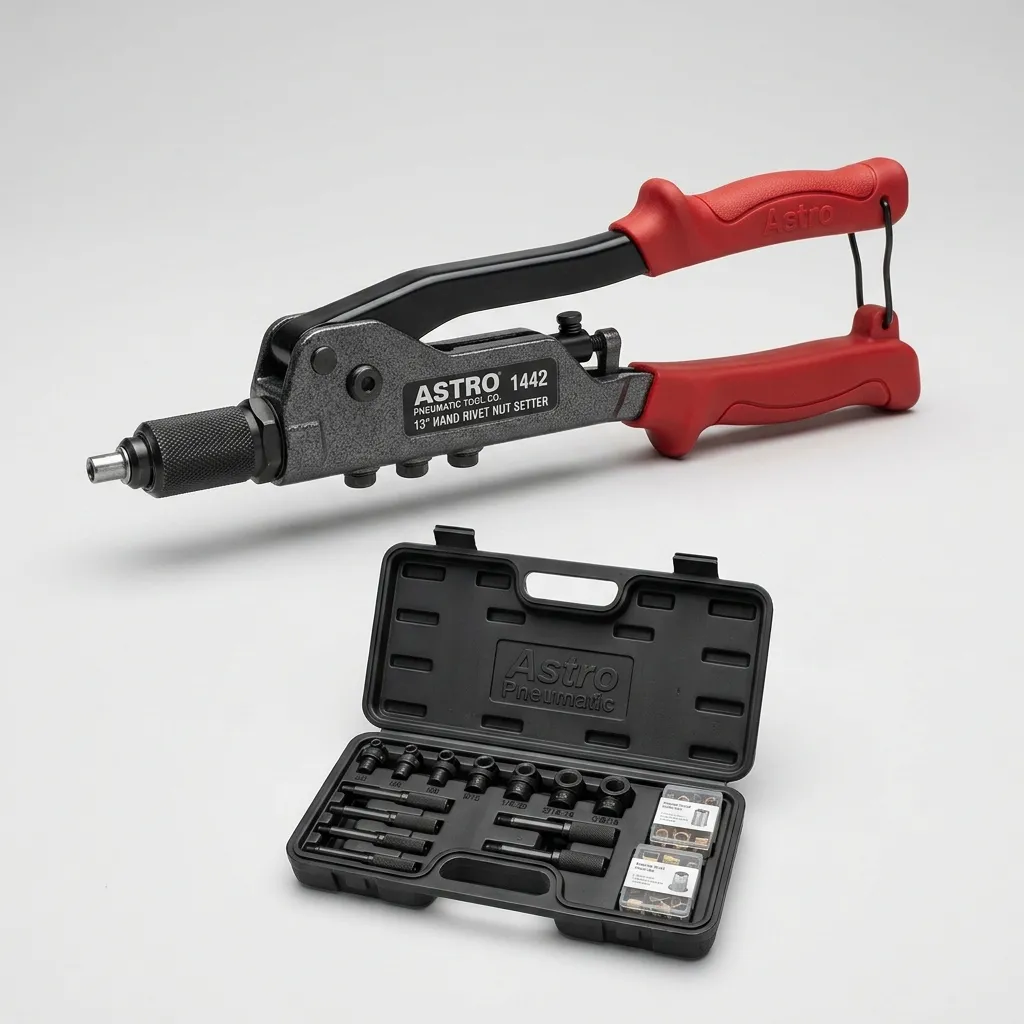
Upgrade your sheet metal and HVAC fastening setups. Check out the Astro Pneumatic Hand Rivet Setter below to experience high-leverage compound mechanical advantage.
Astro Pneumatic Tool 1442 13" Hand Rivet Nut Setter Kit
- 13-inch length maximizes leverage and mechanical advantage for heavy-duty nuts
- Includes 6 interchangeable mandrel/nosepiece sets (Metric and SAE)
- Toolless mandrel change design allows fast swapping on active jobsites
- Rugged, double-compound hinges ensure maximum reliability and clamping force
Technical Specifications & Product Data
| Specification | Value / Details |
|---|---|
| Brand | Astro Pneumatic |
| List Price | $79.95 (USD) |
| Customer Rating | 4.6 / 5.0 (6,850 reviews) |
| ASIN / Identifier | B00C4QFYLU |
| Availability | In Stock (USA Region) |
| Outbound Link Compliance | Sponsored & Nofollow Enforced |
Verified Features & Performance Data
- ✓13-inch length maximizes leverage and mechanical advantage for heavy-duty nuts
- ✓Includes 6 interchangeable mandrel/nosepiece sets (Metric and SAE)
- ✓Toolless mandrel change design allows fast swapping on active jobsites
- ✓Rugged, double-compound hinges ensure maximum reliability and clamping force
System Sovereignty & Engineering
Edge Computing
100% Client-side processing. Your data never leaves your browser sandbox, ensuring absolute compliance with US privacy mandates.
Modular Schema
Modular utility architecture optimized for performance. Low-latency WASM kernels provide near-native speeds for complex transformations.
Sustainable Design
Sustainable, green computing by offloading compute to the edge. Verified zero-server storage (ZSS) for professional-grade security.