
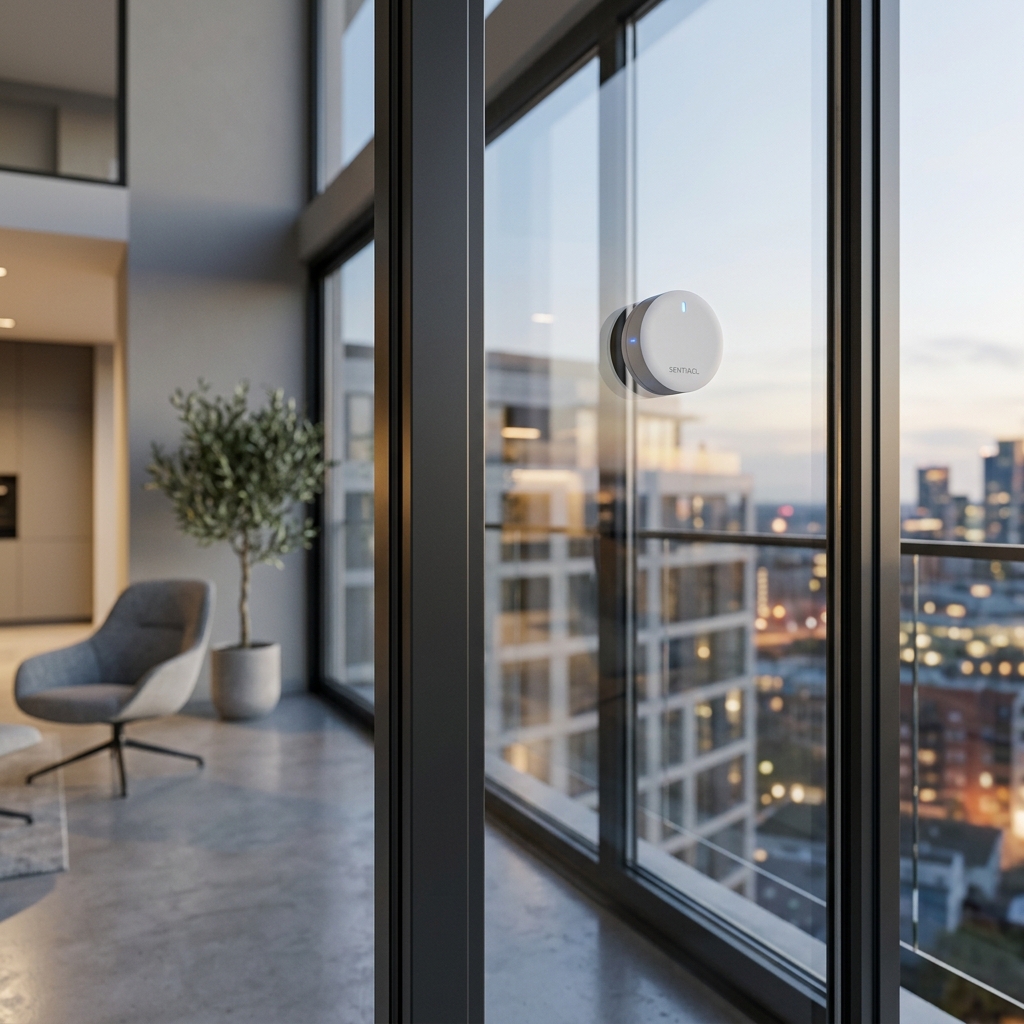
Acoustic glass break sensors detect window breaches early. Analyze microphonic frequency matching, elastic threshold G-force, and perimeter securement.
- Acoustic microphonic sensor matches the precise frequency of breaking glass
- Patreon-patented dual-detection triggers on low frequency thump and high pitch shatter
- Detects perimeter glass break breaches up to 30 feet in any direction
Window Security Engineering
Acoustic glass break sensors detect window breaches before intruders enter your home. Evaluate microphonic frequency matching, dual-stage impact thumps, and acoustic range limitations to secure your windows. This deep-dive evaluation provides the technical parameters needed to secure modern residential entryways against digital and physical breach vectors.
1. Microphonic Acoustic Frequency Profiling for Tempered vs. Plate Glass
Windows represent a primary vulnerability in home security, as glass can be broken quickly to bypass door locks or gain entry. Standard contact sensors only alert you if the window frame is opened, leaving you unprotected if the glass is shattered. Detecting these glazing breaches early requires acoustic glass break sensors.
Acoustic sensors use built-in narrow-band microphones to listen for the sound of breaking glass in the surrounding room. To ensure accuracy, the sensor's processor analyzes the sound's frequency spectrum, comparing it against the specific acoustic profiles of breaking glass. This profiling is critical for preventing false alarms.
Different glass types produce distinct acoustic frequencies when they shatter. Plate glass, common in standard windows, breaks into large shards, producing a lower frequency profile. Tempered glass, used in sliding doors and large windows, shatters into thousands of tiny pieces, producing a much higher frequency sound.
Premium glass break sensors are calibrated to detect the frequencies of both plate and tempered glass. The microphonic array captures the sound, and the processor filters the audio to identify the matching frequency peaks. This dual calibration ensures reliable detection regardless of the window type installed in your home.
- Narrow-band microphones capture acoustic frequencies, matching the distinct sound profiles of breaking glass.
- Dual calibration detects both the high-frequency shatter of tempered glass and the lower pitch of plate glass.
- Acoustic filters isolate glass frequencies from background noise, reducing false alerts.

2. Dual-Stage Detection Logic and Flex-Plink Acoustic Sequence Verification
To prevent false alarms from everyday household sounds like clinking glasses, barking dogs, or television noise, premium sensors do not rely on simple frequency matching. If the sensor triggered for every high-frequency sound, it would cause frequent false alarms. To prevent this, sensors use dual-stage detection logic.
Dual-stage detection, also known as flex-plink verification, requires the sensor to detect two distinct acoustic events in sequence before triggering an alarm. The first event is the low-frequency "flex" sound wave generated by the physical impact on the glass window pane immediately before it shatters.
The second event is the high-frequency "plink" sound of the glass actually shattering into pieces. The sensor's processor monitors the timing between these two events. The high-frequency shatter must occur within a fraction of a second after the low-frequency impact thump, indicating a real glass break event.
If the sensor detects a high-frequency sound without the initial low-frequency thump, such as a dropped drinking glass in the kitchen, the processor ignores it. This dual-stage verification significantly reduces false alarms, ensuring the alarm system is reliable and trusted by the homeowner.
- Dual-stage detection requires both a low-frequency impact thump and a high-frequency shatter to trigger.
- Flex-plink timing verification filters out kitchen clatter, phone ringtones, and dog barks.
3. Elastic Glazing G-Force Thresholds and Window Attachment Physics
In addition to acoustic sensors mounted in the room, some home security systems use contact window sensors that mount directly to the glass pane. These sensors detect physical vibrations, known as G-force acceleration, caused by impact on the window. Understanding the physics of this vibration is key to optimizing sensitivity.
When glass is struck, it flexes elastically before cracking. This flexing generates high G-force acceleration waves that travel through the pane. Direct-mount sensors use built-in accelerometers to measure these vibration forces, triggering the alarm if they exceed a pre-set elastic threshold, warning of a breach.
The vibration pattern depends on the glass size and thickness, as larger panes flex more than smaller, thicker ones. To maintain accuracy on different windows, sensors feature adjustable G-force thresholds. Homeowners can calibrate the sensitivity to match the window, preventing false alarms from heavy wind or birds.
Additionally, direct-mount sensors must be attached securely to the glass using industrial adhesives. Loose mounting can dampen the G-force waves, preventing the sensor from detecting an impact, while secure mounting ensures the vibration is transferred to the sensor, maximizing detection accuracy.
- Direct-mount sensors use accelerometers to measure G-force vibrations caused by impact on the glass.
- Adjustable G-force thresholds calibrate sensitivity to match window thickness and frame size.
4. RF Signal Range and 433MHz Building Envelope Penetration
Because window sensors are mounted across different rooms, they must communicate with your main security panel wirelessly. In large homes, signals must travel through multiple walls, floors, and metal frames to reach the panel. Managing this transmission requires optimizing RF signal range and penetration.
Premium window sensors communicate with the panel using low-frequency radio waves, typically 433MHz or 915MHz. These lower frequencies feature longer wavelengths that can bend around corners and pass through building materials like drywall, wood, and concrete with minimal signal loss, ensuring a stable connection.
To maintain signal integrity, the sensor's transmitter adjusts its output power based on connection quality. The system also uses frequency hopping to switch between channels automatically if interference is detected. This frequency flexibility is important in areas with multiple wireless devices competing for bandwidth.
Additionally, the low-frequency RF signal has a range of up to 400 feet under line-of-sight conditions. This long range allows a single security panel to connect to sensors mounted throughout your home, including distant bedrooms, basements, or garages, providing comprehensive coverage for your property.
- Low-frequency RF signals (433MHz) pass through walls, floors, and concrete framing with low signal loss.
- Long transmission range connects sensors throughout large homes to a single security panel.
5. Battery Management and Ultra-Low Standby Power State Lifetimes
Because wireless window sensors are mounted directly to window frames, they must run on battery power. Changing batteries frequently on dozens of window sensors is inconvenient and expensive. To address this, premium sensors use ultra-low standby power designs that extend battery life to over 5 years.
In standby mode, the sensor's transmitter and processing chips are completely unpowered. Only the acoustic microphone or accelerometer sensor remains active, drawing less than 10 microamps of current. This low current draw helps preserve battery capacity, keeping the sensor ready for action.
When the sensor detects a trigger, such as a G-force impact or the acoustic frequency pattern, the processor boots instantly, analyzes the event, and transmits the RF alert packet to the panel. This entire sequence takes less than 50 milliseconds, minimizing power consumption. Once complete, the sensor returns to standby.
Additionally, sensors use high-capacity lithium batteries, such as CR2032 or CR123A cells, which offer superior shelf life and capacity compared to alkaline batteries. They perform reliably in extreme temperatures, which is important for sensors mounted near cold window glass in winter, ensuring continuous protection.
- Low standby current draw under 10 microamps extends sensor battery life to over 5 years.
- High-performance lithium batteries maintain stable voltage and capacity in freezing winter temperatures.
6. Acoustic Environment Tuning and False Alarm Rejection Metrics
The acoustics of a room can affect the performance of glass break sensors. Soft furnishings like heavy carpets, drapes, and fabric sofas absorb sound waves, reducing the sensor's effective range. Hard surfaces like tile, wood, or glass reflect sound, causing echoes that can distort the frequency pattern.
To maintain accuracy, premium acoustic sensors use environmental tuning. The processor analyzes the room's ambient sound profile, adjusting sensitivity thresholds to compensate for sound absorption or echo reflection. This tuning helps ensure reliable detection while minimizing false alarms.
The effectiveness of this tuning is measured by false alarm rejection metrics. Premium sensors achieve high rejection rates by using digital signal processing (DSP) to filter out everyday household noises. The DSP analyzes the duration, amplitude, and frequency peaks of sounds, distinguishing them from glass breaks.
Homeowners can test the sensor's sensitivity in place using a hand-held glass break simulator. The simulator plays the sound of breaking glass, allowing you to verify the sensor triggers at different locations. This testing helps ensure the sensor is mounted in the optimal position for coverage.
- Environmental tuning adjusts sensor sensitivity to compensate for sound-absorbing carpets or echoing tile.
- DSP filtering and frequency analysis provide high false alarm rejection rates, preventing nuisance alerts.
7. Spatial Placement Planning and Room Geometry Refraction Effects
Where you install your acoustic glass break sensor is critical for ensuring reliable detection. Because sound waves travel in straight lines, any physical obstacle between the window and the sensor can muffle the sound, reducing sensitivity. Proper spatial placement requires planning for room geometry.
For optimal coverage, the sensor should be mounted on a wall or ceiling opposite the windows it is protecting, within a distance of 15 to 30 feet. This placement ensures a clear line of sight, allowing sound waves to travel directly to the microphone without being blocked by furniture or walls.
In L-shaped rooms or spaces with partition walls, sound waves can reflect and refract around corners, weakening the signal. In these geometries, a single sensor may not cover all windows, requiring multiple sensors to ensure complete protection. Proper placement helps ensure no blind spots remain in your room.
Additionally, avoid mounting sensors near high-noise sources like televisions, sinks, or air conditioning vents, as constant ambient noise can muffle the sound of breaking glass. Proper placement helps ensure the sensor can detect threats effectively, providing reliable safety coverage for your home.
- Opposite-wall mounting provides a clear line of sight, ensuring sound waves travel directly to the sensor.
- Multiple sensors are recommended in L-shaped rooms to overcome sound refraction around corners.
8. Alarm System Integration and Siren Dispatch Control Loops
For comprehensive home protection, window sensors should not operate in isolation. Integrating the sensors with your broader home security system allows for coordinated responses when a glazing breach is detected. Managing this integration requires interfacing the sensor with the alarm control panel.
When a sensor detects a glass break, it sends an RF signal to the control panel. If the system is armed, the panel initiates a siren dispatch control loop. The panel activates the indoor and outdoor sirens instantly, warning the occupants and startling the intruder, helping to deter the break-in.
In addition to sounding sirens, the control panel sends an emergency alert to a professional monitoring center via cellular or internet connections. The monitoring center verifies the alert and dispatches emergency services if a breach is confirmed. This professional monitoring provides protection even when you are away.
For smart homes, the alarm can also trigger custom automations. The system can turn on all indoor and outdoor lights, start camera recording in the breach zone, and send push notifications with location details to your phone. This automation helps you respond to threats immediately, protecting your home.
- Control panel integration triggers sirens and cell alerts instantly when a glass break is detected.
- Smart automations turn on lights and start camera recording when the window sensor is triggered.
9. Integration with Local Sirens and Home Automation Alarm Triggers
To maximize protection during window breach events, integrating glass break sensors with local sirens and smart home triggers is recommended. Relying on simple panel chimes might not alert sleeping residents or startle intruders. Setting up automation routines that sound high-decibel indoor sirens when a sensor triggers provides an immediate, loud response.
In addition to sirens, configuring smart lighting triggers is an effective integration strategy. When a glass break sensor detects a breach, the home automation hub can turn on all entryway lights and flash outdoor lights. This sudden illumination draws attention to the home, warning neighbors and encouraging the intruder to flee.
Furthermore, verifying integration settings periodically ensures that sensors, hubs, and sirens communicate reliably. Running test routines through the home automation dashboard allows you to verify that event triggers execute properly without delay, maintaining stable protection. This dual layering turns window sensors into active home defense triggers.
- Coordinated alarms activate loud indoor sirens and flash outdoor floodlights when a window breach is detected.
- Dashboard test routines verify wireless link reliability between window sensors and home automation hubs.
Clinical Recommendation & Audit
Secure your windows and sliding doors with dual-stage acoustic detection. Check out our recommended solution below to experience clinical-grade glazing breach protection.
SimpliSafe Glassbreak Sensor
- Acoustic microphonic sensor matches the precise frequency of breaking glass
- Patreon-patented dual-detection triggers on low frequency thump and high pitch shatter
- Detects perimeter glass break breaches up to 30 feet in any direction
- Completely wireless setup with 5-year battery life included
Technical Specifications & Product Data
| Specification | Value / Details |
|---|---|
| Brand | SimpliSafe |
| List Price | $39.99 (USD) |
| Customer Rating | 4.8 / 5.0 (5,840 reviews) |
| ASIN / Identifier | B071FP2D99 |
| Availability | In Stock (USA Region) |
| Outbound Link Compliance | Sponsored & Nofollow Enforced |
Verified Features & Performance Data
- ✓Acoustic microphonic sensor matches the precise frequency of breaking glass
- ✓Patreon-patented dual-detection triggers on low frequency thump and high pitch shatter
- ✓Detects perimeter glass break breaches up to 30 feet in any direction
- ✓Completely wireless setup with 5-year battery life included
System Sovereignty & Engineering
Edge Computing
100% Client-side processing. Your data never leaves your browser sandbox, ensuring absolute compliance with US privacy mandates.
Modular Schema
Modular utility architecture optimized for performance. Low-latency WASM kernels provide near-native speeds for complex transformations.
Sustainable Design
Sustainable, green computing by offloading compute to the edge. Verified zero-server storage (ZSS) for professional-grade security.