
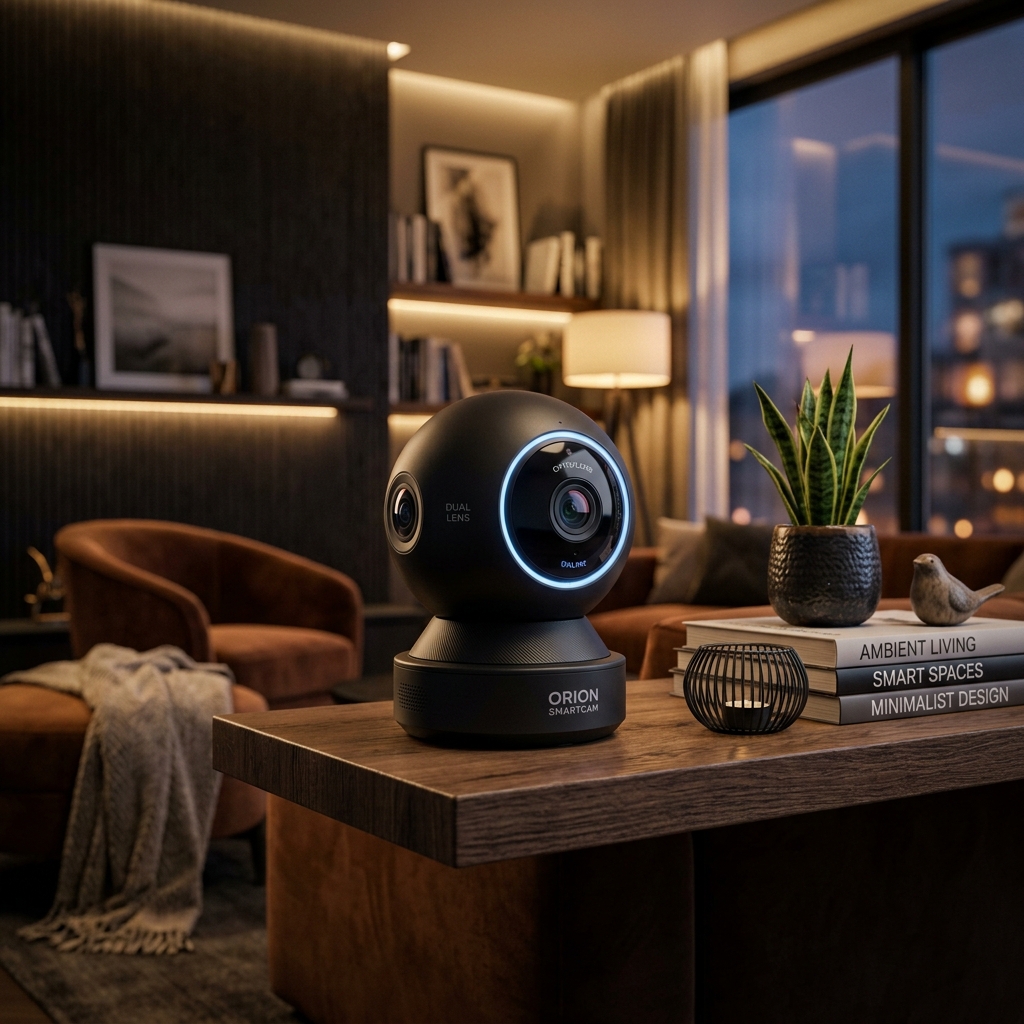
Indoor smart cameras track pets and secure perimeters. Analyze pan-tilt motorized mechanical backlash, local AI shape recognition, and local privacy features.
- Dual cameras deliver 4K wide-angle and 2K telephoto detail tracking
- 360-degree pan-and-tilt motorized rotation eliminates blind spots
- On-device AI recognizes human and pet shapes to follow movement
Indoor Surveillance Engineering
Smart indoor cameras monitor your pets and alert you of unauthorized entryways in real time. Evaluate pan-tilt motor backlash controls, local AI shape recognition accuracy, and video data privacy configurations. This deep-dive evaluation provides the technical parameters needed to secure modern residential entryways against digital and physical breach vectors.
1. Motorized Gear Train Backlash and Pan-Tilt Precision Metrics
Motorized pan-tilt cameras provide 360-degree coverage, but their tracking accuracy depends on the precision of their gear train. Cheap motorized mounts experience significant gear play, known as backlash, when reversing direction. This gear play causes jerky movements and can make the camera lose track of fast-moving targets.
Premium indoor cameras use high-precision stepper motors and tightly matched gear trains to reduce backlash to under 0.5 degrees. This close gear alignment provides smooth, quiet rotation, ensuring the camera tracks subjects smoothly across rooms. The quiet operation is important in home environments, preventing sudden motor noises from distracting pets or residents.
To maintain precision over years of use, the gear train is constructed from wear-resistant materials like self-lubricating polymers or brass. These materials reduce friction and wear, preventing gear wear that would increase backlash over time. This durable mechanical construction helps ensure the camera tracks movement reliably.
Additionally, the camera's firmware uses compensation algorithms to adjust for minor gear slack when reversing direction. By predicting the gear play, the software adjusts the motor pulses, providing instant and precise positioning. This combination of quality mechanics and smart software ensures reliable pan-tilt performance.
- High-precision stepper motors reduce gear backlash to under 0.5 degrees, providing smooth target tracking.
- Self-lubricating gear materials reduce friction and wear, maintaining pan-tilt accuracy over time.
- Backlash compensation algorithms in the firmware adjust motor pulses, ensuring precise camera positioning.

2. On-Device NPU Neural Engine and Human Shape Classification Latency
To monitor busy households effectively without generating frequent false alarms, indoor cameras must identify movement sources accurately. Basic cameras use simple pixel-change detection, which triggers alerts for vacuum cleaners, shadows, or moving curtains. Premium cameras feature on-device neural processing units (NPUs) that analyze shape signatures locally.
The on-device NPU runs advanced machine learning models trained to classify shapes, distinguishing people and pets from other moving objects. This classification process occurs in milliseconds, allowing the camera to identify targets almost instantly. This edge processing capability ensures fast response times while saving battery power.
By analyzing video locally, the camera can trigger the pan-tilt motors to follow a moving person or pet across the room, maintaining tracking without lag. This real-world tracking is important for following intruders or monitoring active pets, ensuring the target remains in the center of the frame.
Additionally, local AI processing protects your privacy. Because the shape analysis occurs on the device, your personal video data does not need to be uploaded to cloud servers for processing. This keeps your personal information inside your home network, providing peace of mind alongside reliable monitoring.
- On-device NPU analyzes video locally, identifying human and pet shapes in milliseconds.
- Edge AI tracking triggers pan-tilt motors to follow moving targets across the room smoothly.
3. Dual-Lens Optical Zoom Mechanics and Autofocus Speed
Single-lens cameras often struggle to provide both wide-angle room views and detailed close-ups of distant targets. Digital zoom can blow up the image but causes pixellation, losing fine details. To address this, premium indoor cameras use dual-lens arrays that combine wide-angle and telephoto lenses.
The wide-angle lens provides a broad view of the entire room, capturing overall activity, while the telephoto lens zooms in on specific targets to capture details like faces or writing. This dual-lens design provides hybrid zoom capability, letting you see clear details from across a large room.
The effectiveness of this hybrid zoom relies on fast autofocus performance. When switching lenses or tracking a moving target, the camera must adjust focus instantly to prevent blurred clips. Premium cameras use advanced phase-detection autofocus (PDAF) to focus in milliseconds, maintaining image sharpness.
Additionally, the telephoto lens uses high-quality optical elements that minimize distortion and chromatic aberration. This ensures zoomed-in video remains clear and sharp, which is critical for identifying intruder features or checking on pets. The combination of dual lenses and fast autofocus provides comprehensive coverage.
- Dual-lens system combines wide-angle and telephoto lenses to provide clear hybrid zoom.
- Phase-detection autofocus focuses in milliseconds, maintaining sharpness as the camera tracks targets.
4. Pet Tracking Detection Algorithms and Sound Sensor Triggers
Indoor security cameras are often used to monitor pets while owners are away, tracking their activity and safety. Because pets move differently than humans, standard motion algorithms can struggle to track them reliably. Premium smart cameras use specialized pet tracking algorithms to follow pets accurately.
These algorithms are trained on a wide variety of pet body shapes, movements, and sizes, allowing the camera to follow dogs and cats as they run or jump. The pan-tilt motors adjust their tracking speed dynamically, matching the pet's movement to ensure they stay in frame, which is important for active animals.
To complement visual tracking, cameras feature sound sensors that can identify specific animal noises, such as barking, meowing, or whining. When the sound sensor is triggered, the camera rotates to face the source of the noise and start recording, alerting you to potential issues like distress or separation anxiety.
Additionally, pet cameras allow owners to speak to their pets using two-way audio. If a pet is barking or scratching, owners can use the mobile app to soothe them, establishing a virtual presence. This capability provides comfort to pets and owners alike, helping manage pet behavior remotely.
- Pet-tracking algorithms follow dogs and cats, adjusting pan-tilt speed to match their movements.
- Sound sensors identify barking or meowing, rotating the camera to face and record the noise.
5. Privacy Shutter Mechanics and Hardware-Level Isolation Protocols
While indoor security cameras provide protection, they also raise valid privacy concerns for residents when they are home. Software-only privacy modes disable streaming but leave the camera lens exposed, which can make users feel uncomfortable. Premium cameras use physical privacy shutters to address these concerns.
A physical privacy shutter uses a motorized mechanism to rotate the camera lenses downward, hiding them behind the housing when the camera is turned off. This physical isolation provides visual confirmation that the camera cannot record, giving occupants peace of mind when they want privacy inside their home.
To complement physical isolation, the camera's electronics use hardware-level isolation protocols. When privacy mode is enabled, power is cut to the microphone, image sensor, and wireless chip, preventing data from being recorded or streamed. This hardware-level cutoff protects your privacy against hackers.
Homeowners can schedule privacy mode to enable automatically when they arrive home, using geo-fencing or smart home integrations. This automation ensures the camera is active only when you are away, balancing home protection with personal privacy seamlessly. The physical shutter provides clear feedback on the camera's status.
- Motorized physical privacy shutters rotate the lenses downward, blocking the camera's view completely.
- Hardware-level power isolation cuts electricity to the microphone and sensor during privacy mode.
6. Low-Light Sensor Sensitivity and H.265 Streaming Latency
Indoor environments present challenging lighting, with deep shadows and dim corners common even during the day. At night, the camera must capture clear images in complete darkness. To maintain image quality in low light, premium indoor cameras use high-sensitivity image sensors and efficient video compression.
These sensors feature large pixel areas that capture more light, improving clarity and reducing digital noise. The camera also uses infrared (IR) night vision to illuminate the room with invisible light, producing clear, black-and-white video. The range of these IR LEDs determines how far the camera can see in total darkness.
To stream high-resolution 4K and 2K video over home Wi-Fi networks without buffering, cameras use H.265 video compression. H.265 offers twice the compression efficiency of H.264, reducing file sizes and bandwidth usage by up to 50% while preserving important details. This optimization ensures smooth, real-time streaming.
The compression process occurs on hardware encoders built directly into the camera's processor, minimizing streaming delay. This ensures you can view live video and receive alerts with minimal lag, which is critical for real-time security monitoring and interactive communication through the mobile app.
- High-sensitivity sensors capture clean video in dim rooms, reducing reliance on digital noise reduction.
- H.265 compression reduces streaming bandwidth by up to 50%, ensuring smooth 4K/2K playback.
7. Network Attachment Storage (NAS) and Local Storage Redundancy
Many security cameras rely on cloud subscriptions to store video clips, which adds recurring costs and introduces privacy concerns. Premium indoor cameras avoid this by using integrated eMMC local storage or microSD card slots. This local storage keeps your video clips secure on the device, eliminating monthly subscription fees.
For advanced users, premium cameras can also stream and save video to Network Attached Storage (NAS) devices inside your home network. Using protocols like RTSP (Real-Time Streaming Protocol) or ONVIF, the camera can send video to a local server or NVR, providing secure backup and storage redundancy.
This dual-storage capability ensures your recordings are safe even if the camera itself is stolen or damaged. The camera can save event clips locally to a microSD card while streaming continuous video to your home NAS, combining local access with secure local backup. This storage redundancy provides robust protection.
Additionally, local storage operates independently of internet connectivity. Even if your home Wi-Fi network goes down or the internet service fails, the camera continues to record and save motion events. Once the connection is restored, you can access your saved clips through the mobile app, ensuring no gaps in your security coverage.
- RTSP and ONVIF support allows the camera to stream video directly to your home NAS or NVR.
- Dual-storage setup saves clips to a microSD card while backing up continuous video to a local server.
8. Home Automation Event-Driven Pan-Tilt Preset Calibration
To maximize protection, indoor security cameras should integrate with your broader smart home. Integrating the camera with your security sensors allows for coordinated responses when an intrusion is detected. Managing this integration requires calibrating the camera's pan-tilt presets to respond to triggers.
Homeowners can define specific pan-tilt positions, known as presets, that correspond to entryways or windows. When a door sensor detects an opening, the smart home hub triggers the camera to rotate instantly to that preset, capturing the entry event. This coordinated response ensures clear video of the breach.
To maintain precision, the camera must recalibrate its motor positions periodically, checking for drift. Stepper motors can lose tracking over time due to mechanical friction or contact with objects. The camera's startup routine includes a calibration sequence that resets the motors, ensuring accurate preset positioning.
Additionally, presets can be triggered by schedules or geo-fencing. When you leave home, the camera can rotate to monitor the main hallway, while rotating to face the wall when you return. This automation balances home protection with personal privacy, making the camera a seamless part of your home.
- Event-driven presets rotate the camera instantly to face triggered door or window sensors.
- Automatic motor recalibration checks positions periodically, preventing mechanical drift.
9. Multi-User Access Management and Remote Sharing Security
To allow family members or house sitters to monitor the home while maintaining security, smart indoor cameras support multi-user access. Homeowners can share camera access through the mobile application, sending invitations to specific email addresses. This multi-user management allows others to view live streams and receive notifications without sharing master account credentials.
To protect your privacy, shared access features custom permissions. The master user can limit shared access to specific times or restrict features like pan-tilt control, audio talk, or video history download. This control helps ensure guests can monitor pets or check on rooms without accessing private settings.
Furthermore, verifying shared users periodically and removing expired access helps maintain home security. The master account dashboard lists all active connections and their permission levels, allowing for instant removal. This remote management, combined with secure sharing, helps ensure your camera remains a trusted part of your home network.
- Multi-user sharing allows family members to view live streams without accessing master settings.
- Custom sharing permissions limit guests from downloading video history or changing pan-tilt settings.
Clinical Recommendation & Audit
Monitor your pets and secure your home's interior with 360-degree high-resolution capture. Check out our recommended solution below to experience clinical-grade indoor security.
eufy Security Indoor Cam S350
- Dual cameras deliver 4K wide-angle and 2K telephoto detail tracking
- 360-degree pan-and-tilt motorized rotation eliminates blind spots
- On-device AI recognizes human and pet shapes to follow movement
- Secure local storage capability via microSD card slot with zero fees
Technical Specifications & Product Data
| Specification | Value / Details |
|---|---|
| Brand | eufy Security |
| List Price | $129.99 (USD) |
| Customer Rating | 4.8 / 5.0 (3,120 reviews) |
| ASIN / Identifier | B0C7G1X8X8 |
| Availability | In Stock (USA Region) |
| Outbound Link Compliance | Sponsored & Nofollow Enforced |
Verified Features & Performance Data
- ✓Dual cameras deliver 4K wide-angle and 2K telephoto detail tracking
- ✓360-degree pan-and-tilt motorized rotation eliminates blind spots
- ✓On-device AI recognizes human and pet shapes to follow movement
- ✓Secure local storage capability via microSD card slot with zero fees
System Sovereignty & Engineering
Edge Computing
100% Client-side processing. Your data never leaves your browser sandbox, ensuring absolute compliance with US privacy mandates.
Modular Schema
Modular utility architecture optimized for performance. Low-latency WASM kernels provide near-native speeds for complex transformations.
Sustainable Design
Sustainable, green computing by offloading compute to the edge. Verified zero-server storage (ZSS) for professional-grade security.