
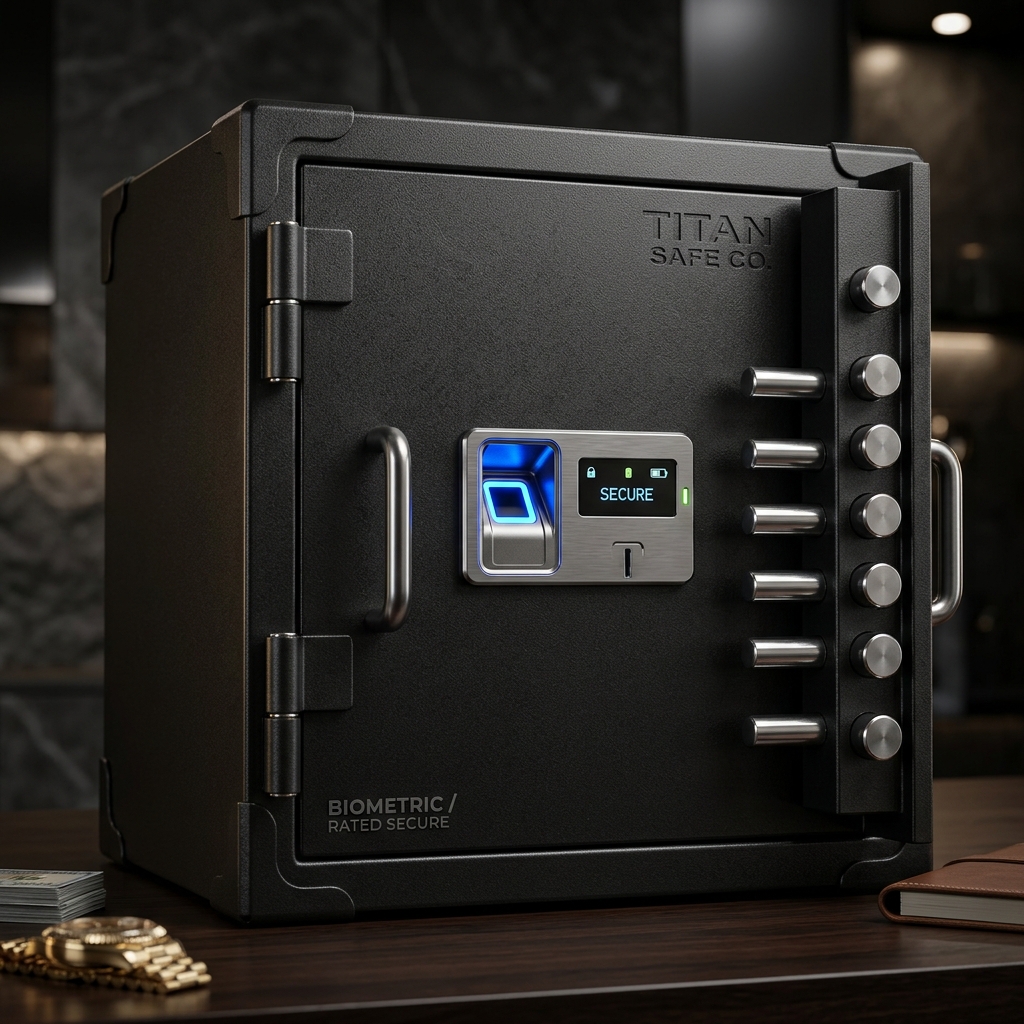
Heavy-duty biometric safes protect documents and valuables. Analyze solid steel live-locking bolts, capacitive fingerprint sensor FRRs, and physical securement.
- Advanced capacitive fingerprint sensor handles single-handed rapid access
- Solid steel construction with pry-resistant door and live-locking bolts
- Gas strut automatically opens the door silently for instant access
Physical Asset Security
Heavy-duty biometric safes secure critical documents and valuables from physical theft and fire hazards. Evaluate solid steel bolt shear strength, capacitive fingerprint authentication accuracy, and pry-resistant door engineering. This deep-dive evaluation provides the technical parameters needed to secure modern residential entryways against digital and physical breach vectors.
1. Solid Steel Locking Bolt Mechanics and Shear Strength Performance
The primary defense against physical attacks on a home safe is the locking bolt mechanism. Standard safes use thin, hollow metal cylinders that can easily bend or shear under pressure. Premium heavy-duty safes utilize solid steel live-locking bolts that slide directly into the safe's steel frame, providing superior resistance against pry-bar attacks.
These locking bolts are manufactured from high-tensile carbon steel, providing high shear strength to resist cutting and impact. When the door is closed, the bolts extend deep into the frame, locking the door securely. This multi-bolt design distributes forces evenly across the frame, preventing a single point of failure during a break-in attempt.
To prevent intruders from cutting the bolts with saws, premium safes feature anti-saw rollers inside the bolts. These hardened steel rollers spin freely if a saw blade attempts to cut them, preventing the blade from gripping and cutting the metal. This simple feature significantly increases the time needed to breach the safe physically.
Additionally, the locking mechanism is protected by hardplates that resist drilling. These plates are placed behind the key cylinder and electronic lock, preventing drills from reaching the locking linkages. The combination of solid steel bolts, anti-saw rollers, and drill-resistant plates provides robust protection against physical attacks.
- Solid steel live-locking bolts distribute impact forces evenly across the safe frame, resisting pry attacks.
- Hardened anti-saw rollers inside the bolts spin freely to prevent hand saws from cutting the steel.
- Drill-resistant hardplates protect the lock linkages, blocking drill attacks on the locking mechanism.
2. Capacitive Biometric Sensor False Rejection Rates (FRR) and Latency
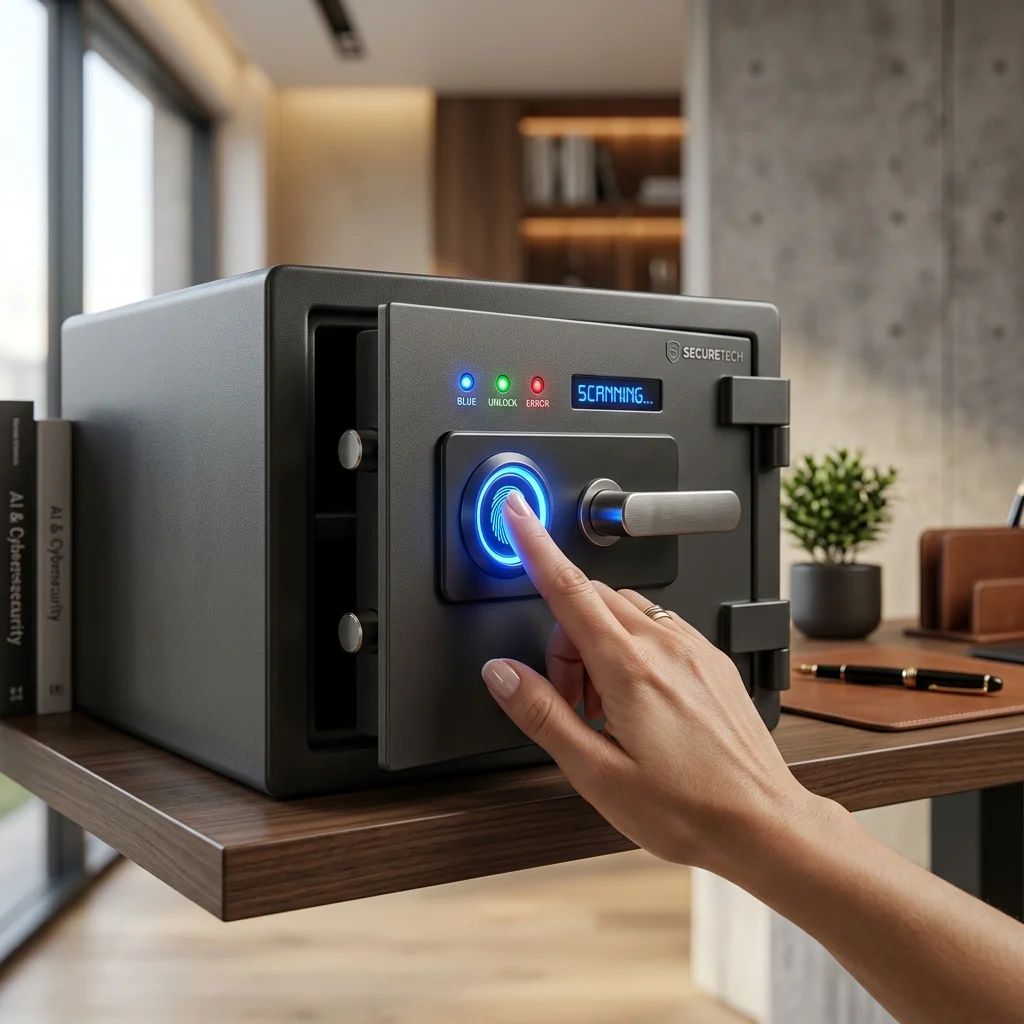
Biometric fingerprint locks provide quick access to valuables, but their real-world performance depends on sensor accuracy. Cheap optical scanners can be slow and easily tricked, while premium safes use capacitive sensors. These sensors map your fingerprint ridges using electrical charges, providing fast and secure access.
The performance of a biometric sensor is measured by its False Rejection Rate (FRR) and False Acceptance Rate (FAR). The FRR is the probability that the sensor rejects a registered fingerprint, while the FAR is the probability that it accepts an unregistered print. Premium sensors achieve an FRR under 0.1% and a FAR under 0.0001%.
A low FRR ensures you can open the safe reliably on the first touch, which is critical during emergencies. High-performance processors compare the scanned print against stored templates in under 500 milliseconds. This rapid scanning response provides immediate access when you need it most, preventing frustrating delays.
Additionally, capacitive sensors are highly secure against spoofing. Unlike older optical scanners, they require a live electrical charge to map the print. This prevents bypass attempts using printed fingerprint pictures or rubber copies, keeping your valuables secure against unauthorized access.
- Capacitive sensors achieve an FRR under 0.1%, ensuring reliable, single-touch access during emergencies.
- Fast processing chips analyze fingerprints in under 500 milliseconds, minimizing access delay.
3. Fire-Resistant Insulation Chemistry and Thermal Transfer Thresholds
Home safes must protect documents and valuables not just from theft, but also from house fires. When a fire occurs, temperatures can rise to over 1,500°F. Without insulation, the heat inside the safe would quickly char paper documents and melt media. Protecting these items requires heat-resistant insulation linings.
Premium safes use a double-walled steel body filled with specialized fire-resistant concrete or gypsum insulation. Gypsum insulation contains chemically bound water molecules. When exposed to high heat, the gypsum undergoes a chemical reaction that releases this water as steam, absorbing heat and cooling the safe's interior.
This thermal barrier keeps the safe's internal temperature below 350°F, which is the charring point of paper. The insulation must maintain this temperature for a specified period, typically 30 to 120 minutes, depending on the safe's fire rating. This protection helps ensure your important documents survive a house fire.
Looking at the expansion, the safe's door features heat-activated seals that expand when exposed to high temperatures. These expanding seals fill the gaps between the door and frame, blocking hot gases and smoke from entering the safe. This seal helps protect your valuables from heat and smoke damage during a fire.
- Gypsum insulation releases bound water molecules as steam, absorbing heat to cool the safe's interior.
- Heat-activated door seals expand to block hot gases and smoke from entering the safe.
4. Water Intrusion Seals and Hydrostatic Pressure Barriers
In addition to fire protection, home safes must protect valuables from water damage. Fires are extinguished using high-pressure water hoses, which can flood your home and submerge your safe. Waterproof seals are essential for protecting paper documents, electronics, and digital media from water damage.
Premium safes use continuous silicone gaskets around the door frame to create a waterproof barrier. These gaskets are compressed when the door is locked, preventing water from passing through. The seal must withstand hydrostatic pressure, which is the pressure exerted by standing water when the safe is submerged.
To verify water protection, safes are tested by being submerged in water for up to 24 hours. The internal storage compartment must remain completely dry, preventing moisture from damaging delicate contents. This protection is important for preventing mold and water damage to paper documents and digital storage devices.
Additionally, waterproof safes feature sealed bolt-down holes. If you choose to secure the safe to the floor, the mounting hardware includes waterproof washers that seal the holes, preventing water from leaking in from below. This attention to detail helps ensure reliable protection against water intrusion.
- Continuous silicone gaskets create a waterproof barrier that resists water penetration when submerged.
- Waterproof washers seal floor bolt-down holes, preventing moisture leaks from below.
5. Mechanical Key Override Security and Cylinder Pick Resistance
While biometric scanners provide quick daily access, they rely on electronic power. If the battery dies or a component fails, you need a backup method of entry. Premium safes include mechanical key override cylinders as a fail-safe backup, ensuring you can always open your safe.
However, adding a key override cylinder can create a security vulnerability if the lock is easily picked. Standard wafer locks are simple to bypass using lockpicks. To prevent this, premium safes use high-security key cylinders, such as tubular or double-sided pin-tumbler locks, which offer superior pick resistance.
These high-security locks use complex pin arrangements and key designs that make manual picking difficult and time-consuming. Tubular locks use circular pins that require specialized tools to manipulate, while pin-tumbler locks use spool and serrated pins that resist picking attempts. This resistance helps secure the override option.
Additionally, the key override cylinder is hidden behind a cover or badge, preventing quick access by opportunists. Keeping the backup lock hidden and using pick-resistant cylinders helps ensure the override option does not compromise the safe's overall security.
- High-security override locks (tubular/pin-tumbler) resist picking, securing the backup entry.
- Hidden backup cylinders prevent quick discovery and physical tampering by unauthorized users.
6. Dual-Lock Authentication Logic and Anti-Tamper Lockdown Modes
To protect high-value assets, some home safes feature dual-lock authentication logic. This feature requires two different locking methods to be verified before the safe will open, such as both a biometric fingerprint scan and a digital PIN. This dual requirement provides an extra layer of security.
Dual authentication prevents unauthorized access even if a family member's print is registered or a PIN is discovered, as both must be used together. Homeowners can enable this feature when storing high-value items or when leaving their home vacant for extended periods, maximizing security.
To prevent brute-force attacks on the digital keypad or biometric sensor, premium safes use anti-tamper lockdown modes. If an incorrect PIN or unregistered print is entered multiple times, the safe's processor initiates a temporary lockout. During this lockout, the safe ignores all inputs, preventing further attempts.
The lockout period increases with subsequent incorrect entries, ranging from 1 to 15 minutes. This delay discourages intruders from trying multiple combinations. Some smart safes also sound an alarm or send alerts to your phone during a lockout, warning you of the bypass attempt.
- Dual authentication options require both a fingerprint scan and a PIN code to open the safe.
- Anti-tamper lockouts pause inputs after repeated incorrect attempts, blocking brute-force attacks.
7. Floor Anchor Bolting Systems and Structural Yield Limits
If a safe is small and light enough to carry, physical security and locks are not enough. Intruders can carry the safe away, allowing them to breach it later at their convenience. To prevent this, home safes should be bolted to the floor or wall, securing them physically to your home's structure.
Premium safes include pre-drilled mounting holes and heavy-duty anchor bolts for securing the safe to wood or concrete floors. The mounting holes are placed inside the safe, preventing access to the mounting hardware when the door is locked. This design prevents intruders from unbolting the safe from the outside.
The effectiveness of the anchor bolts depends on the structural yield limit of the mounting surface. Bolting the safe to concrete provides superior security compared to wood framing, as concrete anchors resist pull-out forces. This solid connection prevents intruders from prying the safe off the floor.
Additionally, bolting the safe down prevents intruders from tipping it over. Tipping a safe allows them to apply more leverage with pry bars to breach the door. Securing the safe vertically limits the room for prying, helping protect your valuables from physical breach attempts.
- Pre-drilled interior mounting holes allow you to bolt the safe down from the inside.
- Heavy-duty concrete anchor bolts resist pull-out forces, preventing removal by intruders.
8. Hinge Construction and Pry-Bar Resistance Calculations
When prying a safe door, the hinges are a common target. If the hinges are mounted externally and lack reinforcement, an intruder can cut them off with a grinder or saw. To prevent this vulnerability, premium safes use internal hinges or pry-resistant external designs.
Internal hinges are mounted inside the safe body, making them inaccessible from the outside. This design prevents intruders from cutting or prying the hinges physically. External hinges are used on some safes to allow the door to open wider, but they must be paired with security features.
To secure external hinges, safes feature dead-locking bolts on the hinge side of the door. When the door is closed, these fixed bolts slide into slots in the safe frame, locking the door securely. Even if the external hinges are cut off, the door remains locked by the internal bolts, preventing access.
Additionally, the gap between the door and frame is minimized to prevent pry bars from inserting. A tight door fit limits the room for prying, protecting the safe. The combination of secure hinges, dead-locking bolts, and tight gaps provides robust protection against physical attacks.
- Internal hinges are hidden inside the safe body, preventing direct access and cutting attacks.
- Fixed hinge-side dead bolts lock the door to the frame, securing it even if external hinges are cut.
9. Humidity Control and Rust Prevention inside the Safe
To protect delicate paper documents, jewelry, and metals from moisture damage inside the sealed safe, regular humidity monitoring is recommended. Airtight and fireproof safes can trap moisture from ambient air or the insulation lining, leading to rust or mold. Storing silica gel packs or desiccant canisters inside helps absorb excess moisture, protecting the contents.
In addition to desiccants, airing out the safe periodically by leaving the door open for a few minutes helps refresh the internal air. This simple step prevents musty odors and moisture buildup, especially in humid climates or basements. Storing sensitive documents in airtight plastic sleeves provides a secondary layer of moisture protection.
Furthermore, verifying the condition of the interior lining and metal surfaces helps detect early signs of rust. Cleaning the door frame and locking bolts with a dry cloth removes dust and prevents binding. This maintenance routine, combined with humidity control, helps ensure your safe remains a clean and secure environment for your valuables.
- Desiccant canisters absorb trapped humidity inside the safe, preventing rust and mold on valuables.
- Airing out the safe periodically prevents moisture buildup from the fireproof gypsum lining.
Clinical Recommendation & Audit
Secure your critical documents and personal assets with biometric access control. Check out our recommended solution below to experience clinical-grade physical securement.
SentrySafe Biometric Quick Access Safe
- Advanced capacitive fingerprint sensor handles single-handed rapid access
- Solid steel construction with pry-resistant door and live-locking bolts
- Gas strut automatically opens the door silently for instant access
- Includes pre-drilled bolt-down hardware for enhanced home security
Technical Specifications & Product Data
| Specification | Value / Details |
|---|---|
| Brand | SentrySafe |
| List Price | $189.00 (USD) |
| Customer Rating | 4.8 / 5.0 (8,240 reviews) |
| ASIN / Identifier | B00D754162 |
| Availability | In Stock (USA Region) |
| Outbound Link Compliance | Sponsored & Nofollow Enforced |
Verified Features & Performance Data
- ✓Advanced capacitive fingerprint sensor handles single-handed rapid access
- ✓Solid steel construction with pry-resistant door and live-locking bolts
- ✓Gas strut automatically opens the door silently for instant access
- ✓Includes pre-drilled bolt-down hardware for enhanced home security
System Sovereignty & Engineering
Edge Computing
100% Client-side processing. Your data never leaves your browser sandbox, ensuring absolute compliance with US privacy mandates.
Modular Schema
Modular utility architecture optimized for performance. Low-latency WASM kernels provide near-native speeds for complex transformations.
Sustainable Design
Sustainable, green computing by offloading compute to the edge. Verified zero-server storage (ZSS) for professional-grade security.