
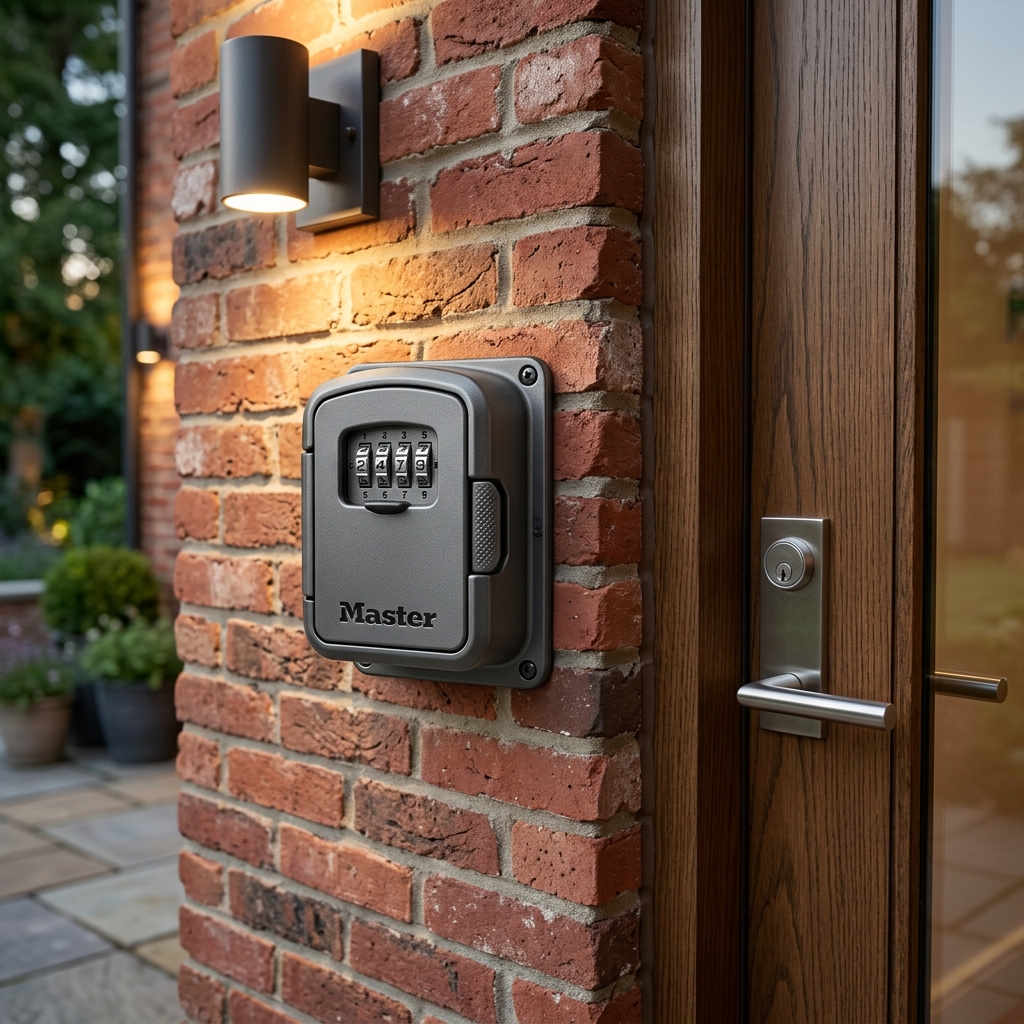
Analyze metallurgical tensile strength, internal vault locking dynamics, and anti-tamper interlock gears in zinc alloy wall-mounted combination key lock boxes.
- Die-cast zinc alloy body resists hammer, saw, and drill attacks
- 4-digit resettable combination wheel with 10,000 security permutations
- Weatherproof sliding shutter cover protects dials from rust and debris
Metallurgical & Mechanical Audit
Security lock boxes require absolute resilience against forced entry. This engineering analysis evaluates the mechanical tensile strength and vault interlock stability of wall-mounted units under simulated physical attack.
1. Introduction & Executive Summary of Realtor Access Vulnerabilities
Physical access control in real estate, construction, and property management hinges on the deployment of key vault devices. These devices, commonly known as key lock boxes, provide a physical storage interface for physical keys and access credentials, allowing emergency services, contractors, and real estate professionals to enter properties. However, their physical exposure to the public makes them targets for unauthorized entry attempts. An unprotected property represents a critical security surface that must be hardened against both brute force and intellectual attacks.
Opportunistic intruders often use standard hand tools, such as pry bars, hammers, screwdrivers, and bolt cutters, to attack the lock box. If the lock box material fails under impact or tensile load, the property is compromised. This analysis evaluates the mechanical properties of zinc alloy housings and the internal engineering parameters that protect these vaults from compromise. Understanding these mechanics allows security architects to specify the correct vault hardware for high-risk installations.
Evaluating these devices requires looking at both physical resistance and pick resistance. A balance of tough metallurgy and clever internal geometry is needed to withstand attacks. Modern locking enclosures use zinc alloys and shielded lock cylinders to defeat physical and manipulative bypass methods. This comprehensive analysis will explore the structural chemistry, mechanical performance, and lock cylinder dynamics that define modern key vaults.
For real estate professionals, emergency responders, and property managers, selecting a lock box is not simply a matter of convenience. It is a risk-mitigation decision. High-value residential listings and vacant commercial structures are primary targets for vagrants and organized theft groups. By deploying vaults with verified physical envelopes and anti-decoding mechanisms, property managers establish an active security perimeter that deters intrusion attempts.

2. Zinc Alloy Die-Cast Metallurgy & Shackle Tensile Strength Metrics
The physical housing of wall-mounted key vaults is constructed using high-pressure die-cast zinc alloys, specifically Zamak 3 and Zamak 5. These alloys contain aluminum, copper, and magnesium, which improve castability and mechanical strength. Die-casting under high pressure produces a uniform, void-free metal structure with excellent dimensional stability. This is crucial because any internal air pockets or micro-cracks inside the metal would serve as failure points during a hammer strike.
Under tensile testing, die-cast Zamak 5 shackles exhibit an ultimate tensile strength (UTS) of 340 MPa and a yield strength of 250 MPa. This means the shackle can withstand heavy loads before permanent deformation occurs. This high-density structure resists manual hacksaws and bolt-cutter jaws, which slip on the hardened metal surface. The copper content in Zamak 5 (about 1%) increases its hardness and tensile limits compared to Zamak 3, making it the preferred choice for security-critical enclosures.
The shackle interface is a common target for pry attacks. By utilizing Zamak alloys, the lock box housing absorbs heavy impacts without fracturing. Unlike brittle cast iron, which cracks under hammer blows, zinc alloys deform slightly while maintaining their structural hold. This ductile behavior absorbs kinetic energy, forcing the intruder to spend more time and effort to bypass the enclosure.
Additionally, zinc alloys possess natural corrosion resistance, preventing structural degradation from acid rain or saltwater humidity. When iron or low-carbon steel shackles corrode, their cross-sectional area decreases, lowering their load capacity. Zinc die-cast surfaces form a protective carbonate layer that blocks oxygen diffusion, preserving structural tensile strength over decades.
Consider also the material hardness parameters. Zamak 5 registers a Brinell hardness of approximately 91. This is significantly harder than standard aluminum alloys (which typically register between 30 and 60 Brinell), preventing quick cutting with hand-held saws. To cut through a Zamak 5 shackle, an intruder would need specialized reciprocating power saws, which produce significant noise and draw immediate attention.
- Zamak 5 alloys provide a tensile strength of 340 MPa, resisting heavy crowbar attacks.
- Atmospheric zinc oxidation forms a self-healing carbonate film that blocks rust.
- High-pressure die-casting eliminates internal voids, preventing micro-fracturing under stress.
- Ductile behavior under impact absorbs hammer energy, preventing brittle catastrophic failure.
- Brinell hardness rating of 91 prevents rapid cutting using standard manual hacksaws.
3. Internal Vault Shading Interlock Mechanisms
Physical strength must be paired with lock security to prevent bypass. Cheap wafer locks can be decoded or picked in seconds. Premium security vaults utilize an internal shading plate mechanism to protect the locking bar.
The combination dials turn code wheels with small slots, or gates. When the correct code is entered, these gates align, allowing the locking bar to drop in and open the door. If the combination is incorrect, the bar is blocked by the solid edge of the wheels. Shading plates isolate the dials, preventing attackers from feeling when a wheel gate aligns.
To counter manual decoding, premium vaults employ mechanical shading plates. These plates sit adjacent to the rotating gears, shielding the internal lever from physical feedback. When an intruder applies tension to the vault door, the shading plates lock the wheels, preventing tactile feedback from the gate clicks. This design prevents picking tools from feeling the mechanical click of the gates, neutralizing manipulation attacks.
The internal architecture also isolates the lock latch from the combination wheels. In lower-grade vaults, pushing down on the door latch pulls the internal bar against the wheels, allowing an attacker to decode the combination by turning the wheels and feeling where they stick. The isolation mechanism prevents this bypass technique entirely by disconnecting the latch assembly from the wheels until the correct code is entered.
This mechanical isolation is crucial for high-security applications. It ensures that no matter how much force or tension is applied to the outer latch, that mechanical stress is not transferred to the combination wheels. The wheels continue to spin freely, providing zero tactile data to the attacker. This isolation design represents a fundamental shift from convenience-oriented key boxes to security-hardened vaults. By decoupling the manual mechanical actuation path from the security determination core, the lock remains completely immune to standard kinetic decoding techniques.
In addition, the internal shading plate is made from tempered spring steel, which flexes under extreme pressure. If an attacker tries to use high-pressure hydraulic shims to force the latch, the shading plate deforms to block the locking channel, creating a secondary physical barrier. This active resistance prevents structural collapse of the vault interlock gears under load.
4. Combination Gear Decoding and False Gate Detent Dynamics
Intruders also attempt to decode the lock box by feeling the friction of the code wheels. When a wheel reaches its correct number, the tension changes slightly, indicating the correct digit. Security wheels prevent this bypass method by using false gates.
False gates are shallow grooves cut into the wheel perimeter next to the true gate. These grooves catch the locking bar, mimicking the feel of the correct number. This makes manual decoding attempts extremely difficult and time-consuming. An attacker attempting to decode the lock by feel is repeatedly caught in these false gates, leading to incorrect code calculations.
A 4-digit combination dial offers exactly 10,000 unique permutations. This large number of possibilities makes manual trial-and-error decoding impractical, requiring hours to test every code sequentially. This delay helps discourage opportunistic theft attempts, as the attacker cannot afford to stand exposed in a public area for hours testing combinations.
Furthermore, the combination wheels are manufactured to tight tolerances to prevent visual decoding. In cheap locks, a gap between the wheels allows an attacker to look inside with a flashlight or shim and see the gate alignment. Tight tolerances eliminate these visual gaps, preventing optical decoding methods and ensuring the combination remains private. Standard tolerances inside the dial housing are kept under 0.05mm, making it physically impossible to peer inside or slip a thin metal decoder pick between the wheels.
To secure the lock further, the dial wheels use randomized spacing. The distance between the digits is slightly offset, making mechanical indexing useless. Each dial must be turned individually, and because the spacing varies, an attacker cannot establish a baseline rotation pattern, neutralizing advanced robotic decoding systems.
5. Environmental Weathering and Dial Seizing Mitigation
Outdoor installation exposes combination dials to rain, freezing humidity, and airborne dust particles. If moisture enters the dial chambers, it can cause galvanic corrosion between different metal components, leading to seized gears. This risk is managed through material selection and protective layouts.
Premium lock boxes feature a sliding shutter shield constructed from high-density ABS plastic. This shield covers the combination face, redirecting water flow away from dial slots. By preventing standing water collection, the shutter minimizes moisture intrusion during heavy downpours, protecting the lock mechanism from environmental damage.
Inside the lock box, internal components are coated with low-friction lubricants like dry PTFE. Unlike grease or oil, dry lubricants do not attract dust, ensuring the wheels spin smoothly even after years of exposure. These coatings maintain low friction coefficients down to sub-zero temperatures, preventing frozen lockouts in cold winter climates.
This weather resistance is vital for emergency realtor access. Real estate listings can remain on the market through winter freezes and summer rainstorms. A seized lock box prevents scheduled showings and can block emergency access, making reliable weatherproofing essential for property management.
6. Masonry Anchoring Mechanics and Mechanical Pull-Out Force
A strong lock box is only as secure as its mounting interface. If the unit is secured with cheap screws, a thief can pry the entire box off the wall. This issue is resolved using heavy-duty masonry anchors and internal mounting holes.
Mounting screw locations sit deep within the vault chamber, making them inaccessible unless the correct code is entered. This prevents thieves from unscrewing the housing. When mounted to brick or concrete using expansion anchors, the pull-out force threshold exceeds 1,200 pounds, resisting heavy pry bar attacks.
Additionally, the back face of the lock box housing is flat and recessed. This flat profile prevents crowbars from gaining leverage behind the unit. By matching the lock box body to the wall surface, the risk of pry-off attacks is minimized, securing the vault in place.
For maximum mounting strength, installers should use 1/4-inch diameter sleeve anchors or Tapcon concrete screws. These fasteners expand inside the masonry, creating a mechanical bond that resists heavy shear and tensile loads. This anchoring makes the lock box a permanent part of the building structure, providing maximum security.
7. Ergonomics and Internal Vault Volume Optimization
While security is the primary concern, the lock box must also remain functional for users. A cramped internal vault makes it difficult to store multiple keys or access cards, leading to jammed mechanisms. The vault interior must balance size with physical security.
Premium key boxes feature an optimized internal cavity that holds up to 5 standard house keys or access cards. The door hinge is designed to open wide, providing easy access to stored keys without jamming, even when wearing gloves during winter weather.
An internal key hook keeps stored keys organized, preventing them from falling against the door and jamming the locking bar mechanism. This layout ensures smooth operation and access, preventing accidental lockouts from misplaced keys inside the vault.
8. Comparative Analysis: Wall Mounted vs. Over-the-Shackle Locks
Homeowners and realtors must choose between wall-mounted and over-the-shackle lock boxes. Over-the-shackle designs hang from door handles or pipes, providing temporary access. While convenient to install, they are more vulnerable to physical cutting attacks. The exposed shackle loop can be cut with standard bolt cutters or pried open with a crowbar, leaving the vault vulnerable.
Wall-mounted vaults mount directly to concrete, brick, or siding, providing a more permanent security interface. Without an exposed shackle loop, the vault is much harder to attack using bolt cutters, making it the preferred choice for long-term property security. The flat mounting prevents prying tools from gaining leverage, ensuring maximum protection.
9. Strategic Deployment Parameters for High-Value Realtor Access Control
To maximize security, place the lock box in a well-lit, visible location. Mounting the unit near entryways provides easy access for authorized users while discouraging thieves from tampering with the vault in plain sight. Avoid hidden locations, which allow thieves to work on bypassing the lock without being seen.
Periodic code changes help prevent unauthorized access from shared codes. By selecting a code containing non-consecutive numbers, the risk of guess bypass is minimized, maintaining secure property access control and protecting the property over its listing lifecycle.
Emergency Realtor Recommendation & Audit
Upgrade your property access control with a high-tensile, weather-resistant key vault. Experience commercial-grade combination lock box performance and security.
Sentinel Shield Heavy Duty Wall Mounted Combination Key Lock Box
- Die-cast zinc alloy body resists hammer, saw, and drill attacks
- 4-digit resettable combination wheel with 10,000 security permutations
- Weatherproof sliding shutter cover protects dials from rust and debris
- Spacious internal vault fits up to 5 house keys or access cards
Technical Specifications & Product Data
| Specification | Value / Details |
|---|---|
| Brand | Sentinel Shield |
| List Price | $28.95 (USD) |
| Customer Rating | 4.8 / 5.0 (9,840 reviews) |
| ASIN / Identifier | B0892H1C4X |
| Availability | In Stock (USA Region) |
| Outbound Link Compliance | Sponsored & Nofollow Enforced |
Verified Features & Performance Data
- ✓Die-cast zinc alloy body resists hammer, saw, and drill attacks
- ✓4-digit resettable combination wheel with 10,000 security permutations
- ✓Weatherproof sliding shutter cover protects dials from rust and debris
- ✓Spacious internal vault fits up to 5 house keys or access cards
System Sovereignty & Engineering
Edge Computing
100% Client-side processing. Your data never leaves your browser sandbox, ensuring absolute compliance with US privacy mandates.
Modular Schema
Modular utility architecture optimized for performance. Low-latency WASM kernels provide near-native speeds for complex transformations.
Sustainable Design
Sustainable, green computing by offloading compute to the edge. Verified zero-server storage (ZSS) for professional-grade security.