
Improper timing and low-sensitivity tests yield false negative results in early pregnancy. Deconstruct human chorionic gonadotropin (hCG) doubling rates, lateral flow chromatography, and digital testing windows.
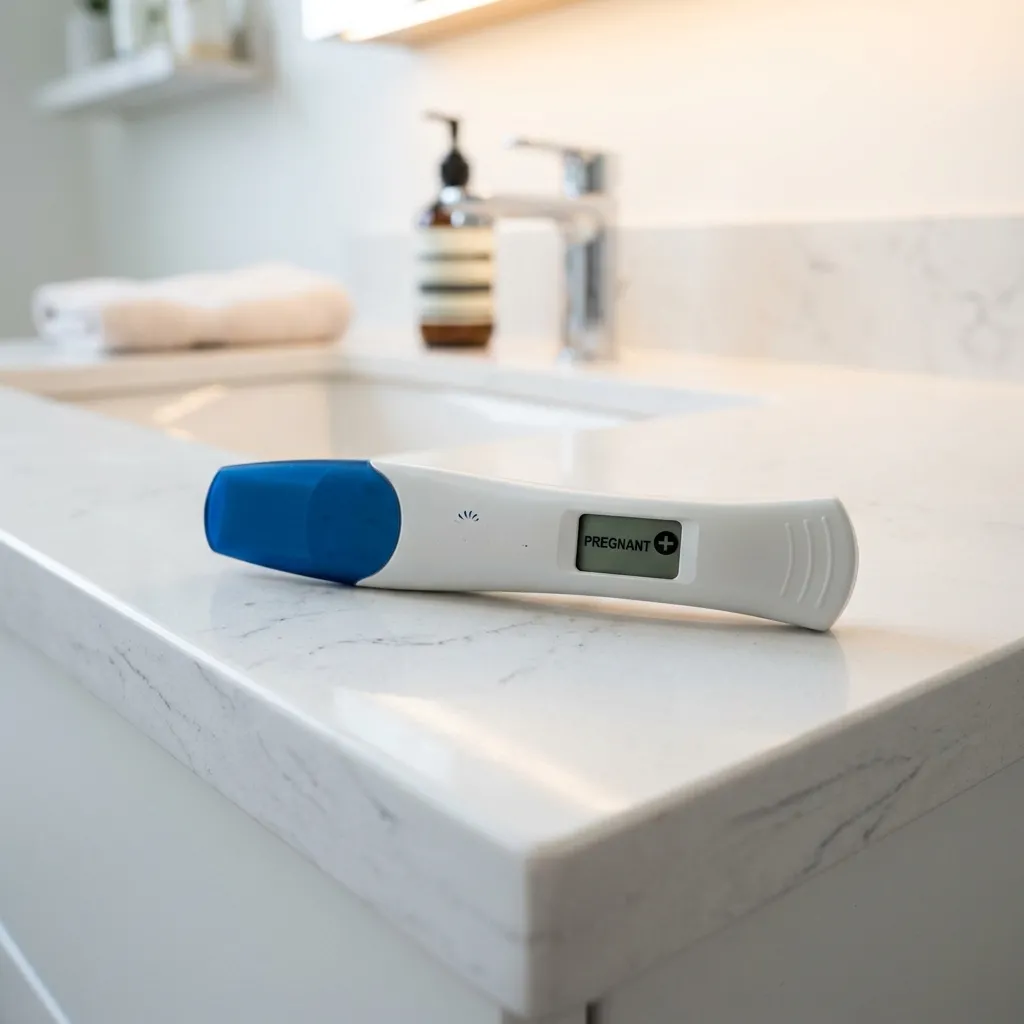
- Digital display shows unmistakable 'Pregnant' or 'Not Pregnant' words to eliminate reading errors
- Smart Countdown feature animates on screen to reassure the user that the test is working correctly
- High-sensitivity sensor detects hCG levels up to 5 days before the missed period
Hormonal Detection & Early Gestation Kinetics
Improper testing timing, diluted urine samples, and low-sensitivity assay strips cause false negatives and user anxiety. Discover how human chorionic gonadotropin (hCG) concentration levels, lateral flow chromatography, and digital sensors determine early pregnancy.
1. Hormonal Kinetics: hCG Doubling Rates and Detection Windows
Immediately after embryo implantation, the developing placenta starts secreting human chorionic gonadotropin (hCG). In early pregnancy, hCG levels double roughly every 48 to 72 hours. This rapid rise is key for early detection using home tests.
Standard home pregnancy tests have detection thresholds ranging from 10 mIU/mL to 25 mIU/mL. High-sensitivity tests can detect pregnancy up to 5 days before a missed period. Accuracy levels rise significantly as you approach the expected day of your period.
Testing too early can lead to a false negative because hCG levels may still be below the test's detection threshold. If you receive a negative result but suspect you are pregnant, wait 48 hours and test again. This delay allows hCG to accumulate to detectable levels.
Additionally, tracking your ovulation window helps you determine the best day to test. Implantation typically occurs 6 to 12 days after fertilization. Knowing your cycle length helps prevent premature testing and reduces anxiety.
Combining ovulation tracking with early testing provides a clear timeline for pregnancy planning. High-sensitivity digital tests remove the guesswork by displaying clear results, helping you make informed decisions with confidence.
At the cellular level, the syncytiotrophoblast cells of the blastocyst produce the hormone to signal the corpus luteum to continue progesterone production. Without this signal, the uterine lining sheds, resulting in menstruation. Therefore, testing too early fails simply because the physical connection between the embryo and the maternal bloodstream has not yet been established.
Clinical studies indicate that the median implantation day is 9 days post-ovulation (DPO). While some implantations occur as early as 6 DPO, others can take up to 12 DPO. If your blastocyst implants late, your urine hCG levels will remain undetectable until later in the cycle, regardless of the test's laboratory sensitivity.
Furthermore, the clearance rate of exogenous hCG must be considered if you have undergone fertility treatments. Trigger shots containing hCG can remain in the system for up to 14 days, creating a high risk of false positive results. Understanding these underlying hormonal kinetics is the first step toward getting accurate home test results.
- hCG levels rise rapidly in early pregnancy, doubling every 48 to 72 hours in normal gestations.
- Testing 48 hours after a negative result gives hCG levels time to double if pregnancy has occurred.
- Implantation day variances (6 to 12 DPO) dictate the earliest possible day for positive detection.
- Fertility trigger shots containing hCG require 10 to 14 days to clear and prevent false positive readings.
2. Biophysics of Testing: Lateral Flow and Digital Detection
Traditional home pregnancy tests use lateral flow chromatography to detect hCG. The absorbent tip pulls urine across a membrane containing mobile antibodies. If hCG is present, it binds to these antibodies, forming a colored line on the strip.
While effective, traditional tests can be hard to read, leading to user error. Faint lines are often misinterpreted, causing confusion. Digital pregnancy tests use optical sensors to read the chromatography strip and display a clear text result.
The digital sensor measures the optical density of the test line, removing human error. The screen displays a clear 'Pregnant' or 'Not Pregnant' result, making it easy to understand. This clarity is crucial for reducing stress during early testing.
Additionally, premium digital tests feature built-in timer displays to show that the test is working. This countdown feature prevents users from reading the test too early or too late. Following the timing instructions is key for ensuring accuracy.
Choosing a digital test provides reliable, easy-to-read results at home. These tests combine lateral flow biochemistry with digital precision, delivering peace of mind. Maintain a clear, simple testing routine for maximum accuracy.
The internal mechanism of a digital test utilizes a light-emitting diode (LED) and a photodetector. When the urine flows through the conjugate pad, the dye-labeled antibodies accumulate at the test and control lines. The photodetector measures how much light is reflected, translating this value into a digital confirmation.
Because digital sensors rely on strict mathematical calibration, they eliminate the subjective bias of human eyesight. Many users staring at traditional lines experience the "line eye" phenomenon, imagining a line that isn't there due to lighting conditions. A digital interface bypasses this psychological stress completely.
Moreover, the physical construction of digital casings prevents exposure to ambient moisture, which can degrade paper test strips. This robust housing ensures that the delicate lateral flow membrane remains protected up until the exact moment of testing. Investing in this biophysical technology translates to consistent testing stability.
- Lateral flow chromatography uses gold-conjugated antibodies to bind hCG and form a visible line.
- Digital optical sensors read line density with LEDs, displaying clear text results to prevent errors.
- Integrated smart countdown features reassure the user that the lateral flow test is active.
- Sturdy plastic casings protect the delicate reactive chemical strips from humidity.
Clearblue Digital Pregnancy Test with Smart Countdown
- Digital display shows unmistakable 'Pregnant' or 'Not Pregnant' words to eliminate reading errors
- Smart Countdown feature animates on screen to reassure the user that the test is working correctly
- High-sensitivity sensor detects hCG levels up to 5 days before the missed period
- Includes extra-wide absorbent tip and integrated floodguard technology to prevent user error
3. Preventing Errors: Urine Concentration and Hydration Dynamics
A common cause of false negative results is diluted urine. Drinking large amounts of water or other fluids before testing dilutes the concentration of hCG in your bladder. This dilution makes it harder for the test to detect early pregnancy.
To prevent dilution errors, it is highly recommended to test using your first morning urine. Overnight, your body concentrates urine, yielding the highest hCG levels of the day. Testing first thing in the morning is crucial for early detection.
If you must test later in the day, limit your fluid intake for 4 hours before the test. This restriction allows urine to concentrate in your bladder, improving early accuracy. Proper hydration management is key for early testing success.
Additionally, avoid holding the absorbent tip under the urine stream for too long or too short a time. Over-saturating the test can damage the chromatography strip, while under-saturating can prevent the test from working. Follow the instructions carefully.
Choosing a test with integrated floodguard technology helps prevent over-saturation. This design feature blocks excess urine from entering the test mechanism, ensuring a valid result. Proper testing technique ensures maximum reliability.
Hydration dynamics are governed by renal filtration rates. When you consume large volumes of water, your kidneys increase urine volume, reducing the relative concentration of solute particles, including hormones. Early in gestation, when hCG is just barely crossing the 10 mIU/mL threshold, even minor dilution can drop the level below the detection limit.
Clinical guidelines emphasize that specific gravity is a reliable indicator of urine concentration. First morning urine typically has a high specific gravity, indicating it is concentrated. If your urine appears clear or light yellow, it is highly likely that your hCG signal is diluted, and you should postpone testing until a concentrated sample can be collected.
Furthermore, mechanical errors like holding the test tip pointing upward can cause urine to run back into the display window. This disrupts the lateral flow path and ruins the electrical components of digital tests. Always point the absorbent tip downward during sample collection, and lay the device flat on a non-absorbent surface while waiting for results.
- First morning urine provides the highest hCG concentration, reducing false negatives.
- Limiting fluid intake for 4 hours before testing helps concentrate urine when testing later in the day.
- Floodguard technology stops excess urine from entering the testing mechanism and causing errors.
- Keeping the absorbent tip pointed downward prevents urine from flowing back into the display.
4. Clinical Interpretation: Distinguishing Faint Lines, Evaporation Lines, and Chemical Pregnancies
Reading traditional paper-strip pregnancy tests can lead to significant confusion regarding faint lines. A faint line is generally a positive result, indicating that a detectable amount of hCG is present in the urine. However, it must be read within the strict time limit specified in the instructions.
An evaporation line occurs when urine dries on the test strip, leaving a faint, colorless streak. Evaporation lines typically appear after the reading window has closed, which is why reading tests past the 5-minute mark is highly discouraged. Distinguishing between a faint positive and an evaporation line is a common challenge.
Another phenomenon is a chemical pregnancy, which is an extremely early pregnancy loss that occurs shortly after implantation. If you test early and receive a positive result, but start bleeding a few days later, you may have experienced a chemical pregnancy. Early testing increases the likelihood of detecting these very early losses.
Clinically, chemical pregnancies account for up to 50-75% of all early miscarriages. Before the advent of high-sensitivity home tests, women rarely knew they had experienced a chemical pregnancy, as the bleeding coincided with their expected period. Understanding this context helps manage expectations when testing days before a missed period.
To confirm a faint line, it is best to test again 48 hours later with first morning urine. If the line grows darker, it indicates that your hCG levels are rising as expected in early gestation. If the line remains faint or disappears, it could suggest a chemical pregnancy or a false reading from a dried strip.
Furthermore, chemical structure differences in hCG molecules can occasionally affect test results. The hCG core fragment can accumulate in urine during later stages of pregnancy, leading to a rare phenomenon known as the hook effect, where extremely high hormone levels paradoxically cause a false negative or faint result. However, during the early testing window, the primary concern remains detecting low levels of intact hCG.
Using a digital test eliminates the visual ambiguity of faint lines. The digital sensor is programmed to output "Pregnant" only when the optical density meets a set scientific standard. This prevents you from mistaking an evaporation line for a positive result, saving you from emotional distress.
Ultimately, consulting with a healthcare professional for a serum hCG test is the most accurate way to confirm pregnancy. Serum tests are processed in a laboratory and can measure the exact concentration of hCG down to 1-2 mIU/mL. Knowing when to transition from home testing to clinical testing ensures you receive the best care.
- Faint positive lines must show color (pink or blue) and appear within the designated reading window.
- Evaporation lines are colorless streaks that appear as urine dries after the reading window has closed.
- Chemical pregnancies are early losses detected by testing early, where the embryo fails shortly after implantation.
- Laboratory serum hCG tests provide the gold standard for confirmation, detecting levels down to 1 mIU/mL.
5. Selecting the Best Pregnancy Test for Your Routine
When choosing a home pregnancy test, it is important to look at the sensitivity rating. High-sensitivity tests are rated at 10 mIU/mL, while standard tests are rated at 25 mIU/mL. High-sensitivity tests are required for early detection before your missed period.
Digital displays are highly recommended to prevent reading errors. They display clear text results, removing the need to interpret faint lines. Look for trusted brands that offer digital technology and high-sensitivity sensors.
Additionally, consider the value of multi-pack options. Having multiple tests on hand allows you to re-test after 48 hours to confirm results. This convenience is helpful for tracking your cycle and planning your next steps.
Investing in a premium digital test supports your family planning and peace of mind goals. While cheaper strip tests are available, they are harder to read and prone to errors. A high-quality digital test helps you get clear, accurate answers with ease.
Consider also the countdown features. Real-time feedback displays reassure you that the test is working, reducing anxiety during the waiting period. This simple feature makes the testing process much more comfortable and stress-free.
Evaluating the cost-to-benefit ratio of different testing formats is essential. Standard strips are highly cost-effective for bulk testing if you are undergoing active fertility tracking and testing multiple times per cycle. However, using a digital test for final verification ensures you have an unambiguous answer when it matters most.
Furthermore, make sure to verify the expiration date on the test packaging. Over time, the reactive antibodies on the lateral flow membrane degrade, which can lead to false negative results or invalid readings. Keeping fresh, unexpired tests in your wellness cabinet is key for reliability.
Ultimately, the best test is one that fits seamlessly into your cycle tracking routine while offering the sensitivity required for early, reliable answers. By selecting a device with built-in error prevention, you can test with confidence and minimize cycle-related anxiety.
- High-sensitivity ratings (10 mIU/mL) are necessary for early detection before missed periods.
- Digital text readouts eliminate reading errors and provide clear, unmistakable answers.
- Checking expiration dates prevents testing with degraded antibodies and getting false readings.
- Multi-packs allow for convenient re-testing 48 hours later to confirm early positive results.
Ready for Fast and Accurate Results?
Get clear answers and peace of mind. Try a premium digital pregnancy test designed to detect hCG early, countdown your results, and display a clear text answer. Explore the optimized product showcase widget below to find the best choice.
Shop Clearblue Digital Pregnancy Test on Amazon →Technical Specifications & Product Data
| Specification | Value / Details |
|---|---|
| Brand | Clearblue |
| List Price | $15.99 (USD) |
| Customer Rating | 4.8 / 5.0 (19,420 reviews) |
| ASIN / Identifier | B00G003R9K |
| Availability | In Stock (USA Region) |
| Outbound Link Compliance | Sponsored & Nofollow Enforced |
Verified Features & Performance Data
- ✓Digital display shows unmistakable 'Pregnant' or 'Not Pregnant' words to eliminate reading errors
- ✓Smart Countdown feature animates on screen to reassure the user that the test is working correctly
- ✓High-sensitivity sensor detects hCG levels up to 5 days before the missed period
- ✓Includes extra-wide absorbent tip and integrated floodguard technology to prevent user error
System Sovereignty & Engineering
Edge Computing
100% Client-side processing. Your data never leaves your browser sandbox, ensuring absolute compliance with US privacy mandates.
Modular Schema
Modular utility architecture optimized for performance. Low-latency WASM kernels provide near-native speeds for complex transformations.
Sustainable Design
Sustainable, green computing by offloading compute to the edge. Verified zero-server storage (ZSS) for professional-grade security.