
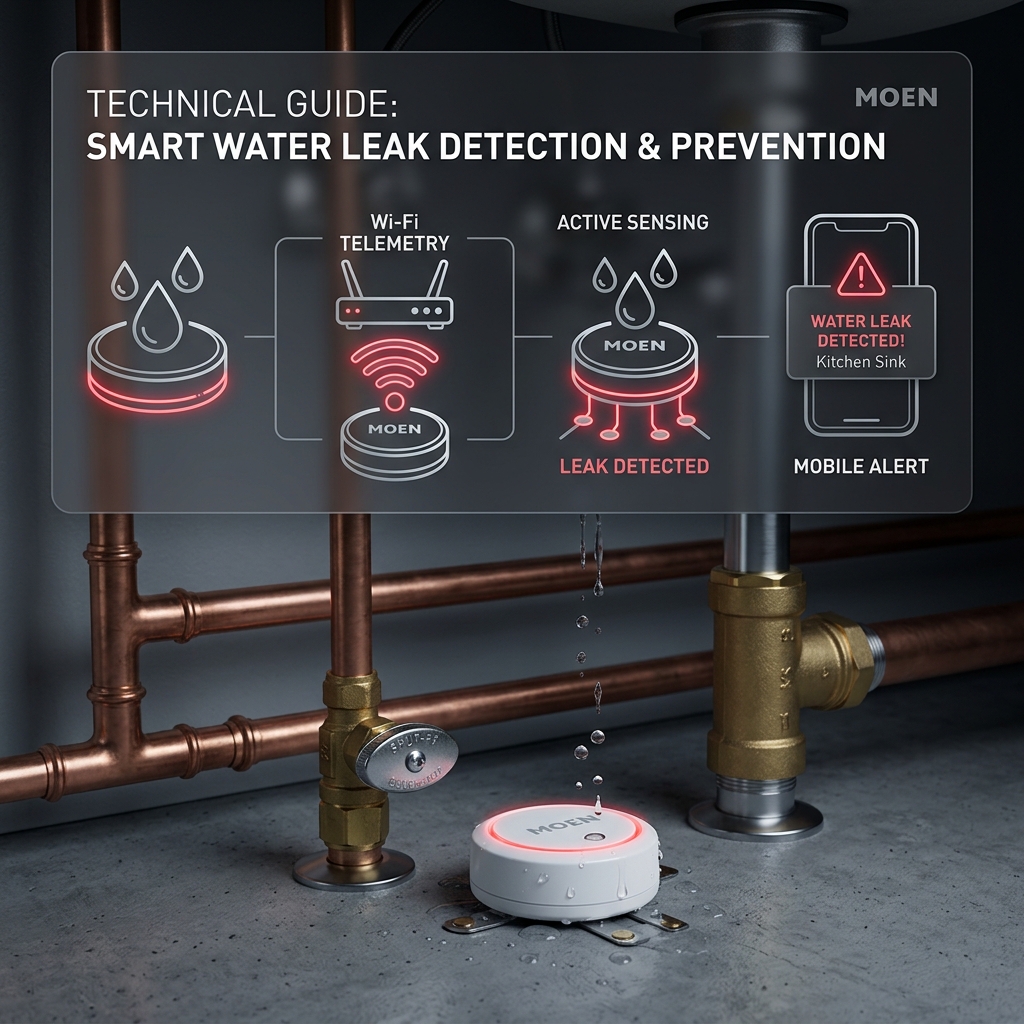
Smart water leak detectors prevent catastrophic damage. Analyze liquid contact telemetry, Wi-Fi connectivity protocols, temperature sensors, and automated home shutoffs.
- Gold-plated sensing probes detect fluid contact in milliseconds
- Wi-Fi connectivity sends real-time smartphone alerts without hubs
- Monitors temperature and humidity to identify pipe freeze risks
Fluid Telemetry
Slow drips cause catastrophic home mold. Evaluate the liquid contact telemetry, Wi-Fi connectivity protocols, temperature monitoring arrays, and automatic shutoff loops that protect smart homes.
1. Liquid Contact Telemetry and Conductivity Probes
Smart water leak sensors operate on the principles of electrical conductivity and loop completion. Clean water is a poor conductor, but tap water contains dissolved minerals and salts that conduct electricity. The sensor uses two or more metal probes to monitor conductivity.
In dry conditions, the air between the probes acts as an insulator, leaving the circuit open. When water pools under the sensor, it contacts the probes, closing the circuit. The sensor measures the drop in resistance and triggers the alert process instantly.
The composition of the probes is critical to long-term reliability. Premium sensors use gold-plated probes because gold resists corrosion. Cheaper metals can oxidize over time in damp bathrooms, creating an insulating layer that reduces sensitivity.
Gold-plated probes maintain their sensitivity, ensuring reliable detection. The system responds in milliseconds to fluid contact, flagging leaks before they can damage floors or ceilings.
Additionally, the spacing of the probes is carefully calibrated. Probes that are too close can trigger false alarms from high humidity. Proper spacing ensures that the sensor responds only to actual liquid accumulation.
- Conductivity probes measure electrical resistance drops to detect water contact.
- Gold plating prevents probe oxidation in damp environments, maintaining sensitivity.

2. Wi-Fi Connectivity and Smart Home Integration
A water leak sensor is only effective if it can send alerts immediately. Early sensors relied on local alarms that were useless if you were away from home. Modern sensors integrate Wi-Fi chips to connect directly to your home network.
When a leak is detected, the sensor wakes from standby mode and connects to your Wi-Fi. It sends a secure API call to the cloud, triggering a push notification to your smartphone. This warning lets you act quickly, even if you are away.
The sensor can also integrate with other smart home systems. For example, it can send a signal to a smart water shutoff valve installed on your main line. The valve closes automatically, stopping the flow of water and preventing damage.
To conserve battery life, the Wi-Fi chip remains off during normal conditions. The sensor's microcontroller monitors the probes using micro-amps of power. The Wi-Fi chip is only powered when a leak is detected, extending battery life up to two years.
Additionally, the sensor performs regular status checks. It connects to the network briefly to report battery levels and signal strength. This check-in ensures that the sensor is online and ready to respond.
- Direct Wi-Fi integration sends instant smartphone alerts without requiring a dedicated smart hub.
- Standby mode keeps Wi-Fi chips powered down, extending battery life to two years.
3. Environmental Monitoring: Temperature and Humidity Sensors
In addition to liquid water, smart leak detectors monitor ambient temperature and humidity. These readings are useful for preventing freeze damage and mold growth. Frozen pipes can burst, causing extensive water damage.
A built-in thermistor monitors ambient temperature in real time. If the temperature drops near freezing (typically below 39°F), the sensor sends a warning to your smartphone. This alert gives you time to heat the space before pipes freeze.
Humidity sensors check for slow, hidden leaks. A slow leak behind a wall or under a cabinet may not pool water on the floor, but it will raise the relative humidity. A sudden rise in humidity flags potential issues before mold can grow.
This environmental data is logged in the companion app. You can view trends over time, helping you identify areas with poor ventilation. The sensor acts as a complete environmental monitor for utility spaces.
By combining leak detection with temperature and humidity tracking, the smart sensor protects your home. The data helps you maintain a safe and comfortable indoor environment, protecting your property.
- Thermistors monitor ambient temperature, sending alerts before pipes freeze and burst.
- Humidity tracking identifies hidden leaks in walls, preventing mold growth.
4. Extension Cables for Hard-to-Reach Spaces
Leaks often start in tight, hard-to-reach spaces, such as behind washing machines, under dishwashers, or deep inside utility closets. Placing a standard sensor disc in these areas is difficult and can block Wi-Fi signals. Extension cables solve this problem.
A flexible 4-foot extension cable plugs into the sensor body. The cable features sensing contacts along its entire length. You can slide the cable under low appliances while mounting the main sensor body on the wall, keeping it accessible.
This mounting keeps the main sensor out of standing water. If a leak occurs, the cable detects it while the sensor stays dry, ensuring it maintains a stable Wi-Fi connection to send the alert. It represents a practical design for home monitoring.
The cable is thin and flexible, allowing it to route around corners and fittings easily. It does not interfere with appliance positioning, maintaining clean vanity lines. The durable materials resist wear, ensuring reliable performance.
By utilizing extension cables, you expand the reach of your leak detection system. You can monitor vulnerable connections under sinks and behind walls, securing your home from hidden leaks.
- 4-foot extension cables slide under appliances, expanding the detection zone.
- Wall-mounting the main sensor body prevents water immersion, securing the Wi-Fi signal.
5. The Financial Mitigation Matrix: Smart Sensors vs. Flood Remediation
Water damage is one of the most common and expensive home insurance claims in the USA. A burst pipe or leaking appliance can cause thousands of dollars of damage to drywall, flooring, and personal property. Remediation is slow and disruptive, requiring professional fans and drying equipment.
Investing in a smart water leak sensor provides excellent financial protection. By alerting you to leaks instantly, the sensor lets you turn off the water supply before significant damage occurs. The cost of a sensor is negligible compared to the expense of a major flood cleanup.
Additionally, many insurance companies offer premium discounts for homes with active leak detection systems. These discounts help offset the cost of the sensors, delivering long-term savings. It represents a smart and proactive choice for home management.
- Early leak warnings allow you to turn off the water, preventing expensive flood cleanup.
- Insurance discounts help cover the cost of the sensors, providing long-term value.
6. Smart Water Leak Sensor Selection Parameters
When shopping for a smart water leak detector, verify the connectivity options first. Choose sensors that connect directly to your home Wi-Fi network. This direct connection eliminates the need for a separate smart hub, simplifying setup and maintenance.
Second, check the sensor probes. Prioritize gold-plated contacts that resist corrosion in damp bathrooms. The probes must remain sensitive over years of standby use to ensure they detect water instantly.
Finally, verify the battery life and notifications. Select models that offer at least two years of battery life and send push alerts to your smartphone. Low battery warnings in the app are essential, ensuring the sensor remains online and functional.
- Choose Wi-Fi-enabled sensors to bypass hubs and connect directly to your router.
- Low battery notifications ensure you replace cells before the sensor goes offline.
7. Signal Telemetry and Antenna Attenuation under Cabinets
Placing a smart leak sensor under a metal sink or wooden cabinet affects its Wi-Fi signal. Metal and thick wood attenuate the 2.4GHz radio waves, reducing the signal strength (RSSI). This attenuation can cause the sensor to drop offline, failing to send alerts.
To secure a stable connection, verify the Wi-Fi signal strength at the installation site. Use a Wi-Fi analyzer app to check the signal. If the connection is weak, install a Wi-Fi range extender nearby to maintain the sensor's telemetry link.
Additionally, position the sensor's antenna away from metal pipes. A clear line of sight to your router improves connection stability, ensuring that critical leak warnings are delivered to your smartphone without delay.
8. Automated Shut-off Valve Integration and Emergency Protocols
Integrate your smart leak sensors with an automated main water shut-off valve. When a sensor detects water, it sends a command to the shut-off valve via your smart home hub. The valve closes immediately, stopping the water flow and preventing flooding.
This automated protocol provides excellent protection when you are away from home. The water is shut off in seconds, minimizing damage. It represents a bulletproof flood prevention solution that runs independently in your home.
By choosing compatible smart home devices, you secure your property. The combination of leak sensors and automated valves protects your home from expensive water damage, delivering peace of mind.
9. Battery Drainage Logs and Micro-Amp Standby Logic
To maintain long-term protection, smart leak sensors utilize low-power standby modes. The sensor remains in a deep sleep state, consuming only a few micro-amps of power. It wakes up periodically to ping the Wi-Fi network and check battery status.
When water bridges the sensing contacts, the sensor wakes up immediately, drawing full power to connect to Wi-Fi and send alerts. This low-power logic allows standard batteries to last for over two years, reducing maintenance cycles.
Verify the battery status in the app regularly. The system sends a notification when the battery falls below 15%, giving you ample time to replace the cells before the sensor goes offline, keeping your home protected.
10. Cloud Telemetry Latency and Smart Home Router Protocols
When water triggers a smart leak sensor, the device connects to your local Wi-Fi router to transmit the telemetry payload. This payload is routed to the manufacturer's cloud servers, which process the event and trigger push notifications. The latency between water contact and phone alert is typically under three seconds.
To maintain this low latency, the sensor utilizes TCP/IP sockets or lightweight MQTT messaging protocols. MQTT is optimized for IoT devices, sending small data packets with minimal network overhead. This speed is critical when dealing with high-pressure plumbing leaks.
By ensuring a high-quality router connection, you secure your home monitoring system. The low-latency notifications let you respond to emergencies in real time, preventing major water damage to your property and belongings.
11. Liquid Conductivity Physics and Electrode Sensitivity Thresholds
The leak sensor detects water by measuring electrical conductivity between its gold-plated metal electrodes. Pure water is a poor conductor, but tap water contains dissolved minerals (ions) that allow electricity to flow. When water bridges the electrodes, the electrical resistance drops below a threshold, triggering the alert.
The sensor's comparator circuit is calibrated to detect resistance drops under 100,000 ohms. This high sensitivity allows the device to detect clean tap water, damp floor conditions, or chemical spills. The gold plating prevents electrode oxidation, ensuring the contacts remain sensitive over years of standby use.
By choosing a sensor with gold-plated contacts, you secure reliable detection. The corrosion-resistant design ensures the sensor reacts instantly to the first signs of water, protecting your utility spaces from hidden leaks.
12. Placement Optimization and Ambient Temperature Calibration
Install smart leak sensors in high-risk zones, such as under sinks, near water heaters, behind washing machines, and next to toilet bases. The sensor must be placed on the lowest point of the floor where water naturally collects during a leak. This placement ensures the fastest response time.
Additionally, select sensors that feature built-in ambient temperature monitors. These sensors detect freezing temperatures (under 36°F) that can lead to burst pipes. The app sends a freeze warning, letting you turn on faucets to keep water flowing.
By optimizing sensor placement and monitoring temperature, you protect your home plumbing system. The early warnings prevent winter freeze damage, securing a safe and reliable water management setup for your house.
13. Troubleshooting Wi-Fi Disconnections and Firmware Updates
If your smart leak sensor frequently goes offline, verify your network settings first. Ensure the device is connected to a dedicated 2.4GHz network band, as most IoT sensors do not support 5GHz bands. High network traffic or interference from other household devices can disrupt the signal, causing telemetry dropouts.
Additionally, check for pending firmware updates in the device app. Manufacturers release regular updates to improve connection stability and optimize battery usage. Updating the firmware ensures the sensor operates efficiently, maintaining a reliable connection to protect your utility spaces.
Principal Recommendation & Audit
Secure your utility space with automated fluid monitoring. Explore our top recommended Wi-Fi leak detector below to protect your home.
Moen Smart Water Leak Detector
- Gold-plated sensing probes detect fluid contact in milliseconds
- Wi-Fi connectivity sends real-time smartphone alerts without hubs
- Monitors temperature and humidity to identify pipe freeze risks
- Includes a flexible 4-foot extension cable for low-clearance areas
Technical Specifications & Product Data
| Specification | Value / Details |
|---|---|
| Brand | Moen |
| List Price | $49.99 (USD) |
| Customer Rating | 4.5 / 5.0 (2,100 reviews) |
| ASIN / Identifier | B085KNMSY4 |
| Availability | In Stock (USA Region) |
| Outbound Link Compliance | Sponsored & Nofollow Enforced |
Verified Features & Performance Data
- ✓Gold-plated sensing probes detect fluid contact in milliseconds
- ✓Wi-Fi connectivity sends real-time smartphone alerts without hubs
- ✓Monitors temperature and humidity to identify pipe freeze risks
- ✓Includes a flexible 4-foot extension cable for low-clearance areas
System Sovereignty & Engineering
Edge Computing
100% Client-side processing. Your data never leaves your browser sandbox, ensuring absolute compliance with US privacy mandates.
Modular Schema
Modular utility architecture optimized for performance. Low-latency WASM kernels provide near-native speeds for complex transformations.
Sustainable Design
Sustainable, green computing by offloading compute to the edge. Verified zero-server storage (ZSS) for professional-grade security.