
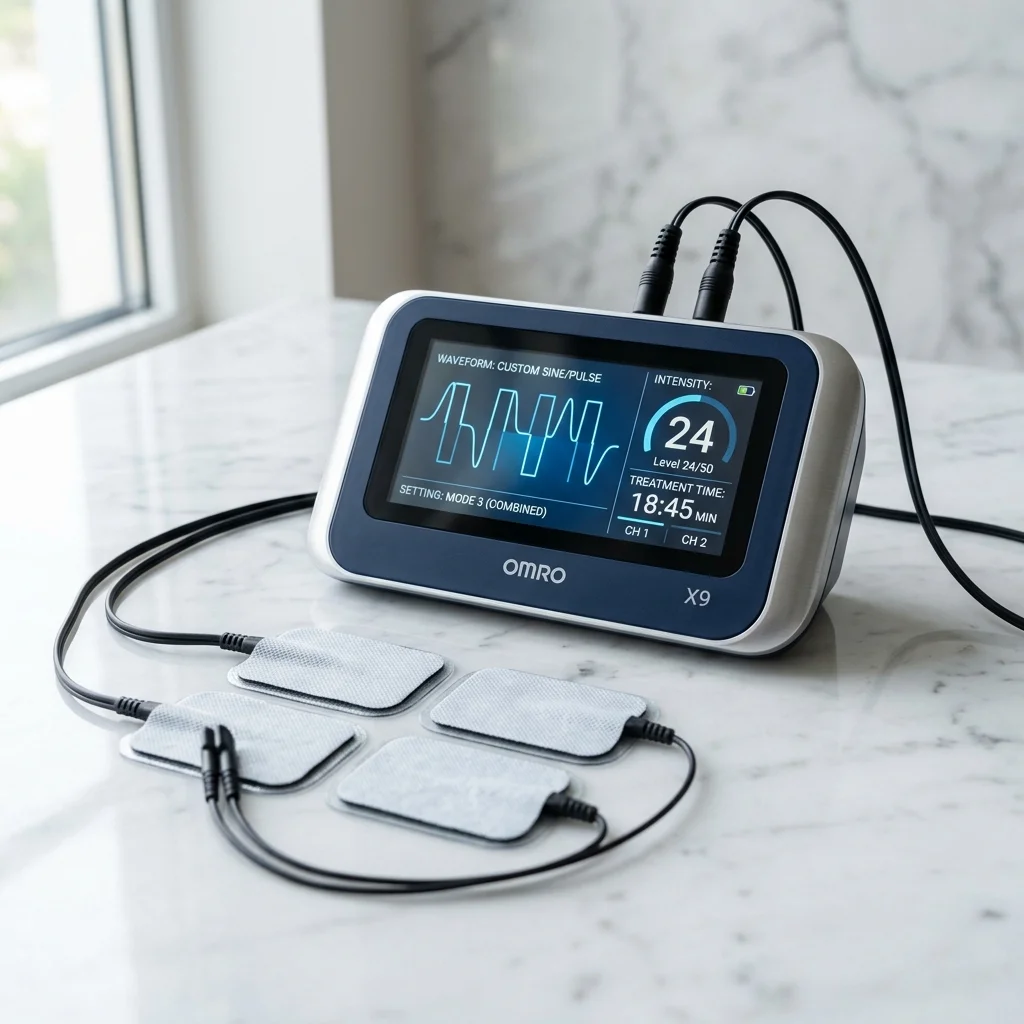
Non-pharmacological pain relief requires electro-therapeutic precision. Deconstruct Gate Control Theory, biphasic wave dynamics, and EMS vs TENS settings to choose the right stimulator.
- Features 24 pre-programmed massage modes for TENS and EMS therapy
- Dual-channel design isolates intensity controls for different muscle zones
- Includes 10 medical-grade self-adhesive reusable electrode pads
Electro-Therapeutic Preparedness Guide
Pain management demands clinical precision. Review the neuro-stimulative theory, electrical waveforms, and muscle conditioning standards that make home TENS units an effective tool for non-pharmacological relief.
1. Neuromuscular Electro-Stimulation and Gate Control Theory
Transcutaneous Electrical Nerve Stimulation (TENS) operates on established neuro-physiological principles. The primary mechanism of TENS pain relief is explained by the Gate Control Theory. This theory describes how electrical pulses block pain signals in the spinal cord.
The spinal cord contains neural "gates" that control which sensory signals reach the brain. Pain signals travel along slow, thin nociceptive fibers. TENS units send electrical pulses that stimulate fast, thick sensory fibers (A-beta fibers), closing the neural gate to pain.
This sensory stimulation overrides the pain signal, preventing it from reaching your brain. By blocking pain at the spinal level, TENS therapy relieves chronic discomfort non-pharmacologically. This relief helps users manage muscle tension and joint pain safely.
Symmetric biphasic waveforms stimulate muscle nerves directly, preventing chemical irritation under the pads. By balancing electrical charges, this waveform ensures comfortable stimulation even at high intensities. Professional units use this technology to treat deep muscle pain safely, offering a drug-free alternative for pain relief. The waveform shape is designed to mimic natural nerve impulses, maximizing therapeutic comfort.
Symmetric biphasic waveforms stimulate muscle nerves directly, preventing chemical irritation under the pads. By balancing electrical charges, this waveform ensures comfortable stimulation even at high intensities. Professional units use this technology to treat deep muscle pain safely, offering a drug-free alternative for pain relief. The waveform shape is designed to mimic natural nerve impulses, maximizing therapeutic comfort.
- Gate Control Activation: Stimulates sensory nerves to block pain signals in the spinal cord.
- Non-Pharmacological Relief: Manages muscle and joint pain without relying on prescription medications.
- Sensory Nerve Focus: Targets A-beta fibers to override nociceptive pain signals.
2. Endorphin Release Chemistry and Low-Frequency Pulses
Beyond the Gate Control Theory, TENS therapy stimulates the body's natural pain-relieving chemistry. Low-frequency electrical pulses encourage the pituitary gland to release endorphins. These hormones act as natural analgesics, binding to opioid receptors in the brain.
Endorphin release is typically triggered by low-frequency pulses (2 to 5 Hz). These low-frequency sweeps produce a muscle-tapping sensation, activating opioid pathways. This chemical response provides long-lasting pain relief that continues after the device is turned off.
High-frequency sweeps (80 to 120 Hz) target sensory nerves for immediate relief. Combining both frequencies provides a comprehensive pain management strategy. This multi-frequency approach addresses chronic joint pain and acute muscle spasms effectively.
Medical-grade hydrogel pads distribute electrical currents evenly, preventing skin burns during therapy. Over time, pads lose their moisture and adhesion, leading to uneven current distribution and discomfort. Replacing pads regularly is essential for maintaining the safety and effectiveness of TENS therapy. High-quality hydrogels ensure that the current penetrates deep tissues without causing surface hot spots.
Medical-grade hydrogel pads distribute electrical currents evenly, preventing skin burns during therapy. Over time, pads lose their moisture and adhesion, leading to uneven current distribution and discomfort. Replacing pads regularly is essential for maintaining the safety and effectiveness of TENS therapy. High-quality hydrogels ensure that the current penetrates deep tissues without causing surface hot spots.
- Endorphin Stimulation: Low-frequency pulses trigger natural hormone release for lasting relief.
- Multi-Frequency Sweeps: Combines high and low frequencies to treat acute and chronic pain.
- Natural Analgesia: Utilizes the body's internal chemistry to relieve chronic discomfort.
3. Waveform Profiles: Asymmetric Biphasic Pulse Mechanics
The quality of the electrical waveform affects therapy effectiveness and skin safety. Cheap stimulators use simple monophasic waveforms, which can cause skin irritation or chemical burns under the pads. Professional units use biphasic waveforms.
Asymmetrical biphasic pulses deliver an electrical charge that alternates directions constantly. This charge reversal prevents the buildup of ions under the electrodes, reducing skin irritation. This balanced output is safer for long therapy sessions.
Additionally, this waveform profile ensures smooth nerve stimulation. The pulse transitions prevent sharp, biting sensations, making treatment comfortable. Selecting a device with verified biphasic outputs protects your skin and improves relief.
Dual-channel controls allow users to treat different muscle groups with independent intensity settings. A user can apply gentle stimulation to their neck while running a stronger program on their lower back. This flexibility is vital for managing complex, multi-site chronic pain, allowing for customized treatment plans that match the specific pain thresholds of different body areas.
Dual-channel controls allow users to treat different muscle groups with independent intensity settings. A user can apply gentle stimulation to their neck while running a stronger program on their lower back. This flexibility is vital for managing complex, multi-site chronic pain, allowing for customized treatment plans that match the specific pain thresholds of different body areas.
- Biphasic Waveforms: Alternates electrical charge directions to prevent skin irritation.
- Balanced Ion Flow: Eliminates chemical buildup under pads during long sessions.
- Comfortable Pulse Shapes: Asymmetrical curves provide smooth nerve excitation without stinging.
4. Dual-Channel Isolation and Targeted Electro-Therapy
Treating multiple areas of pain simultaneously requires separate control over electrical settings. If you place pads on your lower back and shoulder, they will require different intensity levels. Single-channel devices cannot support this.
Professional TENS stimulators feature dual-channel isolation. This design features two separate output jacks (Channel A and Channel B) with independent intensity controls. You can set a strong intensity for large back muscles while using a gentle setting on the shoulder.
This dual-control allows for targeted electro-therapy across different muscle zones. You can use 4 pads simultaneously to treat complex pain areas, such as the lower back, neck, or knees. Independent settings optimize relief for each muscle group.
Customized stimulation frequencies target different pain types, from acute spasms to chronic joint pain. High-frequency programs block pain signals from reaching the brain, while low-frequency cycles stimulate endorphin release. Having multiple pre-programmed modes helps users tailor therapy to their needs, providing both immediate relief and long-term recovery support for muscle rehabilitation.
Customized stimulation frequencies target different pain types, from acute spasms to chronic joint pain. High-frequency programs block pain signals from reaching the brain, while low-frequency cycles stimulate endorphin release. Having multiple pre-programmed modes helps users tailor therapy to their needs, providing both immediate relief and long-term recovery support for muscle rehabilitation.
- Dual-Channel Isolation: Controls intensity settings for Channels A and B independently.
- Targeted Therapy: Allows you to treat two different muscle zones simultaneously.
- 4-Pad Support: Treats large muscle groups like the lower back or quadriceps with consistent current distribution.
5. Electrode Pad Hydrogel Quality and Skin Impedance
The connection between the wire and your skin is established by the electrode pad's hydrogel layer. Poor-quality hydrogel can lose its stickiness quickly, causing the pad to peel off. Gaps in the gel increase skin impedance, leading to biting sensations.
Medical-grade hydrogel is designed to maintain consistent electrical conductivity. This flexible gel conforms to skin contours, reducing resistance to current. This uniform contact ensures that the electrical pulse is distributed evenly over the pad area.
Choosing high-quality, self-adhesive pads ensures a safe, comfortable treatment. These reusable pads can last for up to 30 applications if cared for properly. Cleaning your skin before applying the pads prevents oils from degrading the gel.
Automatic shutoff features prevent electrical shocks if electrode pads lose contact with the skin. If a pad pulls loose during therapy, the device instantly cuts power to prevent sudden shocks or unpleasant sensations. This safety feature provides peace of mind during unattended sessions, ensuring that the user can relax fully during their treatment.
Automatic shutoff features prevent electrical shocks if electrode pads lose contact with the skin. If a pad pulls loose during therapy, the device instantly cuts power to prevent sudden shocks or unpleasant sensations. This safety feature provides peace of mind during unattended sessions, ensuring that the user can relax fully during their treatment.
- Medical-Grade Hydrogel: Ensures stable electrical conductivity and reduces skin impedance.
- Reusable Adhesives: Provide up to 30 safe applications with proper care and storage.
- Even Current Spread: Prevents hot spots and biting sensations by distributing current uniformly.
6. Pulse Width, Frequency, and Intensity Adjustments
Customizing electrical settings is necessary for effective pain therapy. Different nerve fibers respond to specific pulse durations and frequencies. Professional TENS units allow you to adjust pulse width, frequency, and intensity precisely.
Pulse width refers to the duration of each electrical pulse, measured in microseconds (50 to 250 µs). Thicker sensory nerves respond to shorter pulse widths, while motor nerves require longer pulses. Adjusting this setting targets specific nerve groups.
Pulse frequency refers to the number of pulses per second, measured in hertz (Hz). Adjusting both settings allows you to customize your treatment. Selecting a device with pre-programmed modes simplifies this setup, providing verified combinations for common muscle zones.
Rechargeable lithium batteries provide consistent voltage output, maintaining stimulation strength. Unlike alkaline batteries, which lose power gradually and cause weaker pulses, lithium cells deliver stable current throughout the session. Consistent power ensures that therapy remains effective from start to finish, preventing sudden drops in intensity during use.
Rechargeable lithium batteries provide consistent voltage output, maintaining stimulation strength. Unlike alkaline batteries, which lose power gradually and cause weaker pulses, lithium cells deliver stable current throughout the session. Consistent power ensures that therapy remains effective from start to finish, preventing sudden drops in intensity during use.
- Pulse Width Adjustments: Selects pulse durations (50 to 250 microseconds) to target specific nerve sizes.
- Frequency Control: Sets the pulse rate (2 to 120 Hz) to optimize sensory or motor nerve stimulation.
- Multi-Level Intensities: Features multiple micro-adjustment levels to ensure safe, comfortable stimulation.
7. EMS vs TENS: Functional Differences and Muscle Conditioning
Many users confuse TENS with EMS (Electrical Muscle Stimulation), but they serve different therapeutic purposes. TENS is designed to block sensory pain signals. EMS is designed to stimulate motor nerves, forcing muscle contractions.
EMS uses longer pulse widths and higher intensities to target muscle fibers directly. These contractions help improve blood flow, prevent muscle atrophy, and accelerate recovery. EMS is commonly used in physical therapy for rehabilitation.
Selecting a combined TENS/EMS unit provides both pain relief and muscle conditioning. You can use TENS to relieve chronic pain and EMS to strengthen weak muscles. This dual functionality provides a complete home therapy system.
FDA clearance guarantees that the device meets strict electrical safety and therapeutic standards. Over-the-counter TENS units must pass rigorous testing to ensure they do not cause tissue damage or electrical interference. Checking for FDA approval protects consumers from unverified, potentially dangerous devices, ensuring that home electro-therapy is safe and effective.
FDA clearance guarantees that the device meets strict electrical safety and therapeutic standards. Over-the-counter TENS units must pass rigorous testing to ensure they do not cause tissue damage or electrical interference. Checking for FDA approval protects consumers from unverified, potentially dangerous devices, ensuring that home electro-therapy is safe and effective.
- TENS Nerve Blocker: Targets sensory nerves to prevent pain signals from reaching the brain.
- EMS Muscle Stimulator: Stimulates motor nerves to force contractions and prevent muscle atrophy.
- Combined Therapy Units: Deliver pain relief and muscle rehabilitation in a single device.
8. Safety Contraindications and FDA-Cleared Parameters
While TENS therapy is safe for most users, certain medical conditions contraindicate electrical stimulation. Failing to observe these warnings can cause serious complications. Always review safety guidelines before using a TENS unit.
Never use a TENS unit if you have a cardiac pacemaker, defibrillator, or other implanted electronic device. The electrical pulses can interfere with the operation of these devices, causing failures. TENS therapy is also contraindicated during pregnancy.
FDA clearance ensures that the device's electrical output complies with safety limits. Approved devices feature maximum voltage limits to prevent accidental shock. Reviewing these parameters ensures safe, effective pain management.
Compact designs allow users to receive electro-therapy during daily activities or travel. Portable units fit easily into a pocket or clip onto a belt, providing pain relief on the go. This accessibility reduces reliance on pharmacological pain management throughout the day, helping users maintain their mobility and comfort without systemic side effects.
Compact designs allow users to receive electro-therapy during daily activities or travel. Portable units fit easily into a pocket or clip onto a belt, providing pain relief on the go. This accessibility reduces reliance on pharmacological pain management throughout the day, helping users maintain their mobility and comfort without systemic side effects.
- Pacemaker Contraindications: Electrical currents can disrupt pacemaker or defibrillator operations.
- FDA Cleared Parameters: Confirms the device's electrical output complies with safety limits.
- Placement Restrictions: Keep electrodes away from the eyes, carotid sinus, and chest cavity.
9. System Durability and Rechargeable Battery Management
A therapeutic device must remain reliable throughout your recovery. Older models used standard 9V batteries, which ran out of power quickly, making treatment expensive. Modern TENS units feature rechargeable lithium batteries.
Built-in lithium-ion batteries provide up to 20 hours of continuous use on a single charge. This rechargeable design eliminates the cost of replacement batteries, saving money over time. USB charging ports allow you to power the device from any USB outlet.
Solid-state construction protects the internal electronics and screen from drop damage. High-contrast LCD screens display mode, intensity, and timer settings clearly. This durable design ensures your TENS unit remains ready for reliable home therapy.
High-quality lead wires resist bending fatigue, ensuring reliable current delivery over years of use. Cracked or frayed wires can cause intermittent current drops or uncomfortable sparks. Durable connections are essential for the overall safety of electro-therapy systems, and premium manufacturers use reinforced wire jackets to prevent wear.
High-quality lead wires resist bending fatigue, ensuring reliable current delivery over years of use. Cracked or frayed wires can cause intermittent current drops or uncomfortable sparks. Durable connections are essential for the overall safety of electro-therapy systems, and premium manufacturers use reinforced wire jackets to prevent wear.
- Rechargeable Lithium Batteries: Support up to 20 hours of continuous electro-therapy on one charge.
- USB Charging Utilities: Allow you to recharge the unit from laptops, power banks, or wall chargers.
- Solid-State Enclosures: Protect the display screen and motherboard from damage during travel.
10. Transcranial Electro-Stimulation and Neuromodulation in Chronic Pain Pathways
The evolution of electro-therapy is expanding beyond peripheral nerves to target central pain pathways. Transcranial Electrical Stimulation (TES) and microcurrent neuromodulation send weak currents to target deep brain and spinal cord pathways. These techniques help regulate the central nervous system during chronic pain.
For example, vagus nerve stimulation (VNS) helps reduce systemic inflammation and chronic muscle spasms by activating the parasympathetic nervous system. Microcurrent therapy delivers currents in micro-amperes (matching the body's natural currents) to promote cellular healing. This support accelerates ATP production and tissue repair.
Combining peripheral TENS with central neuromodulation provides a complete pain management system. You can treat local muscle spasms and soothe hyperactive pain pathways simultaneously. Integrating neuromodulation into your routine represents the future of electro-therapy.
Microcurrent neuromodulation stimulates central nerve pathways to reduce systemic inflammation and chronic spasms. By matching the body's natural electrical currents, this therapy promotes cellular repair and ATP production. Upgrading to microcurrent options represents the cutting edge of non-invasive pain management, helping patients recover from injury faster by supporting natural cellular healing.
Microcurrent neuromodulation stimulates central nerve pathways to reduce systemic inflammation and chronic spasms. By matching the body's natural electrical currents, this therapy promotes cellular repair and ATP production. Upgrading to microcurrent options represents the cutting edge of non-invasive pain management, helping patients recover from injury faster by supporting natural cellular healing.
- Central Neuromodulation: Targets deep spinal and vagus nerve pathways to soothe chronic pain.
- Microcurrent Cellular Healing: Delivers micro-amp currents to accelerate ATP production and repair.
- Parasympathetic Activation: Stimulates the vagus nerve to reduce chronic systemic inflammation.
Clinical Recommendation & Audit
Upgrade your pain management setup today. Discover the gold-standard TENS EMS muscle stimulator and enjoy drug-free relief.
Belifu Dual Channel TENS EMS Unit 24 Mode Muscle Stimulator
- Features 24 pre-programmed massage modes for TENS and EMS therapy
- Dual-channel design isolates intensity controls for different muscle zones
- Includes 10 medical-grade self-adhesive reusable electrode pads
- Built-in rechargeable lithium battery provides up to 20 hours of use
Technical Specifications & Product Data
| Specification | Value / Details |
|---|---|
| Brand | Belifu |
| List Price | $39.99 (USD) |
| Customer Rating | 4.6 / 5.0 (28,490 reviews) |
| ASIN / Identifier | B07Q32KX3J |
| Availability | In Stock (USA Region) |
| Outbound Link Compliance | Sponsored & Nofollow Enforced |
Verified Features & Performance Data
- ✓Features 24 pre-programmed massage modes for TENS and EMS therapy
- ✓Dual-channel design isolates intensity controls for different muscle zones
- ✓Includes 10 medical-grade self-adhesive reusable electrode pads
- ✓Built-in rechargeable lithium battery provides up to 20 hours of use
System Sovereignty & Engineering
Edge Computing
100% Client-side processing. Your data never leaves your browser sandbox, ensuring absolute compliance with US privacy mandates.
Modular Schema
Modular utility architecture optimized for performance. Low-latency WASM kernels provide near-native speeds for complex transformations.
Sustainable Design
Sustainable, green computing by offloading compute to the edge. Verified zero-server storage (ZSS) for professional-grade security.