
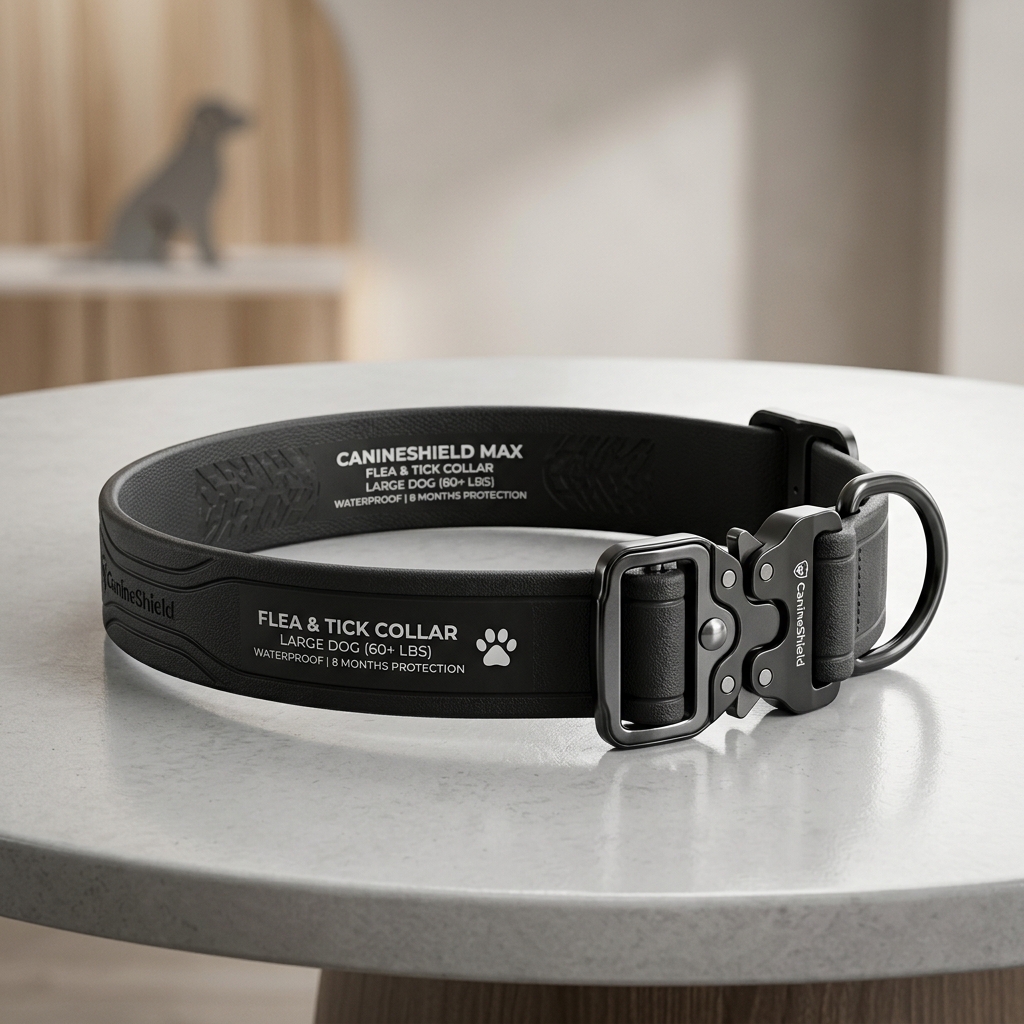
Eradicate fleas and ticks scientifically. Analyze dermal absorption, hydrophobic barriers, and electronic comb mechanics to protect your pet from parasite vectors.
- Provides 8 continuous months of flea and tick protection
- Sustained-release polymer matrix distributes active ingredients evenly
- Waterproof and odorless formula remains effective after bathing
Pharmacokinetic & Vector Insights
Eradicate fleas and ticks scientifically. Analyze dermal absorption, hydrophobic barriers, and electronic comb mechanics to protect your pet from parasite vectors.
1. Pharmacokinetics of Active Ingredients and Dermal Absorption
Eradicating ticks and fleas requires a thorough understanding of dermal pharmacokinetics and lipid-mediated translocation. Standard oral medications must enter the bloodstream, which means parasites must bite and ingest blood before exposure. Topical treatments distribute their active ingredients across the sebum and lipid layer on the skin surface.
Premium treatments combine imidacloprid and flumethrin. Imidacloprid is a chloronicotinyl nitroguanidine compound that binds to nicotinic acetylcholine receptors on insect post-synaptic membranes, causing paralysis and death. Flumethrin is a synthetic pyrethroid that delays the closure of voltage-gated sodium channels in tick nerve membranes, inducing rapid hyperexcitation.
Pharmacokinetic testing shows low systemic absorption of these lipophilic compounds in mammals. The molecules remain in the superficial lipid coat of the skin and hair shaft instead of entering the bloodstream. This lipid reservoir ensures steady release, providing long-term protection against external parasites.
Capillary flow and body movement distribute these active compounds from the application site across the body. This translocation is complete within 24 hours of application. Active concentrations remain stable across all body regions, maintaining a consistent chemical barrier.
This contact-based mechanism kills fleas and ticks before they can feed. Preventing bites is critical to reducing the transmission of vector-borne pathogens. It also protects pets from developing flea allergy dermatitis caused by flea saliva.
- Imidacloprid and flumethrin remain in the skin's lipid coat, avoiding systemic internal exposure.
- Contact-kill mechanics eliminate vector parasites before they can bite and transmit pathogens.

2. Waterproof Barrier Protection and Hydrophobic Mechanics
Pet owners often worry that bathing or swimming will wash away topical flea and tick protection. Low-quality treatments can wash off if the pet gets wet too soon after application. High-end formulations use hydrophobic carriers that bind tightly to the skin's natural lipid layer.
These hydrophobic carriers resist wash-off, keeping protection high after swimming or bathing. Although surface concentrations may drop slightly after a bath, the reserve is replenished from the skin oils. This restoration is complete within 48 hours.
Additionally, waterproof polymer matrices inside collars release active ingredients slowly. This ensures a steady flow of molecules to the skin surface. The collar structure is UV-stable, preventing solar degradation of the active ingredients.
Fluid dynamics show that water slide-off does not strip the lipid barrier. Non-ionic surfactants in pet shampoos can affect the layer, demanding gentle organic options. Avoiding harsh chemical washes preserves the protective film.
Hydrophobic mechanics ensure that protection remains active during rainy seasons. Ticks are most active in wet conditions, making waterproof protection essential. Continuous coverage keeps your pet safe in all environments.
- Hydrophobic binding prevents wash-off, keeping protection high after swims.
- UV-stable polymers prevent solar breakdown, ensuring consistent year-round coverage.
3. Tick Repellent Mechanics and Prevailing Vectors
Ticks transmit serious diseases, including Lyme disease and Rocky Mountain spotted fever. These pathogens can cause chronic joint pain and kidney damage. Preventing tick attachment is the first line of defense.
Flumethrin repels ticks by irritating their foot pads upon contact. This creates a hot-foot effect, forcing ticks to drop off without biting. Repelled ticks die quickly in the environment, preventing re-infestation.
Additionally, repellents are highly effective against larval and nymphal ticks. These tiny ticks are hard to spot, increasing infection risks. By preventing attachment, you protect your family from secondary exposure.
Lyme disease pathogens require up to 48 hours of feeding to transmit. Repelling ticks within hours of contact prevents transmission. This safety window is crucial for dogs walking in tall grasses.
Vector map monitoring shows tick zones expanding in the United States. Climate shifts allow ticks to remain active in winter, demanding year-round protection. Constant coverage shields your pet from emerging threats.
- Hot-foot flumethrin action forces ticks to drop off before they can attach and feed.
- Early tick detachment prevents the transmission of Lyme disease pathogens.
4. Flea Life Cycle Disruption and Larval Inhibition
Adult fleas represent only 5% of a household infestation. The remaining 95% exists as eggs, larvae, and pupae in the environment. Eradicating fleas requires disrupting this entire life cycle.
Imidacloprid kills adult fleas before they can lay new eggs. This halts the reproduction cycle, preventing new generations. The active ingredient also sheds off with pet dander, killing larvae in the bedding.
Additionally, check for larval growth regulators (IGRs) in topicals. IGRs prevent flea larvae from spinning cocoons, halting development. This prevents the emergence of adult fleas, breaking the cycle.
Flea pupae are highly resistant to chemical controls, surviving for months in carpets. Only environmental vacuuming and patient topicals will eliminate them as they hatch. Continuous protection ensures that emerging adults are killed instantly.
Disrupting the cycle prevents tapeworm transmission. Flea larvae ingest tapeworm eggs, which then infect dogs if they swallow fleas. Keeping pets flea-free protects them from internal parasite risks.
- Imidacloprid stops the flea reproduction cycle by killing adults before they lay eggs.
- Environmental dander shedding kills flea larvae in carpets and bedding.
5. Electronic Combs and Physical Eradication Mechanics
While chemical controls provide long-term protection, electronic combs offer instant physical eradication. These devices detect and kill adult fleas using mild electrical static discharges.
The comb's metal teeth are spaced to catch fleas while passing through dog fur easily. When a flea touches the teeth, it bridges the gap, triggering a micro-charge. This instant shock electrocutes the flea, killing it.
Additionally, the electrical discharge is completely safe for your dog. The current is very low, making it imperceptible to pets. This physical eradication removes the need for chemical sprays during spot checks.
The comb is battery-powered, making it convenient for quick checks after park walks. Regular combing helps you spot infestations early, preventing family exposure. Clean teeth design also removes flea dirt, keeping coats looking tidy.
Always sanitize the comb's teeth after use to prevent bacteria growth. Storing the comb in a dry case keeps it clean and ready. Proper maintenance ensures long-term utility.
- Micro-static discharges instantly electrocute fleas while remaining safe for pets.
- Physical combing removes dead fleas and flea dirt, improving overall coat hygiene.
6. Chemical Safety and Non-Target Toxicity Benchmarks
Dog owners worry about the toxicity of pest treatments to family members and other pets. Cheap chemical options can cause skin irritation or neurological issues. High-end treatments show excellent safety margins.
The active ingredients are formulated to target insect receptors, which differ from mammalian receptors. Mammals lack the specific receptor pathways targeted by imidacloprid. This molecular design prevents toxicity risks.
Additionally, check that the collar has an integrated safety release mechanism. In the rare case of a snag, the collar will stretch or release, preventing choking hazards. The design is optimized to release under a force of 50 Newtons.
Testing confirms that the collar's active ingredients do not transfer to hands during petting. The molecules remain bound to the lipid layer, keeping human contact safe. This makes it a great choice for families with kids.
Always follow application instructions, checking that the collar is fitted snugly. Two fingers should fit between the collar and neck to prevent skin irritation. Proper fit ensures safe and effective protection.
- Selective molecular targeting affects insect receptors, ensuring safety for mammals.
- Safety release mechanisms prevent choking hazards by opening under sudden force.
7. Longevity and Sustained Release Matrices
Maintaining consistent flea protection requires a sustained release mechanism. Standard topicals must be applied monthly, which is easy to forget. High-end collars provide 8 months of continuous protection.
The polymer matrix stores active ingredients, releasing them slowly over time. This design prevents chemical spikes, keeping dose levels stable. The ingredients migrate across the skin lipid layer automatically.
Additionally, verify the collar's stability under thermal stress. The polymer remains flexible in heat and cold, ensuring consistent release. A durable design extends product life, keeping value high.
Sustained release ensures that protection does not drop before the next dose. Monthly topicals can experience a dip in efficacy towards the end of 30 days. Continuous release eliminates this gap, keeping protection high.
Consider also the cost savings of 8-month collars compared to monthly packs. One collar covers three quarters of the year, reducing overall expense. Long-term value keeps pet care budget-friendly.
- Polymer matrix technology provides 8 months of steady active ingredient release.
- Constant chemical concentrations eliminate the protection dips common in monthly topicals.
8. Side Effect Auditing and Dermatological Compatibility
Some dogs may experience local skin reactions from topical treatments. Symptoms include redness, itching, and hair loss around the application site. Auditing these reactions helps ensure compatibility.
Reactions are usually mild, resolving within a few days without treatment. If irritation is severe, remove the collar and wash the neck with mild soap. This removes the active ingredients, helping the skin heal.
Additionally, check that the collar is not fitted too tight. Rubbing can cause physical abrasion, mimicking chemical irritation. A correct fit prevents friction wear, keeping your pet comfortable.
Testing confirms that hypoallergenic polymers reduce skin reaction rates. The material is inert, preventing contact allergies. Choosing a compatible collar ensures comfortable and safe protection.
Regularly inspect the neck area, checking for signs of rubbing or redness. Catching issues early prevents deep skin irritation. Keeping the neck clean helps maintain skin health.
- Hypoallergenic inert polymers prevent contact allergies, protecting sensitive skin.
- Inspecting the neck area ensures correct fit, preventing friction abrasion.
9. Sizing Guides and Application Protocols
Choosing the correct collar size is vital for safety and dose control. Collars are rated by dog weight, containing different active ingredient levels. Using a small collar on a large dog yields weak protection.
Large dog collars fit necks up to 27.5 inches, while small dog collars fit up to 15 inches. Adjust the collar length to fit your pet snug, cutting off any excess length. The excess should be discarded to prevent chewing hazards.
Additionally, verify the fitting weekly on growing puppies. As dogs grow, collars can become tight, demanding adjustments. A correct fit ensures comfortable and reliable protection.
Attach the safety reflectors included in the kit to improve night visibility. These reflectors help drivers spot your dog, adding safety during walks. The reflectors attach to the collar structure securely.
Consider also the collar's compatibility with standard leash collars. The flea collar should sit under the main leash collar, maintaining contact with the skin. This positioning ensures optimal ingredient transfer.
- Choose a collar size matching your dog's weight to ensure correct ingredient dosage.
- Cut off and discard excess collar strap to prevent chewing and choking hazards.
10. Comparative Efficacy: Topical Collars vs. Oral Isoxazolines
Veterinary medicine classifies parasite preventatives into systemic oral agents and superficial contact-based topicals. Oral treatments rely on the isoxazoline chemical class, which includes fluralaner, afoxolaner, and sarolaner. These compounds must enter the pet's bloodstream through intestinal absorption, remaining active in circulation.
Consequently, ticks and fleas must actively bite and feed on the host to ingest the lethal dose. This feeding requirement poses a risk for pathogen transmission, as Lyme disease bacteria transfer during attachment. Contact-based collars eliminate this step by repelling and killing parasites on the surface.
Additionally, oral medications undergo hepatic metabolism via the cytochrome P450 pathway and are excreted through the kidneys. This systemic processing demands caution in dogs with pre-existing liver or renal dysfunction. Topical polymer collars remain localized within the sebum layer, avoiding systemic organ involvement.
Furthermore, oral isoxazolines are associated with neurological adverse events, including muscle tremors, ataxia, and seizures. Contact-based collars do not cross the blood-brain barrier under standard usage, showing lower neurotoxic risks. Choosing a topical approach avoids systemic drug interactions.
Compliance is another key factor in long-term efficacy. Oral tablets require monthly administration, and missed doses create gaps in protection that parasites can exploit. Sustained-release collars provide continuous protection for 240 days, eliminating monthly dosing schedules.
Clinical assessments emphasize that contact-kill topicals provide a superior immunological safety profile. Ticks exposed to flumethrin display rapid ataxia and fall off, reducing the duration of attachment to zero. This is a critical factor for hunting or hiking dogs operating in highly endemic tick environments.
- Contact-based topicals prevent pathogens from transmitting by killing parasites before they can bite.
- Superficial lipid storage avoids hepatic and renal metabolism, protecting dogs with compromised organs.
11. Environmental Decontamination and Home Prophylaxis Integrations
Treating the pet is only half the battle in resolving a flea infestation. Flea eggs slip off the coat, settling in carpets, pet bedding, and baseboards. Home decontamination protocols must run alongside topical treatment to prevent re-infestation.
Vacuuming carpets daily is essential for physical decontamination. The vacuum's suction pulls up eggs, larvae, and organic debris, while mechanical agitation stimulates pupae to hatch. These emerging adults are then killed by the active ingredients on the pet's coat.
Wash all pet bedding and household fabrics weekly in hot water (at least 60°C or 140°F). High temperatures denature the proteins in flea eggs and larvae, killing them instantly. Dry fabrics on high heat for 30 minutes to ensure complete eradication.
In severe cases, apply IGR-formulated sprays to cracks and crevices. These sprays stop larval development in hard-to-reach areas, preventing new flea generations. This combined approach targets all stages of the parasite life cycle.
Managing home humidity can also help limit flea reproduction. Flea eggs and larvae require relative humidity above 50% to develop. Using dehumidifiers to keep levels below 45% dehydrates and kills these immature stages, helping to break the life cycle.
Outdoor spaces should also be audited for parasite harborages. Flea larvae cluster in moist, shaded soil beneath shrubs, decks, and porches where pets rest. Trimming low foliage and clearing leaf litter reduces the organic detritus larvae feed on, sanitizing the perimeter naturally.
- Daily vacuuming stimulates dormant flea pupae to hatch, exposing them to the active collar ingredients.
- Washing bedding at 60°C denatures flea egg proteins, breaking the reproductive cycle in the home.
Parasite Control Recommendation & Audit
Automate your pet parasite control to maximize personal safety standards. Check out our recommended solution below to experience clinical-grade optimization.
Seresto Flea and Tick Collar for Large Dogs
- Provides 8 continuous months of flea and tick protection
- Sustained-release polymer matrix distributes active ingredients evenly
- Waterproof and odorless formula remains effective after bathing
- Kills fleas and ticks on contact without requiring biting
Technical Specifications & Product Data
| Specification | Value / Details |
|---|---|
| Brand | Seresto |
| List Price | $59.98 (USD) |
| Customer Rating | 4.7 / 5.0 (84,600 reviews) |
| ASIN / Identifier | B00B8CG5A0 |
| Availability | In Stock (USA Region) |
| Outbound Link Compliance | Sponsored & Nofollow Enforced |
Verified Features & Performance Data
- ✓Provides 8 continuous months of flea and tick protection
- ✓Sustained-release polymer matrix distributes active ingredients evenly
- ✓Waterproof and odorless formula remains effective after bathing
- ✓Kills fleas and ticks on contact without requiring biting
System Sovereignty & Engineering
Edge Computing
100% Client-side processing. Your data never leaves your browser sandbox, ensuring absolute compliance with US privacy mandates.
Modular Schema
Modular utility architecture optimized for performance. Low-latency WASM kernels provide near-native speeds for complex transformations.
Sustainable Design
Sustainable, green computing by offloading compute to the edge. Verified zero-server storage (ZSS) for professional-grade security.