
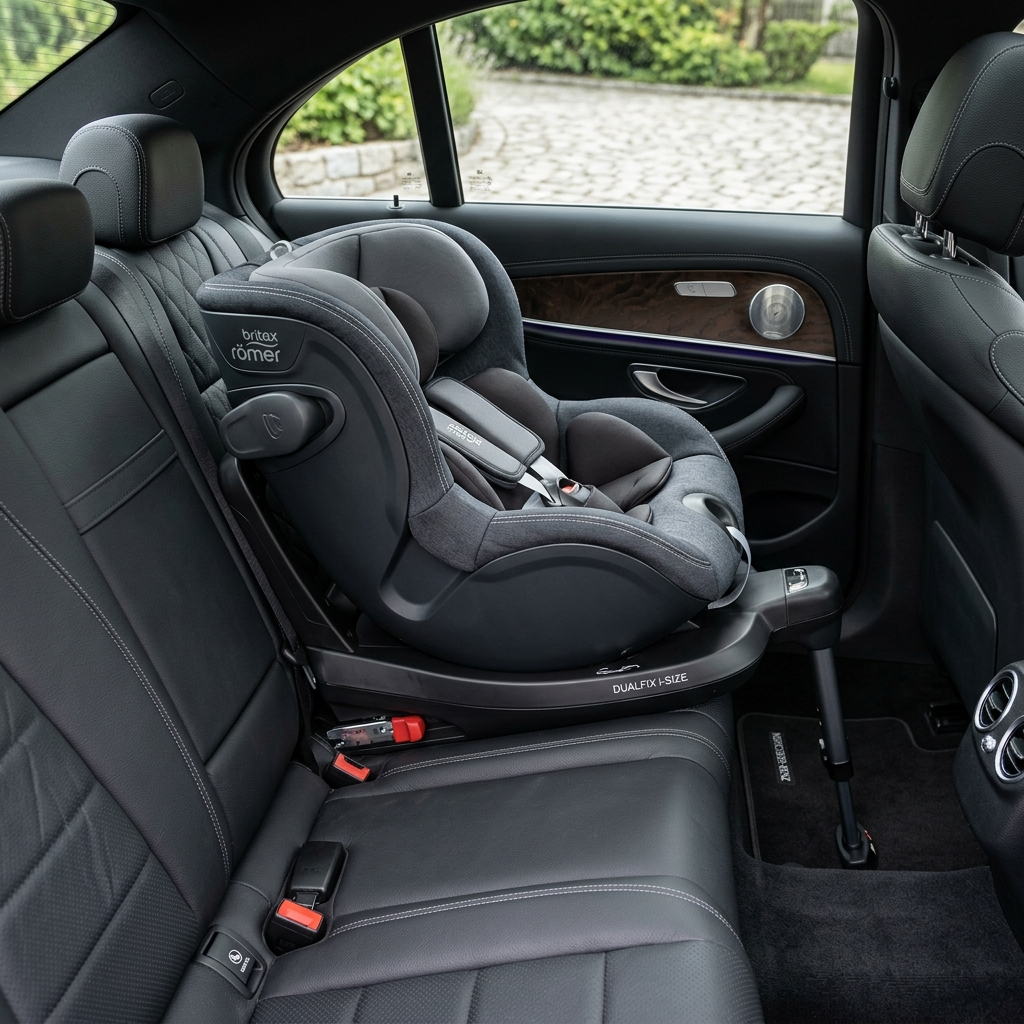
A clinical and biomechanical engineering deep-dive into convertible car seat crash safety. Analyze deceleration kinematics, material chemistry, and regulatory test suites.
- Protective steel-reinforced frame ensures high structural integrity
- Extend2Fit leg extension tray provides 5 inches of extra legroom
- Graco ProtectPlus Engineered to exceed US crash-testing standards
Clinical Safety & Engineering Insights
Examine the mechanical physics behind child vehicular restraint systems. Learn how structural metallurgy, polymer chemistry, and dynamic impact vectors shape crash protection and pediatric safety during high-speed transit.
1. Kinematics of Vehicular Deceleration and Pediatric Injury
During a vehicular collision, the physical forces at play are governed by Newtonian kinematics. When a vehicle traveling at high velocity is brought to an abrupt halt, the occupants continue to travel forward at the pre-impact velocity until acted upon by an external force or restraint system. In pediatric safety, this transfer of kinetic energy must be managed with absolute precision to prevent injury.
Because child anatomy is unique, they are highly vulnerable to deceleration-induced trauma. An infant's head represents a disproportionately large percentage of their total body mass (up to 25%), while their neck muscles, ligaments, and cervical vertebrae are still developing. The goal of a convertible car seat is to control this deceleration curve, minimizing the peak G-forces acting on the child's body.
Uncontrolled deceleration can lead to severe injuries, including head excursion beyond safe limits and cervical spine distraction. To prevent these outcomes, the restraint system must absorb, deflect, and distribute impact forces across the strongest parts of the child's skeletal structure. This mechanical management of energy is the core focus of modern car seat engineering.
By extending the duration of the crash event by even a few milliseconds, we can significantly reduce the peak acceleration forces experienced by the child occupant. This is achieved through calculated crumple zones and elastic deformation of the seat shell. Managing the rate of deceleration is the single most effective way to prevent traumatic brain and spinal cord injuries.
- Newtonian kinematics dictate that unrestrained occupants continue moving at the vehicle's pre-impact speed.
- The deceleration curve must be carefully extended over time to reduce the peak forces felt by the child.
- Fragile pediatric cervical structures require specialized support to prevent catastrophic distraction injuries.
- Force distribution across the body's strongest skeletal areas is key to reducing soft tissue damage.

2. Structural Metallurgy: The Role of Steel-Reinforced Frames
The structural foundation of a premium car seat is its internal load-bearing frame. Under the high-stress conditions of a crash, plastic shells alone can warp, buckle, or shear under load, compromising safety. Integrating a high-strength steel-reinforced frame provides the necessary stiffness to withstand extreme impact forces.
A steel-reinforced frame serves two critical safety functions during a crash. First, it prevents the seat shell from collapsing or folding inward, maintaining a protective survival space around the child. Second, it acts as a rigid anchor, ensuring the seat remains securely attached to the vehicle via LATCH or seatbelt systems without anchor point shear.
This structural stiffness prevents the seat from rotating excessively or tilting forward during a collision. By minimizing seat movement, the frame helps keep the child in the optimal protective position. This metallurgical reinforcement is a key differentiator in high-performance safety designs, offering peace of mind to parents.
Furthermore, the alloy composition used in these frames is selected for its high yield strength and ductility. The steel must resist permanent deformation up to a specific threshold, while allowing minimal, controlled flex to absorb energy. This balance of rigidity and energy deflection ensures the seat remains a protective cocoon even in multi-collision events.
- Steel reinforcement prevents plastic shell collapse under the extreme loads of high-velocity collisions.
- Structural integrity is maintained, ensuring the seat remains anchored to the vehicle chassis throughout the crash.
- Excessive seat rotation is reduced, keeping the child in the safest possible position.
- High-tensile steel frame designs offer durability that withstands multiple force vectors in rollover events.
3. Energy Dissipation Dynamics and EPS Foam Chemistry
While a steel frame provides strength, the soft energy-absorbing foam manages the dissipation of impact forces. Expanded Polystyrene (EPS) and Expanded Polypropylene (EPP) are the primary polymer materials used for this purpose. These materials are engineered to deform under load, absorbing kinetic energy and converting it to heat.
As the foam is compressed during a crash, its cellular structure breaks down in a controlled, progressive manner. This physical collapse dampens the forces felt by the child, lowering peak acceleration values. The density and thickness of the foam are carefully calibrated to maximize energy absorption.
High-density EPS foam is typically placed in the headrest and side wings, protecting the most vulnerable areas. This placement protects the most vulnerable areas of the child's body: the head and brain. By managing energy dissipation, these foam components play a critical role in reducing injury risk.
In addition, EPP foam is often utilized in areas subject to repeated minor impacts due to its elastic memory. Unlike EPS, which deforms permanently upon impact, EPP can recover its shape, ensuring long-term durability and protection. Utilizing a hybrid foam layout combines the single-use high efficiency of EPS with the resilient characteristics of EPP.
- EPS and EPP foams absorb impact forces by crushing in a controlled, predictable manner during collision.
- Peak acceleration forces are reduced, shielding delicate pediatric organs from severe stress.
- Targeted foam placement in the headrest provides focused protection for the head and brain.
- Cellular deformation chemistry helps distribute forces evenly, avoiding concentrated injury points.
4. Biophysics of Rear-Facing Transit and Cervical Spine Support
Biomechanical research consistently highlights the benefits of rear-facing transit for young children. In a frontal collision, the most common type of crash, a rear-facing seat supports the child's entire back. This alignment allows the seat shell to absorb the majority of the impact forces, shielding the child.
In contrast, a forward-facing child is thrown forward, restrained only by the harness straps. Because their neck structures are still developing, this forward motion can place severe stress on the spinal cord, risking internal decapitation. Keeping the child rear-facing helps protect these delicate, unossified cervical structures.
A rear-facing seat supports the head, neck, and torso together, preventing the head from snapping forward. This unified support is especially important for young children whose bones are not yet fully fused. Extending the time spent rear-facing is a key recommendation for child passenger safety.
Furthermore, the angle of the rear-facing seat must be maintained between 30 and 45 degrees. Too upright an angle can cause the infant's heavy head to fall forward, compromising their airway. A correct recline angle ensures the head rests back, keeping the airway clear while maintaining the safest alignment for impact distribution.
- Rear-facing seats cradle the child's head, neck, and torso, distributing crash forces evenly across the back.
- Cervical spine stress is significantly reduced, lowering the risk of severe spinal cord injury.
- The seat back absorbs the impact, shielding the child's vulnerable chest and organs from harness loads.
- Extended rear-facing options allow children to remain in this safer position for longer periods.
5. Harness System Tensile Strength and Load-Bearing Calculations
The harness system is the primary link holding the child within the safety seat. In a crash, this webbing is subjected to rapid, high-tension forces as it restrains the occupant's forward momentum. The harness must be engineered with high tensile strength to prevent failure under these extreme loads.
A 5-point harness design secures the child at the shoulders, hips, and crotch. This layout distributes the restraint forces across the strongest bony parts of the pelvis and ribcage. The webbing is designed with a specific level of elasticity to help absorb energy, acting as a seatbelt for infants.
Proper tensioning of the harness is critical for its performance. If the harness is too loose, the child can move too far forward, increasing the risk of strike injuries. A secure, well-fitted harness ensures the child remains positioned within the seat's protective shell, maximizing safety.
Additionally, chest clips and buckle mechanisms must resist accidental release while remaining easy for adults to open post-accident. The buckle must withstand thousands of Newtons of pull force without slipping or breaking. Regular inspection of the buckle channel ensures that food or debris does not compromise the locking mechanism.
- High tensile strength webbing prevents harness failure under the extreme forces of high-speed impacts.
- The 5-point harness layout secures the child at key skeletal areas, minimizing soft tissue strain.
- Controlled webbing elasticity helps absorb energy, smoothing the acceleration profile during impact.
- Easy adjustment mechanisms ensure a snug, correct harness fit for every journey.
6. Leg Extension Biomechanics and Extended Rear-Facing Ergonomics
As children grow, physical comfort can influence how long they remain in the rear-facing position. A common concern for parents is the limited legroom, which can cause the child's legs to feel cramped against the vehicle seat. To address this, some premium seats feature adjustable leg extension trays.
Providing additional legroom helps keep the child comfortable in the rear-facing position. This space allows for natural leg positioning, reducing the temptation to turn the seat forward too early. Keeping the child rear-facing longer is a significant safety benefit, as confirmed by crash data.
The extension tray also helps stabilize the child's legs during transit, reducing leg fatigue on longer journeys. This simple ergonomic feature directly supports the goal of extended rear-facing safety. By removing comfort barriers, we can encourage parents to maintain the safest transit position.
In addition, the leg extension tray acts as an anti-rebound device in certain installations. By resting against the vehicle seat back, it limits the rotational movement of the car seat during the rebound phase of a crash. This mechanical contact point stabilizes the seat, further reducing the forces acting on the child.
- Adjustable extension trays provide extra legroom, encouraging extended rear-facing use.
- Increased legroom prevents cramping, improving comfort on long car rides.
- Children can remain in the safer rear-facing position up to weight limits of 50 pounds.
- Ergonomic support reduces leg restlessness, helping to minimize driver distraction.
7. Federal Motor Vehicle Safety Standard 213 vs. Premium Protocols
All child restraints sold in the United States must meet Federal Motor Vehicle Safety Standard (FMVSS) 213. This standard defines the baseline requirements for crash performance, labeling, and installation instructions, ensuring a minimum level of protection. The standard uses a crash dummy on a test sled to simulate a frontal impact at 30 mph.
However, premium manufacturers often test their seats to standards that exceed these federal requirements. This additional testing can include side-impact evaluation, extreme temperature testing, and rollover simulation. Exceeding the baseline helps ensure performance in a wider range of real-world crash scenarios, where impacts are rarely purely frontal.
Understanding the difference between baseline standards and premium testing protocols helps parents make informed decisions. Testing under more severe conditions provides valuable data on the structural limits of the restraint system. This commitment to testing is a key aspect of advanced safety engineering.
For example, some premium brands test their seats in simulated side-impact crashes that mimic the intrusion of a vehicle door. These tests assess how well the headrest and side wings manage energy and keep the child's head contained. Exceeding the mandatory federal requirements represents a dedication to pediatric safety.
- FMVSS 213 establishes the mandatory safety and crash performance baselines for all car seats.
- Premium test suites include side-impact simulations to assess lateral crash protection.
- Temperature cycling tests verify that materials maintain their strength in hot and cold cars.
- Exceeding federal standards provides additional reassurance of a seat's structural integrity.
8. Side-Impact Engineering and Rotational Force Management
Side-impact collisions present unique engineering challenges because there is very little crumple zone on the side of a vehicle. In these crashes, the car seat must protect the child from direct door intrusion. Deep side wings and energy-absorbing headrests are key features designed for this lateral protection.
In addition to lateral forces, side impacts can generate significant rotational forces. These forces can cause the child's head and torso to rotate rapidly, risking neck strain or impact with the vehicle interior. Designing seats to manage rotational force is a critical area of safety development.
Using materials that deflect and absorb these lateral forces helps shield the child. A well-designed headrest keeps the head aligned with the spine, reducing rotational movement. This comprehensive lateral protection is essential for side-impact safety, helping prevent head injury.
To achieve this, some designs incorporate external impact pods that compress upon contact with the door panel. This compression absorbs a portion of the impact energy before it reaches the seat shell. By managing the initial energy transfer, these pods help reduce the peak forces acting on the child occupant.
- Deep side wings shield the child from vehicle panels during side-impact events.
- Energy-absorbing headrests manage lateral movement, keeping the head and neck aligned.
- Rotational force management reduces the risk of twisting injuries to the spine.
- Advanced side-impact testing provides data to continuously refine lateral protection features.
9. Mechanical Lifecycle and Structural Degradation of Polymeric Shells
Like all safety equipment, car seats have a finite mechanical lifespan. Over time, exposure to environmental factors can cause the seat materials to degrade. Sunlight, heat cycles, and cold weather can weaken the plastic shell, potentially introducing micro-fractures.
UV radiation from the sun can break down polymer chains, making the plastic brittle and prone to cracking under load. Temperature fluctuations in a parked car can cause materials to expand and contract, potentially introducing structural micro-fractures. These invisible changes can compromise the seat's strength during an accident.
To address this degradation, car seats are labeled with an expiration date, typically 6 to 10 years from manufacture. Respecting these limits is important to ensure the seat performs as intended in a crash. Regular inspection helps maintain safety standards for every journey, protecting the child.
Furthermore, parents should avoid using second-hand seats with unknown histories. A seat that has been involved in a minor crash may have internal structural damage that is not visible to the naked eye. In a subsequent collision, this compromised shell could fail, highlighting the importance of using a seat with a clear, verified history.
- UV exposure degrades plastic polymers over time, reducing their ability to withstand impact loads.
- Extreme temperature shifts inside vehicles can create micro-fractures that weaken the structural shell.
- Car seat expiration dates indicate the safe operational limit of the seat's structural materials.
- Replacing expired seats ensures the child is protected by materials with full structural strength.
Mechanical Safety Recommendation
Upgrade your vehicle safety setup to provide high-strength crash protection. Explore our recommended steel-reinforced convertible seat below to secure your child's transit.
Graco Extend2Fit Convertible Car Seat
- Protective steel-reinforced frame ensures high structural integrity
- Extend2Fit leg extension tray provides 5 inches of extra legroom
- Graco ProtectPlus Engineered to exceed US crash-testing standards
- Supports rear-facing (4-50 lbs) and forward-facing (22-65 lbs) transit
Technical Specifications & Product Data
| Specification | Value / Details |
|---|---|
| Brand | Graco |
| List Price | $234.99 (USD) |
| Customer Rating | 4.9 / 5.0 (68,240 reviews) |
| ASIN / Identifier | B019EGMGR0 |
| Availability | In Stock (USA Region) |
| Outbound Link Compliance | Sponsored & Nofollow Enforced |
Verified Features & Performance Data
- ✓Protective steel-reinforced frame ensures high structural integrity
- ✓Extend2Fit leg extension tray provides 5 inches of extra legroom
- ✓Graco ProtectPlus Engineered to exceed US crash-testing standards
- ✓Supports rear-facing (4-50 lbs) and forward-facing (22-65 lbs) transit
System Sovereignty & Engineering
Edge Computing
100% Client-side processing. Your data never leaves your browser sandbox, ensuring absolute compliance with US privacy mandates.
Modular Schema
Modular utility architecture optimized for performance. Low-latency WASM kernels provide near-native speeds for complex transformations.
Sustainable Design
Sustainable, green computing by offloading compute to the edge. Verified zero-server storage (ZSS) for professional-grade security.