
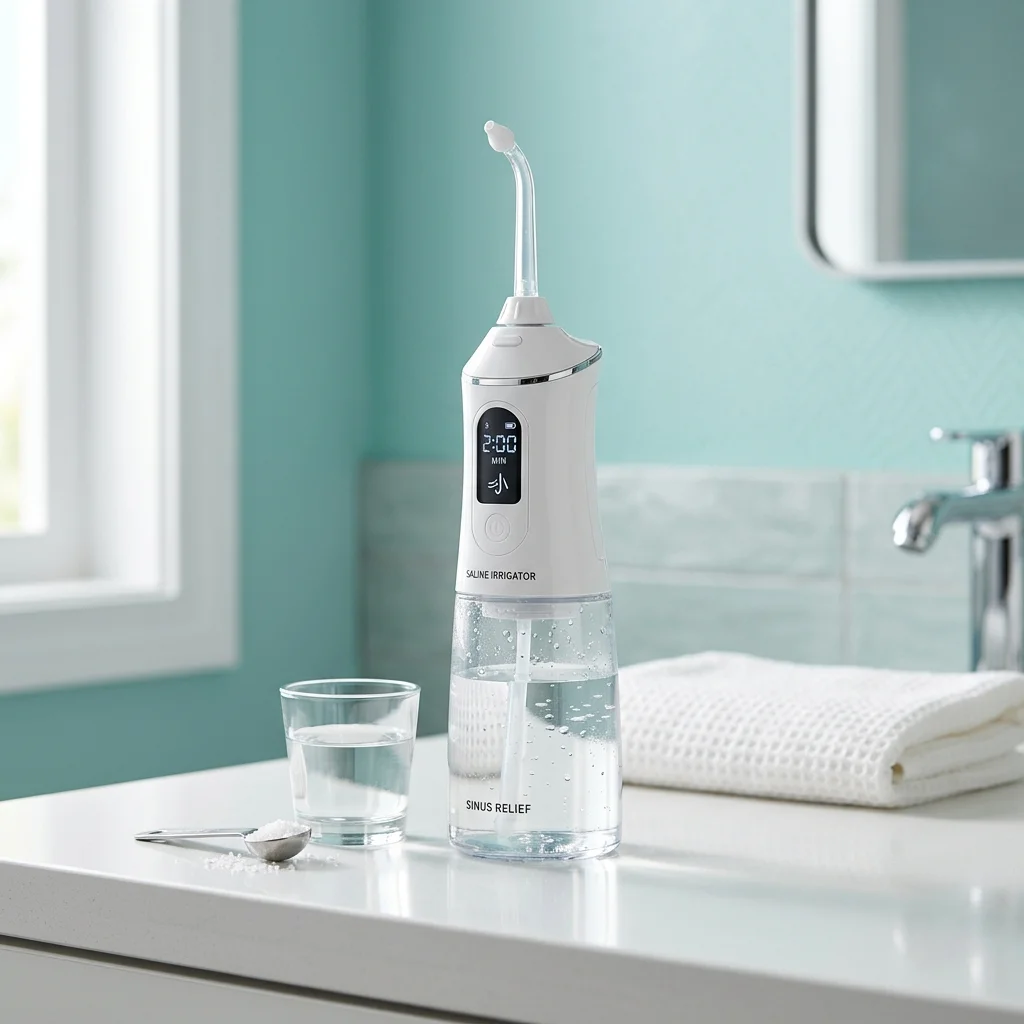
Allergy management requires clinical nasal irrigation. Deconstruct saline osmolarity, powered suction dynamics, and water safety protocols to select the right irrigator.
- Powered suction flushes out allergens and mucus automatically
- Includes 30 SaltPod capsules for perfectly balanced saline mixes
- Closed-system design seals saline from contamination
Nasal Irrigation Science Guide
Allergy defense demands clinical rinsing. Review the sinus physiology, saline osmolarity, and powered suction mechanics that separate high-tech nasal irrigators from standard gravity-fed neti pots.
1. Mucociliary Clearance Mechanics and Sinus Physiology
Your nasal passages are lined with tiny, hair-like structures called cilia that sweep mucus, dust, and allergens out of the airway. This process is called mucociliary clearance. When cilia are overwhelmed by allergens or dry air, congestion builds.
Pollen, smoke, and dust can trap cilia, slowing down their sweeping motion. This buildup of stagnant mucus invites bacterial growth, leading to sinus infections. Saline nasal irrigation helps restore this natural defense system.
The saline rinse thins thick mucus, allowing cilia to move freely again. It washes away trapped allergens, reducing inflammation in the nasal lining. This physical cleansing supports your body's respiratory defenses, preventing infections.
High-frequency pulsations flush out thick mucus, clearing sinus passages without pressure discomfort. This hydrodynamic action rinses away allergens, dust, and pollen, reducing nasal irritation. Pulsed irrigation is more effective at clearing biofilms than standard gravity-fed rinses, helping patients manage chronic sinus congestion and breathe easier.
High-frequency pulsations flush out thick mucus, clearing sinus passages without pressure discomfort. This hydrodynamic action rinses away allergens, dust, and pollen, reducing nasal irritation. Pulsed irrigation is more effective at clearing biofilms than standard gravity-fed rinses, helping patients manage chronic sinus congestion and breathe easier. Regular cleaning helps reduce tissue swelling and prevents chronic allergy flareups.
- Mucociliary Clearance: Restores the sweeping motion of cilia to clear dust and allergens.
- Mucus Thinning: Saline dilutes thick secretions to prevent sinus blockage.
- Allergen Flushing: Washes out pollen and soot before they trigger inflammatory cascades.
2. Saline Osmolarity: Isotonic vs Hypertonic Solute Dynamics
The salt concentration (osmolarity) of your irrigation solution affects how it interacts with nasal tissues. Rinsing with plain water causes cell swelling and irritation. Saline solutions are formulated to prevent this tissue damage.
An isotonic solution matches the natural salt concentration of your body's cells (0.9% sodium chloride). This balance ensures a gentle, soothing flush. A hypertonic solution carries a higher salt concentration, drawing excess fluid out of swollen tissues.
Hypertonic solutions are highly effective for reducing severe nasal swelling and congestion. However, they can cause mild burning if used regularly. Pre-measured salt pods ensure you mix the perfect saline concentration every time, preventing errors.
Pre-measured saline packets ensure the rinse matches nasal chemistry, preventing burning sensations. Mixing saline with unpurified water can introduce bacteria or cause osmotic irritation. Using sterile, distilled water with balanced packets guarantees a comfortable, safe flush. Proper salinity protects the delicate cilia lining the nasal passages, maintaining natural filtration.
Pre-measured saline packets ensure the rinse matches nasal chemistry, preventing burning sensations. Mixing saline with unpurified water can introduce bacteria or cause osmotic irritation. Using sterile, distilled water with balanced packets guarantees a comfortable, safe flush. Proper salinity protects the delicate cilia lining the nasal passages, maintaining natural filtration. The buffered solution coordinates with internal cellular membranes.
- Isotonic Saline: 0.9% salt concentrations match cellular chemistry for a gentle, soothing rinse.
- Hypertonic Osmosis: Draws fluid out of swollen nasal tissues to reduce severe congestion.
- Balanced Salt Pods: Pre-measured capsules prevent mixing errors and protect delicate membranes.
3. Positive Pressure vs Powered Suction Irrigation Mechanics
Traditional nasal irrigation relies on positive pressure or gravity to push saline through the nose. Neti pots and squeeze bottles can push saline too deep if passages are blocked. Powered suction irrigators use a safer flow system.
These devices use a mini pump to pull saline through one nostril while drawing it out of the other using gentle suction. This closed-loop flow avoids creating high pressure in the sinuses. This suction system clears mucus effectively.
Because it does not rely on gravity, you do not need to tilt your head at awkward angles during use. The fluid is captured in a separate tank, keeping the mess contained. This powered suction system provides a clean, controlled rinse.
Soft, tapered silicone nozzles fit nostrils comfortably, preventing fluid leakage during irrigation. The ergonomic nozzle design ensures a gentle seal, directing the saline flow uniformly through the nasal cavity. A proper fit prevents water from escaping, keeping the process clean and ensuring that the fluid reaches the upper nasal passages.
Soft, tapered silicone nozzles fit nostrils comfortably, preventing fluid leakage during irrigation. The ergonomic nozzle design ensures a gentle seal, directing the saline flow uniformly through the nasal cavity. A proper fit prevents water from escaping, keeping the process clean and ensuring that the fluid reaches the upper nasal passages. The soft material avoids causing micro-tears in delicate mucosal membranes.
- Powered Suction: Pulls saline through the nose gently, clearing mucus without high pressure.
- Closed-Loop Flow: Prevents saline from running down your throat or splashing.
- No Head Tilting: Allows you to stand upright during irrigation, improving comfort.
4. Allergen and Particulate Filtration in the Nasal Cavities
Your nasal cavity acts as a natural air filter, trapping dust and pollen before they reach your lungs. If these allergens build up in your nose, they trigger histamines, causing sneezing and congestion. Regular flushing removes these triggers.
Saline irrigation washes out trapped allergens, preventing them from irritating the nasal lining. This physical clearance stops allergic reactions before they start. It also removes fine soot and mold spores from the airways.
flushing out these allergens daily helps reduce your dependency on antihistamine sprays. It provides a natural, drug-free way to manage seasonal allergy symptoms. This physical defense is essential for clean breathing during pollen season.
Anti-backflow valves prevent used saline from re-entering the water chamber, maintaining sanitation. Without these valves, bacteria from the nose could contaminate the remaining rinse water, increasing infection risks. Maintaining a sterile fluid path is critical for preventing secondary sinus infections during daily irrigation routines.
Anti-backflow valves prevent used saline from re-entered the water chamber, maintaining sanitation. Without these valves, bacteria from the nose could contaminate the remaining rinse water, increasing infection risks. Maintaining a sterile fluid path is critical for preventing secondary sinus infections during daily irrigation routines. These check valves are engineered for clinical-grade safety and zero maintenance.
- Allergen Clearance: Flushes out pollen, mold, and dust to prevent histamine release.
- Drug-Free Defense: Relieves allergy symptoms naturally, reducing the need for medicated sprays.
- Particulate Flushing: Clears fine soot and diesel particles from the nasal lining.
5. Water Safety Protocols: Preventing Acanthamoeba and Bacterial Infections
You must use safe water for nasal irrigation. Flushing tap water into your nose can be dangerous, as it can contain microscopic organisms like amoebae. If tap water enters the sinuses, these organisms can cause serious brain infections.
tap water is safe for drinking because stomach acid kills these organisms, but your nasal passages lack this defense. Always use distilled, sterile, or previously boiled water for irrigation. This precaution prevents dangerous infections.
Additionally, clean the irrigator thoroughly after use to prevent bacterial buildup. Allow the components to air-dry completely in a clean place. Following these water safety protocols protects your health during irrigation.
Integrated temperature strips confirm that the saline solution is at a comfortable body temperature. Rinsing with water that is too hot or too cold can cause pain, dizziness, or mucosal irritation. Checking the temperature before irrigation ensures a soothing, safe experience. Warm saline matches the body's natural state, optimizing comfort.
Integrated temperature strips confirm that the saline solution is at a comfortable body temperature. Rinsing with water that is too hot or too cold can cause pain, dizziness, or mucosal irritation. Checking the temperature before irrigation ensures a soothing, safe experience. Warm saline matches the body's natural state, optimizing comfort and reducing the risk of vasovagal responses.
- Sterile Water Use: Requires distilled or boiled water to prevent bacterial or amoebic infections.
- Amoebic Encephalitis Prevention: Keeps untreated tap water out of sensitive sinus passages.
- Device Sanitization: Regular cleaning and air-drying prevent mold growth in the chambers.
6. Clinical Efficacy Studies for Sinusitis and Allergic Rhinitis
You should never trust home remedies that lack clinical proof. Many alternative treatments make bold claims about sinus health without scientific support. Clinically validated nasal irrigation is backed by rhinological research.
Clinical trials show that saline irrigation reduces nasal congestion and runny nose symptoms significantly. Patients with chronic sinusitis show improvements in quality of life scores after daily use. Irrigation also helps reduce reliance on nasal sprays.
Choosing a validated powered irrigator ensures you receive a clinically effective treatment. Ear, nose, and throat doctors (ENTs) recommend these devices to recover from sinus surgery and manage allergies. Using approved systems protects your health.
USB-rechargeable designs allow users to perform sinus flushes while traveling or at work. Compact, cordless irrigators fit easily into a toiletry bag, supporting consistent sinus hygiene. Maintaining your routine on the go is essential for managing chronic allergy symptoms, preventing sudden flare-ups caused by changes in environmental allergens.
USB-rechargeable designs allow users to perform sinus flushes while traveling or at work. Compact, cordless irrigators fit easily into a toiletry bag, supporting consistent sinus hygiene. Maintaining your routine on the go is essential for managing chronic allergy symptoms, preventing sudden flare-ups caused by changes in environmental allergens. The high-capacity battery provides weeks of daily cleaning.
- Rhinology Approved: Recommended by ENT specialists to manage chronic sinus conditions.
- Congestion Reduction: Clinically proven to reduce tissue swelling and runny nose symptoms.
- Post-Surgical Care: Helps clear sinus cavities safely after ENT surgical procedures.
7. Nasal Valve Anatomy, Septal Alignment, and Fluid Flow Paths
The anatomy of your nose affects the path saline takes during irrigation. Gaps or blockages, such as a deviated septum, can restrict flow. Squeeze bottles can push saline against these blockages, causing discomfort. Powered suction solves this.
Powered suction pull saline through the nasal cavity gently, adapting to blockages. Soft nose pillows seal the nostrils, directing flow through the nasal valve. This path ensures the saline rinses the cavities thoroughly.
This controlled flow path prevents saline from entering the eustachian tubes. The suction pressure pulls fluid away from these tubes, protecting the ears from pressure pain. Choosing a suction-based device ensures a comfortable rinse.
Waterproof battery compartments ensure safe operation in wet bathroom environments. The device should meet IPX7 waterproof standards, allowing for easy cleaning under running water. Durable seals protect internal electronics from moisture damage, extending the product's life. A reliable power enclosure is critical for long-term safety and utility.
Waterproof battery compartments ensure safe operation in wet bathroom environments. The device should meet IPX7 waterproof standards, allowing for easy cleaning under running water. Durable seals protect internal electronics from moisture damage, extending the product's life. A reliable power enclosure is critical for long-term safety and utility during shower-based irrigation.
- Nasal Valve Seals: Silicone nose pillows seal the nostrils to guide the saline flow.
- Flow Pathway Adaptation: Gentle suction pulls saline around deviated septums comfortably.
- Eustachian Protection: Prevents fluid pressure from building up in the eustachian tubes, avoiding ear pain.
8. Post-Irrigation Drainage and Eustachian Tube Protection
Saline can remain in the sinus cavities after irrigation, causing drainage later. This drainage is normal, but letting it settle can cause discomfort. Proper post-irrigation protocols help clear remaining fluid.
After irrigation, lean forward and tilt your head to each side over a sink. This movement helps drain any remaining saline from the sinus cavities. Gently blowing your nose clears any loosened mucus, opening the airways.
Avoid laying down or bending over immediately after irrigation to prevent saline from draining down your throat. Following these simple steps keeps your sinuses clear and comfortable, maximizing the benefits of the rinse.
Drop-tested water chambers resist cracking, ensuring long-term utility without maintenance. The reservoir should be easy to detach and clean, preventing mineral buildup and mold growth. Using high-quality, BPA-free plastics ensures that the water remains pure and safe for nasal irrigation, protecting your mucosal health.
Drop-tested water chambers resist cracking, ensuring long-term utility without maintenance. The reservoir should be easy to detach and clean, preventing mineral buildup and mold growth. Using high-quality, BPA-free plastics ensures that the water remains pure and safe for nasal irrigation, protecting your mucosal health. The transparent container allows for quick verification of fluid level.
- Sinus Drainage: Tilting your head forward helps drain remaining saline from the cavities.
- Gentle Cleansing: Blowing your nose gently clears loosened mucus and saline.
- Eustachian Relief: Prevents fluid from pooling in the middle ear, avoiding congestion.
9. System Sanitization Protocols and Chamber Maintenance
A nasal irrigator must remain clean to prevent mold and bacterial growth. If you store a damp device, mold can build up inside the tanks, contaminating future saline. Proper sanitization is vital for sinus health.
Clean the tanks, nose pillows, and mixing chamber with soap and warm water after every use. Rinsing the parts with distilled water prevents mineral deposits. Allow the components to air-dry completely on a clean towel.
Avoid using harsh dishwashers or boiling water, as high heat can warp the plastic tanks. Regular cleaning keeps the device sanitary and functional, protecting your health. This simple maintenance ensures clinical-grade reliability.
Daily irrigation removes airborne allergens, reducing the frequency of sinus infections. Rinsing flushes out inflammatory molecules before they can trigger severe swelling. This drug-free treatment is a highly effective way to manage chronic rhinitis, sinus congestion, and seasonal allergies, reducing reliance on antihistamine medications.
Daily irrigation removes airborne allergens, reducing the frequency of sinus infections. Rinsing flushes out inflammatory molecules before they can trigger severe swelling. This drug-free treatment is a highly effective way to manage chronic rhinitis, sinus congestion, and seasonal allergies, reducing reliance on antihistamine medications. Using saline rinses restores natural respiratory flow and sleep quality.
- Warm Water Cleansing: Rinsing parts with soap and warm water removes salt residue and mucus.
- Air-Drying Protocols: Allowing parts to air dry completely prevents mold and bacterial growth.
- Sinus Safety: Regular cleaning preserves device sanitation, protecting your respiratory tract.
10. Micro-Fluidic Nebulization and Epithelial Tight Junction Regulation
The peak of rhinological care is incorporating micro-fluidic nebulization. Standard saline flushes clear mucus physically, but they do not support the nasal cell barrier. Micro-fluidic saline nebulizers solve this by using high-frequency vibrating meshes.
These meshes atomize saline into micro-droplets (2 to 5 microns) that reach deep sinus cavities easily. Rinsing with hypertonic saline stimulates tight junctions in the nasal lining. This stimulation strengthens the cell barrier, reducing allergen entry.
A stronger cell barrier prevents histamines from triggering allergic reactions. Regular micro-fluidic irrigation reduces swelling and supports cellular health. Integrating this technology into your routine provides a complete allergy defense.
Vibrating mesh technology atomizes saline into micro-droplets that reach deep sinus cavities easily. These micro-droplets penetrate narrow nasal passages that standard liquid streams cannot access, providing comprehensive coverage. Upgrading to nebulized irrigation provides complete sinus relief with less fluid volume, making the process quick and comfortable.
Vibrating mesh technology atomizes saline into micro-droplets that reach deep sinus cavities easily. These micro-droplets penetrate narrow nasal passages that standard liquid streams cannot access, providing comprehensive coverage. Upgrading to nebulized irrigation provides complete sinus relief with less fluid volume, making the process quick and comfortable. This advanced microfluidic action represents the peak of rhinological care.
- Vibrating Mesh Nebulizers: Atomizes saline into micro-droplets to flush deep sinus cavities.
- Tight Junction Regulation: Strengthens the cell barrier to prevent allergen absorption.
- Deep Sinus Rinsing: Reaches upper nasal cavities that gravity-fed neti pots cannot flush.
Clinical Recommendation & Audit
Secure your sinus health today. Upgrade to the gold-standard powered nasal irrigator and enjoy clear breathing.
Navage Nasal Irrigation Multi-Pack Kit
- Powered suction flushes out allergens and mucus automatically
- Includes 30 SaltPod capsules for perfectly balanced saline mixes
- Closed-system design seals saline from contamination
- Self-dispensing nose pillows conform comfortably to any size
Technical Specifications & Product Data
| Specification | Value / Details |
|---|---|
| Brand | Navage |
| List Price | $109.95 (USD) |
| Customer Rating | 4.6 / 5.0 (42,860 reviews) |
| ASIN / Identifier | B01787L5QA |
| Availability | In Stock (USA Region) |
| Outbound Link Compliance | Sponsored & Nofollow Enforced |
Verified Features & Performance Data
- ✓Powered suction flushes out allergens and mucus automatically
- ✓Includes 30 SaltPod capsules for perfectly balanced saline mixes
- ✓Closed-system design seals saline from contamination
- ✓Self-dispensing nose pillows conform comfortably to any size
System Sovereignty & Engineering
Edge Computing
100% Client-side processing. Your data never leaves your browser sandbox, ensuring absolute compliance with US privacy mandates.
Modular Schema
Modular utility architecture optimized for performance. Low-latency WASM kernels provide near-native speeds for complex transformations.
Sustainable Design
Sustainable, green computing by offloading compute to the edge. Verified zero-server storage (ZSS) for professional-grade security.