
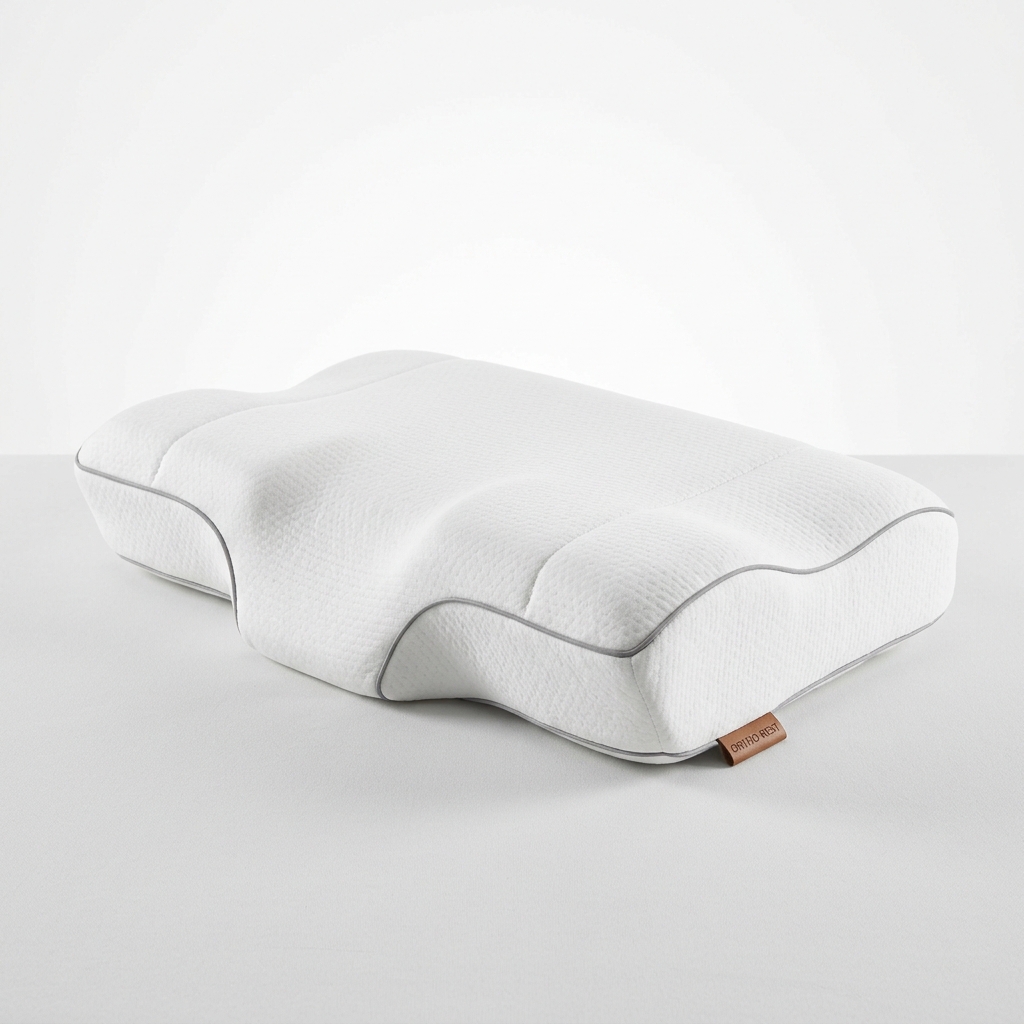
Side sleep biomechanics require precise loft. Compare cervical correction contour designs, load distribution, and shoulder joint decompression.
- Unique ergonomic hollow design cradles head for neck support
- Dual-zone height levels configured for custom shoulder lofts
- High-performance CertiPUR-US viscoelastic foam core
Clinical & Alignment Insights
Side sleep biomechanics require precise loft. Compare cervical correction contour designs, load distribution, and shoulder joint decompression to optimize your lateral sleep posture.
1. Biomechanical Challenges of the Lateral Sleep Position
Sleeping on your side is the most common sleep position, but it presents unique challenges for spinal alignment. When you lie on your side, a large gap is created between your neck and the mattress. This gap is equal to the distance from the tip of your shoulder to the side of your neck.
If this gap is not filled by a supportive pillow, the head tilts downward, bending the neck. This downward bend places severe stress on the cervical spine, causing muscle tension and joint compression. Correcting this requires a pillow with a high loft that matches your shoulder width.
Keeping the head and neck aligned with the rest of the spine is essential for joint health. A straight cervical spine reduces pressure on intervertebral discs and prevents nerve pinching. High-density contour pillows provide this stable support, keeping your spine straight throughout the night.
When the head is misaligned, the neck muscles must contract to hold the skull in position. This constant muscle activation prevents deep muscle relaxation, which is necessary for tissue repair. Over time, this muscle strain can lead to chronic myofascial pain syndrome.
In addition, a downward head tilt compresses the nerves that exit the cervical spine. This compression can cause radicular pain, which radiates down the shoulder and arm. Decompressing these pathways requires keeping the head elevated at shoulder height.
Furthermore, incorrect lateral alignment can affect the alignment of the thoracic and lumbar spine. The body attempts to compensate for a bent neck by twisting the torso, which stresses the lower back. Ensuring correct cervical alignment helps prevent this chain reaction of pain.
- Raised side panels support the head at shoulder height, keeping the neck straight.
- Proper loft fills the shoulder gap, preventing downward head tilt and disc stress.

2. The Physics of Cervical Load Distribution
The weight of the head exerts a downward force on the pillow when sleeping on your side. If the pillow is too soft, the head sinks to the mattress, compressing the shoulder joint. This compression can cause shoulder pain and restrict blood flow, leading to numbness.
Contour pillows distribute this force over a wider surface area. By supporting the head and neck at the same time, the pillow reduces peak pressure on any single point. This pressure relief is especially beneficial for the sensitive shoulder joint, which is decompressed.
The reduction in pressure keeps surface pressure below the threshold for blocking blood flow. Healthy circulation prevents the tossing and turning that interrupts sleep. By decompressing the shoulder and supporting the neck, contour pillows promote deeper rest.
We can model this load distribution by looking at the force vectors acting on the sleeper's body. In the lateral position, the weight of the head must be balanced by a reactive force from the pillow. If this reactive force is concentrated on the ear or jaw, it can cause TMJ pain and jaw stiffness.
Contour pillows distribute this reactive force along the jawline and neck, reducing pressure on the face. This distribution prevents the development of sleep wrinkles and morning facial soreness. It also lowers pressure on the ear cartilage, preventing ear pain.
Additionally, decompressing the shoulder joint allows the rotator cuff muscles to rest. The rotator cuff is a group of muscles that stabilize the shoulder joint. Preventing compression on these muscles helps heal the micro-tears caused by heavy lifting or typing.
- Supporting the head and neck together distributes force, reducing peak pressure.
- Decompressing the shoulder joint reduces pain and prevents numbness in the arm.
3. Viscoelastic Materials under Lateral Compressive Stress
When sleeping on your side, the pillow experiences high compressive stress. The material must resist this stress to maintain its height, but it must also conform to the head's shape to relieve pressure. High-density viscoelastic memory foam is uniquely suited for this task.
Memory foam responds to body heat and weight by softening in areas of high pressure. This response allows the head to sink slightly, forming a supportive cradle. The cooler surrounding foam remains firm, providing the structural support needed to keep the neck straight.
This combination of contouring and support is essential for side sleepers. Low-density foams collapse under compressive stress, losing their height and leaving the neck unsupported. High-density viscoelastic foam maintains its height, ensuring long-term support.
The viscoelastic properties of the foam can be defined by its storage modulus and loss modulus. The storage modulus represents the foam's ability to store elastic energy, while the loss modulus represents its ability to dissipate energy as heat. High-quality foam is formulated to maximize energy dissipation.
This energy dissipation helps absorb the vibrations caused by movement. If your partner shifts during the night, the foam absorbs the motion, preventing it from transferring to your neck. This isolation is highly beneficial for light sleepers.
Furthermore, the polymer matrix is designed to resist deformation over time. Under constant compression, low-quality foams experience plastic deformation, meaning they fail to recover their shape. High-density foam recovers its shape completely, preventing sagging.
- Temperature-responsive foam softens under heat, forming a custom cradle.
- High-density polymer structures resist sagging, ensuring consistent support.
4. Cervical Lordosis and Lateral Spine Alignment
Cervical lordosis is the natural C-curve of the neck, and it must be maintained even when sleeping on your side. If the pillow is too thick, the head is pushed upward, straining the neck muscles. If the pillow is too thin, the head tilts downward, compressing the facet joints.
Cervical correction pillows feature molded profiles that support this lordosis. The central head cavity supports the head at a lower height, while the raised neck roll supports the neck arch. The raised side zones support the head when you roll onto your side, keeping the neck straight.
This dual-zone design allows you to change positions during the night without losing spinal alignment. It keeps the neck in neutral alignment whether you sleep on your back or your side. Consistent support prevents spinal strain and muscle fatigue.
Keeping the spine straight is essential for preventing the development of scoliosis-like postural deviations. When the neck is misaligned for hours, the thoracic and lumbar spine curve to compensate. This compensation causes stiffness and pain in the lower back.
By maintaining correct cervical alignment, the pillow prevents this spinal compensation. It allows the lumbar muscles and ligaments to rest, reducing lower back pain. Supporting the neck is the first step in protecting the entire spine.
Additionally, correct spinal posture keeps the muscles around the spine balanced. Asymmetric muscle strain can pull the vertebrae out of alignment, causing chronic pain. Consistent support helps keep these muscles balanced, promoting long-term joint health.
- Dual-zone designs support back and side sleeping, keeping the spine straight.
- Correct cervical alignment prevents the spinal compensation that causes back pain.
5. Sleep-Lab Testing and ILD Audit
To verify the performance of cervical correction pillows, they undergo laboratory testing. This testing measures the foam's Indentation Load Deflection (ILD), compression recovery, and durability. ILD measures the force required to compress the foam by 25% of its height.
High-quality pillows are formulated to maintain their ILD profile even after repeated use. This stability ensures that the pillow provides consistent support throughout the night. Low-quality pillows lose their ILD profile quickly, flattening out and causing neck pain.
By maintaining its ILD profile, the foam provides the stable support needed to protect the spine. It resists compression under the head's weight, keeping the neck aligned. Investing in a durable pillow ensures consistent sleep quality.
Durability testing involves compressing the foam thousands of times in a mechanical press. This test simulates years of daily use, measuring the loss of height and firmness. High-density memory foam shows less than 3% loss in height after these tests.
In contrast, low-density foam can lose up to 20% of its height, causing it to flatten out. This loss of height reduces the pillow's loft, leaving the neck without support. Choosing a durable, high-density foam pillow prevents this issue.
Furthermore, laboratory testing measures the foam's recovery rate. A slow recovery rate ensures that the foam absorbs energy, reducing the reactive forces transferred back into the neck. This absorption helps prevent muscle stiffness and joint soreness.
- High-density memory foam retains its height and firmness after durability tests.
- Consistent ILD values ensure stable support throughout the night.
6. Ergonomic Adjustments and Shoulder Recesses
Ergonomic adjustments are key to personalizing your sleep setup. Many cervical correction pillows feature shoulder recesses that accommodate the shoulder joint when side sleeping. This design reduces pressure on the shoulder, preventing muscle compression and pain.
In addition, some pillows incorporate adjustable foam layers that allow you to change the loft height. This adjustability helps you find the optimal height for your shoulder width and mattress firmness. A custom loft height ensures correct cervical alignment.
Finally, check the cover material. Covers made from breathable cotton or bamboo rayon improve airflow, keeping you cool. A removable, washable cover makes cleaning easy, keeping your sleep setup fresh and hygienic.
The shoulder cutout shape allows you to place the pillow close to your body. This positioning ensures that the neck roll supports the base of the skull, preventing the head from rolling backward. Supporting the neck at its base is critical for relaxing the upper spine.
Also, look for a pillow with ear cavities on the side zones. These cavities reduce pressure on the outer ear, which is a common site of discomfort for side sleepers. Preventing ear compression helps you stay asleep longer without shifting.
Additionally, adjustable loft inserts allow you to adapt the pillow as your mattress ages. As a mattress softens, you sink deeper, requiring a slightly lower loft height. Being able to remove a foam layer helps maintain alignment over time.
- Shoulder recesses decompress the shoulder joint, reducing muscle soreness.
- Adjustable loft inserts allow you to customize the pillow height for your body.
7. Sleep Micro-Climate and Moisture/Heat Control
Temperature control is especially important when side sleeping. The contact area between the face and the pillow is larger in the lateral position, which can trap more heat. If the pillow lacks ventilation, heat builds up, causing sweating and discomfort.
Cervical correction pillows solve this with open-cell foam structures and gel infusions. Open-cell foam features interconnected cells that allow air to flow freely. This airflow sweeps away warm air, keeping the pillow cool.
This temperature control helps regulate the head's micro-climate, promoting deeper sleep. It supports the body's natural cooling process, helping you fall asleep faster. By preventing heat buildup, the pillow ensures a comfortable sleep surface.
Heat transfer within the pillow follows the principles of conduction and convection. Conduction occurs when body heat is transferred directly into the foam. To dissipate this heat, conductive gel particles are mixed into the polyurethane matrix, drawing heat away from the body.
Convection is managed by the open-cell design and ventilation channels. As the sleeper moves, air is pumped through these channels, replacing warm, humid air with cooler room air. This ventilation keeps the relative humidity of the micro-climate below 50%, which prevents clamminess.
Furthermore, a cool head temperature is closely linked to melatonin production. Melatonin is the hormone that regulates the sleep-wake cycle. A cool sleeping environment helps trigger the release of melatonin, making it easier to enter deep, restorative sleep stages.
- Open-cell foam structures allow air to flow, sweeping away trapped heat.
- Gel infusions adsorb excess heat, maintaining a cool sleep surface.
8. Certifications, Material Safety, and Allergen Audits
When buying an orthopedic pillow, material safety is an important factor. Some low-quality foams contain volatile organic compounds (VOCs) and heavy metals that off-gas, causing odors and irritation. To protect your health, choose a pillow certified by independent testing groups.
The leading standard for foam safety is the CertiPUR-US certification. Certified foams are tested to ensure they are made without ozone depleters, mercury, lead, or phthalates. They also display low VOC emissions, ensuring clean indoor air quality.
Choosing a certified pillow protects you from harmful chemicals, providing peace of mind. It ensures that the foam is safe for daily contact, reducing the risk of allergies and breathing issues. Certified materials guarantee a clean, healthy sleep setup.
VOC testing involves placing the foam in an airtight chamber and measuring the release of organic chemicals over time. Certified foams must emit less than 0.5 parts per million (ppm) of VOCs. This standard prevents the chemical odor that can cause headaches and nausea.
Additionally, OEKO-TEX Standard 100 certification verifies that the textile cover is free from toxic chemicals. The cover is the layer closest to the sleeper's face, making its safety critical. Ensuring the cover is free from formaldehyde and heavy metals prevents skin irritation.
Choosing certified products is especially important for individuals with asthma or chemical sensitivities. Exposure to toxic off-gassing can trigger respiratory issues and disrupt breathing during sleep. Investing in certified materials ensures a safe and allergen-free sleep environment.
- CertiPUR-US certification guarantees the foam is free from harmful chemicals.
- Low VOC emissions protect indoor air quality, reducing odors.
9. The Definitive Lateral Sleep Guide
When choosing a pillow for side sleeping, consider shoulder width, mattress firmness, and foam density. Look for a design that fits your main sleep position. Side sleepers need a higher profile, while back sleepers need a lower contour.
Loft adjustments are an important feature to customize support. Many premium pillows feature removable foam layers that allow you to change the height. This flexibility helps you find the optimal profile for your neck and shoulder width.
Finally, check the cover material. Covers made from bamboo-derived rayon or organic cotton improve airflow, keeping you cool. A removable, washable cover makes cleaning easy, keeping your sleep setup fresh and hygienic over its life.
The width of your shoulders is the primary measurement for selecting loft. To measure this, stand against a wall and have a partner measure the distance from the tip of your shoulder to the side of your neck. This distance should match the loft height of the pillow's side zones.
In addition, the firmness of your mattress affects the required loft. A soft mattress allows your body to sink deeper, requiring a slightly lower pillow loft to maintain alignment. A firm mattress keeps your body elevated, necessitating a higher pillow loft to fill the shoulder gap.
Also, consider the ease of maintenance. Polyurethane foam cannot be washed in a machine, as water can break down the cell structure. A durable, moisture-resistant cover protects the foam core from sweat and oils, extending the pillow's lifespan.
- Removable foam inserts allow for loft adjustments to customize support.
- Breathable bamboo covers improve airflow, keeping the surface cool.
Clinical Recommendation & Audit
Upgrade your sleep setup to correct cervical spine alignment. Check out our recommended solution below to experience clinical-grade neck support.
HOMCA Contour Memory Foam Cervical Pillow for Side Sleepers
- Unique ergonomic hollow design cradles head for neck support
- Dual-zone height levels configured for custom shoulder lofts
- High-performance CertiPUR-US viscoelastic foam core
- Hypoallergenic breathable poly-blend zipper cover
Technical Specifications & Product Data
| Specification | Value / Details |
|---|---|
| Brand | HOMCA |
| List Price | $39.99 (USD) |
| Customer Rating | 4.3 / 5.0 (9,850 reviews) |
| ASIN / Identifier | B085RW82KD |
| Availability | In Stock (USA Region) |
| Outbound Link Compliance | Sponsored & Nofollow Enforced |
Verified Features & Performance Data
- ✓Unique ergonomic hollow design cradles head for neck support
- ✓Dual-zone height levels configured for custom shoulder lofts
- ✓High-performance CertiPUR-US viscoelastic foam core
- ✓Hypoallergenic breathable poly-blend zipper cover
System Sovereignty & Engineering
Edge Computing
100% Client-side processing. Your data never leaves your browser sandbox, ensuring absolute compliance with US privacy mandates.
Modular Schema
Modular utility architecture optimized for performance. Low-latency WASM kernels provide near-native speeds for complex transformations.
Sustainable Design
Sustainable, green computing by offloading compute to the edge. Verified zero-server storage (ZSS) for professional-grade security.