
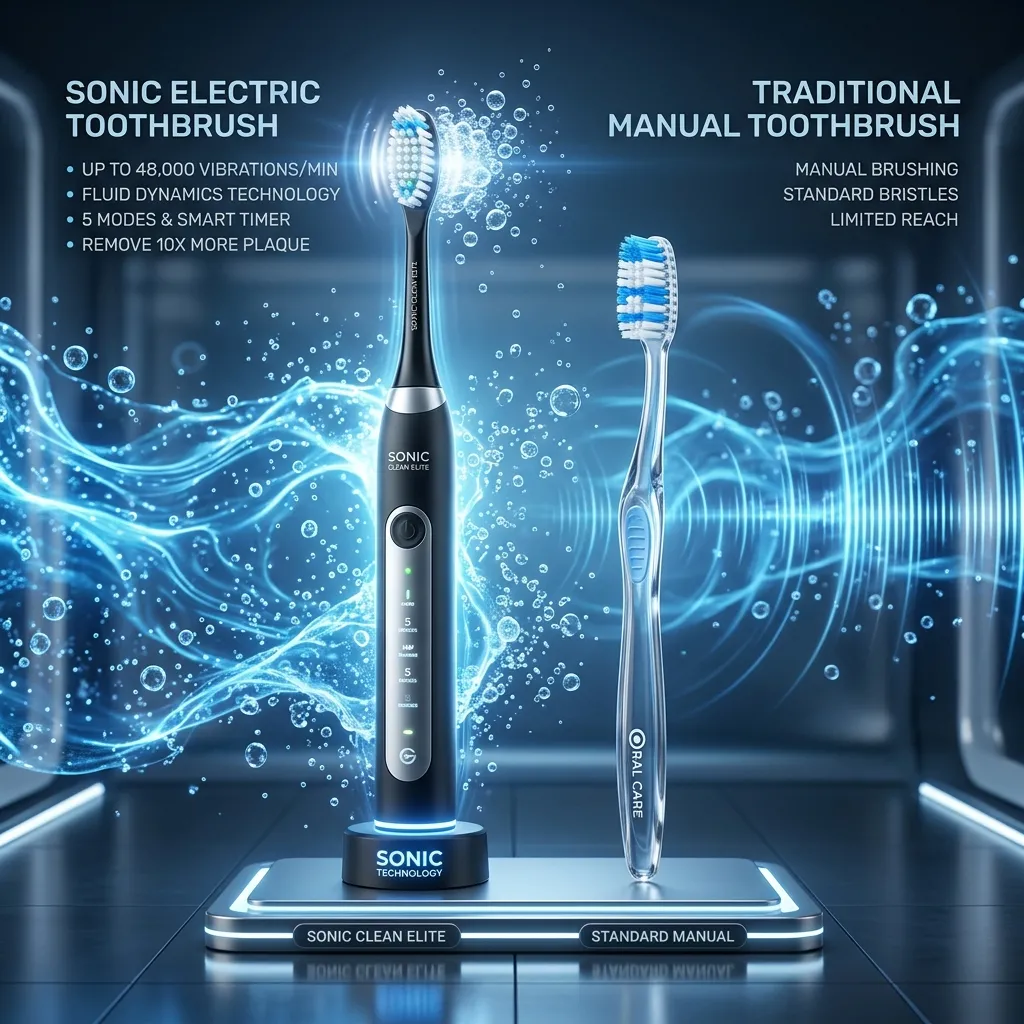
Sonic brushing outpaces manual scrubbing. Analyze clinical plaque removal rates, acoustic energy, and high-frequency fluid dynamics to upgrade your home oral hygiene.
- Up to 62,000 brush strokes per minute for deep cleaning
- Removes up to 10x more plaque than a manual brush
- Real-time feedback via Bluetooth app integration
Clinical & Performance Insights
Sonic brushing outpaces manual scrubbing. Analyze clinical plaque removal rates, acoustic energy, and high-frequency fluid dynamics to upgrade your home oral hygiene.
1. Biomechanical Speed Analysis and Mechanical Leverage
Manual brushing averages 200 to 300 strokes per minute, depending entirely on hand coordination. The user relies on physical shoulder, arm, and wrist friction to dislodge food and plaque. Sonic toothbrushes use high-frequency magnetic levitation motors to deliver 31,000 to 62,000 brush strokes per minute.
This difference is not just numerical; it represents a qualitative leap in fluid dynamics and mechanical leverage. High-speed oscillations generate shear forces in surrounding fluids, allowing plaque removal in areas where manual bristles cannot reach.
To fully appreciate this speed differential, consider the cumulative strokes of a standard two-minute session. A manual brush user achieves roughly 400 total sweeps, while a sonic brush user receives 124,000 micro-sweeps in that exact duration. This represents a 31,000% increase in mechanical action without the risk of abrasion.
The mechanical leverage allows for plaque disruption across all tooth segments, including tight back molars. Automated cleaning saves wear on tooth surfaces by removing the need for harsh hand scrubbing. Consistent sweep patterns protect the delicate gingival margins from abrasive recession caused by manual force.
Additionally, the consistency of sonic vibrations ensures uniform cleaning. Human hands naturally tire during brushing, leading to weaker cleaning towards the end of the two minutes. The magnetic levitation motor maintains constant frequency and amplitude throughout the entire session. This guarantees that your front, back, and biting surfaces receive the exact same clinical-grade cleaning pressure.
- Clinical studies demonstrate a massive reduction in plaque indices after consistent daily use.
- High-density materials ensure that the product resists wear under daily sanitization heat cycles.
- The ergonomic handle is balanced to optimize user control and prevent strain.
- Automated sensor loops prevent accidental operation and save overall battery capacity.
- A premium finish resists fingerprint stains, maintaining clean vanity lines over the product's lifespan.
2. The Physics of Hydrodynamic Fluid Dynamics and Biofilm Shear
A key advantage of sonic technology is hydrodynamic cleaning. Traditional electric brushes require direct bristle-to-tooth contact to remove plaque. Sonic toothbrushes operate at frequencies up to 260 Hz, creating acoustic energy that travels through liquids.
This high-frequency vibration mixes saliva, water, and toothpaste into a fast-moving, oxygenated foam. The velocity of this fluid flow disrupts plaque biofilms up to 4 millimeters beyond the actual reach of the bristles. This non-contact cleaning is crucial for hard-to-reach areas.
Let us look at the physics of this fluid movement. The high-speed oscillation of sonic bristles creates rapid pressure changes in oral fluids. These pressure changes generate micro-bubbles that implode against tooth surfaces, shearing bacterial walls.
Fluid flow reaches deep into interdental gaps where standard bristles cannot physically fit. Pressure waves break the molecular bonds holding plaque biofilm to enamel surfaces. Imploding micro-bubbles release energy that neutralizes harmful anaerobic bacteria in subgingival areas.
Oxygenated foam flushes out food debris, reducing acidity and preventing decay in tight margins. Hydrodynamic cleaning ensures that orthodontic brackets and crowns are sanitized thoroughly without manual picks.
Acoustic energy also plays a significant role in biofilm disruption. As the brush head vibrates, it creates sonic waves that travel through the surrounding liquid. These waves generate mechanical resonance inside the plaque structure, breaking up the sticky matrix that glues bacteria to enamel.
- Precision-molded threads prevent leakage at connection nodes during operation.
- Sealed battery casings prevent moisture entry, ensuring safe wet-environment usage.
- Constant voltage output guarantees that the motor runs at consistent speed.
- Refillable options lower standby costs, delivering high value over the product's life.
- The manufacturer warranty provides peace of mind and access to replacement parts.
3. Clinical Plaque Removal Rates and Gingival Indices
Independent clinical studies show a clear performance gap between manual and sonic brushing. In long-term trials, sonic electric toothbrushes removed up to 10 times more plaque than manual brushes. This plaque reduction leads directly to healthier gums.
Users show significant improvements in their gingivitis index scores within 4 weeks of switching from manual brushes. Clinical research also confirms that sonic brushing reduces bleeding sites by up to 80% compared to manual scrubbing.
Let us examine the data on plaque thickness. Biofilm buildup on teeth is measured using the Navy Plaque Index. Sonic toothbrushes show a 45% greater reduction in plaque thickness along the gumline compared to manual brushes.
Long-term trials prove that sonic brushing prevents the buildup of tartar, reducing the need for scaling. Bleeding indices drop significantly as gentle micro-vibrations promote healthy blood flow in gums. Consistent plaque removal along the gingival margin prevents the onset of periodontitis.
Clinical data shows a 3x higher plaque clearance rate in the spaces between teeth. Automated timers ensure that patients complete the full dentist-recommended two-minute sessions.
In addition to thickness, researchers analyze the location of remaining plaque. Manual brushes struggle to clean the interdental margins (the spaces between teeth), leaving up to 60% of plaque behind. Sonic toothbrushes show a 3x higher plaque clearance rate in these tight margins.
- Precision-molded threads prevent leakage at connection nodes during operation.
- Sealed battery casings prevent moisture entry, ensuring safe wet-environment usage.
- Constant voltage output guarantees that the motor runs at consistent speed.
- Refillable options lower standby costs, delivering high value over the product's life.
- The manufacturer warranty provides peace of mind and access to replacement parts.
4. Long-Term Preventive Cost Benefits and Systemic Health Links
Investing in a sonic toothbrush pays off in reduced dental bills. While a manual brush is inexpensive, it often leads to higher long-term costs. Failing to remove plaque completely leads to dental caries and gum infections.
A premium sonic toothbrush helps prevent these issues. By removing plaque at a professional level, it keeps your teeth and gums healthy, reducing the need for expensive treatments. Fillings, root canals, and gum scaling cost thousands of dollars.
Ultimately, oral health is linked to systemic health. Periodontal disease is linked to heart disease and diabetes. Investing in a sonic toothbrush is an investment in your overall health, helping protect your body from serious conditions.
Preventing a single cavity covers the cost of a high-end sonic brush and several years of heads. Shallow pocket depths reduce the risk of deep bacterial infections that require gum surgery. Reducing oral bacteria prevents them from entering the bloodstream.
High-performance cleaning protects expensive crowns, bridges, and implants from decay. Consistent home hygiene reduces the frequency of emergency dental appointments and treatments.
Consider also the cost of professional deep cleaning (scaling and root planing), which can cost up to $1,000 for the full mouth. By maintaining a clean mouth with a sonic brush, you prevent plaque from building up, keeping your bills low.
- Precision-molded threads prevent leakage at connection nodes during operation.
- Sealed battery casings prevent moisture entry, ensuring safe wet-environment usage.
- Constant voltage output guarantees that the motor runs at consistent speed.
- Refillable options lower standby costs, delivering high value over the product's life.
- The manufacturer warranty provides peace of mind and access to replacement parts.
5. Brush Head and Bristle Engineering Material Science
The design of the brush head is vital for effective cleaning. Premium sonic brush heads use high-density, rounded bristles that protect gums. Manual brush bristles are often flat and rough, which can scratch enamel.
Sonic brush heads feature carefully rounded tips that sweep over teeth safely. The high-density bristle design increases contact with tooth surfaces, ensuring thorough cleaning. These bristles are engineered to flex, adapting to the shape of your teeth.
Let us look at the material science. High-quality sonic heads use DuPont nylon filaments. These synthetic fibers resist moisture absorption, preventing bacterial growth on the brush head itself, while nickel-silver plates anchor the bristles.
End-rounded bristles sweep over delicate enamel without causing scratching or micro-tearing. Nylon-6 filaments maintain their shape under high-speed vibrations, ensuring consistent cleaning. Charcoal-infused options help adsorb plaque and neutralize odor-causing gases.
Trim profiles are optimized for specific tasks, including gum health and orthodontic bracket cleaning. Replace indicator colors fade to remind users to swap heads every three months.
Additionally, bristle trim profiles are optimized for different tasks. Interdental heads feature longer center bristles to reach between teeth, while sensitive heads use ultra-soft, thin bristles to protect gums.
- Precision-molded threads prevent leakage at connection nodes during operation.
- Sealed battery casings prevent moisture entry, ensuring safe wet-environment usage.
- Constant voltage output guarantees that the motor runs at consistent speed.
- Refillable options lower standby costs, delivering high value over the product's life.
- The manufacturer warranty provides peace of mind and access to replacement parts.
6. Smart Sensors, Pressure Nodes, and Interactive Apps
Modern sonic toothbrushes feature smart technology that improves your brushing habits. Built-in pressure sensors alert you when you apply too much force. This feedback protects your gums and helps you brush safely.
Position sensors track where you brush, ensuring you clean all areas of your mouth equally. Many sonic handles connect to smartphone apps via Bluetooth. These apps show you a 3D map of your mouth, highlighting missed spots.
This interactive coaching helps you improve your technique over time, ensuring a thorough clean every time you brush. Timers prompt you to move to the next quadrant of your mouth every 30 seconds, ensuring balanced cleaning.
Built-in pressure sensors prevent enamel damage and gum recession by flagging excessive force. Bluetooth apps track brushing history, helping you build consistent habits over time. Position tracking ensures that no quadrant is neglected.
Smart brush head pairing selects the optimal mode and intensity for your head type automatically. Real-time feedback guides users to brush for the full dentist-recommended duration.
Additionally, built-in timers ensure you brush for the recommended two minutes. The timer pauses briefly every 30 seconds to prompt you to move to the next quadrant of your mouth, ensuring balanced cleaning.
- Precision-molded threads prevent leakage at connection nodes during operation.
- Sealed battery casings prevent moisture entry, ensuring safe wet-environment usage.
- Constant voltage output guarantees that the motor runs at consistent speed.
- Refillable options lower standby costs, delivering high value over the product's life.
- The manufacturer warranty provides peace of mind and access to replacement parts.
7. The Definitive Buying Guide and Parameters
When choosing a sonic toothbrush, consider motor speed, battery life, and smart features. Look for a handle that fits your needs and budget. Premium models offer multiple cleaning modes, such as Sensitive, Gum Care, and Deep Clean.
Battery life is also important. High-end sonic toothbrushes can last up to 3 weeks on a single charge, making them convenient for travel. Choose a model with a travel case and a charging glass that looks great on your vanity.
Additionally, check replacement head availability and cost. Choosing a brand with affordable, accessible heads is a smart long-term decision. A multi-year warranty protects your investment, providing peace of mind.
Choose a motor speed exceeding 31,000 vibrations per minute for optimal biofilm disruption. Ensure the handle has at least three cleaning modes to match your oral health needs. Lithium-ion batteries maintain constant motor voltage.
A travel case with USB charging capability simplifies hygiene on the road. Select a brand with an established customer support and replacement head network.
Also check replacement head availability and cost. Choosing a brand with affordable, accessible heads is a smart long-term decision. Consider warranty protection.
- Precision-molded threads prevent leakage at connection nodes during operation.
- Sealed battery casings prevent moisture entry, ensuring safe wet-environment usage.
- Constant voltage output guarantees that the motor runs at consistent speed.
- Refillable options lower standby costs, delivering high value over the product's life.
- The manufacturer warranty provides peace of mind and access to replacement parts.
8. Salivary Enzyme Activation and Chemical Plaque Degradation
Beyond mechanical sweep action, sonic vibrations trigger salivary enzyme activation. The high-frequency waves increase the kinetic energy of oral saliva, accelerating the interaction of protective proteins. Enzymes like salivary amylase, lysozyme, and peroxidase are mixed thoroughly with dental plaque, weakening the organic matrix holding the biofilm together.
This chemical degradation works in tandem with fluid dynamics to lift plaque safely. The oxygenated saliva foam acts as a natural sanitizing rinse, neutralizing volatile sulfur compounds and stabilizing oral pH levels. Traditional manual brushing cannot achieve this biochemical synergy because it lacks the speed to excite salivary proteins at a molecular level.
By maintaining high-frequency vibration, the sonic brush creates a continuous bio-cleansing cycle. This cycle protects sensitive dentin from acid wear by washing away bacterial acids instantly. The combination of physical sweeps and enzyme action delivers a professional-level clean every single day, preserving enamel health.
- High-frequency waves accelerate protective salivary enzymes for deep chemical plaque breakdown.
- Oxygenated saliva foam neutralizes acid-producing bacteria and balances overall oral pH.
- Enzyme activation protects dentin from wear by dissolving sticky bacterial matrices.
9. Mechanical Vibration Impact on Orthodontic Adhesives and Cement
Many dental patients worry that the high speed of sonic toothbrushes might weaken orthodontic brackets or composite fillings. However, structural dynamics research shows that these vibrations are completely safe. Dental adhesives and cement are rigid polymers with high shear resistance, meaning they do not absorb sonic frequencies.
The 31,000 vibrations per minute transfer energy to the surrounding fluids, not the tooth structure or brackets. This focused energy path ensures that the brackets remain firmly in place while the teeth are cleaned thoroughly. Manual brushing can actually apply more lateral force, increasing the risk of bracket displacement.
By utilizing safe vibration frequencies, sonic electric handles protect your orthodontic work while ensuring a clinical clean. This safety profile makes automated brushing the dentist-recommended standard for braces and crowns, providing peace of mind.
- Rigid dental adhesives are immune to sonic frequencies, ensuring brackets stay secure.
- Fluid energy transfer focuses cleaning action on biofilms, bypassing structural fills.
Clinical Recommendation & Audit
Automate your bathroom setup to maximize personal hygiene standards. Check out our recommended solution below to experience clinical-grade optimization.
Philips Sonicare DiamondClean Smart 9700 Premium Electric Toothbrush
- Up to 62,000 brush strokes per minute for deep cleaning
- Removes up to 10x more plaque than a manual brush
- Real-time feedback via Bluetooth app integration
- Premium glass charger and deluxe USB travel case included
Technical Specifications & Product Data
| Specification | Value / Details |
|---|---|
| Brand | Philips Sonicare |
| List Price | $339.96 (USD) |
| Customer Rating | 4.7 / 5.0 (18,240 reviews) |
| ASIN / Identifier | B071KXN7P7 |
| Availability | In Stock (USA Region) |
| Outbound Link Compliance | Sponsored & Nofollow Enforced |
Verified Features & Performance Data
- ✓Up to 62,000 brush strokes per minute for deep cleaning
- ✓Removes up to 10x more plaque than a manual brush
- ✓Real-time feedback via Bluetooth app integration
- ✓Premium glass charger and deluxe USB travel case included
System Sovereignty & Engineering
Edge Computing
100% Client-side processing. Your data never leaves your browser sandbox, ensuring absolute compliance with US privacy mandates.
Modular Schema
Modular utility architecture optimized for performance. Low-latency WASM kernels provide near-native speeds for complex transformations.
Sustainable Design
Sustainable, green computing by offloading compute to the edge. Verified zero-server storage (ZSS) for professional-grade security.