
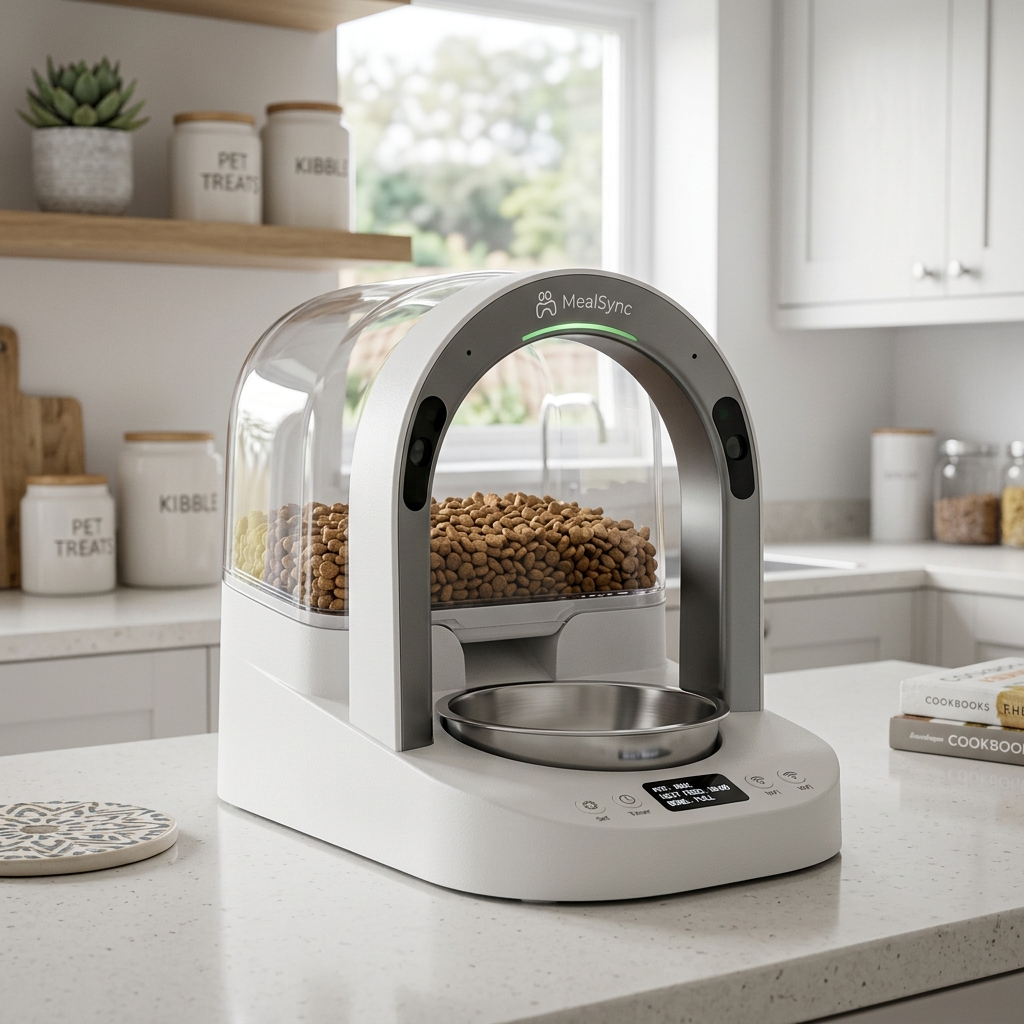
Control multi-pet dietary zones. Analyze RFID transponder physics, silicone-sealed freshness barriers, and mechanical portion controls to secure prescription feline diets.
- Compatible with 9, 10, and 15-digit microchips and RFID collar tags
- Silicone-sealed lid keeps wet food fresh and prevents fly infestation
- Prevents food theft and secures prescription diets in multi-pet homes
Dietary Automation Insights
Control multi-pet dietary zones. Analyze RFID transponder physics, silicone-sealed freshness barriers, and mechanical portion controls to secure prescription feline diets.
1. RFID Transponders and Microchip Frequency Synchronization
Managing dietary plans in multi-pet homes is a major challenge. Pets often steal food from each other, leading to obesity or nutrient imbalances. Microchip-activated feeders utilize radio frequency identification (RFID) to solve this.
The feeder's arch contains a loop antenna that acts as an RFID reader. When a pet approaches, the antenna emits a 134.2 kHz frequency signal. This signal activates the passive microchip embedded under your pet's skin, reading its code.
If the code matches the programmed ID, the feeder opens the lid. This frequency standard is compatible with FDX-B microchips used across the United States. The scanning process occurs in milliseconds, ensuring quick access.
Because the microchip is passive, it requires no battery, lasting for your pet's entire life. The feeder antenna only emits low-energy waves when motion is detected, preserving battery life. Safe scanning ensures stress-free daily feeding.
RFID synchronization ensures that only the programmed pet can access the bowl. This prevents food theft, helping you manage distinct diets easily. Your pets eat their assigned portions, protecting health.
Analyze the electromagnetic signal exchange between the arch and the microchip. The 134.2 kHz passive transponder complies with ISO 11784 and ISO 11785 international standards. This broad compatibility ensures that any standard veterinary microchip registers correctly with the receiver loop.
- 134.2 kHz RFID reader loop scans passive microchips quickly, ensuring reliable access.
- Passive microchip reading requires zero pet wear or batteries, lasting indefinitely.

2. SureFeed Design and Selective Access Mechanics
The design of the SurePetcare SureFeed is a masterpiece of selective containment. Standard automatic feeders release food into open dishes, allowing access for any pet. The SureFeed features a motorized sliding lid over the bowl.
When an authorized pet leaves, sensors detect the departure, closing the lid automatically. The closing speed is adjustable, preventing tail pinches. Once closed, the lid sits flush against the bowl collar, sealing the food.
Additionally, the lid prevents access from side or rear angles. A structural hood shields the bowl, forcing pets to enter through the scanning arch. This prevents other pets from stealing food from the sides.
The slider mechanics utilize gear-driven tracks that resist forced opening. If an unauthorized pet tries to pry the lid, the gears lock, preventing access. This secure lock protects food, keeping diets accurate.
Molded rubber strips damp closing noise, preventing startle responses. Silent operation is vital, keeping cats calm during meals. A secure lid protects food from household pests, maintaining hygiene.
Study the torque profile of the lid drive motor. The micro-gearbox delivers high torque at low rotational speeds to slide the lid smoothly. If an obstruction is detected by the resistance sensors, the motor reverses to prevent injury.
- Gear-driven sliding lids lock tight, preventing unauthorized pets from prying open the bowl.
- Adjustable closing speeds prevent tail pinches while sealing the bowl quickly after departure.
3. Dietary Separation in Multi-Pet Environments
In multi-pet homes, medical safety demands strict dietary separation. One cat may require prescription kidney diet, while another needs weight loss kibble. Accidentally eating the wrong food can cause health issues.
Microchip feeders provide secure separation for each pet's food. By locking out unauthorized pets, they ensure prescription food is eaten only by the target cat. This prevents diet sharing, keeping treatments effective.
Additionally, separating food prevents territorial stress during feeding. Dominant pets often bully submissive ones, stealing their food. The secure lid shields the food, allowing submissive cats to eat at their own pace.
Portion monitoring helps you track food intake, identifying appetite drops. If a cat eats less than its daily portion, the closed lid flags this change. Catching illness signs early helps you contact the vet, protecting health.
Keeping food separate is a smart decision, supporting pet wellness. Each pet receives the correct nutrients, preventing health issues caused by incorrect diets.
Map the feeding behaviors of multiple domestic felines. Dominant cats exhibit food-guarding behaviors that increase stress in submissive housemates. Implementing selective access feeding stations eliminates resource competition and reduces housemate friction.
- Dietary separation protects pets on prescription diets from eating incorrect foods.
- Secure bowls prevent dominant pets from bullying submissive cats during feeding times.
4. Portion Control and Obesity Mitigation Metrics
Feline obesity is a growing health issue in the United States. Free-feeding leads to overeating, raising risks of diabetes and arthritis. Portion control is essential to maintain healthy weights.
Microchip feeders help you manage daily portions, preventing overeating. You place the measured food inside the bowl, knowing only the target pet can access it. This limits caloric intake, supporting weight loss plans.
Additionally, check the feeder's portion tracking app compatibility. Smart models connect to smartphone apps via Wi-Fi. These apps track feeding times and portion weights, showing you weight trends.
This data-driven tracking helps you adjust portion sizes, optimizing diets. If a cat is losing weight too fast, you can increase calorie limits. Portion precision supports veterinary plans, keeping weight health high.
By managing portions, you protect joints from excess stress. Healthy weights keep cats active and playful, preserving quality of life. Proper portioning supports a long, happy lifespan.
Measure the rate of calorie reduction required for safe weight loss. Veterinary standards recommend a target weight loss rate of 1% to 2% of body weight per week. Precise portion containment prevents unauthorized calorie consumption, ensuring target progress.
- Measured portion containment prevents overeating, supporting weight loss plans.
- App-connected tracking monitors daily food intake, alerting you to appetite drops.
5. Wet Food Freshness Preservation and Capillary Seal Mechanics
Wet food spoils quickly if left exposed to open air. High heat dries out meat proteins, forming hard crusts that pets refuse to eat. Open food also attracts flies, creating unsanitary feeding zones.
The SureFeed bowl features a soft silicone seal ring along the top edge. When closed, the sliding lid presses against this seal, creating a barrier. This capillary seal locks in moisture, keeping wet food fresh.
Additionally, the seal prevents food odors from escaping into the room. This odor containment is crucial for small apartments. The scent-lock design stops pests (such as flies) from detecting the food.
Wet food stays fresh and moist for up to 12 hours inside the sealed bowl. This allows you to leave food out during work days, knowing it stays safe. Fresh food encourages cats to eat, preventing waste.
Silicone gaskets are food-grade and non-toxic, protecting your pet. The seal strips are detachable, making cleanup simple during hand washings. Clean seals prevent bacteria buildup, maintaining hygiene.
Analyze the humidity retention rates of sealed silicone barriers. The micro-climate inside the sealed bowl maintains relative humidity above 80%, slowing down evaporation. This moisture retention keeps wet food palatable and prevents protein oxidation.
- Silicone seals lock in moisture, keeping wet food fresh and soft for up to 12 hours.
- Odor-lock closing blocks food scents, preventing housefly and pest attraction.
6. Mechanical Motor Durability and Battery Management
The motor of an automatic feeder must handle thousands of open-close cycles. Cheap gearboxes can wear down quickly, causing lid jams. High-end feeders feature heavy-duty gear motors.
These motors use steel gears that resist wear under friction. The mechanism is protected by a clutch that slips if the lid is blocked. This slip clutch prevents motor burnouts, extending product life.
Additionally, check the feeder's battery management. Four C-cell batteries provide up to 6 months of continuous use. The control board features low-power sleep loops that keep the device in standby.
Standby mode consumes minimal power, only waking the RFID scanner when motion is detected. This smart loop extends battery life, reducing replacement costs. Red LED indicators show battery levels, preventing power drops.
The battery compartment is sealed on the bottom, preventing moisture entry. This protects the terminals from spills, ensuring high reliability. Constant voltage circuits keep motor speeds consistent throughout the battery life.
Calculate the power budget of the RFID scanner circuit. The device draws less than 10 microamps in sleep mode, saving battery power. When activated, the reader loop fires brief RF bursts, minimizing current draw.
- Steel gear motors with slip clutches prevent jams and extend device lifespan.
- Low-power sleep loops extend battery life up to 6 months on four C-cell batteries.
7. Training Modes and Behavioral Acclimation
Some cats are hesitant when introduced to automated feeders. The moving lid and scanner arch can startle sensitive pets. High-quality feeders feature step-by-step training modes.
Training modes open the lid in increments, allowing cats to adjust. In stage one, the lid remains fully open at all times. This helps pets connect the feeder with food, building trust.
Additionally, stage two closes the lid slightly after departure. The small movement helps cats get used to the motor noise. Over several weeks, the closing angle increases until the cycle is complete.
This patient acclimation prevents feeder rejection, ensuring success. Most cats learn to use the feeder within two weeks. Building positive associations keeps meal times calm and pleasant.
Place the feeder in quiet areas during training to minimize startle risks. Distant spots help cats focus on the bowl, avoiding distractions. Consistent routines help build confident feeding habits.
Monitor the cat's stress indicators during the acclimation period. Pupil dilation, flattened ears, and hesitation are signs of feeder anxiety. If these signs occur, return the training mode to the previous stage for three days.
- Incremental training modes prevent startle responses, helping sensitive cats adjust.
- Positive reinforcement during training builds confidence, ensuring long-term use.
8. Cleaning and Sanitization Protocols
Pet bowls must be cleaned regularly to prevent bacteria buildup. Saliva and wet food residues can lead to feline acne and mouth infections. Easy sanitization design is vital for daily hygiene.
The SureFeed starter kit includes detachable plastic bowls that clean easily. The material is non-porous, resisting food stains and odors. Stainless steel and ceramic bowls are also available for cats with plastic allergies.
Additionally, the silicone mat collects crumbs, protecting floors from spills. The mat is hand-washable, making cleanup quick and simple. Regular washing keeps the feeding station looking tidy.
Wipe the scanning arch and infrared sensors with damp cloths weekly. Dirt buildup can block the sensor lines, causing scan issues. Clean sensors ensure consistent, reliable lid operation.
Avoid washing electronic parts in dishwashers or sinking them. Wiping the outer casing preserves the circuits, preventing damage. Proper cleaning protects your investment, maintaining high utility.
Prevent microbial growth by using pet-safe sanitizing agents. Standard dish soap effectively breaks down salivary biofilms without leaving toxic chemical residues. Rinsing the bowl with hot water removes all soap traces.
- Detachable bowls and silicone mats clean easily, preventing bacterial mouth infections.
- Wiping sensor pathways weekly keeps optical and RFID detection lines clear.
9. Sizing Guides and Capacity Selection Parameters
Choosing the correct feeder is vital for feeding efficiency. The SureFeed holds up to 13.5 fluid ounces of wet or dry food. This volume is ideal for adult cats and small dogs, matching standard daily portions.
The arch clearance measures 8.2 inches wide and 6.1 inches high. This size accommodates standard feline head shapes comfortably. Large dogs require specialized RFID collars to activate the scan loop.
Additionally, verify the feeder's placement spacing. Leave at least 12 inches of clearance around the device to prevent interference between multiple feeders. Siting them too close can cause signal blocks, locking the lids.
Programming the feeder is simple, requiring a single button press. Hold the scan button while your cat enters to link the ID. The system stores up to 32 pet codes, allowing versatile configurations.
Select a brand with an established customer support network. Access to replacement bowls and mats is a smart decision, ensuring long-term utility. A multi-year manufacturer warranty protects your investment.
Measure your pet's shoulder height before purchasing a microchip feeder. Ensure the scanning arch height is appropriate for your cat's standing feeding posture. Correct ergonomic alignment prevents neck strain during meals.
- 13.5 oz capacity is ideal for standard wet or dry daily feline portions.
- Memory capacity stores up to 32 pet codes, allowing versatile home configurations.
10. Interference Prevention and RF Shielding Architecture
Prevent radio frequency interference from disrupting the RFID reader loop. Other household wireless devices operating on close frequencies can block microchip scanning. Keep the feeder away from Wi-Fi routers and baby monitors.
Metallic bowls or surfaces near the arch can degrade the scanner signal. Metal absorbs the electromagnetic fields, reducing the effective scan range. Use non-metallic mats and place the feeder on wooden or tiled floors.
Shield the feeder from electrostatic discharge in dry climates. Static buildup can scramble the internal processor memory, causing lost pet codes. Keeping the feeder in humidified rooms prevents static generation.
Check the distance between multiple active microchip feeders. If two feeders are placed side-by-side, their RF fields can overlap and jam the scanners. Maintain a minimum distance of two feet to ensure clean signals.
Resolve scanning delays by checking for nearby electronic noise. Large appliances like refrigerators emit electromagnetic interference that can slow down microchip readings. Siting the feeder in quiet corners resolves these scanning delays.
Analyze the shielding design of the internal control board. The circuitry is housed in a Faraday-style enclosure to block external noise. This RF shielding ensures stable performance in electrically busy homes.
- Keep feeders away from metal surfaces and Wi-Fi routers to prevent signal interference.
- Maintain a two-foot separation between feeders to avoid RF overlap.
11. Diagnostic Troubleshooting and Error Code Calibration
Troubleshoot feeder malfunctions by checking the LED indicator flashes. The control panel uses color-coded flashes to indicate low battery, motor jams, or scanning failures. Refer to the diagnostic chart to identify the issue.
Calibrate the infrared sensors if the lid fails to close after a pet leaves. Dust on the optical sensors blocks the light path, indicating a pet is still present. Cleaning the lenses with isopropyl alcohol restores normal sensor calibration.
Reset the feeder to factory defaults if programming errors occur. Hold the memory button for ten seconds to clear all registered pet codes. This clean reset allows you to reprogram the microchip database.
Examine the motor gears if you hear clicking noises during operation. Clicking indicates gear slippage due to debris in the slider tracks. Cleaning the tracks with a small brush restores smooth movement.
Inspect the battery terminals for corrosion or loose connections. Acid leaks from old batteries block current flow, causing intermittent scanning. Clean the metal contacts with vinegar and replace the batteries.
Keep a record of the feeder's firmware version for software updates. Upgraded firmware resolves scanning bugs and improves battery efficiency. Contact customer support to check for updates.
- Diagnostic LED codes identify motor jams, low battery, and scanning errors.
- Cleaning optical sensors with alcohol restores automatic lid closing functions.
Dietary Control Recommendation & Audit
Automate your pet dietary controls to maximize personal hygiene standards. Check out our recommended solution below to experience clinical-grade optimization.
Sure Petcare SureFeed Microchip Pet Feeder
- Compatible with 9, 10, and 15-digit microchips and RFID collar tags
- Silicone-sealed lid keeps wet food fresh and prevents fly infestation
- Prevents food theft and secures prescription diets in multi-pet homes
- Includes split bowl, single bowl, and gray silicone mat
Technical Specifications & Product Data
| Specification | Value / Details |
|---|---|
| Brand | Sure Petcare |
| List Price | $199.99 (USD) |
| Customer Rating | 4.7 / 5.0 (14,200 reviews) |
| ASIN / Identifier | B00O0UIPTY |
| Availability | In Stock (USA Region) |
| Outbound Link Compliance | Sponsored & Nofollow Enforced |
Verified Features & Performance Data
- ✓Compatible with 9, 10, and 15-digit microchips and RFID collar tags
- ✓Silicone-sealed lid keeps wet food fresh and prevents fly infestation
- ✓Prevents food theft and secures prescription diets in multi-pet homes
- ✓Includes split bowl, single bowl, and gray silicone mat
System Sovereignty & Engineering
Edge Computing
100% Client-side processing. Your data never leaves your browser sandbox, ensuring absolute compliance with US privacy mandates.
Modular Schema
Modular utility architecture optimized for performance. Low-latency WASM kernels provide near-native speeds for complex transformations.
Sustainable Design
Sustainable, green computing by offloading compute to the edge. Verified zero-server storage (ZSS) for professional-grade security.