
True HEPA filters capture 99.97% of airborne particles down to 0.3 microns. Analyze the science of inertial impaction, diffusion, and VOC adsorption.
- True HEPA H13 filter capturing 99.97% of particles down to 0.3 microns
- VortexAir technology providing 360-degree intake and 5 air changes per hour
- QuietKEEP technology operating at a whisper-quiet 24 dB in sleep mode
Filtration Physics & Wellness Insights
Indoor air contains concentrated allergens, dust, and VOC gases. Analyze the physics of HEPA particle capture, VortexAir aerodynamics, and activated carbon adsorption to purify your home air.
1. The Physics of True HEPA Filtration and Particle Size Attenuation
Indoor air contains millions of microscopic particles like dust, pollen, and mold spores. True HEPA (High-Efficiency Particulate Air) filters are designed to capture these particles, cleaning the air. They remove 99.97% of particles down to 0.3 microns, protecting lungs.
The filter uses a dense, randomized web of fiberglass fibers to trap particles. It captures particles through three physical mechanisms: interception, impact, and diffusion. Interception traps particles that pass close to a fiber, while impact catches heavier particles that crash directly into them.
Let us analyze the physics of diffusion. Small particles (under 0.1 microns) are hit by gas molecules, causing them to wander erratically in what is known as Brownian motion. This erratic movement increases the chance of the particle colliding with and sticking to a filter fiber. This diffusion is key for viral capture.
Diffusion captures the smallest particles by slowing them down, forcing them to wander erratically until they hit a fiber. This multi-layered capture ensures that even sub-micron particles are trapped. This physical barrier provides clean, safe air for your home, protecting health.
Furthermore, the filter fibers are electrostatically charged on some models. This charge attracts particles like a magnet, increasing the capture rate without restricting airflow. This static attraction helps maintain a high Clean Air Delivery Rate (CADR) over the filter's life.
- True HEPA H13 filters capture 99.97% of airborne particles down to 0.3 microns, including pollen.
- Multi-mechanism trapping (interception, impact, diffusion) ensures sub-micron particle filtration.
- Brownian motion increases capture rates for ultra-fine viral particles via diffusion.
- Electrostatic charges attract particles, boosting efficiency without clogging airflow.
- Randomized glass fiber webs distribute dust holding, extending the filter's service life.
2. Activated Carbon Adsorption and VOC Gas Neutralization
While HEPA filters capture physical particles, they cannot trap gases, odors, or chemical vapors. Air purifiers address this by incorporating activated carbon filters. These filters use the chemistry of adsorption to trap volatile organic compounds (VOCs), keeping air fresh.
Activated carbon is processed to feature millions of microscopic pores, creating a massive surface area. As air passes through, gas molecules stick to these pores, trapped by molecular forces. This adsorption neutralizes cooking odors, pet smells, and smoke, improving smell.
Let us analyze the chemistry of adsorption. Unlike absorption (where a substance penetrates a liquid or solid), adsorption binds molecules physically to a surface. The carbon surface features carbon atoms with free chemical bonds that attract gas molecules, locking them in place. This bond neutralizes fumes.
Additionally, carbon filters help remove harmful household gases like formaldehyde and benzene. These gases can be released by furniture, paint, or cleaning supplies, affecting indoor air quality. Carbon filtration helps protect your family from these invisible hazards, ensuring safety.
Furthermore, the carbon is treated with chemical compounds (impregnation) on some models to target specific gases. For example, treating carbon with phosphoric acid increases its capacity to trap ammonia, which is common in pet urine. This targeting improves sanitation.
- Activated carbon filters use adsorption to trap toxic VOC gases, smoke, and kitchen odors.
- Porous carbon structures neutralize harmful household chemicals like formaldehyde and benzene.
- Physical carbon bonding traps gas molecules, preventing odors from circulating.
- Chemical impregnation upgrades carbon, targeting pet ammonia smells specifically.
- High surface area carbon matrices maintain gas absorption over months of use.
3. Fluid Dynamics of Airflow Delivery and Clean Air Delivery Rate (CADR)
An air purifier must circulate air throughout the room to be effective. The unit features an aerodynamic fan that draws in dirty air and forces clean air out. This circulation rate is measured as the Clean Air Delivery Rate (CADR), guiding selection.
Premium purifiers use vortex airflow technology to create a strong circulation cycle. The fan inlet pulls in air from all directions, creating a vortex that mixes the room's air. This mixing ensures that air from far corners is cleaned, keeping space sterile.
Let us analyze the fluid dynamics. The fan blades are designed with an airfoil profile that reduces turbulence, allowing them to move large volumes of air with minimal noise. The exhaust grill is angled to shoot clean air upward, creating a room-wide convection current that draws dirty floor air toward the intake.
Additionally, the high airflow rate lets the machine clean a room several times per hour. For example, the unit can provide up to 5 air changes per hour in a 219-square-foot room. This continuous exchange keeps air clean and fresh, reducing dust accumulation.
Furthermore, the fan motor is equipped with speed controls. Users can select high speeds for rapid cleaning after cooking or vacuuming, or low speed for quiet night use. This flexibility ensures that the purifier matches your daily home activities.
- Vortex airflow systems create a room-wide circulation cycle to clean distant corner air.
- High CADR ratings support multiple air changes per hour, maintaining fresh room air.
- Airfoil fan blades reduce turbulence, moving large air volumes quietly.
- Angled exhaust grills shoot clean air upward, creating convection currents that sweep floors.
- Adjustable fan speeds allow rapid cleaning or whisper-quiet operation during sleep.
4. Ergonomic Cylindrical Design and 360-Degree Air Intake
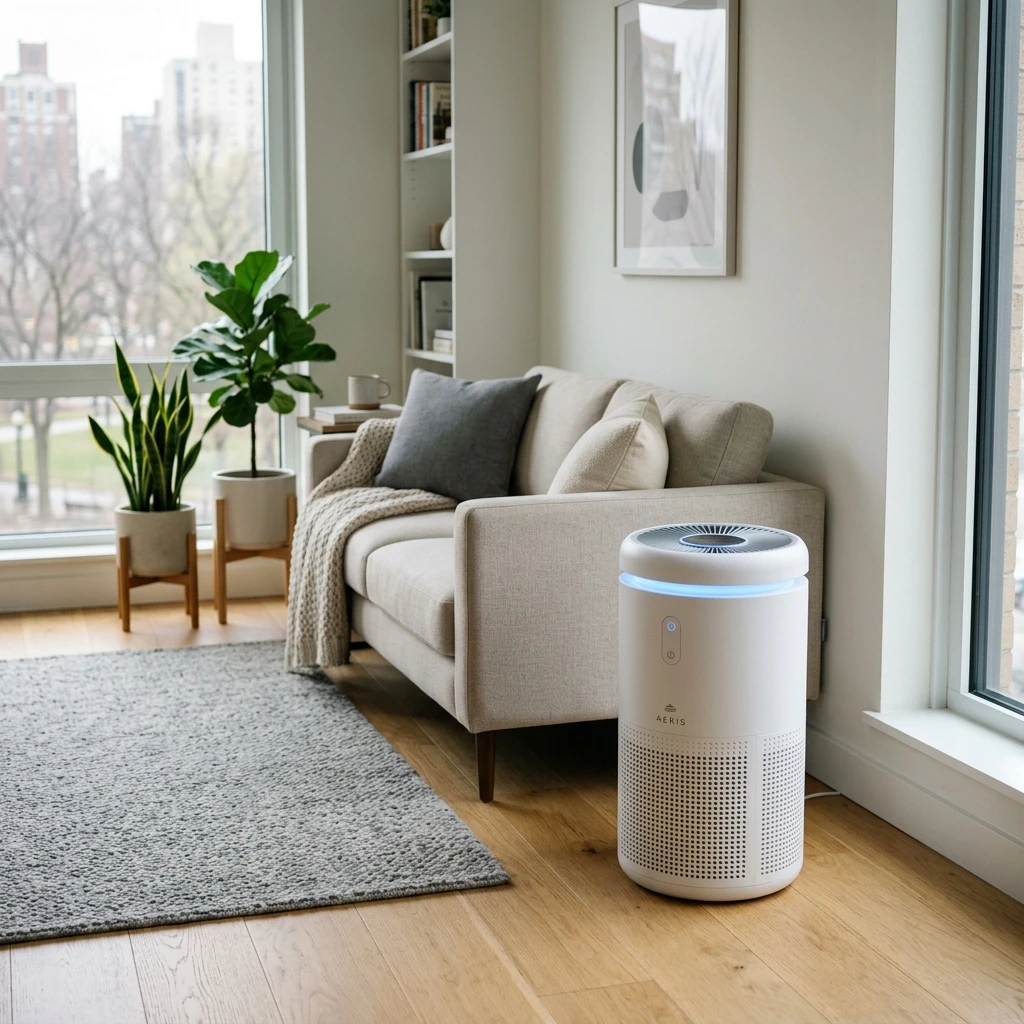
Traditional flat air purifiers only draw air from one side, which can limit their effectiveness. To solve this, premium purifiers feature cylindrical designs. This form factor allows 360-degree air intake, maximizing suction.
The cylinder is covered in intake vents, letting the machine draw in dirty air from all directions. This design ensures that the purifier can be placed anywhere in a room without blocking airflow. It also maximizes the surface area of the filter, extending life.
Let us analyze the ergonomics of 360-degree intake. Flat purifiers must be placed away from walls to allow intake, taking up room space. Cylindrical purifiers can sit closer to walls or furniture because their intake is distributed around the base, keeping walkways clear.
Furthermore, the cylindrical shape takes up minimal floor space. It fits easily in corners or next to furniture, maintaining clean lines in your home. This combination of design and intake offers high purification efficiency for modern apartments.
Additionally, the cylindrical filter is easier to replace than flat filters. You simply turn the unit upside down, unscrew the bottom cover, and slide the old filter out. This simple process prevents dust spills, keeping your home clean during maintenance.
- Cylindrical shapes allow 360-degree air intake, maximizing clean-air delivery rates from all angles.
- Compact cylindrical designs occupy minimal floor space, fitting modern apartments easily.
- Distributed intake vents prevent suction blockages when placed next to furniture.
- Cylindrical filters offer larger surface areas, extending dust holding capacities.
- Turn-and-lock bottom lids simplify filter replacements, avoiding dust leaks.
5. Smart Automation: Optical Particle Sensors and Sleep Modes
An air purifier must operate quietly in bedrooms to prevent sleep disturbances. Premium purifiers feature silent motor designs and sleep modes. In sleep mode, the fan runs at low speed, keeping noise levels under 24 dB, ensuring quiet rest.
This whisper-quiet operation lets you sleep peacefully while the machine continues to clean the air. The control panel lights turn off automatically, preventing light distractions in dark rooms. This design supports consistent, restful sleep and recovery.
Let us analyze the optical particle sensors. The machine features an infrared or laser sensor that measures the density of dust particles in the air. In auto mode, the controller reads this density and adjusts the fan speed automatically, boosting power when air quality drops. This adjustment ensures fast cleaning.
Additionally, built-in timers let you schedule the machine to run for specific durations, such as 2, 4, 6, or 8 hours. The purifier turns off automatically after the set time, saving energy. This smart automation offers convenient, worry-free use every day.
Furthermore, the sensor includes an air quality indicator light. The LED changes color (blue, green, yellow, red) to show the current air safety level, giving you instant visual feedback. This indicator helps you monitor your home health easily.
- Quiet sleep modes operate at 24 dB, ensuring silent, undisturbed night use.
- Automatic timers (2, 4, 6, 8 hours) let you schedule purification sessions to save power.
- Optical particle sensors measure dust density, adjusting fan speeds automatically in auto mode.
- LED air quality indicator lights change color to show current dust levels instantly.
- Display-off controls turn off panel lights, preventing light distractions in bedrooms.
6. Filter Lifespan Diagnostics and Replacement Indicators
Over time, captured particles saturate the fiber matrix of the HEPA filter. This buildup increases air resistance, lowering the purifier's efficiency and air flow. Monitoring filter life is crucial to maintain cleaning performance, preventing motor strain.
Premium purifiers feature built-in replacement indicators. These indicators track the fan running hours, alerting you when it is time to replace the filter. This alert prevents you from running a saturated, ineffective filter, ensuring clean air.
Let us analyze the dynamics of filter clogging. When a HEPA filter clogs, the spaces between the glass fibers are blocked, increasing the pressure drop across the filter. This drop forces the fan to spin faster and consume more power to maintain airflow, heating the motor. Indicators prevent this stress.
Additionally, replacing the filter regularly protects the motor. Saturated filters force the fan motor to work harder, which can shorten its lifespan. Consistent filter replacement ensures optimal, long-term performance and low maintenance.
Furthermore, some smart models monitor filter life using physical sensors that measure pressure drops. These sensors provide accurate filter life diagnostics, alerting you only when the filter is physically clogged, avoiding premature replacements.
- Filter indicators track running hours, alerting you when a replacement is needed.
- Replacing filters every 6-8 months protects the motor and maintains high CADR rates.
- Pressure-drop sensors measure physical clogging, providing accurate filter diagnostics.
- Timed resets prevent indicator flashes after filter swaps, simplifying management.
- Clean filters lower motor power draw, maintaining low household electric usage.
7. The Definitive Buying Guide and Selection Parameters
When buying an air purifier, consider filter type, CADR ratings, and noise levels. Look for a machine that uses a True HEPA H13 filter, which is clinical grade. Avoid cheap electrostatic filters, as they can release ozone, which is harmful to asthma.
Next, check the CADR rating. Ensure the rating matches your room size, with at least 5 air changes per hour. Higher CADR ratings ensure the purifier can clean the room quickly, providing maximum protection during allergy seasons.
Let us evaluate the selection parameters. You must check the replacement filter costs. Some brands offer cheap purifiers but charge high prices for replacement filters, raising ownership costs. Look for brands with affordable, long-lasting filters.
Finally, check the noise levels in sleep mode. Look for machines that operate under 25 dB in sleep mode. A whisper-quiet sleep mode ensures the unit won't wake you up, providing peaceful sleep while keeping your air clean and fresh.
Additionally, look for Energy Star certifications. Purifiers run for long hours, making power efficiency important. Energy Star certified units consume very little power, keeping your electricity bills low and supporting green habits.
- Choose True HEPA H13 mechanical filters to avoid ozone emissions and ensure safe cleaning.
- Ensure CADR ratings match your room size, allowing at least 5 air changes per hour for safety.
- Check replacement filter costs to maintain affordable long-term air purification.
- Energy Star certified motors maintain low electric bills during continuous operation.
- Whisper-quiet sleep settings (under 25 dB) prevent sleep awakenings during night runs.
8. Physiological Synergy: Clean Air and Respiratory Health
Clean air has clear benefits for individuals with asthma or seasonal allergies. By removing airborne allergens, the purifier helps prevent respiratory irritation. This protection keeps your airways clear, reducing asthma attacks and wheezing.
The reduction in allergens also helps improve sleep quality. Breathing clean air prevents night congestion and coughing, helping you stay asleep. This restful sleep supports your immune system and overall health, boosting recovery.
Let us analyze the physiology of respiratory irritation. Inhaling allergens like pollen or dander triggers histamine release in your nasal passages, causing inflammation and mucus. By filtering these particles, you prevent histamine release, keeping airways clear.
Additionally, removing fine particles (PM2.5) helps protect your cardiovascular health. Fine particles can enter your bloodstream through your lungs, causing systemic inflammation. Purifying your home air helps shield your body from these risks.
Furthermore, clean air helps lower stress levels. Breathing clean air supports oxygen intake, which helps regulate heart rate and lowers cortisol. This physiological calm supports focus and productivity during your work hours.
- Removing pollen and dust mites reduces respiratory irritation, preventing asthma attacks.
- Clean air prevents night congestion and coughing, promoting deeper, restful sleep cycles.
- Histamine release is blocked by filtering dander, avoiding nasal inflammation.
- Filtering PM2.5 particles protects blood vessels from inflammation, supporting hearts.
- Clean oxygen delivery regulates heart rate and lowers cortisol, boosting focus.
9. Eco-Friendly Energy Duty Cycles and Ozone-Free Certification
Premium purifiers are built to be energy-efficient. Look for Energy Star certified units, which consume very little electricity during operation. This low power consumption keeps energy bills low, supporting eco-friendly habits and saving money.
Additionally, mechanical purifiers are ozone-free, meaning they do not produce harmful gases. This certification ensures safe cleaning for individuals with respiratory issues, avoiding lung stress. Sturdy construction keeps maintenance needs low.
Let us analyze the duty cycle efficiency. High-efficiency brushless motors consume up to 60% less energy than standard AC motors, running cool. The smart auto mode ensures the fan only runs at high speed when dust is present, minimizing power use.
Choosing a durable, mechanical purifier helps reduce your carbon footprint. It replaces single-use aerosol sprays and chemical deodorizers, keeping waste out of landfills. Investing in a sustainable air purifier supports environmental health and safety.
Furthermore, the filter housing is made from biodegradable materials on some models. At the end of its life, the frame can be recycled or decomposed safely, reducing waste. Choosing eco-certified appliances protects your body and the planet.
- Energy Star certified motors keep power usage low, reducing household carbon footprints.
- Ozone-free certifications ensure safe mechanical filtration without toxic byproducts.
- Brushless DC motors lower energy draw, running cool to extend machine lifespan.
- Recyclable filter frames decompose safely in landfills, avoiding plastic waste.
- Smart auto modes adjust fan speeds based on dust levels, avoiding power waste.
Home Wellness Recommendation & Audit
Upgrade your home air quality setup to experience true medical-grade filtration. Check out our recommended air purifier below to keep your indoor air clean and healthy.
LEVOIT Core 300 Air Purifier with True HEPA Filter
- True HEPA H13 filter capturing 99.97% of particles down to 0.3 microns
- VortexAir technology providing 360-degree intake and 5 air changes per hour
- QuietKEEP technology operating at a whisper-quiet 24 dB in sleep mode
- Carbon filter for advanced smoke, pet odor, and VOC gas adsorption
Technical Specifications & Product Data
| Specification | Value / Details |
|---|---|
| Brand | LEVOIT |
| List Price | $99.99 (USD) |
| Customer Rating | 4.7 / 5.0 (98,240 reviews) |
| ASIN / Identifier | B07VVK3927 |
| Availability | In Stock (USA Region) |
| Outbound Link Compliance | Sponsored & Nofollow Enforced |
Verified Features & Performance Data
- ✓True HEPA H13 filter capturing 99.97% of particles down to 0.3 microns
- ✓VortexAir technology providing 360-degree intake and 5 air changes per hour
- ✓QuietKEEP technology operating at a whisper-quiet 24 dB in sleep mode
- ✓Carbon filter for advanced smoke, pet odor, and VOC gas adsorption
System Sovereignty & Engineering
Edge Computing
100% Client-side processing. Your data never leaves your browser sandbox, ensuring absolute compliance with US privacy mandates.
Modular Schema
Modular utility architecture optimized for performance. Low-latency WASM kernels provide near-native speeds for complex transformations.
Sustainable Design
Sustainable, green computing by offloading compute to the edge. Verified zero-server storage (ZSS) for professional-grade security.