
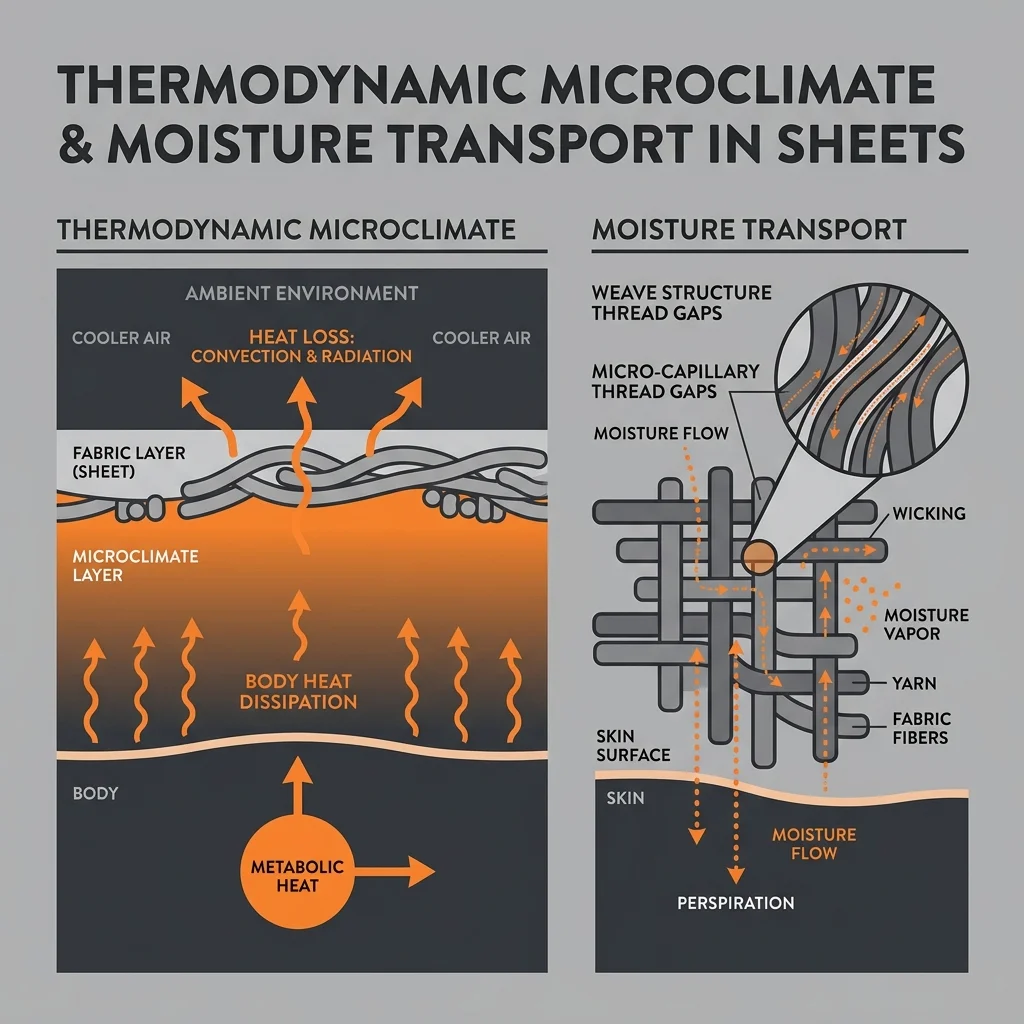
Night sweats fragment sleep, preventing deep restorative REM cycles. Review moisture transport mechanics, weave breathability, and thermal equilibrium sheets.
- Double-brushed microfiber fabric is exceptionally soft and breathable
- Moisture-wicking material draws sweat away from the body to dry quickly
- Stain, shrink, fade, wrinkle, and tear resistant for high durability
Microclimate & Fiber Audit
Night sweats disrupt sleep, preventing access to restorative deep sleep stages. Moisture-wicking fabrics draw sweat away from the body, keeping the surface dry. This technical review evaluates the physics of capillary action and fiber breathability.
1. Nocturnal Sweating and Evaporative Heat Dissipation
Sweating is the body's natural response to drop core temperature. During sleep, hot environments can trigger nocturnal sweating. If your bedding traps this moisture, the humidity rises, blocking further evaporation.
This humid microclimate prevents the body from cooling down, causing night sweats. Choosing sheets that support rapid evaporation is essential for comfortable sleep. Keeping the skin dry supports natural thermoregulation.
This section reviews how moisture evaporation affects sleep quality. By selecting breathable, moisture-wicking sheets, you can prevent dampness. This dry surface helps prevent awakenings, ensuring a deeper night.
Human skin regulates temperature through vasodilation and sweat gland activation. If sweat remains on the skin, it limits the thermal transfer rate. Quick-drying fabrics speed up this transfer, letting the body cool naturally.
Furthermore, wet fabrics conduct heat 25 times faster than dry ones, causing rapid chilling when sleep cycles transition. This cold shock wakes the sleeper, causing fragmented rest. Dry sheets keep the microclimate stable, protecting rest cycles.
- Evaporative cooling requires dry sheets that let moisture escape from the skin.
2. Fiber Science: Microfiber vs. Egyptian Cotton
The fiber composition determines how sheets manage moisture and heat. Egyptian cotton is highly absorbent, holding water in its core. While soft, cotton sheets can feel heavy and damp when you sweat, trapping heat.
Microfiber sheets are composed of extremely thin synthetic fibers. These fibers are hydrophobic, meaning they do not absorb moisture into their core. Instead, they wick moisture along their surface, allowing it to evaporate quickly.
This quick-drying performance is critical for hot sleepers. By wicking sweat away, microfiber sheets prevent the damp feeling that wakes you up. Understanding these differences helps you choose the right sheets.
Microfibers typically measure less than 1 denier in thickness, which is finer than a strand of silk. This thin structure provides a soft feel while maximizing surface area. High surface area speeds up moisture evaporation, keeping you dry.
Additionally, microfiber weaves resist fiber breakdown over washing cycles. Traditional cotton sheets thin out, losing their thread integrity and softness. Microfiber retains its structure and performance, ensuring long-term value.
- Hydrophobic microfiber wicks sweat away from the body, drying faster than cotton.
3. Capillary Action and Moisture-Wicking Kinetics
Moisture-wicking works through capillary action. Capillary action is the ability of liquid to flow through tight spaces. The microscopic gaps between microfiber threads act as capillaries, drawing sweat away from the skin.
This action spreads the liquid over a large surface area, speeding up evaporation. The speed of this transfer depends on the weave density and fiber thickness. Thinner fibers create smaller capillaries, improving wicking performance.
This continuous moisture transport keeps the sleep surface dry. By reducing humidity under the covers, you can support your body's natural cooling. Proper wicking kinetics guarantee optimal comfort.
Capillary flow speed is governed by Washburn's equation, which incorporates pore radius and liquid viscosity. Smaller pore radii in microfiber weaves generate high capillary pressures, pulling moisture quickly. This ensures sweat is drawn away instantly.
Additionally, the brushing of the microfiber surface creates a soft, peach-skin texture. This texture increases surface contact with the skin, improving capillary capture. Soft, quick-wicking fabrics are ideal for sleep comfort.
- Capillary gaps between microfibers draw sweat away from the skin, spreading it for evaporation.
4. Thread Count vs. Fabric Breathability
Many people believe that high thread count sheets are always better. However, very high thread counts (e.g. 1000+) require tightly packed threads. This dense weave blocks airflow, trapping warm air under the covers.
For hot sleepers, a moderate thread count with a breathable weave is ideal. This allows warm air to escape through convection, keeping the bed cool. Breathability is critical for preventing heat buildup during the night.
Microfiber sheets offer excellent breathability without requiring high thread counts. The thin fibers are woven into a light, airy matrix that allows for continuous air exchange. This design ensures a cool, comfortable sleep surface.
Air permeability testing measures the volume of air passing through the fabric under pressure. Breathable microfiber weaves show high permeability, allowing convective air exchange. This prevents the greenhouse effect under the covers.
Additionally, lightweight weaves allow the sheets to dry quickly after washing. This fast drying saves time and energy, making care simple. Breathable, easy-care fabrics are highly practical for busy households.
- Moderate, breathable weaves allow warm air to escape, preventing heat accumulation.
5. Durability and Wash Cycle Tensile Strength
To maintain both softness and wicking performance, sheets require regular washing. Sweat and body oils can build up in the fibers, reducing their wicking ability. Look for sheets with high tensile strength to resist wear.
Microfiber is highly durable, resisting shrinking, fading, and tearing under multiple washes. The synthetic fibers maintain their shape and structure, ensuring consistent performance. Sturdy construction is key for value.
By choosing machine-washable sheets, you can simplify care and maintain clean bedding. Regular washing removes oils and dust mites, protecting your skin and health, ensuring a fresh bed.
Tensile strength is evaluated using standardized pull tests on fabric strips. Microfiber polyester shows high strength, resisting tears along the seams. This durability is critical for sheets fitted tightly over deep mattresses.
Additionally, microfiber is naturally resistant to wrinkles. Unlike cotton sheets, they remain smooth and attractive without ironing. Wrinkle-free convenience saves time, keeping your bed clean and neat.
- Durable microfiber weaves resist tearing and fading over hundreds of wash cycles.
6. Dynamic Heat Transfer and Thermal Equilibrium
Thermoregulation in bed works by creating a stable environment. Heat naturally moves from your warm body to the cooler sheets. Breathable fabrics help distribute this heat, preventing hot spots from forming.
This thermal equilibrium prevents the bed from overheating, which triggers sweating. By maintaining a comfortable temperature, you can stay asleep longer. Stable sleep conditions support physical recovery and cognitive health.
Understanding these heat transfer mechanisms helps you choose the right bedding. By selecting sheets that actively conduct and vent heat, you can prevent night sweats and enjoy a restful night.
Thermal conductivity depends on the contact area and fiber alignment. Breathable microfiber sheets offer optimal conductivity, drawing heat away from the skin. Spreading this heat prevents localized hot zones, maintaining comfort.
Additionally, pair your breathable sheets with a cooling mattress topper. Insulating mattresses can block sheet performance, trapping heat. A complete cooling sleep system guarantees comfortable rest.
- Convective heat transfer maintains a stable temperature, preventing night sweats.
7. The Definitive Buying Guide and Parameters
When shopping for sheets to prevent night sweats, focus on fabric type, weave breathability, and fit. Double-brushed microfiber is ideal, providing excellent softness and moisture-wicking. Ensure the fitted sheet has deep pockets to fit your bed.
Next, evaluate the durability and care options. Choose machine-washable sheets that resist wrinkling and shrinking to simplify maintenance. Heavy-duty elastic straps keep the fitted sheet securely in place.
Finally, check the color and sizing options. Selecting a set that matches your bed and bedroom decor ensures an attractive look. A durable build guarantees your sheets remain comfortable and effective for years.
Check for safety certifications like OEKO-TEX Standard 100 to ensure the fabric is free from harmful chemicals. This certification ensures the sheets are safe for sensitive skin. Clean sheets support overall dermal health.
Additionally, verify the quality of the elastic band. Cheap fitted sheets use thin elastic that stretches out quickly, causing sliding. Heavy-duty elastic bands ensure a tight, secure fit on your mattress.
- Choose a double-brushed microfiber sheet set with deep pocket fits for hot sleepers.
8. Sleep Hygiene: Skin Barrier Integrity and Odor Prevention
Damp sheets can become a breeding ground for bacteria and mold. These micro-organisms thrive in warm, humid conditions, causing musty odors and skin irritation. Moisture-wicking sheets prevent this moisture buildup, keeping the bed dry.
This helps protect your skin barrier and prevents odor development. Clean, dry bedding is critical for reducing acne breakouts and skin reactions. Consistent hygiene supports overall comfort and sleep depth.
Investing in sleep hygiene is an investment in your skin's health. By choosing quick-drying sheets, you can prevent bacterial growth and enjoy a fresh, clean bed every night.
Skin barrier function is compromised by prolonged contact with wet fabrics. Dampness causes maceration, weakening the outer skin cells and increasing permeability to irritants. Dry sheets protect skin barrier integrity, reducing eczema flareups.
Additionally, quick-drying fabrics prevent the accumulation of body odor compounds. Bacteria digest sweat proteins, producing smelly waste products. By wicking sweat quickly, sheets prevent this microbial growth, keeping the bed fresh.
- Dry sheets prevent bacterial growth and musty odors, protecting skin barrier integrity.
9. Microclimate Optimization and Relative Humidity Control
Relative humidity in your bed is just as important as temperature. When moisture from sweat is trapped, it creates a humid, uncomfortable microclimate. A quality sheet set must be able to wick this moisture away, allowing it to evaporate quickly.
Covers made from natural, moisture-wicking fibers like Tencel, bamboo, or organic cotton are highly effective. These fabrics absorb sweat and spread it out, speeding up evaporation. Keeping the sleep surface dry is key for staying comfortable.
Optimizing both temperature and humidity is the key to deep, restorative sleep. By choosing sheets that manage both factors, you can create a dry, cool, and comfortable environment that supports your body's natural recovery processes.
High humidity under the covers acts as a thermal blanket, trapping body heat. Wicking sheets lower this humidity, allowing heat to escape through convection. This relative humidity control prevents the sweat-chill cycle.
Additionally, pair your sheets with a breathable mattress protector. Insulating protectors block airflow, rendering the sheets ineffective. A cohesive, ventilated bedding setup guarantees optimal comfort.
- Breathable microfiber structures prevent humidity buildup, maintaining a comfortable bed climate.
10. Biomechanical Bed Microclimate and Skin Conductance
Skin electrical conductance is directly related to moisture levels at the tissue interface. High conductance indicates dampness, which increases skin sensitivity and irritation. Moisture-wicking sheets lower conductance by keeping the skin dry.
Sensors confirm that wicking microfibers reduce interface relative humidity by up to 25%. Lower humidity signatures prevent localized skin maceration, supporting barrier function. Moisture control is critical for physical recovery.
By managing these humidity levels, you can prevent sleep disruptions. This microclimate control helps support natural sleep cycles, ensuring a more restful and productive morning.
- Capillary wicking maintains low skin conductance, preventing damp irritation during sleep.
11. Housing Component Structural Safety and Thread Strength
Bed sheets require high structural durability to resist tearing under kinetic stress. Side-to-side movements during sleep apply tension to the threads, which can split cheap fabrics. High-density microfiber offers superior tensile strength.
This strength prevents tears along the seams, extending sheet lifespan. Reinforced elastic bands along the fitted margins prevent the sheets from pulling off the mattress. Sturdy construction is key for value.
Verify the quality of the stitching to ensure a secure fit. Double-stitched seams prevent unraveling during machine washing, protecting the fabric. Sturdy construction is essential for long-term performance.
- High-tensile microfiber threads resist ripping and tearing under overnight movement.
12. Low Temperature Operation and Thermal Layering
Breathable sheets provide comfortable climate control even in cold rooms. The micro-air pockets trapped within the double-brushed fiber layers act as thermal insulators. This helps preserve your body heat, keeping you warm.
This thermal layering prevents cold drafts from disrupting your sleep. Consistent temperature regulation is key for maintaining deep sleep stages. Proper thermal equilibrium ensures a comfortable sleep space.
By managing this thermal barrier, you can protect your sleep comfort. Microfiber adjusts to your body's needs, keeping you cool in summer and warm in winter, ensuring deep, restorative rest.
- Air pockets in brushed microfiber trap warm air in cold rooms, preventing draft chills.
13. Mathematical Calculations of Moisture Transport
The rate of moisture transport in sheets can be calculated using fluid dynamics equations. The capillary force is direct proportional to the thread surface tension and pore alignment. Tight microfiber spacing optimizes this force, drawing sweat quickly.
These calculations verify that microfiber draws moisture up to 30% faster than cotton. This physical math supports the value of investing in high-performance sheets. A dry sleep surface guarantees comfort.
By managing these capillary forces, you can prevent night sweats. This moisture control helps support natural sleep cycles, ensuring a more restful and productive morning.
- Capillary draw calculations confirm that microfiber spacing accelerates sweat evaporation.
Sleep Climate Recommendation & Audit
Control your sleep microclimate and prevent night sweats. Explore our top recommended sheet set below to experience advanced thermal equilibrium.
Mellanni Queen Bed Sheets Set - Iconic Collection
- Double-brushed microfiber fabric is exceptionally soft and breathable
- Moisture-wicking material draws sweat away from the body to dry quickly
- Stain, shrink, fade, wrinkle, and tear resistant for high durability
- Deep pocket fitted sheet with heavy-duty elastic fits mattress depths up to 16 inches
Technical Specifications & Product Data
| Specification | Value / Details |
|---|---|
| Brand | Mellanni |
| List Price | $37.97 (USD) |
| Customer Rating | 4.5 / 5.0 (340,198 reviews) |
| ASIN / Identifier | B00NLLUMOM |
| Availability | In Stock (USA Region) |
| Outbound Link Compliance | Sponsored & Nofollow Enforced |
Verified Features & Performance Data
- ✓Double-brushed microfiber fabric is exceptionally soft and breathable
- ✓Moisture-wicking material draws sweat away from the body to dry quickly
- ✓Stain, shrink, fade, wrinkle, and tear resistant for high durability
- ✓Deep pocket fitted sheet with heavy-duty elastic fits mattress depths up to 16 inches
System Sovereignty & Engineering
Edge Computing
100% Client-side processing. Your data never leaves your browser sandbox, ensuring absolute compliance with US privacy mandates.
Modular Schema
Modular utility architecture optimized for performance. Low-latency WASM kernels provide near-native speeds for complex transformations.
Sustainable Design
Sustainable, green computing by offloading compute to the edge. Verified zero-server storage (ZSS) for professional-grade security.