
Residential fire safety requires reliable second-story egress channels. Learn how portable anti-slip escape ladders provide fast deployment in 2026.
- Tangle-free design deploys quickly from standard windows in seconds
- Sturdy steel tangs and anti-slip zinc-plated steel rungs ensure grip
- Supports loads up to 1000 pounds for multiple evacuations
Egress Architecture
Residential fire safety requires reliable second-story egress channels. Learn how portable anti-slip escape ladders provide fast deployment in 2026.
1. Structural Load Dynamics and Tensile Strength Metrics
Emergency escape ladders must bear the load of multiple evacuating occupants concurrently under high-stress conditions. Standard residential escape ladders must meet ASTM F2175 compliance, which requires the ladder to support up to 1,000 pounds of static load. This load limit is verified through intensive weight testing at accredited testing labs.
The ladder's load capacity depends on the tensile strength of its vertical webbing straps. High-tenacity nylon or polyester webbing is used due to its high strength-to-weight ratio and resistance to environmental degradation. These synthetic fibers resist chemical breakdown and heat, maintaining their structural integrity under moderate fire conditions.
Seams linking rungs to the webbing must feature heavy-duty box-stitch patterns. This stitch design distributes shear stress evenly across the fabric webbing, preventing tearing under load. Dynamic impact testing verifies that the ladder can absorb the shock of an occupant jumping or slipping onto a rung during a hurried descent.
If the webbing is too thin, it will stretch excessively under load, making climbing unstable and causing panic. High-quality webbing limits stretch to under 5% at maximum load capacity, ensuring a solid, stable feel. This structural stiffness is critical for children and elderly occupants who struggle with swaying ladders.
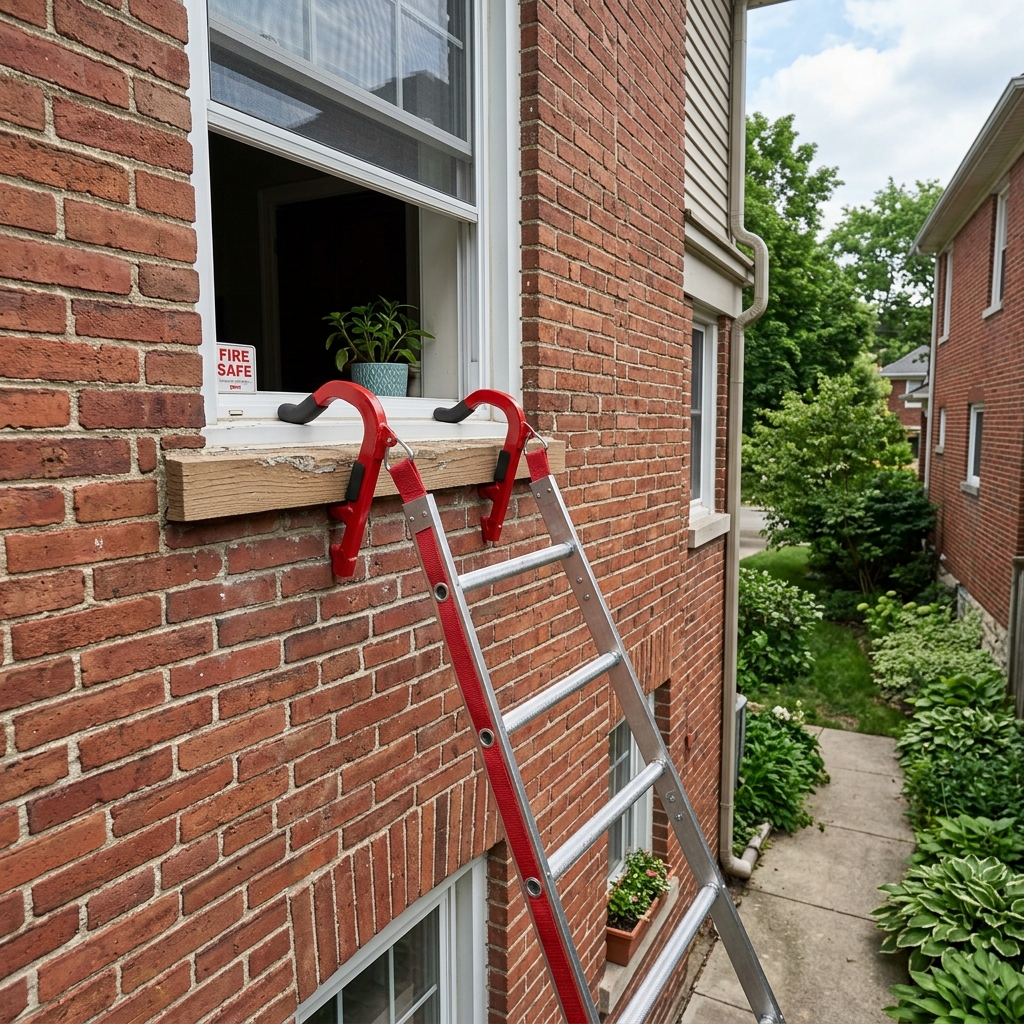
Additionally, the steel tang hooks that anchor the ladder to the window sill must resist bending. Most hooks are manufactured from cold-rolled steel plate, which offers high yield strength. A thick red powder-coat finish prevents corrosion, ensuring the anchor remains reliable after years of storage in dark closets.
The physics of the load transfer require that the downward pull is translated into a compression force against the exterior wall. This compression stabilizes the anchor hooks, locking them onto the sill as weight is applied. Cheaper designs lack this self-locking geometry, which can lead to slips if the occupant shifts their weight off-center.
When analyzing force distribution, we must also consider joint loading. Each rung interface acts as a pivot node. If the fastener connecting the rung to the webbing has low shear resistance, it can shear off when stepped on at an angle. High-quality ladders use dual-riveted steel collars at these nodes to prevent structural failures.
- ASTM compliance ensures the ladder supports up to 1,000 pounds for multiple occupants.
- High-tenacity nylon webbing limits overall stretch to under 5%, improving climbing stability.
2. Tangle-Free Deployment Physics and Deployment Speed
In a residential fire, every second counts. Smoke inhalation can render occupants unconscious in under 2 minutes, meaning egress must be immediate. A fire escape ladder that tangles during deployment is a serious threat to survival. The packing design is critical to prevent knots.
Tangle-free deployment depends on the packaging design. Premium escape ladders use a stacked rung layout, bound by a central release strap. The operator hooks the anchor to the sill, releases the strap, and drops the rungs outside. The rungs fall sequentially, unrolling the webbing smoothly without crossing.
Gravity is the sole deployment force, meaning the ladder must have sufficient weight to drop instantly through rising heat and smoke. Zinc-plated steel rungs provide this weight, pulling the webbing straight. Lightweight plastic or aluminum rungs can get hung up on window sills, siding, or tree branches during deployment.
The release strap must feature a bright, high-visibility color to ensure it can be found in dark, smoky conditions. Simple hook-and-loop fasteners secure the strap, requiring only a firm pull to activate. Tangle-free deployment ensures the egress path is established in under 10 seconds, accelerating evacuation.
Additionally, the ladder's length must match the height of the window sill. A standard 2-story window is roughly 13 feet from the ground. A ladder that is too short will leave occupants hanging, while one that is too long will bunch up at the base, creating a tripping hazard. Choose a length that fits your specific residential heights.
When the rungs drop, they experience aerodynamic drag and potential collisions with the home's siding. The rungs must be designed with rounded edges to slide over vinyl siding, stucco, or brick without getting stuck or damaging the wall. A smooth, swift drop ensures that the exit path is ready immediately.
The drop trajectory is also affected by rising hot air currents from lower-floor windows. If a fire has breached a first-floor window, hot drafts will blow upward. The ladder's steel rungs must have a low cross-sectional area to prevent these thermal drafts from pushing the ladder sideways, keeping it aligned.
- Stacked rung packaging prevents tangles, allowing smooth deployment in under 10 seconds.
- Heavy zinc-plated rungs ensure that gravity drops the ladder straight through smoke.
3. Anti-Slip Metallurgy and Rung Interface
During a home evacuation, occupants will have cold, sweaty, or shaking hands. The ladder rungs must feature an anti-slip texture to ensure stable footing and grip. Smooth, polished metal surfaces are slippery, especially if wet from rain or fire sprinklers, which increases fall risks.
Most premium escape ladders use zinc-plated steel rungs with knurled, grooved, or diamond-textured patterns. This zinc plating protects the underlying steel from rust, while the grooves channel water away from the foot's contact zone. The textured surface increases friction, preventing slips under pressure.
Rung width must be sufficient to accommodate standard adult and child shoe sizes. A width of at least 11 inches provides stable dual-foot support, helping the occupant maintain balance during descent. The rung spacing must also be consistent, typically around 12 inches, to match normal stepping gaits.
In addition, the rungs must include stand-offs. Stand-offs are small spacers that keep the rungs away from the exterior wall of the house. Without spacers, the rungs would press flat against the siding, leaving no space for the occupant's toes or hands, making climbing down nearly impossible.
Stand-offs should provide at least 3 inches of clearance from the wall. This gap ensures that you can wrap your hands around the rungs securely, preventing finger pinching. Smooth, rounded plastic or rubber spacers prevent damage to the home's exterior siding during deployment and use.
The metallurgy of the rungs must also resist temperature spikes. If flames lick the side of the house, the metal rungs must not heat up too quickly, which would burn the climber's hands. Zinc-plated steel has a high thermal capacity, meaning it heats up slower than aluminum, providing a safer surface to grip during egress.
The zinc coating process is also critical. Electro-galvanization provides a thin, smooth rust barrier, but hot-dip galvanization creates a thicker alloy layer that resists abrasion from boots and gravel. Professional-grade ladders specify hot-dip coating to prevent rust from forming under the webbing wraps.
- Grooved zinc-plated rungs provide high-friction contact, preventing slips in wet conditions.
- Wall stand-offs provide 3 inches of toe clearance, preventing finger pinching against siding.
4. Anchor Hook Geometry and Window Sill Compatibility
The connection point between the ladder and the window sill is the most critical anchor node. The hook geometry must distribute the downward pull of the ladder across the window frame and wall structure. A hook that is too narrow will concentrate the force, potentially cracking the window sill or frame.
Most hooks are designed to fit standard residential sills between 6 and 11 inches deep. This range covers standard brick-front, vinyl-sided, and wood-frame walls. The hooks must feature thick, non-slip rubber padding to prevent scratching the interior drywall and trim during deployment.
This padding also increases friction, keeping the hook centered during lateral movements. When climbing, occupants will sway slightly from side to side; the anchor must remain firmly locked onto the sill without sliding. Sturdy steel tangs provide this stability, locking the ladder in place.
The width of the hook must match the width of your window frame. A hook that is too wide will slide laterally, while a narrow hook will not fit over the sill. Checking sill measurements before storing the ladder is critical to ensure compatibility when needed.
Additionally, the anchor assembly must include a stabilizer bar. This bar rests against the interior wall below the window, transferring a portion of the load to the home's framing studs. This layout prevents the window sill from rotating or tearing loose under the occupant's weight, reinforcing the anchor.
The angle of the hook's downward bend determines how it grips the wall. A deep, 90-degree return lip ensures that even if the ladder is unloaded (for example, between climbers), the hooks cannot slip off the window sill if bumped. This security is vital when multiple family members are escaping in sequence.
When setting the anchor, occupants must avoid resting the hooks on weak trim molding. Trim is often attached with small brad nails and can pull loose under weight. The hook must contact the solid wood framing of the window sill core to transfer the load safely.
- Adjustable steel hooks accommodate wall thicknesses between 6 and 11 inches.
- Rubberized pads prevent drywall damage while increasing friction to stop lateral sliding.
5. The Definitive Buying Guide and Parameters
When buying an escape ladder, prioritize load capacities, deployment speed, and window sill compatibility. Look for systems with steel rungs and high-tenacity nylon webbing. Ensure the ladder features built-in stand-offs to protect your hands from pinching against the wall.
For 2-story homes, a 13-foot ladder is highly recommended. It offers the ideal length for second-story egress without leaving excess slack at the base. Ensure the storage profile is compact, allowing it to fit under a bed or in a closet where it is easily accessible during emergencies.
Finally, check the warranty and certifications. A lifetime warranty indicates a reliable manufacturer who stands behind their safety gear. High-quality escape ladders reduce evacuation stress, delivering a safe egress path for your family. Verify that the unit has been tested to meet ASTM standards before purchasing.
Choose a model with a red high-visibility release strap. This allows you to find and activate the ladder in dark, smoky conditions. Sturdy cardboard packaging keeps the ladder clean, dry, and ready for deployment without degradation over years of storage.
Verify that the ladder meets strict NFPA safety guidelines. These standards ensure the ladder has been tested under simulated fire conditions, certifying its load capacity, heat resistance, and deployment speed under pressure.
Avoid purchasing unbranded, cheap ladders that lack compliance documents. Many of these products use thin plastic components or low-grade polyester webbing that can degrade under UV exposure or heat, leading to structural failure during an emergency.
You must also review the storage bag design. Some ladders are sold in simple cardboard boxes that can disintegrate if a water pipe leaks in the closet. A water-resistant polyester storage bag with quick-zip openings keeps the ladder clean, dry, and ready for action.
- 13-foot escape ladders provide the exact length needed for second-story residential egress.
- NFPA compliance guarantees the ladder has been stress-tested for heat and load capacity.
6. Egress Drill Protocols and Family Fire Drills
Having an escape ladder is only useful if family members understand how to deploy it under pressure. Egress drills must be conducted biannually. Practice retrieving the ladder from its storage spot, unboxing it, and placing the hooks over the window sill in the dark.
Ensure children understand how the release strap works and can lift the ladder's weight. You should practice from a first-floor window to avoid fall risks. Proper training reduces panic during real emergencies, building muscle memory that saves lives.
Drills should also practice the exit sequence. The strongest or most capable adult should exit first to stabilize the bottom of the ladder for children or elderly family members who follow. The last person out should verify that the anchor hooks are still fully seated before climbing down.
Monthly inspection checks should confirm that the window screen can be removed quickly. Many window screens become stuck in their frames due to paint or dirt. Practice popped-screen removals during your biannual safety drills to avoid delays during an evacuation.
- Biannual fire drills familiarize family members with ladder retrieval and setup.
- First-floor practice runs build muscle memory and confidence without height risks.
7. Egress Route Planning and Obstacle Mitigation
An escape ladder is useless if the window it deploys from is blocked by furniture or security bars. The escape window must remain clear of heavy dressers, desks, or storage bins. Egress windows must also open fully, without sticking or binding in the tracks.
If the window features security bars, they must be equipped with a quick-release mechanism that can be operated from the inside without keys. Verify that this release opens easily during drills, ensuring a clear exit path. Obstacles outside the window, like thorny bushes or air conditioning units, must also be trimmed or relocated.
Furthermore, map the ground landing zone. The area directly below the egress window must remain clear of garden tools, sharp rocks, or lawn furniture. A soft landing zone, like grass or mulch, reduces the risk of injury if an occupant falls or drops from the last rung during evacuation.
You must also locate any overhead power lines. Never deploy a metal escape ladder near electrical service drops or power lines, as contact can cause fatal electrocution. If power lines are near the window, select a different window for your primary egress route to ensure safety.
According to the NFPA, residential fire deaths are cut in half in homes with a planned, practiced second exit path. Portable escape ladders deliver this secondary path for second-story rooms, complementing smoke detectors and ensuring absolute safety during structural emergencies.
- Keeping egress windows clear of furniture ensures instant access in a fire.
- Quick-release security bars provide immediate egress access without key searches.
Egress Security Recommendation
Secure your second-story egress channels and protect your family from fire hazards. Check out our recommended solution below to experience clinical-grade safety.
Kidde 2-Story Portable Fire Escape Ladder (13-Foot)
- Tangle-free design deploys quickly from standard windows in seconds
- Sturdy steel tangs and anti-slip zinc-plated steel rungs ensure grip
- Supports loads up to 1000 pounds for multiple evacuations
- Compact profile stores easily under beds or in closets when not in use
Technical Specifications & Product Data
| Specification | Value / Details |
|---|---|
| Brand | Kidde |
| List Price | $43.95 (USD) |
| Customer Rating | 4.8 / 5.0 (12,420 reviews) |
| ASIN / Identifier | B00004WA76 |
| Availability | In Stock (USA Region) |
| Outbound Link Compliance | Sponsored & Nofollow Enforced |
Verified Features & Performance Data
- ✓Tangle-free design deploys quickly from standard windows in seconds
- ✓Sturdy steel tangs and anti-slip zinc-plated steel rungs ensure grip
- ✓Supports loads up to 1000 pounds for multiple evacuations
- ✓Compact profile stores easily under beds or in closets when not in use
System Sovereignty & Engineering
Edge Computing
100% Client-side processing. Your data never leaves your browser sandbox, ensuring absolute compliance with US privacy mandates.
Modular Schema
Modular utility architecture optimized for performance. Low-latency WASM kernels provide near-native speeds for complex transformations.
Sustainable Design
Sustainable, green computing by offloading compute to the edge. Verified zero-server storage (ZSS) for professional-grade security.