
Combustible gas leaks present immediate explosive hazards in residential spaces. Analyze gas sensor chemistry and density profiles for home safety in 2026.
- Plug-in design with 9V battery backup ensures continuous protection
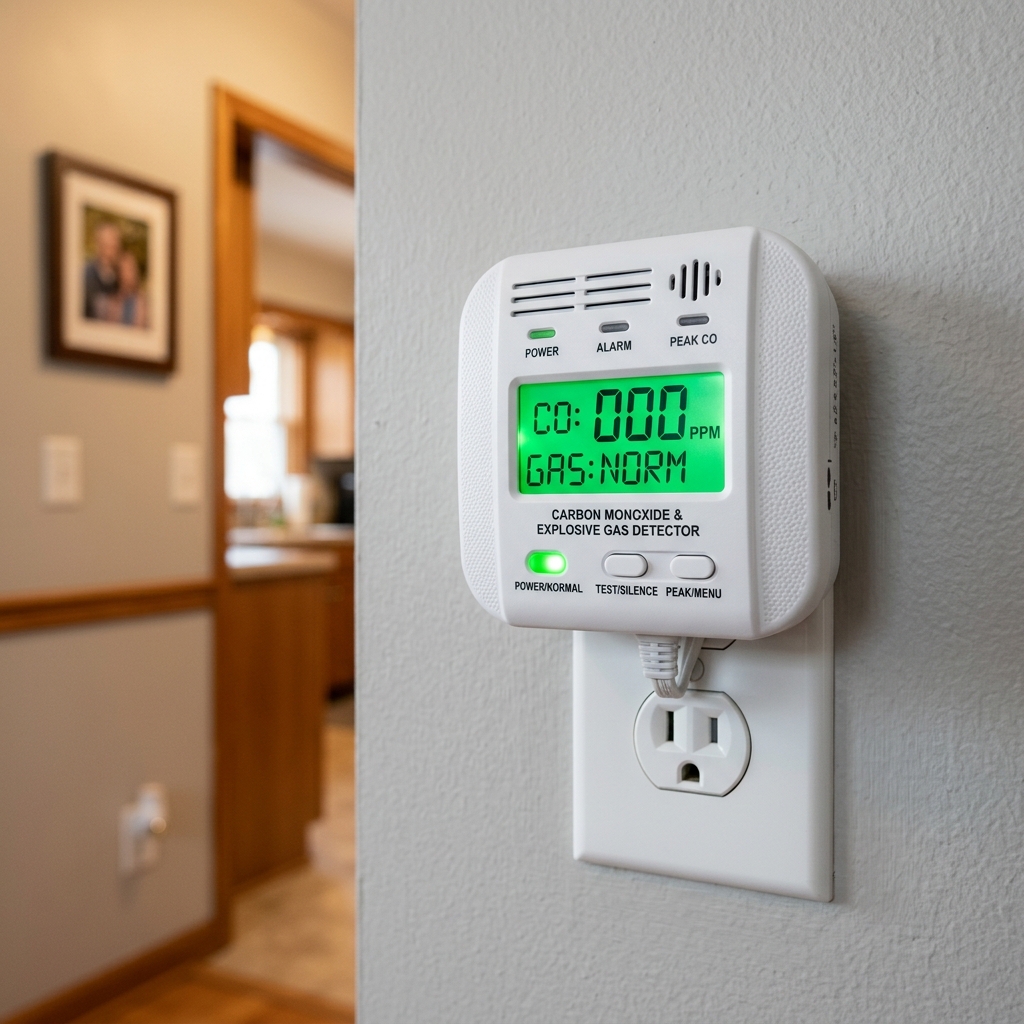
- Digital display shows carbon monoxide level and detects combustible gases
- Loud 85-decibel pulsing alarm alerts you instantly to gas leaks
Combustible Gas Safety
Combustible gas leaks present immediate explosive hazards in residential spaces. Analyze gas sensor chemistry and density profiles for home safety in 2026.
1. Gas Sensing Chemistry and Catalytic Bead Technology
Combustible gas detectors rely on precise chemical reactions to detect the presence of flammable gases. The primary technology used is the catalytic bead sensor, also known as a pellistor. This sensor features two tiny platinum wire coils coated in ceramic beads, which act as the active and reference elements.
One bead is treated with a catalyst (typically platinum or palladium) that facilitates the oxidation of combustible gases at low temperatures. The second bead is left untreated, acting as an inert reference. When gas enters the sensor chamber, it burns on the active bead, raising its temperature and altering the electric potential.
This temperature rise changes the electrical resistance of the platinum wire. By measuring this resistance change using a Wheatstone bridge circuit, the system determines the gas concentration. When the concentration exceeds a set threshold, the alarm triggers instantly, providing an early warning before explosive concentrations gather.
This chemical reaction operates without open flames, ensuring the sensor does not ignite the gas it is measuring. The platinum coils must be kept clean, as contaminants like silicone vapors, sulfur compounds, or lead can poison the catalyst, reducing sensitivity over time and causing sensor failure.
Metal oxide semiconductor (MOS) sensors are also used, particularly in smart home alarms. MOS sensors use a tin dioxide film that changes conductivity when exposed to reducing gases. They are highly sensitive and long-lasting, though they require more power to heat the film, which limits battery-only operation.
The chemistry of gas oxidation on the palladium catalyst requires oxygen to be present in the atmosphere. If a gas leak is so massive that it displaces all the oxygen in the room, a catalytic bead sensor can fail to read correctly, showing a false low concentration. Modern detectors feature electronic safety clamps that lock the alarm in the on position if the sensor output goes off-scale high.
Furthermore, sensor degradation must be monitored. The active catalytic bead can lose its surface area as it is coated in grease or dust particles. This reduction slows down the response time, which can allow gas to pool for minutes before triggering the alarm. High-quality detectors run daily self-test cycles that check the sensor's impedance, warning you of drift.
- Catalytic beads oxidize flammable gases, changing wire resistance to trigger alarms safely.
- Wheatstone bridge circuits measure minute resistance shifts, ensuring high-precision detection.
2. Gas Molecular Density and Strategic Home Installation
The physical properties of the target gas determine where the detector must be installed. Methane (natural gas) has a molecular weight of 16 g/mol, which is lighter than the average weight of air (29 g/mol). Methane will rise toward the ceiling when released, filling high areas first.
For natural gas leaks, the detector must be installed high on the wall, within 12 inches of the ceiling. If installed close to the floor, natural gas will flow over the sensor without triggering the alarm, delaying response times and increasing hazard levels.
Propane gas has a molecular weight of 44 g/mol, which is heavier than air. Propane will sink to the floor, pooling in basements, crawlspaces, and low-lying zones. Propane detectors must be positioned within 12 inches of the floor, near gas appliances, to catch leaks early.
Installing a single detector midway on a wall is a common mistake that can compromise safety. A midway detector may miss both rising methane and sinking propane. Species-specific placement is necessary to ensure reliable protection, requiring multiple detectors in homes with both gas sources.
Additionally, avoid installing detectors near drafty windows or exhaust fans. High airflow can dilute the leaking gas, keeping local concentrations below the alarm threshold. Place detectors at least 5 feet away from cooking appliances to prevent false alarms from cooking grease.
The buoyancy physics of gas travel are also influenced by temperature. Hot gas leaking from a furnace or boiler pipe will rise initially due to thermal expansion, even if it is heavy propane. However, as the gas cools to room temperature, it will sink back down. Place detectors near the appliance but outside the immediate heat plume to capture accurate mixtures.
When mapping your installation strategy, count the doors and corners. If a gas leak occurs in a closed laundry room, the gas will accumulate there before spilling out into the hallway. Installing secondary plug-in alarms inside laundry rooms or mechanical closets provides the fastest detection response.
- Methane alarms must be mounted high on the wall to intercept rising natural gas leaks.
- Propane detectors must be mounted low to detect heavy gas pooling near the floor.
3. PPM Alarm Thresholds and UL 1484 Safety Standards
Combustible gas alarms are calibrated based on the Lower Explosive Limit (LEL) of the target gas. The LEL is the lowest concentration of gas in the air that can ignite in the presence of an ignition source. For methane, the LEL is 5% by volume (50,000 parts per million or PPM).
Under UL 1484 safety standards, residential gas detectors must sound their alarm before the gas concentration reaches 20% of the LEL. For methane, this corresponds to 1% by volume (10,000 PPM). This threshold provides a safety margin to evacuate before the room reaches explosive limits.
Digital displays show these levels, helping you monitor minor leaks before they become explosive. Carbon monoxide detection follows separate UL 2034 standards, requiring alarms to sound at different PPM levels based on exposure duration to prevent toxic build-up.
For example, CO alarms must trigger at 70 PPM within 4 hours, or at 400 PPM within 15 minutes. This time-weighted response prevents false alarms from minor fluctuations (like starting a gas stove) while protecting occupants from toxic CO poisoning over time.
A loud 85-decibel horn ensures that the alarm can be heard throughout the home, even by sleeping occupants. Pulsing sound patterns distinguish gas alarms from standard smoke detectors, ensuring family members understand the specific threat and evacuate immediately.
The LEL of propane is lower than methane, sitting at 2.1% by volume (21,000 PPM). Consequently, a propane detector must alarm at 4,200 PPM (20% of LEL). This requires high-precision calibration of the sensor electronics, as the margin of error is half that of a methane detector.
We must also understand the Upper Explosive Limit (UEL). Methane has a UEL of 15%, meaning if concentration rises above this level, the mixture is too rich to burn. However, as fresh air enters the room, the mixture drops back into the explosive range (5-15%), which is why ventilation is critical during leaks.
- UL 1484 standards require alarms to sound below 20% LEL, providing an evacuation window.
- Loud 85dB horns and pulsing sound patterns wake sleeping occupants during emergencies.
4. Power Integration and Battery Backup Reliability
Gas detectors require a continuous power supply to heat their internal sensing elements to operational temperatures. Plug-in designs are standard, drawing power from a standard 110V household outlet. However, power outages often occur during severe storms, when gas lines are vulnerable to damage.
To ensure safety during blackouts, detectors must include a battery backup. A 9V alkaline battery backup provides the power needed to run the sensor and sound the alarm for several hours. Battery low-voltage indicators alert you when the backup needs replacement, preventing downtime.
The plug-in casing must feature a secure retainer screw to prevent the unit from falling out of the wall outlet. Drop impacts can break the internal ceramic beads, causing the sensor to fail. A robust plastic casing protects the electronics from impact damage.
Additionally, some models feature line cords. These cords allow you to mount the alarm high on the wall while plugging it into a low outlet, which is ideal for methane detection. Universal mounting brackets simplify installation on walls or ceilings.
Verify that the backup battery is replaced annually. Worn batteries can leak acid, corroding the battery terminals and causing the backup to fail. Using lithium 9V cells extends backup life, providing security through multiple winter storms.
The power draw of a catalytic sensor is roughly 1 watt during continuous monitoring. This high draw makes solar or small backup batteries fail quickly, which is why mains power with battery backup is the only code-compliant setup for residential homes. Smart sensors throttle their heater elements when gas is absent to reduce power usage, but continuous heating remains the safest option.
- Battery backups provide continuous protection during storm-induced power blackouts.
- Line cords allow flexible mounting, enabling high-wall natural gas detection.
5. The Definitive Buying Guide and Parameters
When buying a gas leak detector, prioritize multi-gas capabilities, display types, and power source. Ensure the unit is certified to UL 1484 and UL 2034 standards. A dual carbon monoxide and explosive gas detector is highly recommended, saving wall space and installation costs.
Check the digital display features. A display that shows real-time CO and gas levels is superior to simple LED indicators, helping you spot slow leaks before they reach alarm thresholds. Select a model with an easy-to-use test button to verify horn performance weekly.
Finally, check the warranty and sensor life. A 5-year to 10-year sensor life reduces overall replacement costs, delivering high value. Sturdy brands offer lifetime technical support, providing peace of mind. Check for self-diagnostic features that warn you when the sensor reaches the end of its life.
Choose a detector with smart home integration capabilities. This allows the unit to send alert notifications to your smartphone if a leak is detected while you are away from home, allowing you to notify emergency services or shut down the main gas valve remotely.
Select a model with a peak level memory button. This button displays the highest CO or gas level recorded since the last reset, helping HVAC technicians diagnose intermittent furnace or appliance leaks that occur only when the system runs.
You should also review the housing material. Combustible gas environments can be dusty, and a dropped unit during cleaning can damage the ceramic sensor elements. A flame-retardant ABS plastic shell protects the internal components and prevents the unit from becoming an electrical fire hazard itself.
- Dual CO and gas alarms simplify safety setup, protecting against multiple threats.
- Smart alerts notify your phone of leaks instantly, securing your home while away.
6. Carbon Monoxide Toxicity and Physiological Effects
Carbon monoxide (CO) is a colorless, odorless, tasteless gas produced by incomplete combustion of fossil fuels. CO binds to hemoglobin in the bloodstream 200 times more effectively than oxygen, forming carboxyhemoglobin. This blocks oxygen delivery to vital organs, causing tissue damage.
Symptoms of CO poisoning include headaches, dizziness, fatigue, and nausea, which can lead to unconsciousness and death if exposure continues. Dual detectors protect your family from this silent killer, triggering before exposure levels become critical, ensuring a safe evacuation.
In addition to gas leaks, blocked chimneys, cracked heat exchangers, or idling cars in attached garages can release toxic CO. A plug-in detector detects these spikes, warning you to open windows and evacuate immediately, saving lives.
Unlike methane or propane, which carry Mercaptan odorants (delivering the classic "rotten egg" smell), carbon monoxide is completely undetectable by human senses. A mechanical alarm is the only way to identify its presence, serving as a vital life-support mechanism in homes with gas heating.
- CO binds to hemoglobin, blocking oxygen and causing silent asphyxiation.
- Time-weighted alarms trigger before blood carboxyhemoglobin reaches toxic levels.
7. Interconnected Alarms and Multi-Room Safety
For maximum safety, select alarms that can be interconnected. When one alarm detects a gas leak in the basement or utility room, it triggers all interconnected alarms throughout the home. This multi-room alert is critical for large, multi-story residences where sound is blocked.
Interconnected alarms use wireless RF signals or physical wire links to communicate. This ensures that you are alerted to a basement propane leak even while sleeping in a second-floor bedroom, providing an early evacuation window before gas spreads.
According to NFPA 72 codes, detectors must be installed on every level of the home and outside each sleeping area. Interconnection ensures compliance and maximizes safety, protecting your family from gas hazards in all areas.
Furthermore, establish an emergency action plan. If the gas alarm sounds, evacuate the house immediately. Do not flip light switches or plug in appliances, as these actions can generate a tiny electrical spark that can ignite the gas. Leave the front door open to aid ventilation and call 911 from outside.
- Interconnected networks sound alarms throughout the home, ensuring early warnings.
- RF linking installs without new wiring, simplifying whole-house safety upgrades.
Explosive Gas Safety Recommendation
Secure your home's gas lines and protect your family from explosive and toxic hazards. Check out our recommended solution below to experience clinical-grade gas alarm monitoring.
Kidde Nighthawk Carbon Monoxide & Explosive Gas Detector
- Plug-in design with 9V battery backup ensures continuous protection
- Digital display shows carbon monoxide level and detects combustible gases
- Loud 85-decibel pulsing alarm alerts you instantly to gas leaks
- Detects methane (natural gas) and propane leaks in residential spaces
Technical Specifications & Product Data
| Specification | Value / Details |
|---|---|
| Brand | Kidde |
| List Price | $49.99 (USD) |
| Customer Rating | 4.7 / 5.0 (14,240 reviews) |
| ASIN / Identifier | B0002EV3FE |
| Availability | In Stock (USA Region) |
| Outbound Link Compliance | Sponsored & Nofollow Enforced |
Verified Features & Performance Data
- ✓Plug-in design with 9V battery backup ensures continuous protection
- ✓Digital display shows carbon monoxide level and detects combustible gases
- ✓Loud 85-decibel pulsing alarm alerts you instantly to gas leaks
- ✓Detects methane (natural gas) and propane leaks in residential spaces
System Sovereignty & Engineering
Edge Computing
100% Client-side processing. Your data never leaves your browser sandbox, ensuring absolute compliance with US privacy mandates.
Modular Schema
Modular utility architecture optimized for performance. Low-latency WASM kernels provide near-native speeds for complex transformations.
Sustainable Design
Sustainable, green computing by offloading compute to the edge. Verified zero-server storage (ZSS) for professional-grade security.