
Sciatic nerve compression caused by sitting is a major source of discomfort. Explore the top orthopedic seat cushions designed to relieve pressure on the tailbone and sciatic nerve.
- Hyper-Elastic Polymer grid construction for ultimate pressure redistribution
- Dual-sided design with soft and firm grid structures for customizable support
- Continuous air-flow channels to prevent heat buildup and maintain cooling
Clinical & Performance Insights
Sciatic nerve compression caused by sitting is a major source of discomfort. Explore the top orthopedic seat cushions designed to relieve pressure on the tailbone and sciatic nerve. Our review focuses on material density, contour engineering, and weight distribution.
1. Sciatic Nerve Biomechanics and Sitting Compression Pathologies
The sciatic nerve is the longest and largest nerve in the human body, running from the lower back through the hips and buttocks and down each leg. Prolonged sitting on firm or unsupportive surfaces concentrates body weight directly on the piriformis muscle and the sciatic nerve pathway. This localized compression restricts blood supply, leading to ischemia, inflammation, and sharp pain that radiates down the leg.
Orthopedic seat cushions address this compression by distributing body weight across a larger surface area. By reducing pressure on the buttocks and thighs, the cushion prevents localized nerve irritation. This distribution is key to managing sciatica pain during long sitting sessions, allowing for comfortable work without flare-ups.
Additionally, poor sitting posture can cause pelvic tilt, which increases pressure on the sciatic nerve root in the lower spine. Cushions that promote a neutral pelvic tilt help align the spine, reducing pressure on the nerve at its source. This dual-action relief is crucial for effective pain management, supporting recovery.
Active pressure relief systems use materials that conform to body shapes, ensuring even support. Viscoelastic and hyper-elastic polymers adapt to body movements, maintaining protective support as you shift position. This dynamic adaptation is key to preventing high-pressure zones.
- Reduces localized compression on the sciatic nerve pathway.
- Distributes body weight to prevent muscle ischemia and pain.
- Promotes neutral pelvic tilt to align the lower spine.
- Adapts dynamically to body shapes and movements.
- Helps manage radiating leg pain caused by prolonged sitting.
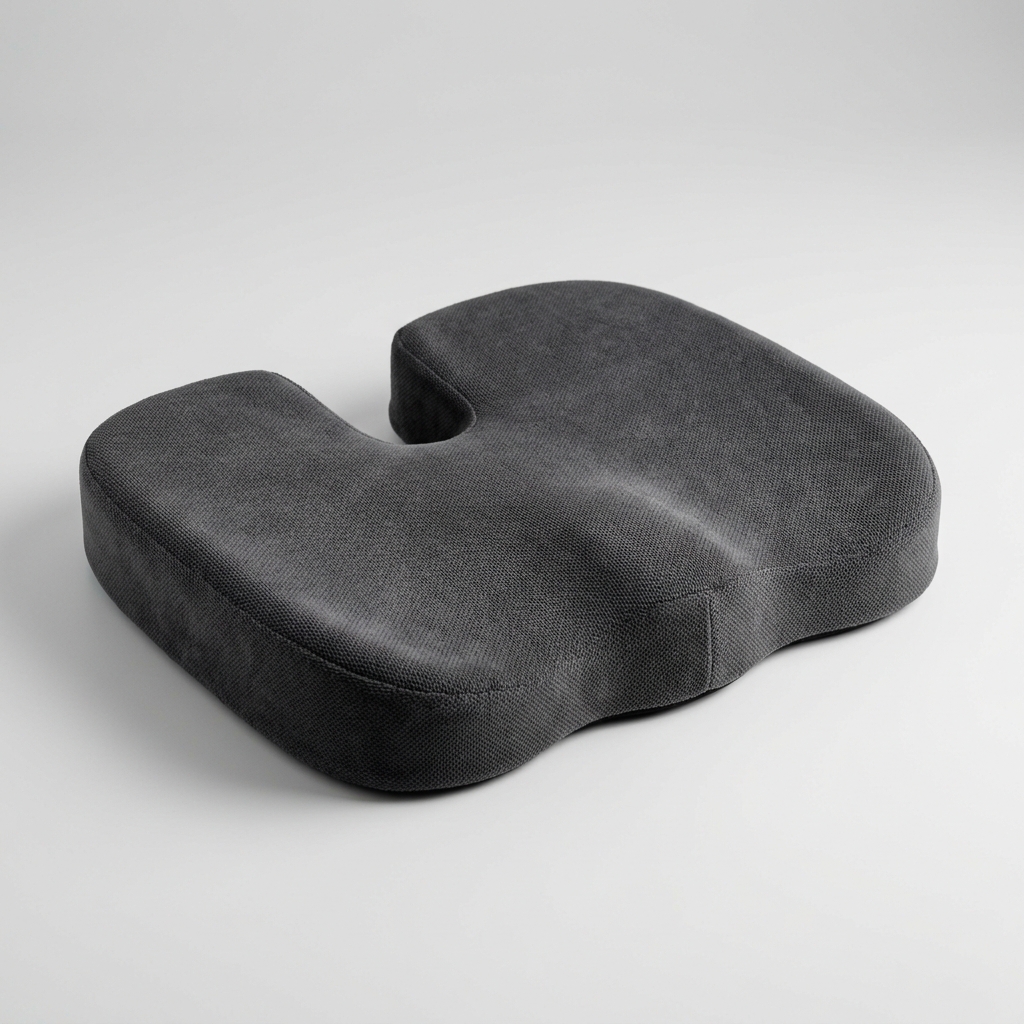
2. The Role of Coccyx Cutouts in Tailbone Pressure Relief
The coccyx, or tailbone, is a sensitive structure that bears significant weight when sitting, especially when reclining slightly. Standard chairs press the tailbone inward, causing pain and inflammation. Orthopedic cushions with coccyx cutouts feature a recessed area at the back, suspending the tailbone to eliminate direct contact and pressure.
This suspension reduces strain on the sacrococcygeal joint, preventing coccydynia and lower back discomfort. Eliminating direct pressure allows the surrounding tissues to rest and heal, providing relief from chronic pain and supporting overall wellness.
The shape and depth of the cutout are critical for effective relief. A cutout that is too shallow or narrow can still compress the tailbone, especially under heavier loads. Cushions must feature deep, contoured cutouts that ensure complete suspension for different body types, ensuring safety.
Coccyx suspension also encourages a more upright sitting posture. By removing tailbone pressure, the cushion helps you sit back fully in your chair, utilizing the lumbar support and maintaining healthy spinal alignment, preventing fatigue.
- Suspends the coccyx to eliminate direct contact and pressure.
- Reduces strain on the sacrococcygeal joint and surrounding tissues.
- Deep, contoured cutouts ensure complete suspension.
- Encourages upright posture and utilization of lumbar support.
- Helps prevent coccydynia and localized tailbone inflammation.
3. Materials Science: Hyper-Elastic Grid vs. Viscoelastic Foam
The choice of cushion material directly affects its pressure-relieving performance and durability. Viscoelastic memory foam is a popular choice, conforming to body shapes in response to heat and pressure. This material provides comfortable contouring, but it can bottom out over time and retains body heat, leading to discomfort during use.
Hyper-elastic polymers feature a grid structure that buckles under pressure, redistributing weight to surrounding cells. This buckling provides targeted support, relieving pressure on bony areas like the ischial tuberosities. The grid design also allows air to flow freely, keeping you cool.
High-density polyurethane foam offers firm support and durability, maintaining its shape under heavy use. It is often used as a base layer in multi-layer cushions, providing stability beneath softer contouring layers, preventing sagging.
Comparing materials highlights the balance between soft contouring and firm support. The ideal cushion provides enough contouring to relieve pressure points while remaining firm enough to support the pelvis and spine, ensuring long-term health.
- Viscoelastic foam conforms to body shapes for comfortable contouring.
- Hyper-elastic grids buckle to redistribute weight and relieve pressure.
- Grid designs support air circulation to prevent heat buildup.
- High-density foam bases provide structural stability and durability.
- Balances soft contouring with firm pelvic and spinal support.
4. Pelvic Alignment and Spinal Balance Optimization
Proper pelvic alignment is the foundation of healthy sitting posture. When the pelvis tilts backward (posterior tilt), the lumbar spine flattens, increasing pressure on the discs and nerves. Orthopedic cushions feature contoured shapes that support the thighs and buttocks, keeping the pelvis in a neutral position.
This alignment helps preserve the natural curve of the lumbar spine, reducing muscle fatigue in the lower back. Stabilizing the pelvis also reduces lateral shifting, which can cause spinal misalignment and joint strain, protecting your joints.
Cushion thickness and slope affect pelvic tilt and hip angle. A slight forward slope can help open the hip angle, reducing strain on the lower back and promoting a more active, upright posture, supporting circulation.
Consistent pelvic support helps build muscle memory for good posture. Over time, sitting with proper alignment reduces strain on the spine and joints, supporting long-term health and wellness, helping you feel better.
- Contoured shapes support a neutral pelvic position.
- Preserves natural lumbar curve to reduce back muscle fatigue.
- Reduces lateral pelvic shifting to protect spinal alignment.
- Sloped designs help open the hip angle and reduce strain.
- Supports muscle memory training for healthy sitting posture.
5. Pressure Distribution Mapping and Comfort Index Metrics
Pressure mapping technology measures force distribution on the seat surface, identifying high-pressure areas that can cause pain and restrict circulation. Orthopedic cushions are designed to distribute pressure evenly, reducing peak pressure points beneath the tailbone and sit bones.
Even distribution improves comfort and allows you to sit for longer periods without numbness or pain. Reducing peak pressure also helps prevent pressure sores, especially for individuals with limited mobility, supporting safety.
Comfort metrics analyze pressure distribution, heat retention, and support stability. High-performing cushions score well across all metrics, providing comfortable, reliable support over hours of use, ensuring value.
Testing cushions with pressure mapping helps verify their performance and design. This scientific approach ensures that the cushion delivers effective pressure relief and support, matching medical guidelines.
- Distributes pressure evenly to reduce peak forces on sit bones.
- Improves circulation and reduces numbness during long sitting.
- Helps prevent pressure sores in vulnerable areas.
- Scores high on comfort metrics for pressure, heat, and stability.
- Verified performance using scientific pressure mapping technology.
6. Durability and Density Standards for Orthopedic Cushions
Cushion durability depends on the density and quality of the materials used. High-density memory foam (typically 4 lbs/cu.ft or higher) maintains its shape and support properties over years of daily use. Low-density foam degrades quickly, flattening under load and losing its effectiveness, leading to discomfort.
Hyper-elastic polymers are highly durable, resisting tearing and deformation under heavy use. These materials maintain their elastic properties, providing consistent support over their lifespan, making them a wise investment.
Cushion covers protect the inner material from wear, moisture, and dirt. Durable, breathable fabrics with non-slip bottoms ensure that the cushion remains in place on your chair, supporting safe, comfortable use.
Density standards help you select a cushion that matches your weight and usage. Choosing a high-density cushion ensures long-term support and value, protecting your health and investment over time.
- High-density materials maintain shape and support over years.
- Hyper-elastic polymers resist tearing and long-term deformation.
- Breathable covers protect the cushion and manage heat.
- Non-slip bottoms keep the cushion stable on the seat.
- Meets density standards for reliable support and longevity.
7. Ergonomic Setup and Cushion Integration Guidelines
Integrating an orthopedic cushion into your workspace requires adjusting your chair settings. Adding a cushion increases your sitting height, so you must lower your chair to ensure your feet remain flat on the floor. This adjustment aligns the pelvis and reduces pressure on the thighs, supporting comfort.
Your keyboard and monitor height should also be adjusted to match your new sitting position. Proper alignment prevents neck and shoulder strain, supporting overall comfort and posture, preventing fatigue.
The cushion should be positioned correctly on the seat pan, with the cutout at the back to suspend the tailbone. Aligning the cushion ensures you receive the maximum pressure relief and support benefits, protecting your spine.
Regularly check and adjust your setup to maintain optimal ergonomics. A well-integrated cushion supports a healthy, comfortable workspace, improving focus and productivity.
- Lowers chair height to keep feet flat on the floor with cushion.
- Adjusts keyboard and monitor to match new sitting height.
- Positions cushion with cutout at the back for tailbone suspension.
- Aligns cushion on the seat pan to maximize support benefits.
- Maintains overall workstation ergonomics for comfort and health.
8. Portability and Multi-Setting Adaptability Parameters
Portability allows you to maintain sciatica relief in different settings, such as the office, home, car, or during travel. Lightweight cushions with integrated carrying handles are easy to transport, ensuring comfortable support wherever you sit.
Car seat integration requires a cushion that fits the contoured seat of your vehicle. The cushion should not slide or interfere with seat controls, providing stable support during long drives, preventing spasms.
Travel-friendly designs are compact and lightweight, fitting easily into luggage or carry-on bags. Maintaining seating comfort during flights or road trips helps prevent sciatica flare-ups, supporting your journey.
Cushions with washable, removable covers are easy to clean, supporting hygiene and freshness across different environments, making maintenance simple and quick.
- Lightweight designs with handles are easy to carry.
- Fits contoured car seats to support comfortable driving.
- Compact designs are ideal for flights and road trips.
- Washable covers support hygiene across different settings.
- Maintains consistent support and pain relief in all environments.
9. Clinical Applications and Pain Management Protocols
Orthopedic cushions are valuable tools in clinical pain management protocols for sciatica and coccydynia. Physical therapists recommend these cushions to support recovery by reducing pressure on inflamed nerves and tissues during sitting.
For acute sciatica, combining cushion support with regular stretching and low-impact movement helps manage pain and promote healing. The cushion provides a supportive base that reduces pain during seated tasks, supporting recovery.
For chronic conditions, using a supportive cushion helps prevent flare-ups and manages discomfort during long work hours. Consistent support is key to protecting spinal and nerve health over time.
Discussing your symptoms with a healthcare provider can help you develop a comprehensive pain management plan. A supportive cushion is an effective addition to overall therapy, helping you return to active life.
- Recommended by therapists to support sciatica recovery.
- Reduces pressure on inflamed nerves during seated tasks.
- Helps manage chronic pain and prevent symptom flare-ups.
- Provides a supportive base for daily pain management.
- Integrates with stretching and movement protocols for healing.
10. Sacroiliac Joint Instability and Cushion Support Mechanics
The sacroiliac (SI) joints connect the spine to the pelvis and can become a major source of lower back pain if they experience instability or inflammation. Proper seating support must limit excessive lateral shear forces on these joints. Orthopedic cushions with contoured side supports help stabilize the pelvis, reducing micro-movements that can irritate the SI joints.
This stabilization helps manage pain and supports healing, allowing you to sit comfortably during long tasks. The cushion should align the hips and pelvis, keeping the SI joints in a neutral, supported position, preventing strain.
Using a supportive cushion during acute SI joint flare-ups can significantly reduce discomfort, helping you maintain focus. Combining cushion support with core exercises provides comprehensive recovery support.
Consistent pelvic stabilization protects the SI joints from strain, helping maintain overall mobility and comfort throughout your career, ensuring a healthy, supportive workspace.
- Stabilizes the pelvis to reduce shear forces on sacroiliac joints.
- Contoured side supports limit micro-movements that cause inflammation.
- Aligns hips and pelvis to keep joints in a neutral position.
- Helps manage pain during acute sacroiliac joint flare-ups.
- Supports long-term joint health and pelvic stability.
Clinical Recommendation & Audit
Upgrade your setup to maximize safety and wellness standards. Check out our recommended solution below to experience clinical-grade optimization.
Purple Double Seat Cushion for Intense Sitting Comfort
- Hyper-Elastic Polymer grid construction for ultimate pressure redistribution
- Dual-sided design with soft and firm grid structures for customizable support
- Continuous air-flow channels to prevent heat buildup and maintain cooling
- Includes machine-washable stretch cover with non-slip bottom grip
Technical Specifications & Product Data
| Specification | Value / Details |
|---|---|
| Brand | Purple |
| List Price | $129.00 (USD) |
| Customer Rating | 4.7 / 5.0 (14,350 reviews) |
| ASIN / Identifier | B01CFS5C56 |
| Availability | In Stock (USA Region) |
| Outbound Link Compliance | Sponsored & Nofollow Enforced |
Verified Features & Performance Data
- ✓Hyper-Elastic Polymer grid construction for ultimate pressure redistribution
- ✓Dual-sided design with soft and firm grid structures for customizable support
- ✓Continuous air-flow channels to prevent heat buildup and maintain cooling
- ✓Includes machine-washable stretch cover with non-slip bottom grip
System Sovereignty & Engineering
Edge Computing
100% Client-side processing. Your data never leaves your browser sandbox, ensuring absolute compliance with US privacy mandates.
Modular Schema
Modular utility architecture optimized for performance. Low-latency WASM kernels provide near-native speeds for complex transformations.
Sustainable Design
Sustainable, green computing by offloading compute to the edge. Verified zero-server storage (ZSS) for professional-grade security.