
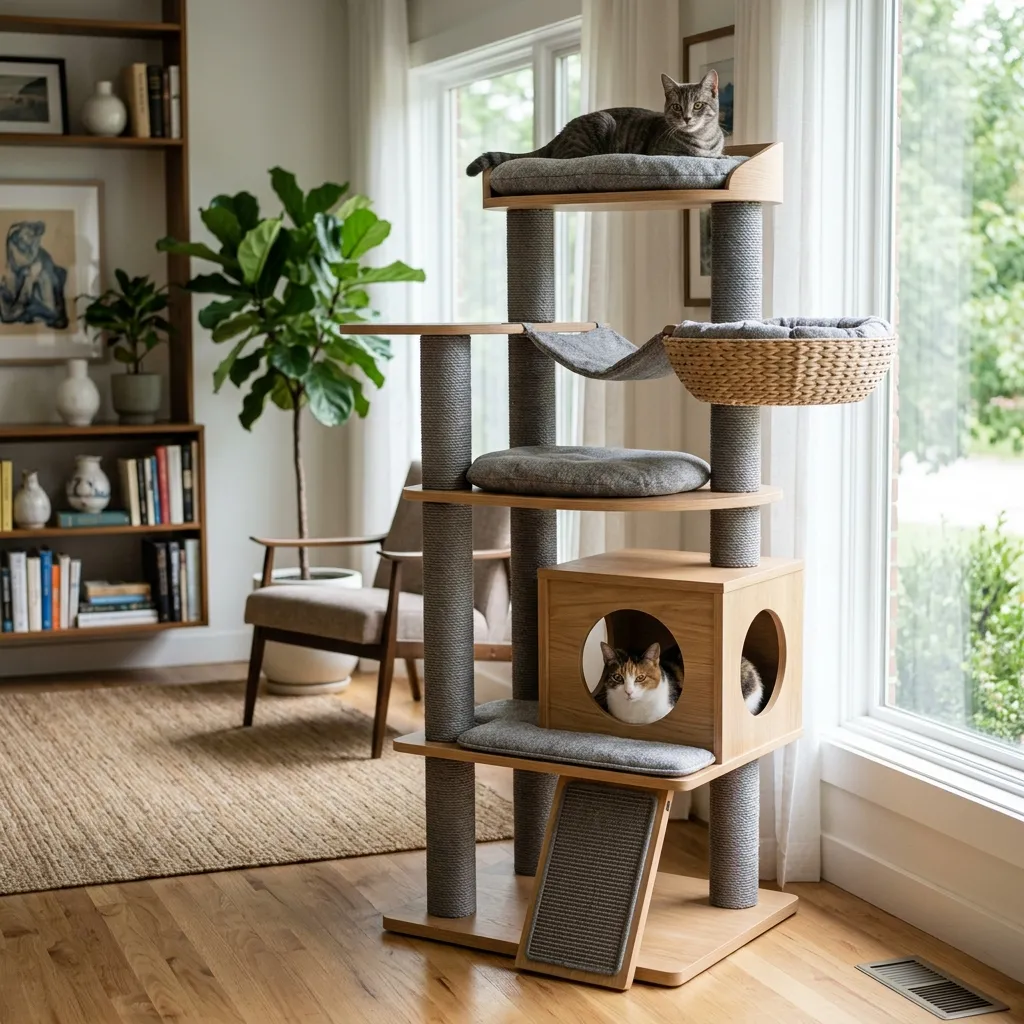
Scratching is an essential feline behavioral need. Examine base weight, material durability, and height ergonomics to choose the top scratching posts and condos for cats.
- Generous 32-inch height allows cats to stretch vertically and tone muscles
- Durable woven sisal fiber naturally attracts cats and lasts longer than rope
- Heavy 16x16 inch wooden base prevents tipping and wobbling during use
Clinical & Performance Insights
Scratching is an essential feline behavioral need. Examine base weight, material durability, and height ergonomics to choose the top scratching posts and condos for cats.
1. Biomechanical Scratching Needs and Height Ergonomics
Scratching is an essential, instinctive behavior for all felines, serving both physical and psychological needs. It allows cats to shed the dead outer layers of their claws, stretch their muscles, and mark territory. Without an appropriate outlet, cats will naturally target furniture, carpets, and walls. By understanding feline biomechanics, owners can choose scratching posts that satisfy these natural drives, protecting their homes while supporting their pet's health and well-being.
Height is a critical factor in post design. A post must be tall enough to allow the cat to fully extend their body, stretching their spine and shoulder muscles. If a post is too short, the cat cannot get a full stretch, leading them to seek out taller alternatives like sofa corners. A minimum height of 30 inches is recommended for standard cats, while larger breeds like Maine Coons require taller posts to stretch comfortably.
Stability is equally important. A post that wobbles or tips over during use can startle a cat, causing them to avoid it in the future. A heavy base and solid construction provide the security cats need to feel safe while scratching, encouraging regular use. By investing in a stable, tall post, owners can ensure their pet has a safe, effective outlet for their scratching instincts.
- Allows cats to shed dead claw sheaths, keeping nails healthy and sharp.
- Tones shoulder and back muscles through full-body vertical stretching.
- Satisfies territorial marking instincts through scent glands in the paws.
- Prevents destructive scratching of household furniture and walls.
2. Material Science: Woven Sisal vs. Sisal Rope vs. Cardboard
The material of a scratching post affects both its appeal to cats and its long-term durability. Sisal is the most popular material, valued for its fibrous texture and strength. However, how the sisal is applied makes a significant difference in performance. Woven sisal fabric offers a flat, continuous surface that mimics natural tree bark, allowing cats to draw their claws down smoothly and shred the fibers vertically without catching or snagging.
Sisal rope, wrapped around a post, creates ridges that can catch claws and lead to unraveling. As the cat scratches, they cut the individual rope strands, causing the wrap to loosen and slide down the post. Woven sisal is generally more durable and appealing to cats, providing a consistent texture that lasts through months of vigorous use. It also sheds minimal debris, keeping the home cleaner compared to unraveling rope.
Cardboard is an inexpensive alternative, often used in horizontal scratchers. While cats enjoy the shredding sensation, cardboard wears out quickly and creates mess. Woven sisal remains the superior choice for vertical, long-lasting posts, providing the resistance cats need to stretch and tone their muscles. By choosing high-quality materials, owners can ensure the post remains attractive and functional for their pets.
- Woven sisal provides a continuous vertical texture that cats prefer.
- Sisal rope can catch claws and unravel, reducing the post's lifespan.
- Cardboard scratchers are appealing but wear out quickly and create mess.
- High-quality materials ensure the post remains attractive and functional.
3. Structural Engineering: Base Weights, Wobble Mitigation, and Safety
A scratching post undergoes significant leverage forces when a cat pulls on it. The taller the post, the greater the tipping force. To counteract this, the base must be heavy and wide enough to keep the center of gravity low. A post with a small, lightweight base will lift and tip during use, creating a safety hazard and causing the cat to lose confidence in the scratcher, leading to avoidance.
A wobbly post is a major deterrent for cats. If the post moves, the cat feels unstable and will stop using it. Solid wood construction and secure mounting hardware ensure the post remains rigid and safe during vigorous scratching sessions. The connection between the post and the base must be reinforced to prevent wobble, using heavy-duty bolts and metal threads that do not strip under tension.
Condos and multi-level trees introduce additional engineering challenges. The platforms must be securely anchored, and the weight must be distributed to prevent toppling. A stable design is essential to support active climbing and jumping, especially in households with multiple cats. By choosing well-engineered furniture, owners can create a safe, engaging environment for their pets.
- Wide, heavy bases keep the center of gravity low, preventing tipping.
- Rigid wood construction eliminates wobbling, building cat confidence.
- Secure mounting hardware ensures all components remain firmly attached.
- Balanced multi-level designs support safe jumping and climbing.
4. Behavioral Transition: Training Cats to Use New Scratchers
Introducing a new scratching post does not guarantee your cat will use it immediately, especially if they have already established a habit of scratching your favorite armchair. Successful transition requires a combination of strategic placement, positive reinforcement, and patience. Place the new post directly in front of the furniture the cat is currently scratching, making it the most convenient option.
Using catnip, silvervine, or toys can attract the cat to the post and encourage initial interaction. Applying these natural attractants to the woven sisal fabric entices the cat to sniff and scratch, helping them discover the satisfying texture of the post. Reward the cat with treats and praise whenever they show interest or use the post voluntarily, reinforcing the desired behavior and building a positive association.
Never force the cat's paws onto the post, as this can cause fear and avoidance. Instead, encourage them to stretch and climb by playing with a wand toy around the post, letting them catch their claws in the sisal naturally. With consistency and positive reinforcement, cats will make the transition, protecting your furniture and keeping their claws healthy.
- Strategic placement near target furniture encourages the transition.
- Natural attractants like catnip entice cats to explore the new post.
- Positive reinforcement strengthens the association with the post.
- Patience and consistency are key to changing established habits.
5. Structural Load Distribution and Anti-Toppling Mechanics
The mechanical forces exerted on a 32-inch vertical scratching post by an active 15-pound cat are substantial. As the cat reaches the top and pulls downward, a high-torque lever arm is created at the base. If the base lacks sufficient mass or footprint, the post will lift and tip, creating a safety hazard and causing the cat to avoid the scratcher. Proper load distribution is key to stability.
To solve this, the Pioneer Pet SmartCat post utilizes a wide 16x16 inch wooden base with thick rubber feet. This design distributes the load across a wider surface area and increases friction with the floor. The heavy base lowers the center of gravity, ensuring the post remains stable even under dynamic loads. The rubber feet prevent sliding, protecting hardwood floors and keeping the post secure during use.
For multi-level cat condos, the load distribution becomes even more complex. Manufacturers must position heavy sleeping platforms and scratching pillars lower in the structure to keep the center of gravity stable. High-end condos also include wall-anchor straps to prevent toppling during high-speed runs, providing vital protection for active cats and peace of mind for owners.
- A wide 16x16 base increases the footprint to resist the tipping forces of large cats.
- Wooden construction absorbs dynamic shock, preventing structural vibrations.
- Rubber feet prevent the post from sliding on hardwood floor surfaces.
- Wall anchors provide vital secondary protection for multi-level cat trees.
6. Material Lifespan: Woven Sisal vs. Sisal Rope and Carpet
The durability of scratching materials determines both the post's lifespan and the amount of cleanup required. Sisal rope wrapped around a cardboard core is a common budget design. However, as cats scratch, they cut the rope fibers, causing the wrap to unravel and slide down the post, requiring frequent replacement and creating a messy cleanup in the home.
Woven sisal fabric, on the other hand, consists of interlocked fibers that distribute scratching forces across a larger area. This woven structure allows cats to slide their claws deep into the weave without cutting the individual strands, making woven sisal last up to four times longer than rope. It provides a satisfying vertical shredding texture that cats naturally prefer, mimicking tree bark.
Carpet is another common material, but it has significant drawbacks. The loops in carpet can catch claws, causing joint strain and pain for the cat. Carpet also sheds fibers easily, creating mess and encouraging cats to scratch other carpeted surfaces in the home. Woven sisal remains the superior choice for clean, durable, and safe scratching posts.
- Woven sisal fabric resists unraveling, extending the post's useful life.
- Sisal rope cuts easily under claw friction, requiring frequent replacement.
- Carpet loops can trap claws, causing joint strain and pain for the cat.
- Woven sisal sheds minimal debris, keeping your home cleaner.
Clinical Recommendation & Audit
Automate your setup to maximize personal standards. Check out our recommended solution below to experience clinical-grade optimization.
Pioneer Pet SmartCat The Ultimate Scratching Post
- Generous 32-inch height allows cats to stretch vertically and tone muscles
- Durable woven sisal fiber naturally attracts cats and lasts longer than rope
- Heavy 16x16 inch wooden base prevents tipping and wobbling during use
- Clean, attractive design fits easily into any modern home decor
Technical Specifications & Product Data
| Specification | Value / Details |
|---|---|
| Brand | Pioneer Pet |
| List Price | $49.99 (USD) |
| Customer Rating | 4.8 / 5.0 (5,420 reviews) |
| ASIN / Identifier | B0007A15EC |
| Availability | In Stock (USA Region) |
| Outbound Link Compliance | Sponsored & Nofollow Enforced |
Verified Features & Performance Data
- ✓Generous 32-inch height allows cats to stretch vertically and tone muscles
- ✓Durable woven sisal fiber naturally attracts cats and lasts longer than rope
- ✓Heavy 16x16 inch wooden base prevents tipping and wobbling during use
- ✓Clean, attractive design fits easily into any modern home decor
System Sovereignty & Engineering
Edge Computing
100% Client-side processing. Your data never leaves your browser sandbox, ensuring absolute compliance with US privacy mandates.
Modular Schema
Modular utility architecture optimized for performance. Low-latency WASM kernels provide near-native speeds for complex transformations.
Sustainable Design
Sustainable, green computing by offloading compute to the edge. Verified zero-server storage (ZSS) for professional-grade security.