
Crop yield optimization requires precise soil pH and N-P-K nutrient management. Compare the top digital and chemical soil testing kits in 2026.
- Complete test kit analyzes soil pH, nitrogen, phosphorus, and potash levels
- Includes color-coded comparator boxes and reagents for accurate results
- Provides detailed recommendations for over 450 plants and crops
Soil Chemistry & Nutrition
Crop yield optimization requires precise soil pH and N-P-K nutrient management. Compare the top digital and chemical soil testing kits in 2026.
1. Soil Chemistry, N-P-K Ratios, and Crop Nutrient Absorption
Agricultural soil is a complex living system composed of mineral particles, organic matter, water, air, and billions of microbes. For optimal crop yields, the soil must contain a balanced ratio of primary macronutrients: nitrogen (N), phosphorus (P), and potassium (K). These elements are absorbed through plant root structures.
Nitrogen is the primary builder of amino acids, proteins, and chlorophyll, promoting rapid vegetative growth and lush foliage. Phosphorus plays a critical role in energy transfer (ATP), root elongation, and flower or seed formation. Potassium regulates stomatal opening, managing water absorption and cellular turgor pressure.
If any of these nutrients are deficient, crop growth is severely restricted. For example, nitrogen deficiency causes yellowing of lower leaves (chlorosis), while phosphorus deficiency results in purple leaf veins and stunted root systems. Testing reveals these gaps, guiding fertilizer selection before planting.
Additionally, excessive nutrients can be toxic to plants and soil microbes. Excess nitrogen causes lush but weak vegetative growth, making plants vulnerable to insect pests and fungal diseases. Runoff from excess phosphorus can pollute local waterways, highlighting the need for accurate soil testing to prevent over-fertilizing.
Nutrient absorption is also linked to the Cation Exchange Capacity (CEC) of the soil. CEC measures the soil's ability to hold and exchange positive ions (like calcium, magnesium, and potassium) with plant roots. Clay and organic loam soils have high CEC, while sandy soils require frequent, light fertilizing to prevent leaching.
The biology of the soil food web also influences nutrient availability. Microbes and mycorrhizal fungi break down organic matter into inorganic ions that roots can absorb. If soil is sterilized or chemical load is too high, this food web collapses, reducing the efficiency of N-P-K uptake even if total levels are high on paper.
- Balanced N-P-K macronutrients support chlorophyll production, root growth, and disease resistance.
- Cation Exchange Capacity determines how well soil particles hold nutrients against rain leaching.
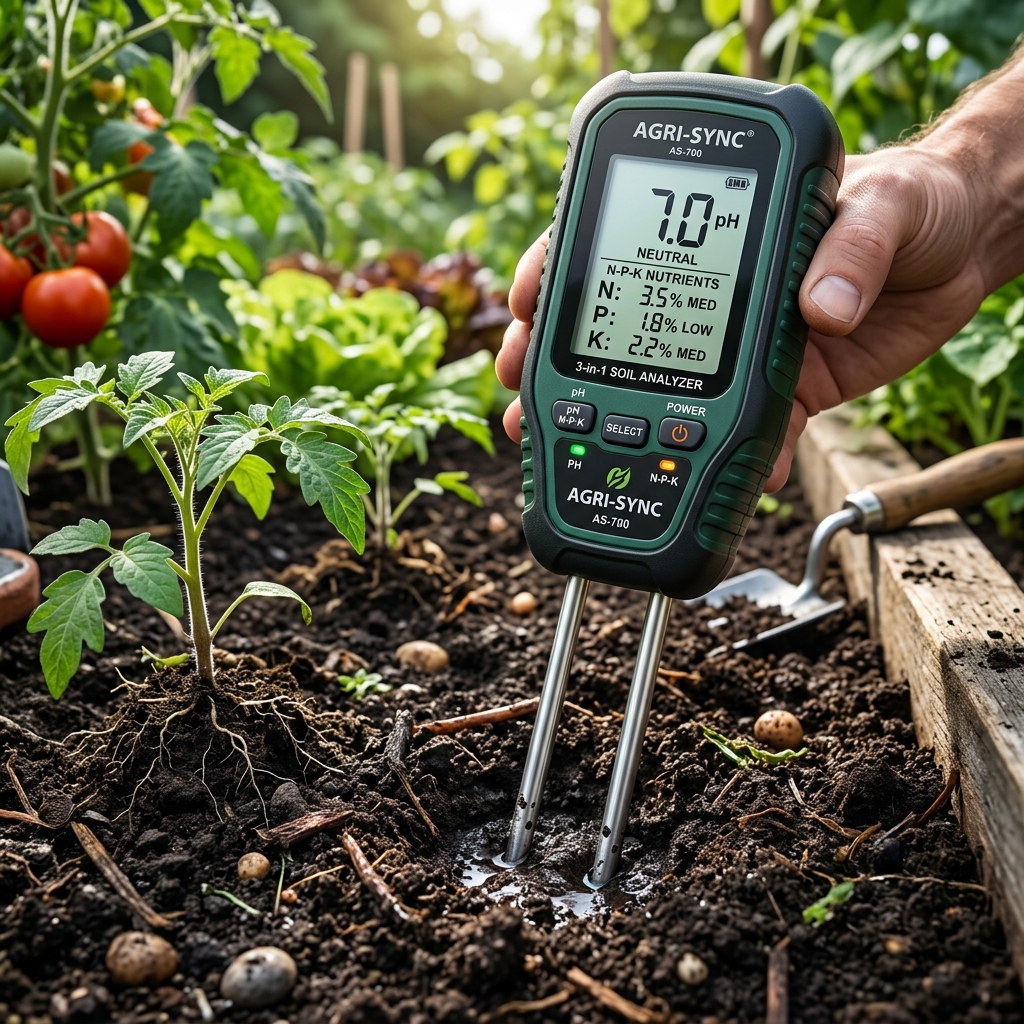
2. Soil pH Kinetics and Nutrient Lockout Mechanics
Soil pH measures the concentration of hydrogen ions in the soil solution, using a logarithmic scale of 0 to 14. A pH of 7.0 is neutral, while lower values are acidic and higher values are alkaline. Most agricultural crops grow best in slightly acidic to neutral soils, specifically between 6.0 and 7.0 pH.
Within this pH window, nutrients dissolve easily in soil water, making them accessible to plant roots. If the pH drops below 5.5, aluminum and manganese become highly soluble, reaching toxic levels that stunt root growth. Crucial nutrients like phosphorus lock onto iron and aluminum minerals, becoming insoluble.
This chemical bonding is known as nutrient lockout. Even if nitrogen and phosphorus are abundant in the soil, the plant roots cannot absorb them because they are chemically bound to soil oxides. Adding fertilizer to locked soil is useless, resulting in runoff and financial waste.
To unlock these nutrients, you must adjust the soil pH. Adding agricultural lime (calcium carbonate) raises the pH of acidic soils, releasing locked phosphorus. Adding elemental sulfur drops the pH of alkaline soils, improving iron and manganese absorption. Testing is necessary to calculate exact application rates.
If you add lime without testing, you risk over-liming, which raises the pH above 7.5. This causes iron, zinc, and boron to lock onto calcium, leading to severe micronutrient deficiencies and leaf chlorosis. Accurate pH testing is the foundation of soil management, ensuring healthy ion exchange.
The buffering capacity of your soil determines how much lime or sulfur is needed to change the pH. Soils high in clay or organic matter resist pH changes due to their large reserve of hydrogen ions on soil particles. Sandy soils have low buffering capacity, meaning small additions of lime can cause rapid pH swings, requiring careful monitoring.
When amending acidic soil, you can use calcitic lime (calcium carbonate, CaCO3) or dolomitic lime (calcium magnesium carbonate, CaMg(CO3)2). If your soil test shows low magnesium, dolomitic lime is the preferred choice, correcting both pH and magnesium levels at the same time, preventing chlorosis.
- Nutrient lockout occurs when extreme pH levels cause vital minerals to bond chemically with soil particles.
- Targeted lime or sulfur applications adjust pH, unlocking existing nutrients for root absorption.
3. Chemical Reagent Testing vs. Digital Probe Physics
Homesteaders can test their soil using two main methods: chemical reagent kits and digital probe meters. Chemical kits use color-coded comparator boxes and liquid or powder reagents. The operator mixes soil with water, lets it settle, adds the reagent, and compares the color response.
This chemical reaction is highly accurate, measuring the actual soluble nutrients in the soil solution using dye indicators. The color intensity corresponds directly to the nutrient concentration, providing a reliable reading. However, the process is manual, requires refills, and takes time to complete.
Digital probes use electrical conductivity to measure pH and moisture instantly. The probe features two metal electrodes (often copper and zinc) that generate a micro-voltage (galvanic reaction) when inserted into damp soil. The meter reads this voltage, displaying the pH level on a scale.
Digital probes are fast, reusable, and require no refills. However, their accuracy depends on soil moisture, density, and contact. If the soil is too dry or loose, the electric circuit cannot close, leading to incorrect readings. Regular cleaning of the metal tips with fine steel wool is necessary to prevent scale buildup.
Weighing these methods depends on your garden size. Chemical reagent kits provide detailed N-P-K nutrient data that digital probes cannot match. Probes are ideal for quick pH and moisture checks in multiple beds, while kits are necessary for seasonal nutrient audits before planting.
The chemistry of reagent kits relies on established analytical methods. For nitrogen testing, the salicylic acid or zinc reduction method is used, turning the solution pink. Phosphorus uses the molybdenum blue method, turning the solution blue. Potassium uses a turbidimetric test, turning the solution cloudy. These visual shifts correspond to laboratory standards.
When using chemical reagents, the water quality used for mixing is vital. Tap water often contains chlorine, iron, or dissolved carbonates that can react with the reagents, skewing color development. Always use distilled or deionized water to run chemical tests, ensuring reagent purity.
- Chemical reagent kits measure actual nutrient solutions, delivering high-precision N-P-K values.
- Digital metal probes read galvanic micro-voltages, providing instant pH and moisture checks.
4. Soil Core Sampling Protocols and Sample Integrity
The accuracy of a soil test depends entirely on the quality of the soil sample collected. A single handful of surface soil is not representative of your entire garden. Surface soil contains organic debris, mulch, and fresh fertilizer residues that skew the results, leading to errors.
To collect a representative sample, operators use a process called core sampling. Use a clean trowel or soil probe to dig down 4 to 6 inches in the active planting zone, where root mass is dense. Collect a vertical slice of soil from this depth, removing stones, roots, and organic debris.
Repeat this process at 3 or 4 different spots in your garden bed or crop field. Place all the cores in a clean plastic bucket and mix them together thoroughly. This mixture provides an average sample that represents the entire planting area, balancing localized spikes.
Avoid using metal buckets or brass tools to mix the soil. These metals can leach trace elements (like copper or zinc) into the sample, corrupting trace mineral test results. Clean plastic containers and tools preserve sample integrity, ensuring accurate chemical reactions.
Furthermore, let the mixed soil air-dry in a warm room before testing. Do not heat the soil in an oven or microwave to speed up drying, as high heat can vaporize nitrogen compounds and destroy soil organic matter, leading to false low readings. Dry, clean soil ensures accurate reagent reactions.
When collecting samples, avoid specialized areas like fence lines, fertilizer piles, low spots where water pools, or areas near gravel paths. These locations carry unusual chemical signatures (like high calcium from gravel or concentrated nitrogen from manure) that will distort your garden's average reading.
For deep-rooting crops (like fruit trees or alfalfa), collecting a secondary sample at 12 to 18 inches depth is recommended. This sub-soil layer often carries different pH and potassium profiles than the topsoil, helping you manage deep root health.
- Mixing multiple 6-inch core samples provides an accurate average of the garden bed.
- Plastic tools prevent metallic contamination, preserving trace mineral test accuracy.
5. The Definitive Buying Guide and Parameters
When choosing a soil test kit, prioritize parameter coverage, ease-of-use, and recommendation guides. Look for kits that analyze pH, nitrogen, phosphorus, and potash levels. A color-coded comparator box with optical filters simplifies reading results under natural light.
Check the test capacity, measured by the number of tests included. A 40-test kit is highly recommended, allowing you to audit multiple garden beds several times a season. Ensure the kit includes a detailed crop recommendation booklet listing pH preferences for plants.
Finally, check reagent shelf life. Reagents can degrade over years, leading to slow reactions and color shifts. Fresh, sealed reagents ensure accuracy, protecting your crops and soil investment. Look for kits with replacement reagents available separately to reduce waste.
Choose a kit that includes individual test chambers for each parameter. This allows you to run pH, nitrogen, and phosphorus tests concurrently, saving time. Clear plastic chambers resist staining from soil particles, ensuring clear visibility.
Select a brand that provides online fertilizer calculators. These digital tools translate your test results (e.g. low nitrogen, high pH) into exact fertilizer and lime application rates (in pounds per 1000 square feet), simplifying soil remediation.
Avoid purchasing cheap test strips that lack a clear calibration key. These strips often bleach out if exposed to moisture, making color matching difficult. Rigid comparator chambers with liquid reagents provide a much longer shelf life and more reliable contrast scales.
For organic growers, the conversion guide must include organic recommendations. Many kits only specify synthetic fertilizer applications (like 10-10-10). Having a guide that details how much bone meal, blood meal, or greensand to add is invaluable for organic growers.
- Multi-parameter kits screen pH, N, P, and K, providing a complete soil health profile.
- Online calculators convert PPM readings into exact fertilizer pounds, avoiding over-application.
6. Soil Salinity and Electrical Conductivity Metrics
In addition to nutrients, soil salinity is a critical parameter for crop health. High salt levels (salinity) restrict water absorption through plant roots, causing osmotic stress, leaf burn, and stunting. Salinity is measured by Electrical Conductivity (EC) of the soil water.
Digital EC meters measure the flow of electric current through a soil solution. Excess chemical fertilizers, poor water quality, or poor drainage can cause salts to accumulate. Monitoring EC levels helps you manage irrigation and drainage, keeping salinity below toxic limits.
If your EC reading is high (above 2.0 dS/m), you must flush the soil with clean, low-salt water to leach the accumulated salts below the root zone. Regular organic matter additions also improve soil structure, enhancing drainage and mitigating salt retention.
EC measurements are usually taken using a 1:1 soil-to-water mixture by volume. Mix equal parts dry soil and distilled water, stir thoroughly, and let it stand for 30 minutes before inserting the EC probe. This standard ratio allows you to compare results with agricultural extension templates.
- High soil salinity restricts root water intake, causing leaf tip burn and stunting.
- Digital EC meters track salt buildup, guiding irrigation and soil flushing protocols.
7. Micro-Nutrient Screening and Trace Mineral Audits
While N-P-K are the primary macronutrients, crops also require trace minerals (micronutrients) like iron, boron, zinc, copper, manganese, and molybdenum. Although needed in tiny amounts, micronutrient deficiencies can cause severe crop failure and poor fruit quality.
Trace mineral audits require sending samples to professional agricultural labs, as home kits lack the high sensitivity needed to measure parts-per-billion levels. Combining home testing for macronutrients with annual lab tests for trace minerals ensures complete soil optimization, maximizing crop yields.
Iron deficiency causes yellowing between green veins (interveinal chlorosis) in new leaves, common in alkaline soils where iron is locked. Boron manages calcium transport and cell division; a deficiency causes hollow stems in broccoli and poor pollination in tomatoes. Regular testing prevents these crop failures.
Molybdenum is required in the absolute smallest amounts (often less than 1 PPM), but it is the critical catalyst for nitrogenase enzymes that allow legumes to fix nitrogen from the air. High-accuracy lab tests verify this trace mineral balance, preventing crop stunting.
- Micronutrients like boron and iron regulate enzymes, supporting cell division.
- Annual professional lab audits verify trace mineral balance, complementing home tests.
Crop Yield Recommendation
Optimize your garden's soil chemistry and maximize crop yields. Check out our recommended solution below to experience clinical-grade soil testing.
Luster Leaf Rapitest Soil Test Kit for pH, N, P, K
- Complete test kit analyzes soil pH, nitrogen, phosphorus, and potash levels
- Includes color-coded comparator boxes and reagents for accurate results
- Provides detailed recommendations for over 450 plants and crops
- Simple chemical process delivers results in minutes for home gardeners
Technical Specifications & Product Data
| Specification | Value / Details |
|---|---|
| Brand | Luster Leaf |
| List Price | $18.49 (USD) |
| Customer Rating | 4.6 / 5.0 (5,820 reviews) |
| ASIN / Identifier | B0000DI845 |
| Availability | In Stock (USA Region) |
| Outbound Link Compliance | Sponsored & Nofollow Enforced |
Verified Features & Performance Data
- ✓Complete test kit analyzes soil pH, nitrogen, phosphorus, and potash levels
- ✓Includes color-coded comparator boxes and reagents for accurate results
- ✓Provides detailed recommendations for over 450 plants and crops
- ✓Simple chemical process delivers results in minutes for home gardeners
System Sovereignty & Engineering
Edge Computing
100% Client-side processing. Your data never leaves your browser sandbox, ensuring absolute compliance with US privacy mandates.
Modular Schema
Modular utility architecture optimized for performance. Low-latency WASM kernels provide near-native speeds for complex transformations.
Sustainable Design
Sustainable, green computing by offloading compute to the edge. Verified zero-server storage (ZSS) for professional-grade security.