
Ultrasonic cavitation creates millions of microscopic bubbles that implode to blast away jewelry contaminants. Analyze the science of 42,000 Hz transducer mechanics.
- Powerful 42,000 Hz ultrasonic waves for deep, gentle cleaning
- Generous 600ml capacity stainless steel SUS304 cleaning tank
- Five pre-programmed cleaning cycles (90s, 180s, 280s, 380s, 480s)
Acoustic & Materials Insights
Manual scrubbing scratches precious metals and fails to reach tight settings. Analyze the physics of ultrasonic cavitation, micro-bubble collapse, and metal safety to restore jewelry brilliance at home.
1. The Physics of Ultrasonic Cavitation and Micro-Bubble Collapse
Ultrasonic cleaning is driven by the physics of acoustic cavitation. The machine features a piezoelectric transducer attached to the bottom of the water tank. This transducer converts electrical energy into high-frequency sound waves, typically at 42,000 Hz, radiating through the liquid.
These sound waves travel through the liquid, creating alternating high-pressure (compression) and low-pressure (rarefaction) cycles. During the low-pressure cycle, millions of microscopic vapor cavities (bubbles) form in the water. During the high-pressure cycle, these bubbles implode with force.
Let us analyze the thermodynamics of bubble collapse. When a cavitation bubble implodes, the surrounding water rushes in to fill the void, generating localized temperatures up to 5,000 Kelvin and micro-jets of fluid traveling at high speeds. These micro-jets strike the jewelry surface, dislodging dirt.
The implosion of these bubbles releases intense energy on a microscopic scale, scrubbing the item. This energy scrubs away dirt, oils, cosmetics, and tarnish from the surface of your jewelry. This non-contact cleaning is highly effective for intricate filigree and tight settings.
Furthermore, because the bubbles are microscopic, they can penetrate crevices that are smaller than a single brush bristle. This penetration ensures that hidden areas, such as the space behind gemstone settings, are cleaned thoroughly. This deep sanitization restores the original brilliance.
- 42,000 Hz waves create millions of micro-bubbles that implode to release high cleaning energy.
- Microscopic implosions scrub surfaces gently, removing contaminants without scratching precious gold.
- Micro-jets of fluid travel at high velocities to blast away tarnish from intricate settings.
- Bubble formation in low-pressure cycles ensures complete water penetration in tight joint nodes.
- Non-contact scrubbing prevents bristle friction, avoiding surface scratches on soft silver.
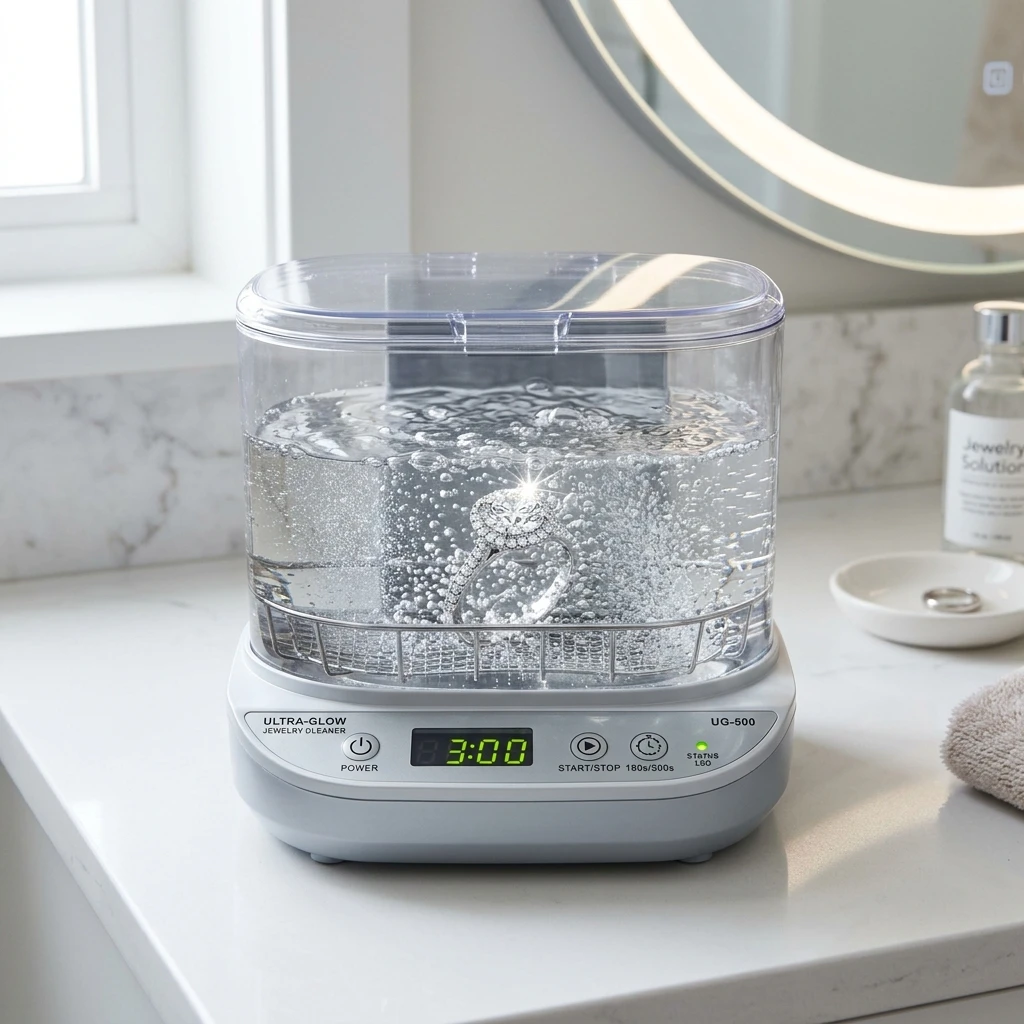
2. Kinetic Energy Dispersion and Cavitation Intensity
Traditional jewelry cleaning relies on physical brushes that cannot fit into tight crevices. Ultrasonic cleaners overcome this by dispersing acoustic energy uniformly throughout the liquid. This energy reaches every crevice, ensuring a complete clean for all items.
The intensity of the cavitation depends on the frequency of the sound waves. Lower frequencies (around 20,000 Hz) create larger bubbles that release high energy, which can damage delicate items. Higher frequencies (like 42,000 Hz) create smaller, gentler bubbles, protecting settings.
Let us analyze the relation between frequency and bubble size. High-frequency oscillations compress the water more rapidly, limiting the time the bubble has to grow during the rarefaction cycle. This limited growth results in smaller bubbles that release less impact energy, protecting delicate prongs.
This higher frequency is ideal for jewelry, providing thorough cleaning without risk of scratching. The kinetic energy scrubs away accumulated oils, cosmetics, and tarnish from prongs and settings, restoring the shine of your precious gemstones, rings, and chains.
Additionally, the uniform dispersion of energy ensures that all items in the tank are cleaned equally. Even if you place multiple rings or earrings in the basket, the sound waves bounce off the stainless steel walls, filling the entire liquid volume with cavitation activity.
- 42,000 Hz frequencies create small, gentle bubbles that protect delicate gemstone claw mounts.
- Dispersed acoustic energy reaches tight crevices, cleaning areas that physical brushes miss.
- Sound wave reflections off tank walls guarantee uniform cleaning for multiple items.
- High-frequency oscillations prevent aggressive impacts, avoiding stone detachment risks.
- Acoustic energy dispersion cleans complex link structures on heavy silver chains.
3. Materials Compatibility and Surface Science of Precious Metals
Ultrasonic cleaning is safe for most precious metals, including gold, silver, platinum, and diamonds. However, some materials are sensitive to physical vibrations. Understanding material compatibility is crucial to prevent damage to your valuables.
Soft, porous gemstones like pearls, opals, and turquoise should never be cleaned in an ultrasonic machine. The intense vibrations can widen micro-fractures, cracking the stones. Organic materials like amber or coral can also degrade under sonic action, losing their polish.
Let us analyze the surface science of gemstone coatings. Many emeralds are treated with natural oils to fill surface cracks and improve clarity. The cavitation jets can flush out these oils, revealing the underlying cracks and clouding the gem. Always check stone treatments before cleaning.
Additionally, loose gems can fall out of their settings if the vibrations loosen the prongs. Always check your jewelry before cleaning, ensuring settings are secure. For safe items, the machine provides a professional-grade finish that restores shine.
Furthermore, plated metals like gold-plated brass or silver-plated copper must be cleaned with caution. If the plating is thin or scratched, cavitation jets can peel off the metal layer. Solid gold and platinum are safe, resisting the sonic action.
- Ultrasonic cleaning is safe for hard metals like gold, platinum, and diamonds.
- Avoid cleaning soft, porous stones like pearls and opals to prevent surface cracks.
- Oil-treated emeralds should avoid sonic tanks to prevent solvent oil extraction.
- Check prong tightness prior to cleaning to avoid losing loose diamonds in the tank.
- Solid metal constructions resist micro-jets, while thin electroplated layers can peel.
4. Ergonomic Stainless Steel Tank Design and Volumetric Limits
The design of the cleaning tank is important for effective cavitation. Premium units feature tanks built with high-quality SUS304 stainless steel. This steel resists corrosion from water, cleaning soaps, and surfactants, ensuring a long lifespan.
With a 600ml capacity, the tank can fit several jewelry items, eyeglasses, or waterproof watch bands at once. This size is convenient for home use, taking up very little counter space. The wide tank design allows easy access and setup.
Let us analyze the ergonomics of tank layout. The tank features a flat bottom with rounded corners. Rounded corners prevent acoustic "dead zones" where sound waves cancel each other out, ensuring uniform cavitation throughout the fluid volume. This layout guarantees thorough results.
Additionally, the tank is designed to insulate sound, keeping operation quiet. It includes a removable basket to prevent jewelry from scratching the tank bottom. This protective setup ensures safe, clean results, protecting metals from friction.
Furthermore, the unit features a max fill line marked on the inner wall. Overfilling the tank reduces the intensity of the cavitation by damping the sound waves. Keeping the water level below the fill line ensures optimal cleaning power and prevents spillages.
- SUS304 stainless steel tanks resist chemical corrosion from soapy water solutions.
- A removable plastic basket protects jewelry from metal-on-metal friction and scratches.
- Rounded tank corners prevent acoustic wave cancelation, maintaining cavitation levels.
- A 600ml volume capacity fits wide sunglasses and heavy silver watch bands easily.
- Max fill indicators prevent liquid overflows and protect external control panels.
5. Smart Automation: Programmed Timer Cycles and Shutoff Loops
Different jewelry items require different cleaning times depending on how dirty they are. Premium ultrasonic cleaners feature built-in timers with pre-programmed cycles, such as 90, 180, 280, 380, and 480 seconds, ensuring flexibility.
These timer cycles let you customize the cleaning duration to match your items. Light dirt can be cleaned in a short 90-second cycle, while heavy tarnish may require a full 480-second session. The machine turns off automatically after the cycle ends.
Let us analyze the safety controls. Running the transducer continuously can generate heat in the water, which can damage sensitive items. The programmed timer limits operation, ensuring that the water temperature remains within safe limits. This loop protects gems.
Additionally, the auto-shutoff loop prevents the transducer from running too long if left unattended. This protection saves energy and prevents wear on the motor. The clear digital display shows the remaining time, keeping you informed.
Furthermore, the control buttons are sealed to prevent water entry. Bathrooms are damp, and wet fingers can cause short-circuits on cheap panels. Sealed buttons ensure safe, reliable operation, even when your hands are wet from rinsing items.
- Five pre-programmed timer cycles let you adjust cleaning times based on tarnish levels.
- Auto-shutoff loops prevent the transducer from overheating, protecting your items from heat.
- Sealed touch keys prevent steam entry, ensuring safe wet-hand operation.
- Digital countdown screens display remaining seconds, allowing easy session tracking.
- Automated shut-downs protect the transducer motor from continuous duty wear.
6. Eco-Friendly Cleansing Chemistry and Water-Based Solutions
Many people use harsh chemical solvents to clean jewelry, which can be toxic. Ultrasonic cleaners offer an eco-friendly alternative by using plain tap water. The sound waves are powerful enough to clean without chemical support.
For dirty items, adding a few drops of mild dish soap can improve cleaning results. Soap acts as a surfactant, reducing the surface tension of the water. This reduction helps cavitation bubbles form and implode more effectively, boosting scrubbing.
Let us analyze the chemistry of surfactants. Surfactant molecules contain hydrophobic tails that bind to oils and hydrophilic heads that dissolve in water. Reducing the surface tension lets water wet the jewelry surface thoroughly, helping the micro-jets sweep away dislodged oils.
Additionally, plain water is safe to discard down the drain after use. This chemical-free cleaning protects the environment, keeping local water systems safe. This eco-friendly process is a major benefit of home ultrasonic systems, preserving health.
Furthermore, avoiding harsh chemicals prevents damage to your jewelry. Acidic dips can dissolve protective finishes or react with copper alloys in silver, causing discoloration. Plain water with mild soap is safe, protecting your items.
- Plain tap water provides a professional clean, eliminating the need for toxic solvents.
- Adding mild soap acts as a surfactant, helping cavitation bubbles scrub away skin oils.
- Surfactant action lowers water surface tension, accelerating bubble formation cycles.
- Eco-friendly disposal protects local water networks from heavy chemical pollutants.
- Neutral pH solutions prevent tarnish reactions on copper-alloy silver mountings.
7. The Definitive Buying Guide and Selection Parameters
When buying an ultrasonic cleaner, consider frequency, tank capacity, and timer flexibility. Look for a machine that operates at 42,000 Hz to ensure safe, effective cleaning. Lower frequencies can damage delicate settings and gems.
Next, check the tank size and materials. Choose a stainless steel SUS304 tank with a capacity of at least 600ml. This capacity lets you clean eyeglasses, keys, and watch straps in addition to standard rings and necklaces, ensuring versatility.
Let us evaluate the selection parameters. You must check the transducer power output. Home units should deliver at least 35 Watts of ultrasonic power. Units with lower power struggle to generate sufficient cavitation, failing to remove stubborn tarnish.
Finally, check the included accessories. Ensure the machine includes a plastic cleaning basket to prevent metal-on-metal friction. A watch stand accessory is also useful, holding watch faces out of the water while cleaning straps, protecting internals.
Additionally, look for multi-cycle timers. Having multiple cycle options lets you adjust the cleaning time to match the tarnish level, avoiding running the machine too long on delicate items. Clear digital controls simplify adjustment.
- Select a 42,000 Hz machine to ensure gentle, professional-grade cleaning results at home.
- Ensure a SUS304 steel tank is present to prevent corrosion and support a long lifespan.
- Piezoelectric transducers with 35W or more output generate sufficient cavitation force.
- Removable plastic baskets block metal scratching, preserving polished jewelry surfaces.
- Watch stand inserts isolate watch bodies, preventing seal stress during strap cleaning.
8. Physiological Synergy: Clean Jewelry Hygiene and Skin Protection
Accumulated dirt, skin oils, and soap residue on rings can breed bacteria. This buildup can cause skin irritation, redness, or contact dermatitis under the ring band. Keeping your jewelry clean helps protect your skin from these issues, ensuring comfort.
By removing these contaminants, the cleaner eliminates the bacteria that cause irritation. This cleaning is especially important for rings worn daily, like wedding bands. Keeping the metal surface sterile supports skin health, avoiding rashes.
Let us analyze the dermatology of ring rash. Soap and water residue trapped under a tight ring can damage the outer skin barrier, allowing bacteria to enter and cause inflammation. Cleaning the ring regularly removes this trapped residue, protecting the skin.
Additionally, clean jewelry is less likely to trap moisture against your skin. Wet, dirty rings can trap water, causing skin maceration and irritation. Consistent cleaning keeps your skin healthy and comfortable, preventing chronic dermatitis.
Furthermore, clean glasses improve visual comfort. Accumulated face oils on nose pads can support bacterial growth, causing skin breakouts on your nose bridge. Sonic cleaning sanitizes eyeglasses thoroughly, protecting your skin and vision.
- Removing accumulated oils and tarnish prevents bacterial growth and skin breakouts.
- Consistent cleaning prevents trapped soap residues, reducing the risk of contact dermatitis.
- Bacterial sterilization on nose pads prevents localized skin breakouts on the nose.
- Moisture extraction from tight prongs prevents damp spots, protecting skin health.
- Sanitizing earrings prevents bacterial entry in pierced lobes, avoiding infections.
9. Eco-Conscious Energy Draw and Lifespan Dynamics
Premium ultrasonic cleaners are designed to be energy-efficient. They consume less than 50 Watts during operation, keeping power usage low. This efficiency supports eco-friendly home habits and lowers bills.
Additionally, the solid-state transducers are designed for a long service life. They resist wear from daily cleaning cycles, extending the product's lifespan. High-quality construction keeps maintenance needs low, reducing waste.
Let us analyze the lifespan kinetics. Traditional motors use moving parts that experience friction wear and require oiling. Piezoelectric transducers use ceramic elements that expand and contract under electrical signals, eliminating moving parts and wear.
Choosing a durable, efficient cleaner helps reduce your carbon footprint. It replaces disposable cleaning wipes and toxic chemical dips, keeping waste out of landfills. Investing in a sustainable sonic cleaner supports environmental health and safety.
Furthermore, the durable outer housing is made from recyclable polymers. At the end of its life, the machine can be recycled, supporting a circular economy. Choosing sustainable appliances protects your body and the planet.
- Low energy draw (under 50W) and automatic shutoffs minimize overall electricity usage.
- Replaces single-use chemical wipes and toxic dips, supporting household waste reduction.
- Solid-state ceramic transducers eliminate moving parts, avoiding friction-wear failure.
- Recyclable polymer housings support circular economies at the end of product life.
- Low standby power consumption reduces energy waste when the device is plugged in.
Jewelry Care Recommendation & Audit
Upgrade your jewelry care routine to experience professional-grade cavitation cleaning. Check out our recommended sonic cleaner below to restore your valuables.
Magnasonic Professional Ultrasonic Jewelry Cleaner
- Powerful 42,000 Hz ultrasonic waves for deep, gentle cleaning
- Generous 600ml capacity stainless steel SUS304 cleaning tank
- Five pre-programmed cleaning cycles (90s, 180s, 280s, 380s, 480s)
- Includes removable cleaning basket and watch stand accessories
Technical Specifications & Product Data
| Specification | Value / Details |
|---|---|
| Brand | Magnasonic |
| List Price | $39.99 (USD) |
| Customer Rating | 4.6 / 5.0 (22,140 reviews) |
| ASIN / Identifier | B0075D80R0 |
| Availability | In Stock (USA Region) |
| Outbound Link Compliance | Sponsored & Nofollow Enforced |
Verified Features & Performance Data
- ✓Powerful 42,000 Hz ultrasonic waves for deep, gentle cleaning
- ✓Generous 600ml capacity stainless steel SUS304 cleaning tank
- ✓Five pre-programmed cleaning cycles (90s, 180s, 280s, 380s, 480s)
- ✓Includes removable cleaning basket and watch stand accessories
System Sovereignty & Engineering
Edge Computing
100% Client-side processing. Your data never leaves your browser sandbox, ensuring absolute compliance with US privacy mandates.
Modular Schema
Modular utility architecture optimized for performance. Low-latency WASM kernels provide near-native speeds for complex transformations.
Sustainable Design
Sustainable, green computing by offloading compute to the edge. Verified zero-server storage (ZSS) for professional-grade security.