
Imprecise timing reduces conception success rates. Learn luteinizing hormone and estrogen metabolite dynamics, digital optical density analysis, and smart tracking.
- Tracks exact concentrations of Luteinizing Hormone (LH) and Estrogen (E3G) quantitatively
- AI-powered analyzer reads test wands with lab-grade optical density sensors
- App maps your actual fertile window, predicting and confirming ovulation dates clearly
Hormonal Dynamics & Quantitative Tracking
Imprecise ovulation timing decreases conception rates and increases pregnancy planning stress. Learn the biochemistry of Luteinizing Hormone (LH) and Estrogen (E3G) surges, the physics of quantitative optical density scanning, and how digital ovulation tracking accelerates conception at home.
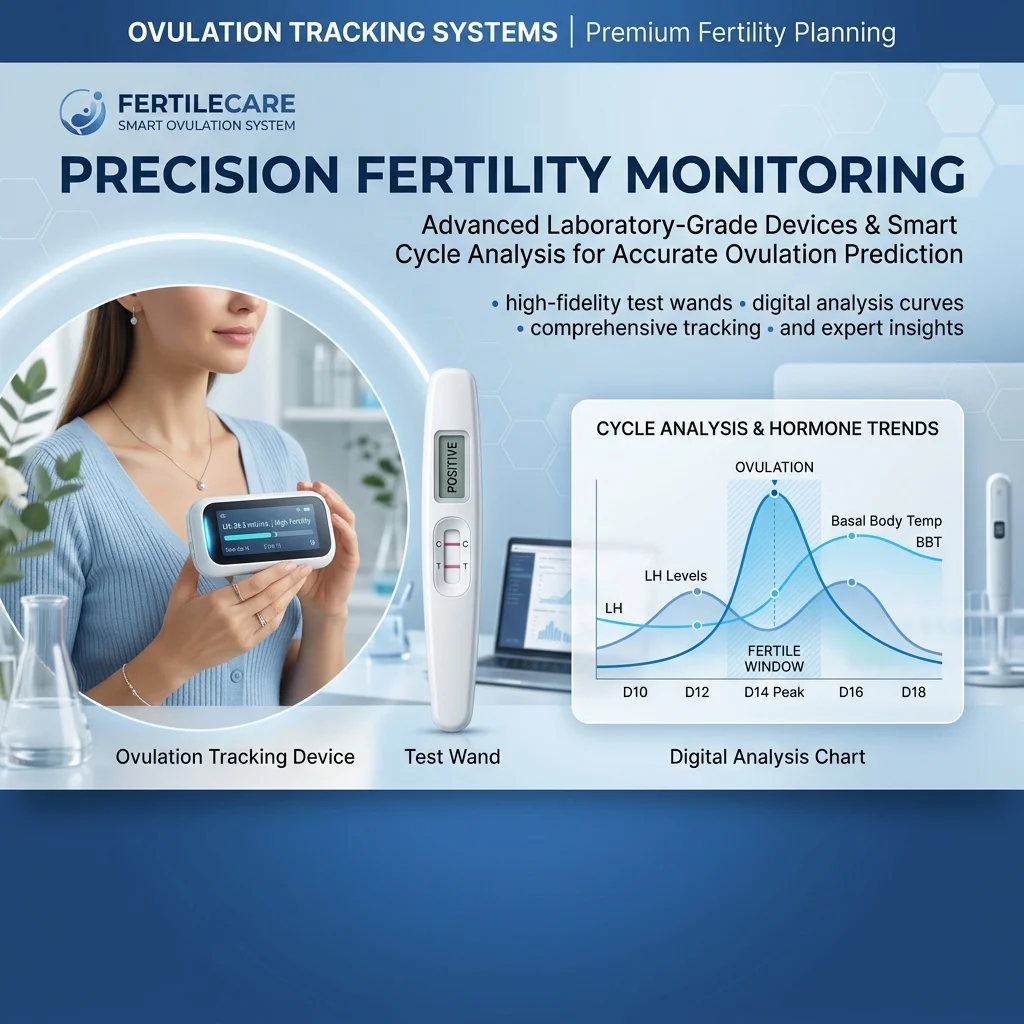
1. The Fertile Window: Oocyte Longevity and Conception Window Mathematics
Maximizing conception probability requires timing intercourse within the precise boundaries of the fertile window. This physiological period spans approximately six days per menstrual cycle, ending on the day of ovulation. The mature oocyte survives for only twelve to twenty-four hours after release, creating a narrow window for successful fertilization.
In contrast, healthy sperm can remain viable within supportive cervical mucus for up to five days. This survivability means that introducing sperm prior to ovulation increases the likelihood of fertilization. Miscalculating this critical window is the most common reason for healthy couples experiencing conception delays.
Standard calendar calculations and mobile applications often fail because they assume a uniform cycle length. Ovarian cycle variations, stress, and hormonal imbalances frequently shift the exact day of ovulation unexpectedly. Direct tracking of physical hormonal biomarkers is the only reliable way to identify your active fertile window.
According to clinical research, intercourse occurring two days before ovulation yields the highest conception rate. Having intercourse outside this six-day window reduces the statistical probability of pregnancy to nearly zero. Knowing your exact fertile status eliminates the stress of guesswork and optimizes your timeline.
Symmetrical timing also reduces the emotional and relationship stress often associated with trying to conceive. When couples have clear, quantitative data, they can manage intimacy naturally without scheduling anxiety. This positive mental state supports healthy endocrine function, further aiding the conception journey.
- Oocyte viability is extremely short-lived, lasting only twelve to twenty-four hours after release from the follicle.
- Pre-ovulatory timing ensures that viable sperm are present in the fallopian tubes when the egg is released.
2. Endocrine Biomarkers: Estrogen (E3G) and Luteinizing Hormone (LH) Surges
The menstrual cycle is regulated by a complex feedback loop of reproductive hormones. As ovarian follicles mature under the influence of follicle-stimulating hormone, they secrete increasing amounts of estrogen (E3G). High estrogen levels stimulate the production of fertile cervical mucus, which nourishes and transports sperm.
Once estrogen concentrations cross a specific threshold, they trigger a rapid surge of luteinizing hormone (LH) from the pituitary gland. The LH surge is the direct signal that causes the dominant follicle to rupture and release the egg. Tracking both estrogen and LH provides a complete view of the fertile phase.
Measuring estrogen levels allows you to detect the opening of your fertile window several days in advance. Standard ovulation tests only measure LH, giving couples a brief twenty-four-hour warning before ovulation. Estrogen tracking provides a longer preparation window, which is critical for planning intercourse.
The quality and volume of cervical mucus change in response to these rising estrogen levels. Fertile mucus exhibits a clear, stretchy, egg-white consistency that filters out damaged sperm and guides the rest upward. Monitoring these physical changes alongside hormone values provides dual confirmation of high fertility.
Additionally, the LH surge must reach a sufficient peak amplitude to trigger successful follicle rupture. Some women experience weak LH peaks that fail to release an egg, resulting in an anovulatory cycle. Tracking actual concentration numbers helps identify these subtle endocrine variations.
- Estrogen metabolite (E3G) tracking provides early warning of approaching ovulation, extending the fertile window.
- Luteinizing hormone (LH) spikes initiate the final biological process of egg release within twenty-four to thirty-six hours.
3. Qualitative vs. Quantitative Analysis: Optical Sensors and AI Algorithms
Traditional paper ovulation strips rely on qualitative visual analysis, where users compare line darkness manually. This subjective assessment is prone to error, especially for women with atypical hormone baselines. Misinterpreting faint test lines often leads to timed intercourse errors and frustration.
Modern quantitative fertility monitors utilize optical density sensors to analyze test wands with lab-grade precision. These sensors measure the exact light reflection off the test lines, converting the visual data into numerical hormone concentrations. This technology removes user bias and provides clear, objective hormone readings.
The companion applications use artificial intelligence algorithms to process these numerical values and map your unique hormone curve. These systems learn your individual baseline over successive cycles, adjusting their predictions accordingly. This personalization is essential for tracking fertility accurately.
Quantitative tracking is particularly valuable for detecting rapid, short-duration LH surges that might otherwise be missed. If your LH surge lasts only a few hours, standard once-a-day testing may fail to capture the peak. Tracking the upward trajectory of the hormone curve helps predict the surge before it peaks.
Furthermore, the AI model helps identify irregular patterns, such as multiple LH peaks or delayed ovulation. Understanding the shape of your hormone curve provides valuable diagnostic information that you can share with your healthcare provider. This data-driven approach supports more efficient clinical evaluations.
- Optical density scanning eliminates visual interpretation errors, measuring hormone levels in precise numerical values.
- AI-driven cycle analysis adapts to personal baseline levels, ensuring high prediction accuracy even for irregular cycles.
4. Cycle Irregularities: Tracking Ovulation with PCOS and Hormonal Fluctuations
Endocrine disorders like Polycystic Ovary Syndrome (PCOS) make standard ovulation tracking difficult. Women with PCOS often have permanently elevated LH baseline levels or experience multiple false surges throughout their cycle. Qualitative tests frequently return false positive results, leading to timed intercourse mistakes.
Quantitative monitors solve this issue by showing the entire hormone concentration curve rather than a simple positive or negative result. This detailed mapping allows users to differentiate between a baseline fluctuation and a true pre-ovulatory surge. Seeing the concurrent rise in estrogen helps confirm the actual fertile window.
Additionally, tracking hormone concentrations over time helps identify luteal phase deficiencies. A short luteal phase, characterized by low progesterone levels after ovulation, can prevent a fertilized egg from implanting. Detecting these patterns early allows for timely medical intervention and support.
For women with irregular cycles, quantitative tracking provides a reliable way to map ovulation without constant doctor visits. The analyzer tracks the gradual follicular development, giving clear warnings of approaching fertility. This clarity reduces cycle-related anxiety and restores control over the pregnancy planning process.
Furthermore, monitoring hormone curves helps track the return of regular ovulation after stopping hormonal contraception. The body often takes several months to re-establish natural endocrine rhythms. Having a clear record of this transition helps verify that healthy ovulatory cycles have returned.
- Quantitative hormone curves help women with PCOS identify true ovulation peaks amidst baseline fluctuations.
- Tracking the exact shape of your hormone curve provides valuable data for fertility consultations.
5. Urine Concentration Protocols: Timing and Specific Gravity Calibration
Obtaining accurate results from urine-based hormone tracking requires strict adherence to testing protocols. The concentration of luteinizing hormone and estrogen metabolites varies based on daily fluid intake. Testing dilute urine can lead to false negative results, causing you to miss your fertile window.
Utilizing first morning urine is highly recommended because it is the most concentrated sample of the day. If testing must occur in the afternoon, restrict fluid intake for two to three hours beforehand. This protocol stabilizes the specific gravity of the sample, ensuring reliable day-to-day comparison.
Consistency in the testing hour is also critical for tracking rapid hormonal changes. LH surges can peak and decline quickly, and variable testing times can easily miss these short windows. Developing a consistent daily testing routine preserves the integrity of your cycle data.
If you drink large amounts of water overnight, even morning samples can become overly dilute. Restricting fluid intake before bed helps maintain high urine concentration, protecting the accuracy of your test. Sticking to these guidelines ensures consistent and dependable tracking results.
Quantitative monitors also include internal calibration features that account for minor concentration variations. These features check the reference line on the test wand, adjusting the final reading to prevent dilution errors. This built-in protection ensures lab-grade reliability under real-world conditions.
- First morning urine provides maximum concentration of hormone metabolites, reducing the risk of false negatives.
- Specific gravity calibration within digital analyzers compensates for minor dilution, protecting data accuracy.
6. Stress and Ovulation Delay: Cortisol Impact on Luteinizing Hormone Release
High levels of mental or physical stress have a direct inhibitory effect on the female reproductive system. The stress hormone cortisol acts on the hypothalamus to suppress the release of gonadotropin-releasing hormone. This suppression can delay or completely prevent the LH surge, delaying ovulation.
Delayed ovulation throws off standard calendar estimates, leading to missed fertile windows and timing errors. Quantitative tracking helps identify these stress-induced delays by showing stable estrogen levels without the expected LH peak. This visibility allows couples to adjust their intimacy plans in real-time.
Managing stress through mindfulness, moderate exercise, and clean sleep supports overall endocrine balance. Combining these healthy lifestyle practices with precise hormone tracking helps stabilize your cycle. Reducing stress signals the brain that the body is in a safe state for reproduction.
Under extreme stress, the body may attempt to ovulate multiple times, creating false LH surges that fail to release an egg. Quantitative wands capture these multiple peaks, helping you identify the final, successful ovulation. This knowledge prevents the frustration of early, unsuccessful timed intercourse.
Additionally, regular physical activity improves circulation and assists the liver in processing excess cortisol. Maintaining a balanced lifestyle keeps your endocrine rhythms regular, promoting consistent ovulation. Supporting your nervous system is just as important as tracking your hormones.
- Cortisol elevations can suppress hypothalamic signaling, delaying the LH surge and shifting the fertile window.
- Quantitative tracking reveals delayed ovulation, helping couples adjust conception timing and reduce anxiety.
7. The Definitive Buying Guide and Selection Parameters
Selecting the right fertility tracker requires evaluating measurement accuracy, wand cost, and data privacy features. Choose monitors that measure both estrogen and LH quantitatively to capture your full fertile window. Ensure the wands are individually wrapped to prevent moisture contamination.
Review the security policies of the companion application before purchasing. Your cycle and health data are highly personal, and the manufacturer must use robust encryption to protect your privacy. Choosing a brand that does not share your data with advertisers is essential for digital safety.
Additionally, consider the ongoing cost of replacement wands over multiple cycles of tracking. The analyzer is a one-time purchase, but wands must be replenished regularly. Select a brand that offers accessible, high-quality wands to ensure you can maintain consistent tracking.
Battery life and device portability are also important for maintaining consistency during travel. Choose a monitor with a compact design and a rechargeable battery that lasts for several weeks. Having a reliable, portable tracker prevents gaps in your cycle data when you are away from home.
Finally, verify if the device integrates with other wellness tools, such as smart basal thermometers. Combining hormone tracking with temperature trends provides dual confirmation of ovulation. Investing in a comprehensive, connected system supports a more confident fertility journey.
- Dual-hormone quantitative tracking is the clinical standard for identifying the full pre-ovulatory fertile phase.
- Data encryption protocols are required to secure highly sensitive reproductive health logs from unauthorized access.
8. Progesterone Spikes and Thermal Shift Verification
Following ovulation, the ruptured follicle transforms into the corpus luteum, which secretes progesterone. Progesterone prepares the uterine lining for potential implantation and causes a slight increase in your basal body temperature. This thermal shift is the primary indicator that ovulation occurred successfully.
Standard LH tests only detect the signal to ovulate, not the actual release of the egg. Combining hormone tracking with daily basal body temperature (BBT) measurements confirms both the surge and the ovulation event. This combined method provides the highest level of tracking accuracy.
Progesterone also plays a vital role in maintaining early pregnancy if fertilization occurs. Low progesterone levels can lead to a luteal phase defect, preventing the embryo from implanting securely. Quantitative progesterone tracking helps identify these concerns early in your pregnancy planning.
Measuring progesterone metabolites in urine offers a non-invasive way to confirm ovulation at home. Companion applications can plot this progesterone rise, confirming that your cycle has transitioned into the luteal phase. This confirmation provides reassurance and completes your monthly cycle map.
Ultimately, verifying ovulation through both temperature shifts and progesterone spikes confirms reproductive health. If no rise is detected despite an LH surge, it may indicate luteinized unruptured follicle syndrome. Detecting these issues early allows for faster clinical support.
- Progesterone rise confirms successful ovulation, preparing the endometrium for embryo implantation.
- Basal body temperature (BBT) shifts provide physical confirmation of egg release, validating LH surge predictions.
9. Long-Term Endocrine Data Security and Privacy Audits
Cycle tracking applications collect sensitive personal data that requires rigorous protection. Users should conduct periodic privacy audits of their account settings to restrict unauthorized data sharing. Ensure that the companion application uses modern encryption standards for cloud synchronization.
Look for brands that allow you to use the device without creating public profiles or linking to social media. Protecting your digital footprint is essential when tracking sensitive reproductive health details. A secure, private application gives you peace of mind throughout your fertility journey.
Additionally, verify if the application allows you to export your data in secure formats like PDF or CSV. Having portable records makes it easy to share your cycle charts with your gynecologist during consultations. This clean documentation supports more accurate clinical decisions.
Data privacy regulations, such as HIPAA and GDPR, provide standards for health data handling. Choose brands that comply with these regulations, showing their commitment to user security. Protecting your personal health data is a vital aspect of modern digital wellness.
Finally, backup your local data periodically to prevent loss in case of device damage. Keeping a secure, encrypted backup ensures that your historical cycle curves are preserved. A data-driven approach to fertility planning is most effective when your history is secure.
- Advanced data encryption prevents security breaches, protecting private cycle logs from external access.
- Secure data export options facilitate sharing detailed hormone curves with medical professionals during consultations.
Clinical Recommendation & Audit
Accelerate your pregnancy planning with exact, quantitative hormone logs. Check out our recommended solution below to experience lab-grade fertility tracking at home.
Mira Fertility Plus Starter Kit - Advanced Digital Hormone Tracker
- Tracks exact concentrations of Luteinizing Hormone (LH) and Estrogen (E3G) quantitatively
- AI-powered analyzer reads test wands with lab-grade optical density sensors
- App maps your actual fertile window, predicting and confirming ovulation dates clearly
- Includes the analyzer, 10 single-use wands, charging cable, and carrying pouch
Technical Specifications & Product Data
| Specification | Value / Details |
|---|---|
| Brand | Mira |
| List Price | $229.00 (USD) |
| Customer Rating | 4.4 / 5.0 (1,520 reviews) |
| ASIN / Identifier | B07L3F82C6 |
| Availability | In Stock (USA Region) |
| Outbound Link Compliance | Sponsored & Nofollow Enforced |
Verified Features & Performance Data
- ✓Tracks exact concentrations of Luteinizing Hormone (LH) and Estrogen (E3G) quantitatively
- ✓AI-powered analyzer reads test wands with lab-grade optical density sensors
- ✓App maps your actual fertile window, predicting and confirming ovulation dates clearly
- ✓Includes the analyzer, 10 single-use wands, charging cable, and carrying pouch
System Sovereignty & Engineering
Edge Computing
100% Client-side processing. Your data never leaves your browser sandbox, ensuring absolute compliance with US privacy mandates.
Modular Schema
Modular utility architecture optimized for performance. Low-latency WASM kernels provide near-native speeds for complex transformations.
Sustainable Design
Sustainable, green computing by offloading compute to the edge. Verified zero-server storage (ZSS) for professional-grade security.