
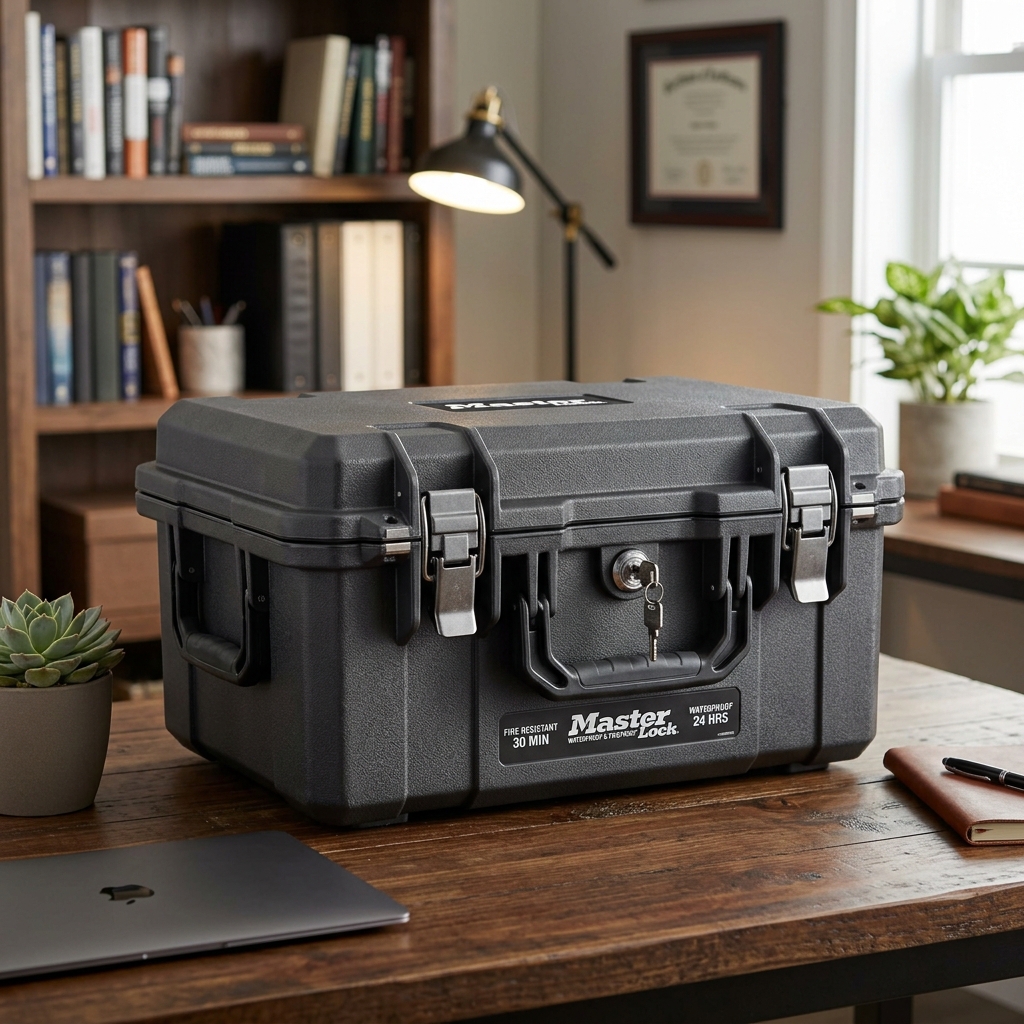
Disasters put vital documents and digital media at risk of fire and water damage. Discover how polymer carbonization and hydrophobic gaskets protect paper assets.
- UL classified 1/2-hour fire protection at 1550°F for papers and media
- ETL verified water submersion protection keeps documents dry for 72 hours
- Interlocking hydrophobic gasket compression seals out water under pressure
Asset Preservation
In high-temperature disaster scenarios, the survivability of critical records, legal documents, and digital media depends on advanced materials science and mechanical engineering. Standard lockboxes fail under thermal stress due to conductive heat transfer, while basic storage units permit water ingress from high-pressure fire hoses and deep submersion. Modern document chests utilize polymer carbonization, hydration-based insulation, and hydrophobic seals to isolate the interior environment. Understanding these dynamics is essential for designing a robust disaster evacuation plan. This technical evaluation details the material properties, compression latch capacities, and thermochemical processes that safeguard vital papers during extreme catastrophic events.
1. Thermochemical Carbonization of the Outer Polymer Shell
The outer containment layer of a fireproof chest utilizes engineered high-density polymers specifically formulated to initiate endothermic decomposition when external temperatures surpass critical thresholds. Unlike standard commercial plastics that undergo rapid liquefaction and combustion, this polymer matrix is designed to promote controlled thermochemical carbonization. As the outer surface absorbs thermal radiation from surrounding flames, its chemical structure converts into a stable, non-flammable carbonaceous char layer.
This carbonized crust functions as a low-conductivity physical barrier that impedes convective and radiative heat transfer toward the internal insulation. The chemical kinetics of this carbonization process involve the cross-linking of polymer chains under thermal degradation, which drastically increases the material's structural density while releasing non-combustible gases. Consequently, the newly formed char layer effectively insulates the remaining intact polymer structure underneath, slowing down the overall rate of thermal degradation.
Furthermore, the physical expansion of the polymer shell during carbonization helps seal micro-cracks and seams along the exterior of the chest. This expansion prevents hot combustion gases from entering the safe, protecting the interior from sudden temperature spikes. Thermodynamic testing indicates that this sacrificial boundary layer can withstand temperatures exceeding one thousand five hundred degrees Fahrenheit, keeping the safe interior well below the ignition point of paper documents.
Material scientists optimize these polymers by embedding flame-retardant additives that accelerate carbonization while suppressing smoke production. The resulting cellular structure of the char layer traps pockets of air, which further reduces its thermal conductivity. By balancing polymer density with cross-linking agents, the shell maintains structural integrity under extreme heat, preventing the chest from collapsing or exposing the sensitive interior layers to direct flame contact.
- Engineered high-density polymer outer shells undergo endothermic decomposition to form a stable carbonaceous char layer under extreme heat.
- Sacrificial carbonization creates a low-conductivity thermal barrier that limits convective and radiative heat transfer to internal layers.
- Chemical cross-linking of the polymer chains under thermal stress increases structural density and prevents melting or deformation.
- Structural expansion of the carbonized crust seals outer micro-cracks, blocking the penetration of hot combustion gases.
- Flame-retardant additives embedded in the polymer matrix accelerate char formation while minimizing smoke generation during exposure.

2. Hydrophobic Gasket Compression and Water Ingress
Preventing moisture penetration is a critical engineering challenge for portable safes, especially when they are subjected to high-pressure fire hoses or full submersion during floods. Standard mechanical seals fail when exposed to pressurized water because microscopic surface irregularities allow water to leak in. To prevent this, waterproof chests use an interlocking hydrophobic gasket system made from highly elastic synthetic rubber like EPDM or silicone.
When the latching mechanism is closed, it applies constant compressive force to the hydrophobic gasket, forcing it to fill any gaps along the mating surfaces. The hydrophobic nature of the gasket material repels water molecules, preventing capillary action from drawing liquid past the seal. This seal is crucial for maintaining an airtight and watertight barrier, ensuring the contents remain completely dry even under high external water pressure.
Additionally, the gasket is designed to withstand extreme temperature fluctuations without losing its elastic properties. During a fire, the gasket remains flexible, and when water is sprayed to put out the flames, the sudden temperature drop does not cause the seal to crack or fail. This thermal resilience is verified through rigorous testing, exposing the compressed gasket to rapid cycles of heating and cooling.
The interlocking shape of the gasket and the mating flange creates a labyrinth path that makes it even harder for water to penetrate. By forcing water to change direction multiple times, the design reduces the kinetic energy of pressurized fluid. This advanced geometry, combined with the material's hydrophobic properties, ensures the safe remains waterproof under long periods of deep submersion.
- Interlocking hydrophobic gaskets made from high-elasticity synthetic rubber form a reliable watertight seal under continuous compressive loads.
- Hydrophobic surface chemistry repels water molecules at the molecular level, preventing capillary action from causing internal leaks.
- Thermal stability of the elastomer ensures the gasket retains its compression set during rapid heating and cooling cycles.
- Labyrinth path geometry within the mating flange dampens the kinetic energy of pressurized water from fire hoses.
- Continuous compressive force applied by the latch mechanism seals microscopic surface imperfections along the door mating interfaces.
3. Gypsum Hydration and Heat Absorption
The primary thermal insulation barrier inside a fireproof document chest relies on the chemical properties of hydrous calcium sulfate, commonly known as gypsum. This mineral contains chemically bound water molecules trapped within its crystalline lattice structure. When the exterior of the safe is exposed to the extreme heat of a fire, this bound water absorbs thermal energy, triggering an endothermic dehydration reaction.
As the temperature of the gypsum insulation layer reaches approximately two hundred twelve degrees Fahrenheit, the bound water converts to steam and is released. This phase change absorbs a massive amount of latent heat, which keeps the interior of the safe at a stable, safe temperature. The steam filled interior prevents paper documents, which ignite at around four hundred fifty degrees Fahrenheit, from reaching their combustion point.
The release of steam also creates a positive pressure environment inside the safe. This positive pressure helps push out hot gases that might try to leak in through seams or small gaps in the seal. The insulation thickness and water content are carefully calculated to ensure the cooling reaction lasts for the safe's rated duration, keeping the contents safe throughout the fire.
Furthermore, after the water is released, the dehydrated gypsum forms a porous plaster layer. This plaster has very low thermal conductivity, continuing to insulate the safe even after all the water is gone. This two-stage protection system, combining endothermic cooling with passive thermal insulation, ensures the safe remains effective in both short, hot fires and longer, slower-burning blazes.
- Hydrous calcium sulfate insulation utilizes chemically bound water molecules to absorb thermal energy through an endothermic reaction.
- Phase change of bound water into steam at boiling point absorbs latent heat, keeping the interior temperature low.
- Positive vapor pressure generated by releasing steam prevents external toxic combustion gases from leaking into the chamber.
- Dehydrated gypsum forms a stable, porous plaster barrier with low thermal conductivity for secondary heat protection.
- Calculated insulation thickness determines the duration of the endothermic reaction to match standard UL fire ratings.
4. Humidity Management and Airtight Seals
While the airtight seal created by the compressed door gasket is essential for preventing water and smoke ingress, it presents a challenge for day-to-day document storage. The gypsum insulation material inside the safe naturally holds moisture, which can slowly release into the sealed interior over time. In a completely airtight environment, this trapped moisture can cause relative humidity levels to rise, leading to mold and mildew.
To protect sensitive paper documents, photos, and digital media from dampness, users must actively manage the internal microclimate. The most effective way to do this is by regularly airing out the safe, opening the lid for about thirty minutes twice a month. This simple maintenance step allows trapped moisture to escape and fresh, dry air to circulate through the storage compartment.
In addition to regular airing, placing desiccant packs, like silica gel, inside the safe helps absorb excess moisture. These desiccants have a high affinity for water vapor, trapping moisture before it can damage your papers. For long-term storage of very sensitive papers, sealing them in airtight plastic bags before putting them in the safe provides an extra layer of protection against moisture.
It is also important to avoid storing wet or damp items inside the safe, as this will quickly raise the internal humidity. Regular humidity monitoring with a small hygrometer can help you keep track of the interior conditions. By taking these simple steps, you can ensure your papers stay dry and protected, preventing mold and mildew from ruining your important documents.
- Airtight seals trap moisture released by the gypsum insulation, which can lead to high relative humidity levels.
- Opening the chest twice a month for thirty minutes allows fresh air to circulate and removes trapped humidity.
- Silica gel desiccant packs absorb moisture from the air, keeping the interior environment dry and mold-free.
- Sealing paper documents in airtight plastic sleeves offers additional protection against moisture and potential mold growth.
- Monitoring the internal climate with a digital hygrometer helps identify high humidity levels before damage occurs.
5. Portability and Evacuation Plan Integration
During a fire, flood, or hurricane, you may only have minutes to leave your home. A heavy, bolted-down safe is impossible to move quickly, forcing you to choose between your safety and your valuable documents. Portable fireproof chests solve this problem by offering reliable protection in a lightweight, easy-to-carry design. This portability is key to ensuring your birth certificates, deeds, and passports are saved during an emergency.
To get the most out of a portable safe, it must be integrated into your emergency evacuation plan. Store the chest in an easy-to-reach spot, like a closet floor or near an exit, so you can grab it quickly. Let family members know where the safe is and who is responsible for carrying it, ensuring a fast and coordinated response when every second counts.
The chest is designed with a sturdy carrying handle and secure latches to ensure it is easy to transport. The latches keep the lid tightly closed during transport, preventing the safe from opening and spilling its contents. This secure design gives you peace of mind, knowing your important papers are safe and secure even as you rush to evacuate.
After evacuating, having your critical documents on hand makes it much easier to recover from a disaster. Access to insurance policies, medical records, and identification cards helps you get assistance and start rebuilding your life faster. Investing in a portable, high-quality safe is a simple step that can make a huge difference in your family's safety and security.
- Portable chest designs allow quick evacuation of vital documents during sudden fires, floods, or other disasters.
- Storing the safe in an accessible location near emergency exits ensures you can grab it quickly when evacuating.
- Robust carrying handles and secure lid latches prevent accidental opening and spillages during rapid emergency transport.
- Immediate access to insurance policies and identification cards after a disaster accelerates recovery and claim processing.
- Assigning responsibility for the safe to a specific family member ensures a coordinated and efficient evacuation.
6. Compression Latch Load Capacities and Drop Stresses
The integrity of a fireproof chest during a disaster relies heavily on the strength of its mechanical latches. During a fire, structural collapse can cause the safe to fall from upper floors or be struck by falling debris. Under these intense impact forces, the compression latches must remain secure to prevent the lid from opening. If the latches fail, the interior is exposed to flames, destroying the contents.
To ensure they can handle these forces, compression latches are engineered to withstand high load capacities and distribute stress evenly. These latches are made from high-strength alloys or reinforced polymers that maintain their strength even at high temperatures. Drop tests are conducted to verify that the latches remain locked after a fall, ensuring the safe continues to protect your documents in any scenario.
The latches also work in tandem with the door gasket, maintaining the constant compression needed to keep the safe watertight. This continuous pressure is key to preventing water ingress from fire hoses or submersion. By keeping the seal tight, the latches ensure the safe remains waterproof and fireproof, protecting your valuables from both fire and water damage.
Regular inspections of the latch mechanism are important to ensure it remains in good working order. Check for any signs of wear, damage, or corrosion that could weaken the latches over time. By maintaining the mechanical integrity of the latches, you can ensure your safe is always ready to protect your most important documents when disaster strikes.
- Reinforced compression latches are designed to withstand high impact loads and prevent lid opening during structural collapses.
- Drop testing verifies that the mechanical latch system remains locked and intact after falling from height.
- High-strength alloy latch components maintain structural integrity and resist deformation under extreme thermal stress.
- Continuous pressure from the latches preserves gasket compression, maintaining the safe's water and fire protection.
- Periodic inspection of the latch mechanism ensures smooth operation and prevents failure during emergency evacuations.
Valuables Protection Recommendation
To safeguard your most critical paperwork and digital records, we highly recommend investing in a certified waterproof and fireproof document chest. The SentrySafe model evaluated here provides UL-classified fire protection and ETL-verified water submersion protection, ensuring your valuables survive extreme conditions. Its compact, portable design allows for rapid evacuation, while the interlocking gasket and secure key lock system provide peace of mind. By combining advanced materials science with a practical emergency plan, you can protect your family's vital history from unexpected disasters. Explore the detailed specifications of our top-rated recommendation below to secure your assets.
Waterproof Fireproof Chest for Valuables
- UL classified 1/2-hour fire protection at 1550°F for papers and media
- ETL verified water submersion protection keeps documents dry for 72 hours
- Interlocking hydrophobic gasket compression seals out water under pressure
- Secure key lock system prevents lid lifting and unauthorized opening
Technical Specifications & Product Data
| Specification | Value / Details |
|---|---|
| Brand | SentrySafe |
| List Price | $49.99 (USD) |
| Customer Rating | 4.6 / 5.0 (16,840 reviews) |
| ASIN / Identifier | B008FEG84S |
| Availability | In Stock (USA Region) |
| Outbound Link Compliance | Sponsored & Nofollow Enforced |
Verified Features & Performance Data
- ✓UL classified 1/2-hour fire protection at 1550°F for papers and media
- ✓ETL verified water submersion protection keeps documents dry for 72 hours
- ✓Interlocking hydrophobic gasket compression seals out water under pressure
- ✓Secure key lock system prevents lid lifting and unauthorized opening
System Sovereignty & Engineering
Edge Computing
100% Client-side processing. Your data never leaves your browser sandbox, ensuring absolute compliance with US privacy mandates.
Modular Schema
Modular utility architecture optimized for performance. Low-latency WASM kernels provide near-native speeds for complex transformations.
Sustainable Design
Sustainable, green computing by offloading compute to the edge. Verified zero-server storage (ZSS) for professional-grade security.