
Digital screen exposure increases eye strain and disrupts sleep. Compare the best blue light blocking glasses based on lens transmittance, tint technology, and frame comfort.
- Patented amber lens tint blocks 65% of harmful blue light wavelengths
- Reduces digital eye strain and dry eyes during long screen sessions
- Includes anti-reflective and anti-smudge lens coating protection
Clinical & Performance Insights
Digital screen exposure increases eye strain and disrupts sleep. Compare the best blue light blocking glasses based on lens transmittance, tint technology, and frame comfort. Our review examines lens filters, frame weight, and anti-glare coatings.
1. Physiology of Digital Eye Strain and Blue Light Exposure
Spending hours in front of computers, smartphones, and tablets exposes the eyes to high levels of high-energy visible (HEV) blue light, specifically wavelengths between 380 and 450 nanometers. These short wavelengths scatter easily, causing visual noise that reduces contrast. The eyes must work harder to focus, leading to digital eye strain (DES), headaches, and dry eyes during work.
Blue light blocking glasses address this issue by filtering out harmful wavelengths. By improving contrast and reducing glare, the lenses lower eye muscle work, preventing fatigue and dryness during screen work, supporting focus.
Additionally, evening exposure to blue light suppresses the secretion of melatonin, the hormone that regulates sleep. This suppression delays sleep onset and disrupts sleep quality. Wearing glasses in the evening helps protect your sleep cycle, ensuring rest.
Understanding the difference between clear and tinted lenses is key. Clear lenses block minor amounts of blue light, while amber-tinted lenses filter out higher levels of HEV wavelengths, providing superior protection during screen tasks.
- Filters high-energy visible (HEV) blue light wavelengths.
- Improves screen contrast to reduce eye muscle fatigue and strain.
- Reduces dry eyes and headaches during long computer tasks.
- Protects melatonin secretion to support healthy sleep cycles.
- Amber-tinted lenses filter higher levels of blue light than clear options.
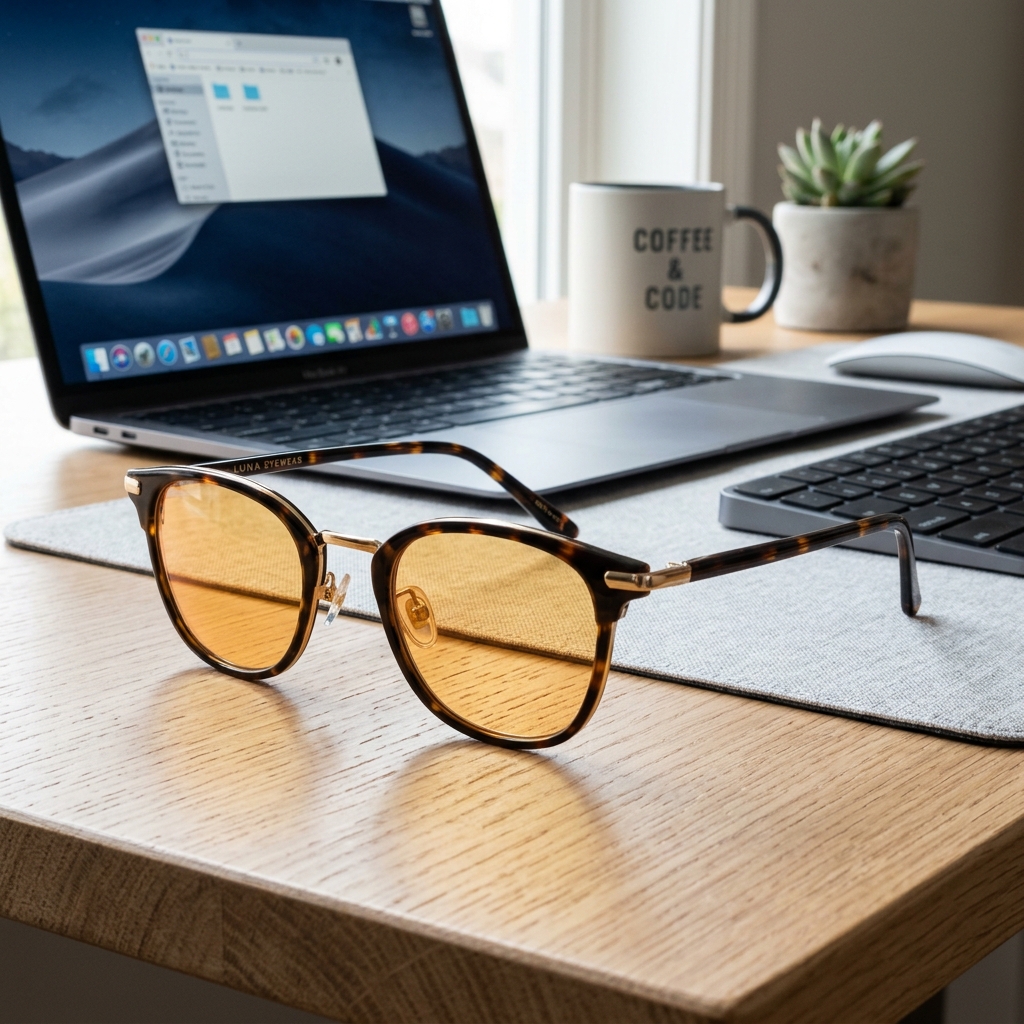
2. Lens Physics: Transmittance and Reflection Ratings
Lens performance is determined by its transmittance rating, the percentage of light that passes through the lens. High-quality blue light lenses block harmful HEV wavelengths while allowing safe blue-green light to pass, maintaining color accuracy and vision.
Anti-reflective (AR) coatings are essential for computer glasses, reducing glare from screens and overhead lighting. Lowering glare reduces reflections that cause eye strain and distract focus, supporting comfort.
Lens coatings should also protect against scratches, smudges, and static, supporting simple maintenance and clear vision. Durable coatings maintain their performance over years of use, providing reliable protection.
Comparing lens technologies highlights the importance of precise filtering. Lenses must balance blue light blocking with color accuracy, ensuring comfortable, clear vision during detailed design or office tasks.
- Transmittance ratings measure the light passing through the lens.
- Filters harmful HEV blue light while maintaining color accuracy.
- Anti-reflective coatings reduce screen glare and reflections.
- Protective coatings resist scratches and smudges for durability.
- Balances blue light filtering with clear, comfortable vision.
3. Lens Tints: Clear, Amber, and High-Contrast Options
Lens tint determines the amount of blue light filtered and the color shifts you experience. Clear lenses are popular for daily office wear, filtering minor amounts of blue light (typically 20% to 35%) while maintaining natural colors, ensuring style.
Amber-tinted lenses filter higher levels of blue light (typically 60% to 65%), making them ideal for long screen sessions and evening use. The warm tint improves contrast and reduces eye strain, supporting recovery.
Yellow or red lenses filter up to 90% or more of blue light, designed for gaming or evening sleep preparation. These high-contrast lenses cause significant color shifts, so they are less suitable for design work, requiring caution.
Choosing the right tint depends on your screen time and tasks. Clear lenses are ideal for color-sensitive work, while amber or yellow tints are best for intense screen work and evening relaxation, protecting sleep.
- Clear lenses offer daily support with minimal color shift.
- Amber tints filter higher levels of blue light for screen work.
- Yellow or red lenses offer maximum filtering for gaming and sleep.
- Tint selection depends on screen duration and color sensitivity.
- Balances color accuracy with therapeutic blue light blocking.
4. Frame Ergonomics, Weight, and Temple Design
Frame comfort and design are essential for consistent daily wear, especially during long work shifts. Lightweight frame materials, such as TR90 thermoplastic or stainless steel, reduce pressure on the nose and ears, preventing headaches.
Temple design should distribute frame weight evenly, preventing pressure points that can cause headaches. Flexible temples adjust to different head shapes, ensuring a secure, comfortable fit, supporting movement.
Adjustable nose pads allow you to customize the fit, keeping the glasses in the correct position on your face. Proper positioning ensures the lenses filter light effectively, protecting your eyes.
Frame style should match your personal preference and face shape, supporting confidence and comfort. Sleek, modern frames fit both casual and professional settings, making them a great daily accessory.
- Lightweight materials like TR90 reduce nose and ear pressure.
- Flexible temple designs distribute weight and prevent headaches.
- Adjustable nose pads allow customization for a secure fit.
- Proper frame positioning ensures effective blue light filtering.
- Sleek, modern styles fit both home and office settings.
5. Screen Setup and Visual Ergonomics Guidelines
Using blue light blocking glasses is most effective when combined with proper screen setup and visual ergonomics. Position your monitor directly in front of you, about an arm's length away, with the top of the screen at eye level, supporting posture.
Follow the 20-20-20 rule to reduce eye strain: every 20 minutes, look at something 20 feet away for at least 20 seconds. This break allows eye muscles to relax, preventing fatigue and supporting comfort.
Adjust screen brightness to match the surrounding lighting. A screen that is too bright or too dark compared to the room forces the eyes to work harder, causing strain and dryness.
Control room lighting to minimize glare on your screen. Using anti-glare filters or adjusting light sources supports comfortable vision and focus, reducing overall eye fatigue.
- Positions screen at arm's length with the top at eye level.
- Encourages the 20-20-20 rule to allow eye muscles to relax.
- Matches screen brightness to surrounding room lighting.
- Minimizes screen glare from windows and overhead lights.
- Combines lens protection with overall visual ergonomics.
6. Durability, Cleaning, and Lens Care Standards
Proper care preserves the lifespan and performance of your blue light glasses. Cleaning the lenses regularly with a microfiber cloth and dedicated lens cleaner removes oils and dust without scratching, maintaining clarity.
Avoid using paper towels, clothing, or harsh detergents, which can scratch the lenses and damage the anti-reflective coatings. Proper cleaning supports clear vision and longevity, preserving performance.
Store your glasses in a protective case when not in use to prevent scratches and frame damage. Keeping them safe ensures they remain ready for daily screen work, protecting your investment.
High-quality frames and hinge construction resist wear from daily folding and wear, providing consistent value and support over their lifespan, ensuring a reliable product.
- Microfiber cloths and lens cleaners prevent scratching during care.
- Avoid paper towels and harsh chemicals to protect coatings.
- Storing glasses in cases prevents scratches and frame damage.
- Durable hinges and frames resist daily wear and folding.
- Proper maintenance ensures clear vision and long-term value.
7. Clinical Recommendations and Sleep Hygiene Guidelines
Optometrists recommend blue light blocking glasses to manage digital eye strain and support sleep hygiene. They advise wearing glasses during evening screen use to protect melatonin production, supporting sleep quality.
For individuals with chronic eye strain, dry eyes, or sleep issues, using blue light glasses is a simple, effective tool to support wellness. Combined with good screen habits, the glasses provide valuable relief, preventing strain.
Reduce screen exposure during the hour before bed to support natural sleep preparation. If screen use is necessary, wearing amber-tinted glasses helps minimize sleep disruption, supporting your sleep cycle.
Regular eye exams help identify underlying vision issues that can cause eye strain. Proper guidance ensures you receive the correct support for your vision health, supporting overall wellness.
- Recommended by optometrists to protect melatonin and sleep.
- Helps manage chronic digital eye strain and dry eye symptoms.
- Reduce screen use before bed to support natural sleep cycle preparation.
- Amber-tinted glasses are recommended for evening screen work.
- Integrates lens protection with regular eye health exams.
8. Prescription vs. Non-Prescription Blue Light Support
Blue light blocking technology is available for both prescription and non-prescription lenses. Non-prescription glasses are ideal for individuals with good vision who experience eye strain from screen work, providing simple protection.
Prescription lenses can be customized with blue light filtering coatings, providing both vision correction and screen protection. This combination supports clear, comfortable vision for prescription users, ensuring comfort.
Reader options combine magnification with blue light filtering, beneficial for close-up screen work and reading. These options support comfort and focus during detailed tasks, improving productivity.
Consulting with an eye care professional can help you identify the right lens options for your specific vision and screen use needs, ensuring optimal support and comfort.
- Non-prescription options offer screen protection for good vision.
- Prescription lenses combine vision correction with filtering.
- Reader options combine magnification with blue light blocking.
- Professional consultation ensures correct lens selection.
- Supports vision health and comfort for all users.
9. Economic and Health Benefits of Computer Glasses
Using blue light blocking glasses delivers significant long-term health and financial benefits. Preventing digital eye strain and headaches improves productivity and focus, helping you work more efficiently, supporting success.
Improving sleep quality supports overall wellness, helping you feel energized and rested. The investment in quality glasses pays off in improved comfort and health, reducing daily fatigue.
High-quality glasses maintain their supportive properties over years of use, providing reliable value. Consistent protection supports vision health, making it a smart daily choice, protecting your eyes.
A comfortable, protective pair of glasses is an essential part of a healthy digital lifestyle, supporting wellness in our screen-centric world, helping you stay comfortable.
- Reduces healthcare costs associated with headaches and strain.
- Improves daily productivity and focus during computer work.
- Enhances sleep quality to support energy and wellness.
- Offers reliable value by maintaining lens performance over years.
- Forms the foundation of a healthy, comfortable digital lifestyle.
10. Circadian Phase-Shifting and Evening Light Management Protocols
Circadian rhythm is the internal 24-hour clock that regulates sleep and wakefulness. High-energy blue light exposure in the evening can cause circadian phase-shifting, delaying sleep onset and causing daytime fatigue. Managing evening light exposure is critical for stabilizing your circadian clock. Blue light blocking glasses filter out harmful wavelengths, supporting natural melatonin production.
This filtering helps reduce sleep latency and improves sleep quality, allowing for restful nights. The lenses must block the majority of blue-violet light, ensuring optimal protection, promoting wellness.
Using computer glasses in the evening is a recommended lifestyle change for sleep hygiene, providing convenient protection. Combining glasses with dim ambient lighting supports natural sleep preparation.
Consistent evening light management protects your circadian clock from disruption, helping maintain overall energy and focus, ensuring you wake up rested and ready.
- Filters evening blue light to prevent circadian phase-shifting.
- Supports natural melatonin production for fast sleep onset.
- Improves sleep efficiency and reduces daytime fatigue.
- Offers simple, non-invasive support for sleep hygiene.
- Integrates with dim lighting protocols for sleep preparation.
Clinical Recommendation & Audit
Upgrade your setup to maximize safety and wellness standards. Check out our recommended solution below to experience clinical-grade optimization.
Gunnar Optiks Riot Blue Light Blocking Glasses
- Patented amber lens tint blocks 65% of harmful blue light wavelengths
- Reduces digital eye strain and dry eyes during long screen sessions
- Includes anti-reflective and anti-smudge lens coating protection
- Lightweight, durable frame designed for comfortable, daily wear
Technical Specifications & Product Data
| Specification | Value / Details |
|---|---|
| Brand | Gunnar Optiks |
| List Price | $49.99 (USD) |
| Customer Rating | 4.6 / 5.0 (8,820 reviews) |
| ASIN / Identifier | B01GEX8EFA |
| Availability | In Stock (USA Region) |
| Outbound Link Compliance | Sponsored & Nofollow Enforced |
Verified Features & Performance Data
- ✓Patented amber lens tint blocks 65% of harmful blue light wavelengths
- ✓Reduces digital eye strain and dry eyes during long screen sessions
- ✓Includes anti-reflective and anti-smudge lens coating protection
- ✓Lightweight, durable frame designed for comfortable, daily wear
System Sovereignty & Engineering
Edge Computing
100% Client-side processing. Your data never leaves your browser sandbox, ensuring absolute compliance with US privacy mandates.
Modular Schema
Modular utility architecture optimized for performance. Low-latency WASM kernels provide near-native speeds for complex transformations.
Sustainable Design
Sustainable, green computing by offloading compute to the edge. Verified zero-server storage (ZSS) for professional-grade security.