
Gravity causes blood to pool in the lower legs during long shifts. Compare the best compression socks based on mmHg pressure levels, graduated alignment, and fiber science.
- 20-30 mmHg graduated compression profile to maximize venous return
- Durable double-stitched Lycra spandex construction for shape retention
- Breathable, moisture-wicking fabric helps keep legs cool and dry
Clinical & Performance Insights
Gravity causes blood to pool in the lower legs during long shifts. Compare the best compression socks based on mmHg pressure levels, graduated alignment, and fiber science. Our review focuses on pressure gradients, fabric durability, and comfort.
1. Physiology of Lower Extremity Venous Stasis and Muscle Fatigue
When standing for long periods, the circulatory system must work against gravity to pump blood from the lower legs back to the heart. Without movement, the calf muscle pump, which assists venous return, remains inactive. This gravitational pull causes blood to pool in the veins of the feet and calves, leading to venous stasis, fluid leaking into surrounding tissues, and painful swelling during long shifts.
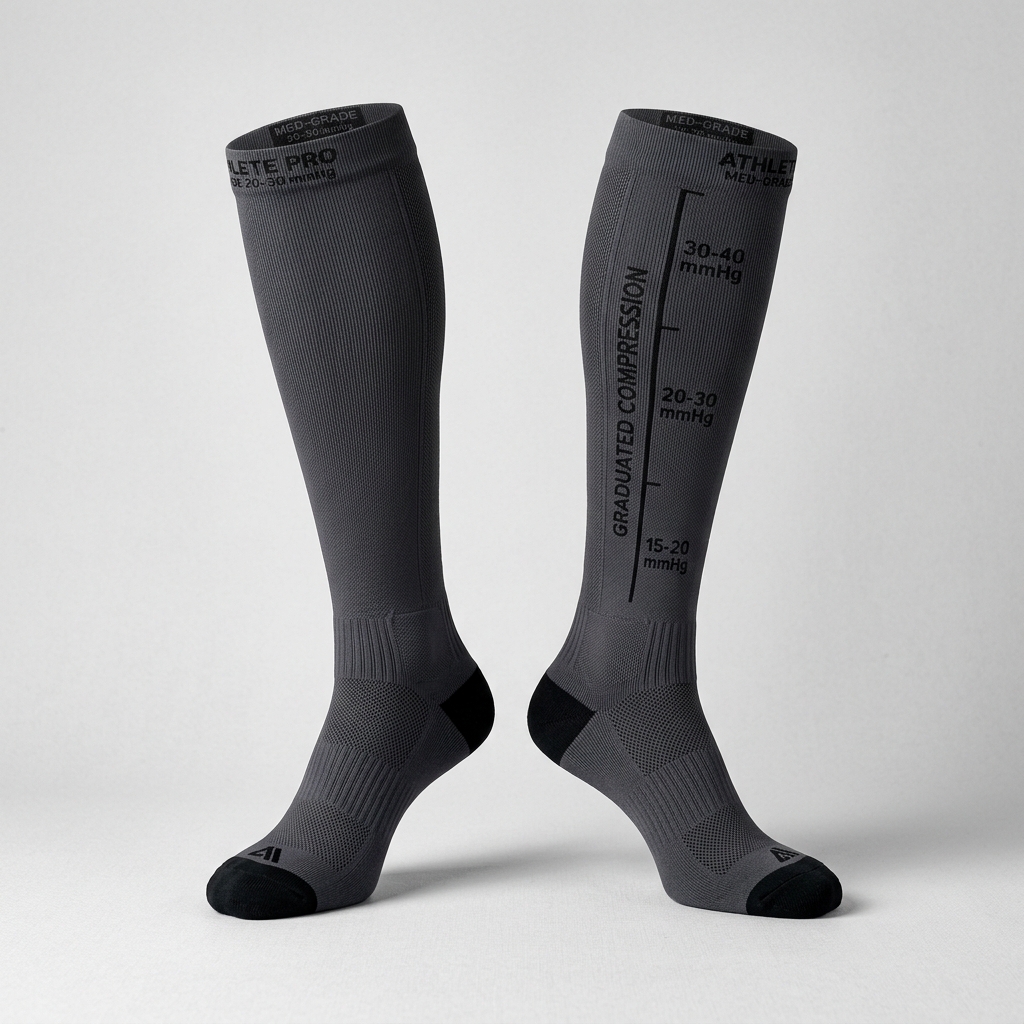
Graduated compression socks address this issue by applying pressure to the legs. The pressure is strongest at the ankle and decreases as it goes up the leg. This gradient squeezes the veins, helping return blood to the heart and lowering swelling, preventing leg fatigue.
Additionally, sustained venous pressure can stretch and damage vein valves, leading to varicose veins and chronic venous insufficiency. Regular compression use protects these valves and supports healthy blood flow, preventing long-term vascular issues.
Understanding the difference between graduated compression and standard tight socks is key. Graduated compression is designed to assist blood flow, while standard tight socks can restrict circulation and cause discomfort, defeating the purpose.
- Counteracts blood pooling in the lower legs caused by gravity.
- Graduated pressure profile assists venous return to the heart.
- Squeezes veins to improve blood flow and reduce leg swelling.
- Protects vein valves from damage to prevent varicose veins.
- Supports healthy leg circulation during long shifts.
2. Understanding Graduated Compression Levels (mmHg)
Compression pressure is measured in millimeters of mercury (mmHg). Different pressure levels are designed for specific needs, from mild recovery support to medical therapy. Choosing the right compression level is key to safety and comfort, preventing circulation issues.
Mild compression (8-15 mmHg) provides gentle support for tired legs, helping relieve minor swelling. Moderate compression (15-20 mmHg) is popular for travel and active work, helping prevent leg fatigue and support daily energy.
Firm compression (20-30 mmHg) is clinically recommended for varicose veins, deep vein thrombosis (DVT) prevention, and recovery. This level provides firm support that assists blood flow during long periods of standing, ensuring safety.
Extra firm compression (30-40 mmHg) is used under medical guidance for severe venous insufficiency and lymphedema. Following therapist advice ensures safe, effective use of high-pressure compression, protecting your legs.
- Compression pressure is measured in millimeters of mercury (mmHg).
- Mild compression (8-15 mmHg) offers light support for tired legs.
- Moderate compression (15-20 mmHg) helps prevent general fatigue.
- Firm compression (20-30 mmHg) is recommended for varicose veins and DVT.
- Extra firm compression (30-40 mmHg) is used under medical guidance.
3. Materials Science and Fiber Weave Engineering
Material composition determines the elastic properties, breathability, and durability of compression socks. High-quality socks blend nylon and spandex (Lycra) to provide firm, consistent compression. These fibers stretch to fit your legs, maintaining their shape and tension over time, ensuring support.
Spandex fibers provide the elasticity needed for graduated compression. Nylon fibers add strength and durability, helping the socks resist wear and tear from daily use and wash cycles, providing long-term value.
Moisture-wicking fabrics help keep legs cool and dry by drawing sweat away from the skin. Controlling moisture is key to preventing skin irritation, blisters, and odors during long work shifts, supporting comfort.
Double-stitched seams ensure that the socks maintain their compression profile over their lifespan. Reinforced heels and toes add durability and comfort in high-wear areas, protecting your feet during active shifts.
- Nylon and spandex blends maintain consistent compression tension.
- Spandex fibers provide elasticity for graduated pressure profiles.
- Moisture-wicking materials draw sweat away from the skin.
- Double-stitched seams prevent unraveling and maintain shape.
- Reinforced heels and toes add durability in high-wear areas.
4. The Calf Muscle Pump and Venous Return Dynamics
The calf muscles act as a pump for the venous system in the lower legs. When you walk, these muscles contract, squeezing the deep veins and pushing blood back toward the heart. When standing still, this pump remains inactive, leading to blood pooling, swelling, and discomfort.
Compression socks support the calf muscle pump by providing a firm barrier for muscles to push against. This resistance makes the pump more efficient, improving blood return even during static standing, reducing fatigue.
This improved circulation reduces fluid retention and the feeling of heaviness in the legs. You can stand for longer periods with less fatigue and discomfort, supporting focus and energy during your shifts.
Consistent compression support helps protect leg health over decades of standing work. Keeping blood moving is key to preventing vascular issues and maintaining mobility as you age, supporting active lifestyle.
- Calf muscles act as a pump to push venous blood toward the heart.
- Compression socks provide a barrier that improves pump efficiency.
- Improves blood return even during long static standing.
- Reduces fluid retention and the feeling of heavy, tired legs.
- Protects vascular health over decades of active work.
5. Sizing, Fit, and Measurement Parameters for Optimal Support
Proper sizing is critical for the safety and effectiveness of compression socks. A sock that is too tight can restrict blood flow and cause discomfort, while a sock that is too loose will not provide the graduated compression needed to support circulation, rendering them ineffective.
Sizing requires measuring the circumference of the ankle and calf, and the length from the heel to the back of the knee. These measurements ensure a customized, supportive fit that matches your leg shape, preventing pressure points.
Socks should be put on carefully to prevent bunching or folds, which can create high-pressure areas. Folds can cause discomfort and restrict circulation, defeating the purpose of the socks, so smooth application is key.
Regularly check the fit of your socks, as leg sizes can change due to swelling, weight changes, or muscle tone. Maintaining proper sizing supports consistent comfort and performance, ensuring safety.
- Proper sizing is essential for safe, effective compression.
- Requires ankle and calf circumference measurements for fit.
- Socks must fit smoothly without folds to prevent pressure points.
- Improper fit can restrict blood flow and cause discomfort.
- Regularly check fit to ensure consistent support as leg size changes.
6. Durability, Washing, and Maintenance Guidelines
Proper care extends the lifespan of compression socks, preserving their elastic properties and compression profile. Hand washing or machine washing on a gentle cycle with mild detergent is recommended to protect the delicate fibers, preventing damage.
Air drying is best, as high heat from dryers can damage the elastic fibers, causing the socks to lose their tension and support. Avoid using bleach or fabric softeners, which can degrade the materials, shortening lifespan.
Socks should be replaced every 3 to 6 months, depending on use. Over time, the elastic fibers lose their resilience, reducing the compression pressure and effectiveness, meaning regular updates are needed.
Maintaining several pairs allows you to rotate their use, giving the fibers time to recover and extending the lifespan of each pair, ensuring you always have supportive socks ready for shifts.
- Gentle washing with mild detergent preserves elastic fibers.
- Air drying is recommended to prevent heat damage to spandex.
- Avoid bleach and fabric softeners to protect material integrity.
- Replace socks every 3-6 months to maintain correct pressure.
- Rotating multiple pairs extends the lifespan of each pair.
7. Clinical Recommendations and Safety Precautions
Compression socks are safe and beneficial for most users, but certain conditions require caution or medical advice. Individuals with peripheral arterial disease (PAD) should avoid compression socks, as compressing the arteries can worsen blood flow, risking tissues.
For individuals with diabetes, regular foot inspections are essential before using compression socks. Diabetic users should select socks with seamless toes to prevent friction and skin irritation, preventing sores.
Consult with a doctor if you experience numbness, pain, or skin changes while wearing compression socks. These symptoms can indicate improper fit or underlying conditions, requiring evaluation.
Following proper usage guidelines ensures safe, comfortable support. Gradual adaptation allows your legs to adjust before wearing the socks for long shifts, preventing discomfort.
- Contraindicated for individuals with peripheral arterial disease.
- Diabetic users should inspect feet and choose seamless toes.
- Consult a doctor if you experience pain or numbness.
- Follow usage guidelines for safe, comfortable support.
- Gradual adaptation supports comfortable wear during long shifts.
8. Design Options: Athletic, Casual, and Professional Styles
Compression socks are available in a variety of styles to match different dress codes and personal preferences. Athletic compression socks feature extra padding in the heel and toe, providing comfort during exercise or active work, reducing impact.
Casual styles look like standard socks, blending easily with daily wear. These options provide discreet support, allowing you to enjoy the benefits of compression without changing your look, supporting compliance.
Professional styles are designed for business attire, featuring sleek designs and neutral colors that fit office settings. These options support leg health while maintaining a professional appearance, ensuring style.
Choosing the right style ensures that you feel comfortable and confident wearing compression socks throughout the day, supporting consistent use and vascular health, improving wellness.
- Athletic styles feature extra padding for high-impact comfort.
- Casual designs blend with daily wear for discreet support.
- Professional styles match business attire in office settings.
- Consistent styling options encourage daily use of compression.
- Supports confidence and comfort across different activities.
9. Economic and Health Benefits of Compression Socks
Using compression socks delivers significant long-term health and financial benefits. Preventing venous issues like varicose veins and DVT reduces healthcare costs and protects your mobility and wellness, making them a wise choice.
Reducing leg fatigue and swelling improves productivity and comfort during long shifts, helping you work more efficiently. The investment in quality socks pays off in improved comfort and health, reducing recovery time.
High-quality socks maintain their supportive properties over months of use, providing reliable value. Consistent support protects your legs and vascular health, making it a smart daily choice, supporting career longevity.
Incorporating compression into your routine supports overall wellness, helping you feel energized and comfortable after a long day of standing, improving your quality of life.
- Reduces healthcare costs by preventing chronic venous issues.
- Improves comfort and productivity during long work shifts.
- Offers reliable value by maintaining pressure over months.
- Protects vascular health and mobility as you age.
- Supports overall wellness by preventing swelling and fatigue.
10. Orthostatic Hypotension and Compression Support Dynamics
Orthostatic hypotension is a form of low blood pressure that happens when you stand up from sitting or lying down, leading to dizziness or lightheadedness. Graduated compression socks help manage this condition by preventing blood pooling in the lower legs. Squeezing the veins improves blood pressure stability during changes in position.
This support helps reduce dizziness and improves safety, allowing for comfortable transitions. The socks should be put on in the morning before standing, ensuring optimal support throughout the day, preventing symptoms.
Using compression socks is a recommended lifestyle change for orthostatic hypotension, providing simple support. Combining socks with hydration supports blood volume stability.
Consistent vascular support protects against blood pressure drops, helping maintain overall balance and comfort, ensuring you stay active and safe during daily activities.
- Prevents blood pooling in lower legs to stabilize blood pressure.
- Reduces dizziness and lightheadedness when standing up.
- Should be put on in the morning for all-day symptom control.
- Offers non-pharmacological support for blood pressure stability.
- Supports balance and safety during daily position changes.
Clinical Recommendation & Audit
Upgrade your setup to maximize safety and wellness standards. Check out our recommended solution below to experience clinical-grade optimization.
Physix Gear Sport Graduated Compression Socks (20-30 mmHg)
- 20-30 mmHg graduated compression profile to maximize venous return
- Durable double-stitched Lycra spandex construction for shape retention
- Breathable, moisture-wicking fabric helps keep legs cool and dry
- Reinforced heel and toe padding for ultimate comfort during long shifts
Technical Specifications & Product Data
| Specification | Value / Details |
|---|---|
| Brand | Physix Gear Sport |
| List Price | $19.98 (USD) |
| Customer Rating | 4.7 / 5.0 (82,450 reviews) |
| ASIN / Identifier | B01M319A71 |
| Availability | In Stock (USA Region) |
| Outbound Link Compliance | Sponsored & Nofollow Enforced |
Verified Features & Performance Data
- ✓20-30 mmHg graduated compression profile to maximize venous return
- ✓Durable double-stitched Lycra spandex construction for shape retention
- ✓Breathable, moisture-wicking fabric helps keep legs cool and dry
- ✓Reinforced heel and toe padding for ultimate comfort during long shifts
System Sovereignty & Engineering
Edge Computing
100% Client-side processing. Your data never leaves your browser sandbox, ensuring absolute compliance with US privacy mandates.
Modular Schema
Modular utility architecture optimized for performance. Low-latency WASM kernels provide near-native speeds for complex transformations.
Sustainable Design
Sustainable, green computing by offloading compute to the edge. Verified zero-server storage (ZSS) for professional-grade security.