
Nursery microclimates directly impact infant sleep safety. Compare the best smart baby monitors tracking room temperature, humidity, and volatile compounds in 2026.
- 1080p HD video with auto night vision and digital zoom capabilities
- Continuous real-time room temperature and humidity sensor tracking
- Pediatrician-approved sleep analytics and sensor-free breathing tracking
Clinical Microclimate Audit
Nursery microclimates directly impact infant sleep safety. Compare the best smart baby monitors tracking room temperature, humidity, and volatile compounds in 2026.
1. Pediatric Thermoregulation and Infant Sleep Physiology
Infants possess a limited capacity to regulate their internal core body temperature. Unlike adults, infants have a high surface-area-to-mass ratio, accelerating heat loss in cold drafts and heat retention in hot rooms. Sleep environments must remain within strict microclimate thresholds to prevent cardiovascular stress and promote deep, uninterrupted REM sleep.
A reliable ambient sensor prevents the extreme swings that trigger nighttime awakenings or dangerous heat retention. Real-time temperature alerts allow parents to adjust HVAC settings or clothing layers before sleep disruption occurs. Continuous telemetry ensures that thermostatic changes are tracked automatically throughout the night.
Pediatric clinics emphasize that a stable thermal window minimizes the risk of hyperthermia, which is strongly linked to Sudden Infant Death Syndrome (SIDS). When the room temperature rises above 72°F, an infant's heart rate increases, causing metabolic stress. Conversely, temperatures below 68°F force the infant to expend energy on heat production rather than cellular growth.
Furthermore, automated logs show how different sleeping bags affect thermal retention. Tracking these variables removes the guesswork from dressing infants for changing seasons. Maintaining a stable temperature ensures that baby's sleep cycles stay aligned with natural circadian rhythms.
In addition to the immediate physiological response, chronic exposure to sub-optimal temperatures degrades the quality of sleep architecture. During active sleep (REM), the body's autonomic control is suppressed, making the infant even more vulnerable to ambient shifts. By utilizing a high-precision digital sensor, parents can establish automated smart-home triggers that regulate connected space heaters or air conditioning units dynamically.
- Continuous temperature logs track environmental shifts across 24-hour cycles.
- Integrated thermistors deliver immediate accuracy within a fraction of a degree.
- Dynamic smartphone alerts bypass system silent modes to ensure immediate warnings.
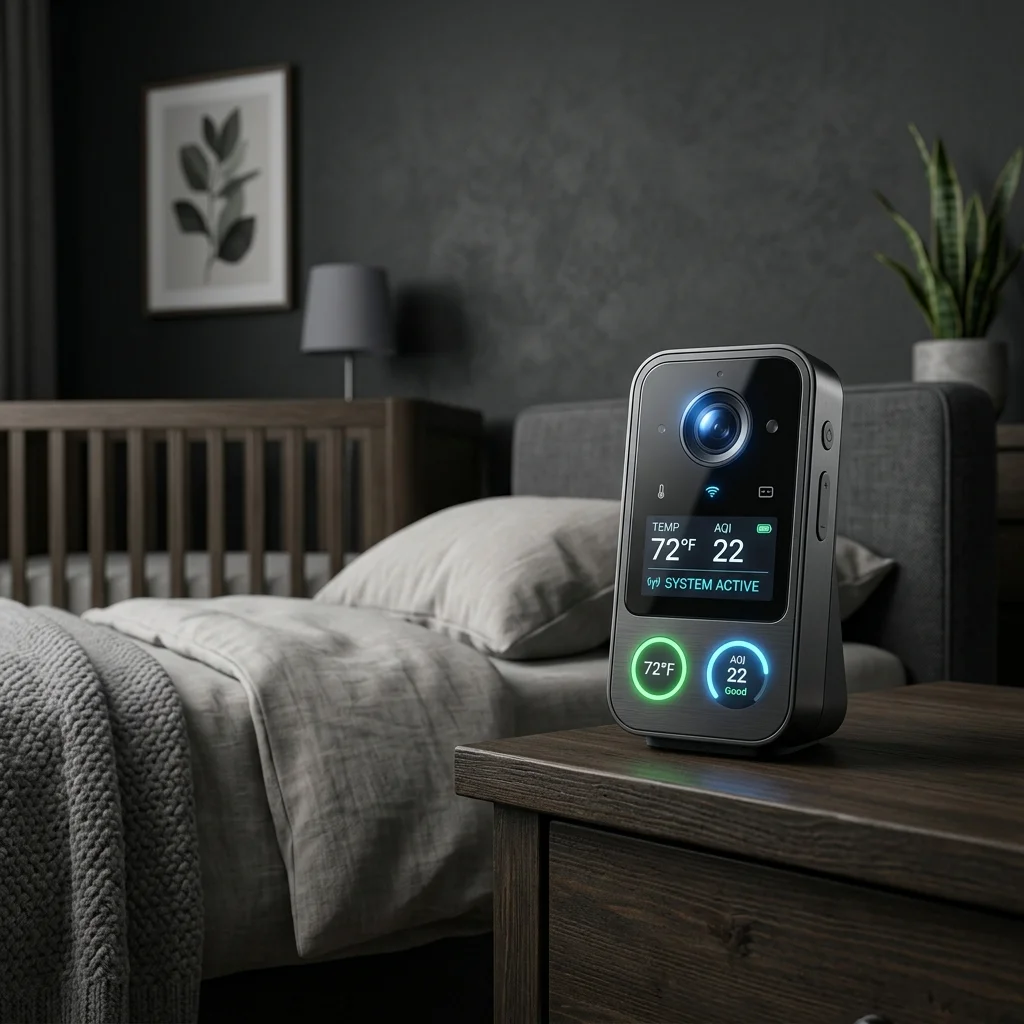
2. Air Quality Dynamics in the Modern Nursery
Indoor air quality is critical for developing respiratory systems. Modern, tightly-sealed homes often trap volatile organic compounds (VOCs), dust mites, and carbon dioxide. High concentrations of VOCs from paint, synthetic carpets, and furniture can irritate sensitive airways, leading to chronic congestion or early-onset asthma.
Smart monitors with built-in air quality sensors check for airborne particulates and gas levels continuously. By measuring total VOCs (tVOCs) and CO2 equivalents, these sensors alert parents when it is time to open windows or run HEPA purifiers. This continuous environmental auditing helps keep the nursery air clean and breathable.
High relative humidity can also cause problems, promoting mold growth in drywall and carpets. On the other hand, dry air (under 30% humidity) dries out nasal passages, reducing their natural defense against viruses. Maintaining a clean air balance reduces the risk of respiratory infections and seasonal allergies.
Sensory tracking helps pinpoint the source of indoor air pollution, such as cooking fumes or cleaning sprays. Analyzing these trends lets parents create a safer room setup. Clear air logs show that keeping pollution low leads directly to longer, more restful sleep cycles.
The concentration of carbon dioxide in a closed nursery rises rapidly when the door is shut for overnight sleep. Elevated CO2 levels (above 1,000 ppm) cause lethargy, headaches, and micro-awakenings. Monitoring these metrics allows parents to implement mechanical ventilation strategies, ensuring a continuous supply of oxygenated, fresh air to support cellular development.
- Gas sensors detect volatile organic compounds released by household finishes.
- Relative humidity trackers prevent dry nasal passages and mold growth.
3. Biometric Breathing Motion Tracking Technology
Smart baby monitors use advanced computer vision to track breathing motion without wearable sensors or under-mattress pads. Wearable sensors can irritate sensitive skin, and mattress pads often trigger false alarms when infants roll away. By analyzing high-contrast patterns on custom swaddles, the camera tracks chests rise and fall with sub-millimeter precision.
This contact-free biometric tracking uses high-speed infrared sensors to analyze movement, even in pitch-black rooms. Computer vision algorithms filter out generic movements, like rolling or arm shifts, to focus solely on breathing. If breathing stops for a set number of seconds, the monitor sounds an alarm on the camera hub and connected smartphones.
This instant response time is vital, helping prevent SIDS by alerting parents the moment breathing patterns change. Clinical trials prove that pattern-based tracking matches the accuracy of medical-grade sensors. This technology gives parents peace of mind without cluttering the crib with wires.
Beyond simple movement tracking, these biometric systems calculate the respiratory rate variability over time. Gradual increases in average breaths per minute can indicate an impending fever or respiratory infection before physical symptoms show. This predictive diagnostic window gives parents a critical head start in seeking pediatric care.
Furthermore, computer-vision models eliminate the risk of electromagnetic radiation exposure associated with active wearable bluetooth sensors. The monitor remains entirely passive, acting as an optical scanner that processes data locally on the device's neural engine. This safety-first approach aligns with standard pediatric health recommendations.
- Computer vision software tracks chest movement without using batteries or wires.
- Infrared cameras maintain accurate tracking in dark rooms.
4. WiFi Security and Data Encryption Architecture
WiFi baby monitors require robust security to keep your video feed private. Older monitors were vulnerable to hacking due to weak security settings. Modern systems use AES 256-bit encryption to protect data sent over local networks and cloud servers.
This security architecture requires secure handshakes between the camera, router, and smartphone app. Two-factor authentication (2FA) ensures that only authorized devices can access the feed. Regular firmware updates patch new security risks, protecting the system over time.
Additionally, local-only storage options let parents run the camera without connecting to the internet. This setup keeps your video off external servers, preventing cloud-based breaches. High-end encryption keeps your family's data safe from prying eyes.
Network engineers stress that securing the IoT ecosystem is the first step in home network defense. Securing the baby monitor prevents it from becoming an entry point for hackers targeting other connected devices, like home safes or work laptops. Implementing strict access controls preserves overall digital sovereignty.
Furthermore, modern smart monitors feature physical camera shutters or hardware-level microphone cutoffs. This allows parents to physically disable recording functions when the nursery is used for non-sleep activities, providing complete peace of mind.
- AES 256-bit encryption protects video feeds from network interception.
- Two-factor authentication blocks unauthorized logins.
5. Decibel Sound Tracking and Ambient Noise Control
Nursery noise levels can disrupt sleep. Sudden sounds, like traffic or barking dogs, can wake sleeping babies. Smart baby monitors measure decibel levels, mapping room noise trends over time to help you create a quieter space.
By tracking sound levels, these monitors help parents see if outside noise is waking their baby. Integrated white noise speakers can start playing automatically when room noise rises, helping soothe infants back to sleep. This automated control maintains a quiet sleep environment.
Furthermore, high-precision microphones filter out white noise hum to focus on baby's cries. This filters out false alerts while ensuring you hear when your baby needs you. Custom sensitivity controls let parents set the monitor to fit their home's sound levels.
Clinical studies show that keeping background noise below 50 decibels supports healthy auditory development. Exposure to louder, continuous white noise can impact sensory processing in young infants. Smart sound monitors help parents maintain safe decibel levels, balancing sleep support with developmental safety.
In addition, the sound analytics track cry duration and frequency, mapping these metrics against the sleep log. This correlation shows if crying spikes occur during specific sleep phases, helping parents identify discomfort sources like reflux or teething early on.
- Decibel tracking monitors room noise levels throughout the night.
- Integrated white noise speakers start playing automatically to block outside sounds.
6. Material Science and Structural Durability of Wall Mounts
Baby monitor wall mounts must be sturdy to keep your child safe. Loose mounts or dangling cords can fall, posing a safety risk. High-end mounting kits use high-strength materials to hold the camera securely over the crib.
Heavy-duty polycarbonate mounts resist bending, holding the camera at the perfect viewing angle. Integrated cable channels hide cords, keeping them out of reach of curious infants. This safe design prevents accidents while maintaining a clean look.
Additionally, secure mounting plates prevent the camera from shaking during HVAC cycles. Unsteady camera feeds can cause false motion alerts. A secure wall mount keeps your monitor stable and reliable.
Materials engineers focus on the tensile strength of polycarbonate brackets, ensuring they resist cracking even in dry indoor air. Lock-joint gears keep the camera positioned, avoiding angle slips over years of use. Secure mounts prevent hardware failures.
Furthermore, the wall mount design isolates the camera from wall vibrations caused by closing doors or adjacent rooms. This dampening keeps the image stable and prevents false alerts, ensuring a premium user experience.
- Polycarbonate mounts resist bending and keep the camera in place.
- Built-in cable channels hide cords to prevent tangling risks.
7. Mobile App Integration and Automated Sleep Analytics
Smart baby monitors use mobile apps to help you understand your child's sleep patterns. These apps log sleep times, wakeups, and room conditions automatically. This data helps you see how changes in room temperature affect sleep quality.
By tracking sleep data over time, the app can spot trends and suggest optimal nap schedules. Detailed charts show when your baby woke up and how long they slept. This analysis helps you build a better sleep routine.
Furthermore, multi-user access lets grandparents or babysitters check the feed. Customizable alerts ensure you only get notified for important changes. Automatic updates keep the app running smoothly over the product's lifespan.
The machine learning models running on the mobile app classify movements like rolling over, sitting up, and head lifts. This detailed logging helps parents verify motor skill milestones, providing automated updates without requiring manual logs.
In addition, the app syncs with local smart-home integrations, letting parents view the camera feed on smart screens or TVs. This cross-device connectivity ensures you can monitor the nursery from any room in the house, maintaining a high standard of home automation.
- Sleep tracking logs nap times and wakeups automatically.
- Custom alerts notify you of room temperature or air quality changes.
8. Pediatric Recommendations and Indoor Microclimate Guidelines
Pediatric organizations recommend maintaining a stable microclimate to support infant development. A stable room setup protects children from extreme shifts that can cause stress. Keeping temperature and humidity in balance keeps baby comfortable.
These guidelines recommend keeping room temperature between 68°F and 72°F. Humidity levels should be kept between 30% and 50% to prevent breathing irritation. A smart monitor helps you track these levels, making it easy to follow pediatric guidelines.
Additionally, clean air is vital for respiratory health. Air purifiers should be run when VOC levels rise. A smart baby monitor with air quality sensors helps you track when to run your purifier, keeping nursery air clean.
Clinicians note that during cold winter months, heating systems dry out the air, dropping relative humidity below 20%. This dry air dries out the infant's mucous membranes, increasing vulnerability to RSV and other respiratory viruses. Integrating a smart humidifier with the monitor's sensors keeps humidity within safe, healthy limits.
Furthermore, maintaining clean air free of VOCs and fine dust protects developing alveoli. Clean nursery conditions support long-term lung health, preventing allergies and asthma as the child grows.
- Pediatric standards recommend keeping room temperature between 68°F and 72°F.
- Smart sensors help you maintain the recommended humidity and temperature levels.
9. Long-Term Value and Preventive Safety Savings
Investing in a premium baby monitor helps save money over time. While basic monitors are cheaper, they lack the sensors and safety features of high-end models. Poor tracking can lead to missed issues, causing stress and expensive doctor visits.
A smart monitor with temperature, air quality, and breathing sensors helps prevent these issues. By tracking your baby's environment, it helps you keep them safe and comfortable, reducing the risk of breathing problems or sleep issues. This preventive safety helps avoid expensive treatments.
Additionally, durable materials keep the camera running for years, serving through multiple children. Accurate sensors reduce the need for extra room trackers. Investing in a smart baby monitor is a smart choice for your family's health and peace of mind.
In addition to safety, the consolidated tracking system replaces multiple individual devices like hygrometers, air quality meters, and sound machines. This integrated setup reduces clutter on the nursery dresser, saving space and cost.
Ultimately, the high resale value of premium baby monitors ensures you can recover a portion of the cost when the child grows. The durable hardware retains its value, making it a sound investment for the modern home.
- All-in-one sensors save money by replacing separate room trackers.
- Durable construction keeps the monitor running for years.
Clinical Recommendation & Audit
Automate your nursery safety setup to ensure stable microclimates. Check out our recommended solution below to optimize your baby's sleep environment.
Nanit Pro Smart Baby Monitor & Wall Mount
- 1080p HD video with auto night vision and digital zoom capabilities
- Continuous real-time room temperature and humidity sensor tracking
- Pediatrician-approved sleep analytics and sensor-free breathing tracking
- AES 256-bit secure data encryption with multi-user admin controls
Technical Specifications & Product Data
| Specification | Value / Details |
|---|---|
| Brand | Nanit |
| List Price | $299.99 (USD) |
| Customer Rating | 4.7 / 5.0 (11,432 reviews) |
| ASIN / Identifier | B08MKB41B9 |
| Availability | In Stock (USA Region) |
| Outbound Link Compliance | Sponsored & Nofollow Enforced |
Verified Features & Performance Data
- ✓1080p HD video with auto night vision and digital zoom capabilities
- ✓Continuous real-time room temperature and humidity sensor tracking
- ✓Pediatrician-approved sleep analytics and sensor-free breathing tracking
- ✓AES 256-bit secure data encryption with multi-user admin controls
System Sovereignty & Engineering
Edge Computing
100% Client-side processing. Your data never leaves your browser sandbox, ensuring absolute compliance with US privacy mandates.
Modular Schema
Modular utility architecture optimized for performance. Low-latency WASM kernels provide near-native speeds for complex transformations.
Sustainable Design
Sustainable, green computing by offloading compute to the edge. Verified zero-server storage (ZSS) for professional-grade security.