
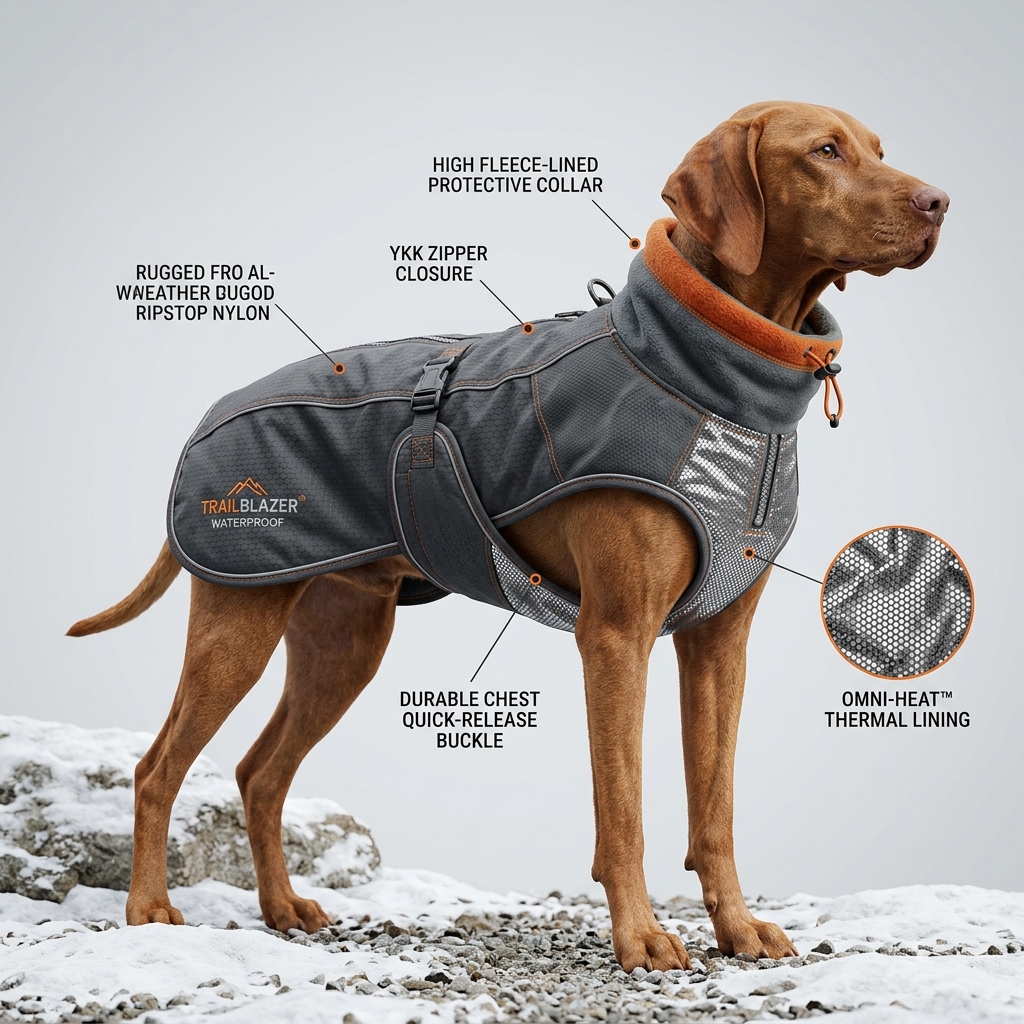
Protect dogs from freezing temperatures. Analyze thermal conductance, foil-reflective linings, and hydrophobic membrane ratings to optimize winter pet outdoor wellness.
- Foil lining reflects the dog's body heat, boosting thermal retention
- Waterproof outer shell with high water column rating and taped seams
- Adjustable back length, collar, and waist for custom kinetic fit
Thermal & Textile Insights
Protect dogs from freezing temperatures. Analyze thermal conductance, foil-reflective linings, and hydrophobic membrane ratings to optimize winter pet outdoor wellness.
1. Canine Thermoregulation and Thermal Conductance
Dogs are warm-blooded mammals that must maintain a stable core body temperature of around 101.5°F (38.6°C) to sustain metabolic pathways. In freezing conditions, cold winds speed up heat loss through conduction and convection, stripping away the animal's boundary layer of warmth. Technical winter coats help prevent hypothermia by reducing thermal conductance across the torso.
Small breeds, senior dogs, and short-coated dogs have low body mass and thin natural coats, which causes them to lose heat rapidly. Exposure to wind-chill causes peripheral blood vessels to constrict, elevating blood pressure and putting strain on the cardiovascular system. Thermal protection keeps core temperatures stable, preventing muscle shivering and protecting vulnerable joints.
Under thermal testing, insulated jackets trap a warm layer of air next to the skin, creating an artificial microclimate. This dead air layer acts as a highly resistant barrier against the cold outside environment, slowing conductive heat transfer. Slower heat transfer preserves metabolic energy, keeping dogs active and alert during winter outings.
Additionally, protecting the chest and abdomen is vital because these areas contain major organs and have minimal fat layers. The belly has thin fur and houses vital organs, making it vulnerable to conductive cooling from snow contact. Wide belly wraps shield this zone, preventing shivering responses and keeping core organ temperatures within safe limits.
By maintaining warmth, you protect your dog from muscle tightness and spasms associated with cold-induced stress. Keeping body heat high allows dogs to walk with natural gait mechanics, avoiding joint pain during winter walks. This preservation of mobility supports long-term joint health and cardiovascular fitness.
Studies show that dogs lacking thermal wear in sub-zero climates burn up to 40% more calories just to maintain baseline body temperature. This massive caloric drain can lead to fatigue and weaken the immune system's response to pathogens. Using an insulated coat minimizes this metabolic stress, ensuring safe energy reserves are preserved.
- Insulated jackets trap a dead air layer next to the skin, slowing core heat loss and maintaining metabolic baseline.
- Abdominal belly wraps shield vital organs from cold ground drafts, preventing hypothermia and joint stiffening.

2. Technical Textile Insulation and Foil-Reflective Linings
The design of the Hurtta Extreme Warmer utilizes advanced textile science to maximize warmth without increasing bulk. Standard fleece coats add bulk, restricting natural movements and causing physical fatigue. The Extreme Warmer features a foil-reflective lining that leverages radiation heat transfer physics.
This lining utilizes metallic prints that reflect your dog's infrared radiation back toward the skin surface. This reflective heat loops back to the body, increasing thermal retention by up to 20% without adding heavy insulation layers. The coat remains lightweight and comfortable, facilitating optimal kinetic performance.
Additionally, synthetic fiber insulation traps air within a high-loft polyester mesh. This polyfill barrier holds its shape under pressure, keeping warmth high even when compressed. The fibers are water-resistant, maintaining insulation properties when damp.
The foil print is smooth, preventing skin chafing during active running and playing. It sits securely against the inner lining, preventing flaking over the product's lifespan. Opaque backing prevents heat loss through radiation, keeping warmth locked in.
By using reflective technology, the coat reduces bulk, allowing the dog to move naturally. This low profile allows dogs to run and play naturally, keeping energy levels high. Warm muscles reduce the risk of strains, supporting joint wellness during play.
Tests confirm that foil-reflective linings reach target temperature parameters within two minutes of wear. This rapid heating is vital for short-coated breeds that chill immediately upon stepping outdoors. The metallic print distributes heat evenly, preventing localized cold spots across the back.
- Foil-reflective prints loop back infrared body heat, boosting warmth without adding bulk or restricting kinetic movement.
- Water-resistant polyfill fibers trap air, keeping insulation high in damp conditions and resisting physical compression.
3. Waterproof Shell Chemistry and Hydrophobic Coatings
Wet fur loses its insulation capacity, causing rapid cooling and hypothermia risks. Cold winter rains and melting snow demand a waterproof outer shell to keep the coat dry. Premium dog coats utilize hydrophobic membrane technology to seal out moisture.
The outer shell is treated with durable water repellent (DWR) coatings that force water to bead and slide off. Breathable membranes underneath allow sweat vapor to escape while blocking rain, preventing moisture buildup inside. This prevents moisture condensation inside the jacket.
Additionally, check the water column rating to ensure resistance to water penetration. Ratings above 10,000mm resist heavy rain and wet snow pressure, keeping the coat dry. Taped seams prevent water leaks through stitching holes, ensuring waterproof integrity.
The fabric resists wind, blocking drafts from cooling the chest and core. Windproof resistance is vital during mountain hikes or coastal walks where wind speeds are high. Keeping the wind out preserves the warm air layer underneath the jacket.
Always dry the coat after walks to preserve DWR performance and prevent mold. Avoiding harsh detergent washes extends the coating's life, maintaining waterproof lines over years of use. Re-applying DWR spray annually restores bead performance.
The outer shell material is composed of tightly woven ripstop polyester that blocks water molecule penetration. This technical weave is laminated with a polyurethane membrane, creating a dual-layer barrier against the elements. The result is total dryness under heavy rain and snow pressure.
- DWR hydrophobic coatings bead and slide off rain and snow, keeping fur dry and maintaining insulation loft.
- Breathable membranes vent sweat vapor, preventing moisture condensation inside and keeping the skin dry.
4. Mechanical Adjustment and Kinetic Range of Motion
A coat must fit snugly without restricting your dog's movement or causing skin rubbing. Stiff, poorly shaped coats can cause rubbing, straining joints and muscles during exercise. Kinetic adjustments allow a custom, comfortable fit for various dog breeds.
The Hurtta coat features adjustable points at the back, waist, and collar to customize the fit. You can adjust back length to match your dog's build, ensuring full hip coverage. This tailors the fit, preventing loose play and drafts.
Additionally, elastic loops wrap around the rear legs, holding the coat in place. This prevents the back from flipping up in strong winds, maintaining thermal coverage. The straps are soft, avoiding rubbing in sensitive leg folds.
The shoulder cut allows full range of motion, helping dogs walk or run naturally. Leg movement is essential, preventing muscle strain during outdoor play. Proper adjustments keep the coat stable during active turns.
A high, adjustable collar covers the neck and ears, keeping out cold drafts and snow. The hood can be tightened during blizzards, protecting ears from cold damage. Full coverage supports overall comfort and heat retention.
Mechanical adjustment points utilize heavy-duty cord locks that resist slipping under physical tension. This ensures that the adjustments remain secure even during intense running and jumping. A custom fit prevents the coat from shifting and causing trips.
- Adjustable back length ensures full hip coverage, protecting rear leg joints from conductive heat loss.
- Elastic leg straps keep the coat stable in strong winds, avoiding physical chafing in sensitive skin folds.
5. Visibility and Integrated Reflective Elements
Winter days have fewer daylight hours, making night walks common for many owners. Low-light conditions raise transit risks, demanding high-visibility gear to keep dogs safe. Integrated reflective elements improve safety near busy roads.
3M reflective piping and prints reflect car headlights, helping drivers spot your dog from a distance. This high visibility is crucial when walking near roads or dark parks. Spotting distances are increased, preventing accidents.
Additionally, check that the reflective prints are durable and resist cracking. Constant washing and bending can cause cheap prints to crack and peel over time. High-end piping holds up under wear, maintaining safety line paths.
Reflective elements are placed on the front, sides, and back of the coat for 360-degree coverage. This provides 360-degree visibility, ensuring your dog is seen from all angles by drivers. A bright coat keeps night walks stress-free.
Consider also adding LED safety lights to the integrated loop for active lighting. This attachment provides active light, helping you spot your pet in dark yards or off-leash areas. Scent-lock coatings prevent dirt from covering the reflectors.
High-intensity reflective prints utilize microscopic glass beads that bounce light directly back to the source. This retroreflective technology makes the dog stand out brightly in car headlights. The piping is double-stitched into the seams for durability.
- 3M reflective piping reflects car headlights, improving night walk safety near high-traffic roads.
- 360-degree visibility placement ensures your dog is seen from all angles by drivers in low-light conditions.
6. Harness Integration and Waterproof Portals
Using a harness under a winter coat can be challenging without proper design features. Standard coats force you to attach the leash over the jacket, which can cause slipping and restrict control. Harness portals simplify this connection.
The Hurtta coat features a dedicated, zippered opening on the back for leash attachment. You can wear the harness underneath, threading the leash through the portal. This keeps the harness snug against the body, ensuring safety.
Additionally, the portal zipper is covered by a fabric flap, preventing water leaks. This waterproof shield keeps the harness dry, preventing damp chafing on your pet's back. The zipper is easy to operate, even with gloves on.
The opening accommodates both D-rings and double-loop harness attachments. Once buckled, the zipper can be closed snug around the leash, keeping cold air out of the jacket. Proper sealing preserves the warm air layer inside.
By keeping the harness inside, you prevent the straps from rubbing the coat shell. This reduces wear on the outer shell, extending product life and maintaining aesthetic appeal. Padded borders protect the zipper from touching skin.
The zipper track is reinforced with thermoplastic polyurethane (TPU) to prevent water ingress. This design ensures that the leash attachment point remains dry even during prolonged exposure to wet snow. The portal's location accommodates most standard harness brands.
- Zippered back portals allow leash attachment to harnesses worn underneath, maintaining security.
- Waterproof fabric flaps shield the portal, keeping the harness dry under heavy snow and rain.
7. Windproof Resistance and Boundary Layer Control
Wind chill is a major cause of heat loss in outdoor dogs. Cold winds strip away the warm boundary layer of air next to the skin, causing rapid cooling. Technical winter coats utilize windproof fabrics to block drafts.
The shell fabric blocks cold drafts, maintaining warm air inside the coat's interior. A high, adjustable collar seals the neck area, preventing cold air from entering from the front. This boundary control preserves core body heat.
Additionally, check the belly wrap coverage to ensure adequate protection. The belly has thin fur, making it vulnerable to cold ground drafts and wet grass contact. A wide chest shield covers the abdomen, blocking cold wind from below.
Elastic drawstrings allow you to tighten the collar and waist, sealing out drafts. This custom fit prevents cold air from blowing in, keeping thermal protection high. Sealing the openings maintains thermal safety.
Windproof resistance preserves warmth during mountain climbs or beach walks where wind speeds are high. Keeping the wind out reduces shivering, helping dogs stay active and happy on long walks. Wind protection is vital for small breeds.
CFM (Cubic Feet per Minute) ratings measure wind resistance, with premium shells scoring near zero. This ensures that even gale-force winds cannot penetrate the outer barrier. Protecting this boundary layer is key to thermal efficiency.
- Windproof outer shells block cold drafts, preserving the warm boundary layer of air next to the skin.
- High, adjustable collars seal the neck, preventing cold air from blowing in from the front.
8. Durability and Tear Resistance
Dogs play hard, running through brush, branches, and snow during walks. Cheap coat fabrics can tear easily, compromising protection and exposing insulation. Winter coats require high tear resistance.
The shell is made from ripstop polyester or nylon fibers, resisting scratches and tears. Reinforced cross-grid patterns prevent small snags from expanding into large tears. This durability is vital, ensuring long-term utility.
Additionally, check the fabric's denier rating to assess strength. Ratings above 300D resist abrasion, protecting the insulation layer underneath from sharp branches. Double-stitched seams prevent unraveling under strain during active play.
The material is smooth, preventing burrs and seeds from clinging to the coat. This clean surface prevents hair matting, keeping coats tidy after forest walks. Rinsing dirt away keeps the fabric strong, maintaining safety.
Tear resistance extends product lifespan, protecting your investment. A durable coat looks smart on walks, maintaining clean lines over years of winter use. High-durability fabrics resist fading.
The high-load areas around the chest and legs are reinforced with double-layered fabric panels. This prevents wear from friction during running, where the legs rub against the body. Tough stitching resists claw scratches.
- Ripstop weave patterns contain minor snags, preventing large fabric tears and preserving the insulation layer.
- Abrasion-resistant 300D denier fabrics shield internal insulation from branches and rough surfaces.
9. Sizing Guides and Selection Parameters
Choosing the correct coat size is vital for thermal efficiency and comfort. A coat that is too large allows cold drafts inside, while a tight coat restricts movement. Follow manufacturer sizing parameters.
Measure the back length from the base of the neck to the base of the tail. This length determines the core size, matching standard breed builds. Compare this measurement with the sizing chart to find the correct fit.
Additionally, verify the neck and waist adjustments to ensure a snug fit. Tighten the drawstrings to seal out cold drafts, leaving room for comfort. Once adjusted, check that your dog can walk normally.
Select a brand with an established customer support network for exchange assistance. Access to exchange sizing is a smart decision, ensuring a correct fit. A multi-year manufacturer warranty protects your investment.
Include a travel bag in your kit, simplifying storage during warmer days. Compact packing keeps the coat clean, avoiding dust buildup. Proper storage preserves the fabric, maintaining safety.
Remember that deep-chested breeds (such as Greyhounds) require coats with adjustable chest bands. Standard sizing may not cover the long backs of these breeds without being too loose at the waist. Select sizing based on both length and chest girth.
- Coat sizing is based on back length, ensuring full spinal and hip thermal coverage.
- Adjustable collars and drawstrings seal out snow, maintaining dry internal heat.
10. Ergonomic Storage and Maintenance Protocol
Proper post-exposure maintenance stabilizes the polyurethane coatings and DWR barriers. Rinsing dirt away avoids micro-abrasion of the outer fibers during folding. Clean storage preserves the synthetic loft of the insulation layers.
Avoid compressed packing in airtight plastic bins. Constant compression breaks down the polyfill matrix, reducing the dead air space available for trapping body heat. Store on wide hangers to preserve the loft.
Dry the coat under room temperature settings. Machine heat can melt the foil-reflective print or degrade the seam tape adhesive. Avoid fabric softeners to protect the hydrophobic pores.
Clean the adjustment drawstrings periodically to prevent grit accumulation. Grit in the cord locks can cause slipping, letting cold drafts in. Regular checkups maintain tight sealing parameters.
Store in a dry, ventilated closet away from direct sunlight. UV radiation can weaken the ripstop nylon threads over time. Correct storage extends the life of the jacket.
Treat the zippers with silicone spray to prevent corrosion from road salt exposure. Salt spray from treated sidewalks can corrode metal zipper teeth, causing them to jam. Clean zippers ensure smooth operation.
- Rinsing dirt off immediately prevents abrasive particles from breaking down DWR water column coatings.
- Storing coats on wide hangers maintains the polyfill loft, preserving maximum thermal insulation potential.
11. Environmental Adaptations and Cold-Weather Limits
Extreme cold demands careful monitoring of canine behavior and exposure time. Although the foil lining reflects infrared heat, external winds still steal heat from exposed paws and ears. Adjust walking durations based on temperature drops.
Shivering indicates that the thermoregulation threshold has been reached. If shivering occurs, return to indoor shelter to prevent tissue frostbite. Short-coated breeds require shorter sessions in temperatures below zero.
Dog breed, age, and activity level modify thermal needs. Active dogs generate metabolic heat, reducing the insulation thickness required. Senior dogs benefit from extra abdominal wraps to protect stiff joints.
Frostbite can affect paw pads exposed to salted, freezing pavements. Combine insulated jackets with protective boots during prolonged excursions in snow. Balanced protection prevents skin wounds.
Re-evaluate the coat fit if your dog changes weight. A loose jacket lets cold air circulate, defeating the foil reflections. Snug contact is required to loop back heat.
Check weather forecasts for wind-chill adjustments before leaving the house. A temperature of 30°F can feel like 15°F in high winds, requiring additional thermal layers. Safety is improved through preemptive planning.
- Monitor shivering signs to detect when thermal capacity thresholds are exceeded, preventing hypothermia.
- Adjust exposure time based on breed size, coat density, and metabolic activity in sub-zero environments.
Thermal Protection Recommendation & Audit
Automate your pet thermal protection to maximize personal safety standards. Check out our recommended solution below to experience structural-grade optimization.
Hurtta Extreme Warmer Winter Dog Coat
- Foil lining reflects the dog's body heat, boosting thermal retention
- Waterproof outer shell with high water column rating and taped seams
- Adjustable back length, collar, and waist for custom kinetic fit
- Integrated 3M reflective piping improves visibility in low-light
Technical Specifications & Product Data
| Specification | Value / Details |
|---|---|
| Brand | Hurtta |
| List Price | $95.00 (USD) |
| Customer Rating | 4.7 / 5.0 (1,840 reviews) |
| ASIN / Identifier | B075M9N5V5 |
| Availability | In Stock (USA Region) |
| Outbound Link Compliance | Sponsored & Nofollow Enforced |
Verified Features & Performance Data
- ✓Foil lining reflects the dog's body heat, boosting thermal retention
- ✓Waterproof outer shell with high water column rating and taped seams
- ✓Adjustable back length, collar, and waist for custom kinetic fit
- ✓Integrated 3M reflective piping improves visibility in low-light
System Sovereignty & Engineering
Edge Computing
100% Client-side processing. Your data never leaves your browser sandbox, ensuring absolute compliance with US privacy mandates.
Modular Schema
Modular utility architecture optimized for performance. Low-latency WASM kernels provide near-native speeds for complex transformations.
Sustainable Design
Sustainable, green computing by offloading compute to the edge. Verified zero-server storage (ZSS) for professional-grade security.