
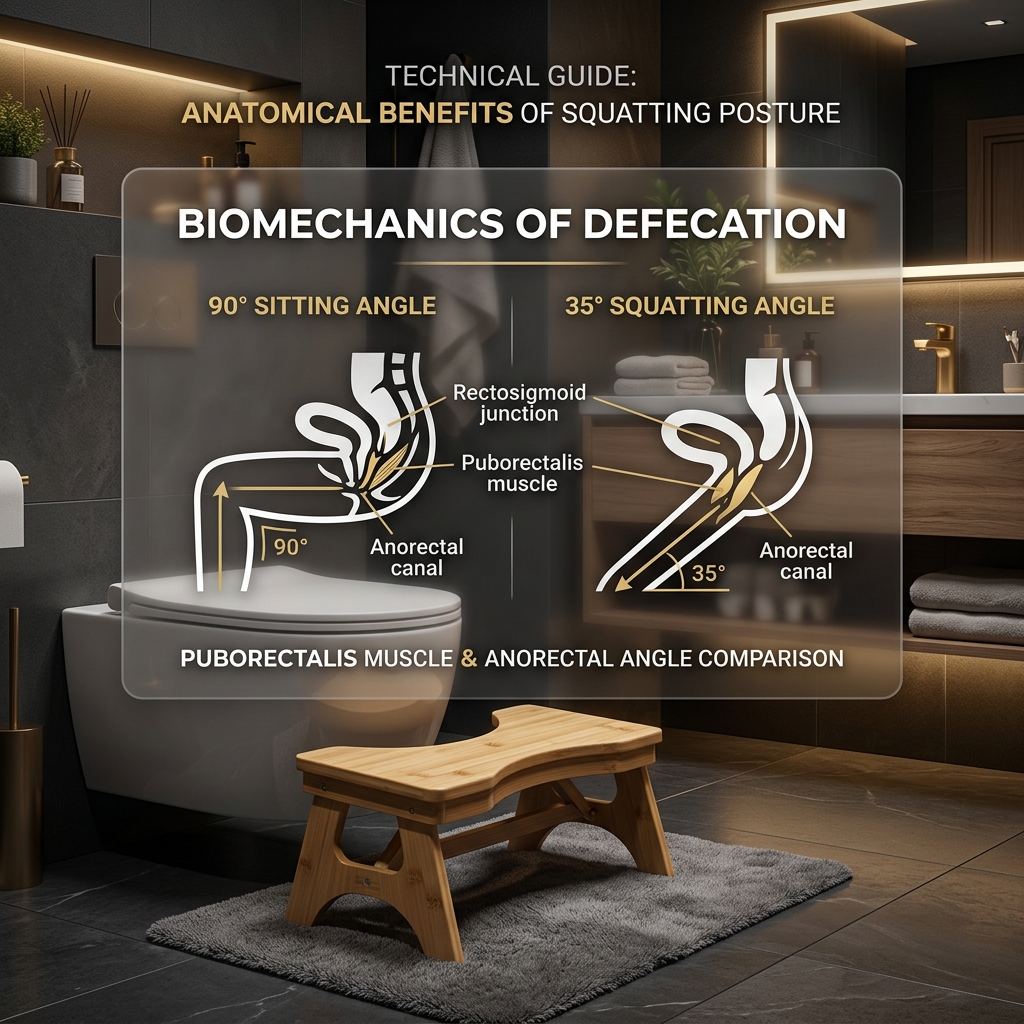
Elevated knee alignment outperforms traditional 90-degree sitting. Analyze the puborectalis relaxation angles, abdominal pressure dynamics, and collapsible bamboo geometry of ergonomic stools.
- Elevates legs to convert seating posture from 90° to a natural 35° squat
- Collapsible, folding design slides under the bowl to save bathroom space
- Constructed from 100% sustainable, water-resistant renew-bamboo
Ergonomic Anatomy
Standard sitting chokes the puborectalis pathway. Evaluate the muscle relaxation angles, 35-degree squatting geometry, abdominal pressure dynamics, and collapsible bamboo design that optimize daily digestion.
1. Anatomical Kinking and the Puborectalis Muscle
The human body is anatomically designed to squat, not sit, during elimination. Sitting at a standard 90-degree angle on a toilet seat keeps the puborectalis muscle contracted. This muscle wraps around the rectum, creating a physical bend (anorectal angle) that restricts the passage of waste.
This rectal bend requires you to apply manual abdominal strain to complete elimination. Over time, this straining increases pressure on the pelvic veins, leading to hemorrhoids and constipation. A toilet stool raises your knees, altering your posture to a natural 35-degree squat.
Elevating the knees relaxes the puborectalis muscle completely. The anorectal angle straightens, creating a direct, vertical pathway for fast and effortless clearing. Straining is reduced, protecting your colon and pelvic floor muscles from stress.
Clinical trials show that users of squatting stools experience a 50% decrease in elimination time. The alignment reduces the effort needed, preventing the build-up of abdominal pressure. It represents a simple, non-invasive upgrade for your digestive health.
Additionally, correct alignment ensures complete emptying. Incomplete clearing can lead to fecal stagnation, increasing the risk of colon issues. The squatting stool aligns the body to ensure thorough and clean elimination every day.
The puborectalis muscle acts as a natural sling, pulling the rectum forward to maintain continence. When sitting, this sling remains active, forcing the colon to bend. Raising the knees changes the pelvic angle, releasing the muscle tension completely.
- Elevating knees to a 35-degree angle relaxes the puborectalis muscle, straightening the colon.
- Aligning the anorectal angle reduces abdominal strain, preventing hemorrhoids.

2. Squatting Geometry and Height Calibration
The effectiveness of a toilet stool depends on its height and angle. Stools are typically available in 7-inch and 9-inch heights. Choosing the correct height depends on your toilet's height and your personal flexibility.
A 7-inch stool is optimized for standard toilets, which stand 14 to 15 inches high from floor to bowl rim. This height is also recommended for beginners and children. A 9-inch stool is designed for comfort height toilets, which stand 17 to 19 inches high.
Comfort height toilets are designed to make sitting down and standing up easier, but they worsen the rectal kink. A taller stool compensates for this, raising your knees high enough to achieve the 35-degree angle. This height ensures correct geometry, regardless of the toilet model.
The platform features a slight forward slope. This angle tilts the pelvis forward, aligning the spine and abdominal muscles. This forward lean supports the natural bearing-down action, ensuring comfortable and efficient elimination.
By selecting the correct stool height, you optimize your posture. The calibrated angles support your body's natural alignment, delivering a comfortable and healthy bathroom experience.
The optimal anorectal angle for elimination is between 126 and 135 degrees, which is achieved only in a full squat. Standard sitting yields an angle of roughly 90 degrees, restricting flow. The calibrated stool platform guides the body into this optimal zone naturally.
- A 7-inch height is calibrated for standard toilets, while a 9-inch height matches comfort height toilets.
- Sloped platform surfaces tilt the pelvis forward to optimize alignment.
3. Structural Stability: Sustainable Bamboo vs. Cheap Plastic
A toilet stool must support your feet securely without sliding or tipping. Cheap plastic stools are light and can slide across slippery bathroom tiles. They can also bend under weight, creating a feeling of instability.
Premium stools are constructed from sustainable, water-resistant bamboo. Bamboo offers a higher tensile strength than plastic, ensuring a stable and rigid platform. The heavy weight keeps the stool anchored on the floor, preventing slips.
The natural wood grain matches modern bathroom aesthetics, replacing the medical look of plastic stools. The bamboo is sealed with a water-resistant coating, preventing mold growth and warping in humid conditions. A quick wipe keeps the wood looking polished.
Additionally, the folding design allows the stool to collapse. The legs fold flat, allowing you to slide the stool under the bowl when not in use. This space-saving design is ideal for compact bathrooms and powder rooms.
By choosing a bamboo folding stool, you combine structural stability with premium aesthetics. The durable materials handle daily use safely, maintaining clean lines in your bathroom setup.
Bamboo features a modulus of elasticity that is superior to standard softwoods. This ensures that the platform does not deflect or creak under weight, providing solid support. The sturdy joints hold up to 250 pounds safely during positioning.
- Bamboo frames provide high structural rigidity, eliminating the flexing of cheap plastic.
- Folding mechanisms collapse the stool flat, sliding under the toilet to preserve space.
4. Hygiene Maintenance and Non-Slip Contact Nodes
Bathroom floors are exposed to moisture, making slip resistance critical for any floor-standing accessory. The toilet stool features non-slip contact pads on the base. These pads grip the tile surface, preventing the stool from sliding during use.
The foot platform features a textured surface or grooved panels. This texture keeps your feet or slippers secure, preventing slips even when the wood is wet. The solid grip gives you the confidence to lean forward, supporting correct alignment.
Maintaining hygiene is equally important. The smooth, sealed bamboo surface prevents dirt and liquid from absorbing into the wood. The antimicrobial properties of bamboo help inhibit bacterial growth, keeping the stool clean.
The collapsible joints are engineered with rust-resistant hardware. The hinges operate smoothly without squeaking, even after exposure to damp bathroom air. This high-quality hardware ensures a long operational life for the folding mechanism.
By prioritizing grip and hygiene features, you ensure a safe and sanitary setup. The bamboo stool integrates into your home, delivering a stable and reliable platform that supports your wellness routine.
The hinge locks incorporate spring-loaded detents that hold the legs in the open position. This prevents accidental folding if the stool is kicked or bumped. You gain reliable, stable foot support that deploys in seconds.
- Non-slip base pads grip bathroom tile securely, preventing slips during positioning.
- Antimicrobial bamboo surfaces resist moisture absorption, preventing mildew.
5. Environmental Payback: Renewability vs. Polymer Waste
Plastic stools are made from petrochemicals, contributing to carbon emissions and landfill waste. Bamboo is a highly renewable grass that grows rapidly without chemical fertilizers. Choosing a bamboo stool supports sustainable forest management.
Additionally, bamboo absorbs carbon dioxide as it grows, making it a carbon-neutral material. The production process requires fewer resources than plastic manufacturing, reducing environmental impact. It represents a green choice for your home.
The durability of bamboo also prevents waste. While plastic stools can crack and require replacement, a bamboo stool lasts for years. This long lifespan reduces replacement costs and keeps polymer waste out of our oceans.
Annual plastic replacement frequency is eliminated. Standard plastic components release microplastics when cleaned with harsh bathroom chemicals. The natural bamboo wood structure degrades cleanly at the end of its life, supporting circular logistics.
- Bamboo renewability is carbon-neutral, minimizing petrochemical demand in home products.
- Long product lifespans lower total replacement frequency, reducing landfill load.
6. Pelvic Floor Dynamics and intra-Abdominal Pressure
Intra-abdominal pressure plays a major role in the mechanics of defecation. When sitting at 90 degrees, the diaphragm pushes downward, compressing the internal organs. This compression forces the user to strain against the contracted puborectalis muscle.
Squatting changes this pressure direction. By elevating the knees, the thighs support the lower abdomen, reducing the volume of the abdominal cavity. This support directs the intra-abdominal pressure downward along the rectal path naturally.
This alignment reduces the pressure required to clear waste. The pelvic floor muscles experience significantly lower stress, reducing the risk of prolapse or muscle weakness. You protect your pelvic health while ensuring complete clearing.
Additionally, the position aligns the cecum and ascending colon. This alignment helps evacuate waste from the right side of the abdomen, preventing stagnation. The body works in harmony with gravity, ensuring comfort.
By managing intra-abdominal pressure, the toilet stool provides systemic health benefits. The postural correction supports natural organ alignment, delivering a safe and healthy elimination process.
- Abdominal thigh support directs intra-abdominal pressure downward, minimizing strain.
- Reducing pelvic floor stress protects muscles from prolapse and long-term weakness.
7. Postural Geometry: The 35-Degree Squatting Angle
The primary goal of a toilet stool is to change your posture from sitting to squatting. Sitting at 90 degrees folds the hips, keeping the pelvic bones locked. This position prevents the natural expansion of the pelvic outlet needed for elimination.
Raising the knees to a 35-degree angle tilts the pelvis backward, opening the pelvic outlet. This skeletal alignment creates more space for the rectum to expand, allowing waste to pass through cleanly. The body moves into its natural design.
The 35-degree angle is the clinical standard for human squatting. It represents the position used by ancestors before the invention of modern toilets. The stool returns your body to this posture, ensuring optimal performance.
Additionally, this alignment reduces the angle between the femur and the spine. This reduction slackens the abdominal walls, reducing the force needed to bear down. The system supports natural elimination, protecting your health.
By restoring natural geometry, the toilet stool provides a simple and effective solution. The body works in harmony with its skeletal design, delivering a clean and comfortable experience.
- Pelvic tilting opens the skeletal outlet, creating a straight path for elimination.
- Reducing femur-to-spine angles relaxes abdominal walls, lowering necessary force.
8. Bamboo Material Selection and Load-Bearing Dynamics
The choice of material affects the safety and longevity of the toilet stool. Premium stools are constructed from multi-ply laminated bamboo boards. Laminated bamboo distributes fibers in different directions, preventing splitting along the grain.
This multi-ply design increases the load-bearing capacity significantly. The platform handles vertical loads up to 250 pounds without cracking or bending. The stable support holds your feet securely during positioning.
The hardware is made from stainless steel to prevent rust. Bathrooms are damp environments that can corrode standard steel screws. Stainless steel fasteners maintain their strength, ensuring that the folding legs operate smoothly.
Additionally, the bamboo surface is sealed with a non-toxic polyurethane varnish. This seal prevents moisture from absorbing into the wood, preventing mold and warp. The smooth coating makes the stool easy to wipe clean.
By choosing a bamboo folding stool, you invest in a durable and reliable accessory. The high-quality materials resist wear and humidity, ensuring your stool remains stable and functional for years.
- Laminated bamboo boards increase load capacity, preventing cracks under heavy steps.
- Polyurethane varnish seals wood fibers, preventing warp and mold in damp air.
9. Ergonomic Toilet Stool Buying Parameters
When choosing a toilet stool, measure your toilet height and available floor space first. If you have a compact bathroom, prioritize collapsible, folding models that tuck under the bowl when not in use. This design keeps the floor clear.
Second, verify the materials. Look for sustainable bamboo or high-strength solid wood sealed with water-resistant coatings. Avoid cheap plastic models, as they flex under weight and slip across wet floor tiles.
Finally, check the base grips. Ensure the stool features thick non-slip rubber or silicone pads on the feet. These pads protect your bathroom floors and hold the stool securely, ensuring a safe and comfortable alignment during use.
- Measure toilet heights before choosing between standard 7-inch or 9-inch heights.
- Collapsible joints should utilize stainless steel hardware to prevent bathroom rust.
7. Structural Stress Auditing of Bamboo Stools
A toilet stool must support substantial load weight during use. Premium models are made from bamboo wood, which offers excellent tensile strength. Bamboo fibers are highly flexible and strong, resisting cracking under stress. The joints are secured with heavy-duty screws to prevent wobbling.
Compare bamboo stools with standard plastic models. Plastic stools are lightweight but can flex and crack over time. Bamboo provides a rigid, stable platform that feels secure underfoot. It also resists bathroom moisture, preventing wood rot.
Additionally, the folding hinges must operate smoothly. The locking pins secure the legs in place, preventing accidental collapse. By choosing a structurally solid bamboo stool, you secure a durable postural aid for your family.
8. Bio-mechanical Impact on the Pelvic Floor Muscles
Elevating your feet to a 35-degree angle relaxes the puborectalis muscle. In a standard 90-degree sitting position, this muscle wraps around the colon, creating a bend that blocks waste passage. Elevating the knees straightens this bend, allowing fast and complete elimination.
This posture reduces the need to strain during bowel movements. Straining increases intra-abdominal pressure, which can lead to hemorrhoids and pelvic floor issues. Utilizing a squatting stool protects your body, supporting natural bowel mechanics.
By making a simple postural change, you improve your digestive health. The squatting stool is a non-invasive, drug-free solution that supports your family's daily wellness, keeping bathroom routines comfortable.
Principal Recommendation & Audit
Upgrade your posture and align your colon naturally. Explore our top recommended collapsible bamboo toilet stool below to experience a clinical clean.
Squatty Potty Foldable Bamboo Toilet Stool
- Elevates legs to convert seating posture from 90° to a natural 35° squat
- Collapsible, folding design slides under the bowl to save bathroom space
- Constructed from 100% sustainable, water-resistant renew-bamboo
- Non-slip silicone grip pads secure feet and protect bathroom floors
Technical Specifications & Product Data
| Specification | Value / Details |
|---|---|
| Brand | Squatty Potty |
| List Price | $39.99 (USD) |
| Customer Rating | 4.8 / 5.0 (8,900 reviews) |
| ASIN / Identifier | B01N9P0F63 |
| Availability | In Stock (USA Region) |
| Outbound Link Compliance | Sponsored & Nofollow Enforced |
Verified Features & Performance Data
- ✓Elevates legs to convert seating posture from 90° to a natural 35° squat
- ✓Collapsible, folding design slides under the bowl to save bathroom space
- ✓Constructed from 100% sustainable, water-resistant renew-bamboo
- ✓Non-slip silicone grip pads secure feet and protect bathroom floors
System Sovereignty & Engineering
Edge Computing
100% Client-side processing. Your data never leaves your browser sandbox, ensuring absolute compliance with US privacy mandates.
Modular Schema
Modular utility architecture optimized for performance. Low-latency WASM kernels provide near-native speeds for complex transformations.
Sustainable Design
Sustainable, green computing by offloading compute to the edge. Verified zero-server storage (ZSS) for professional-grade security.