
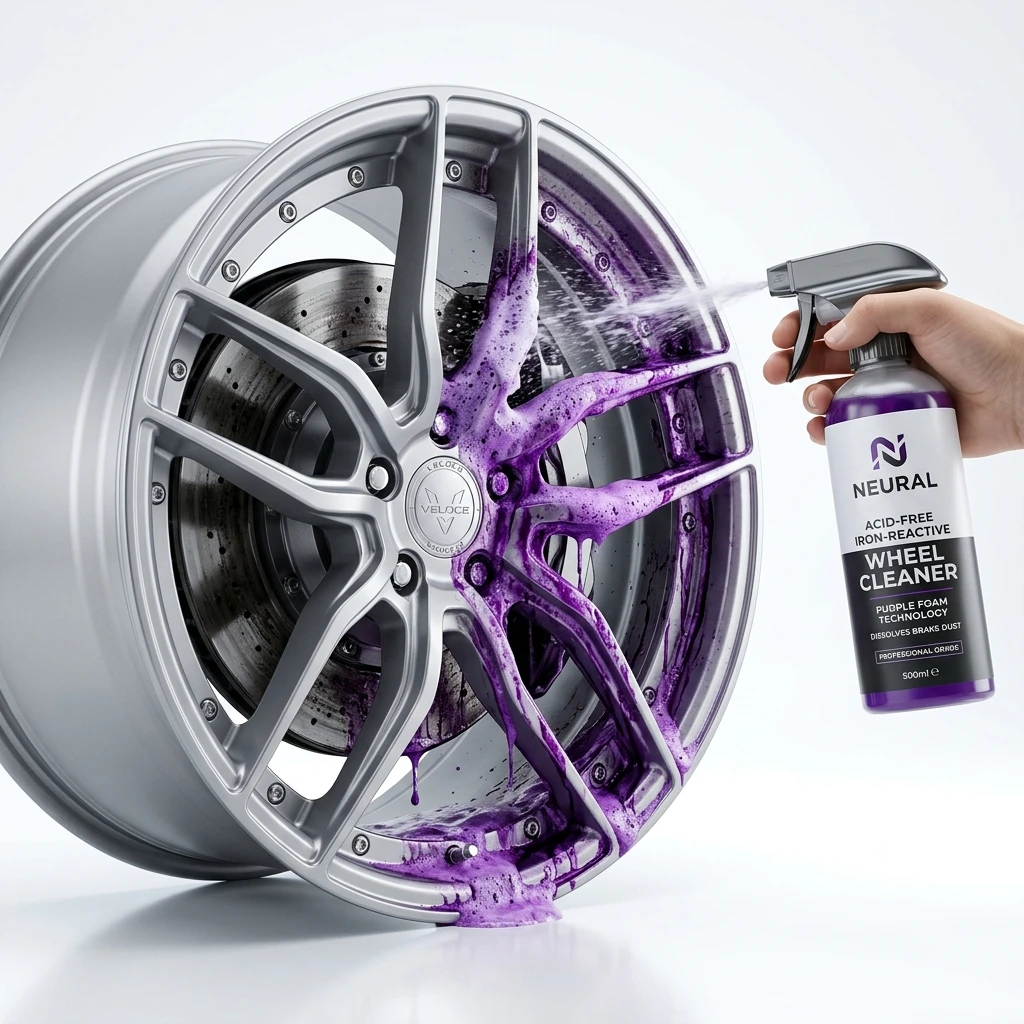
Brake dust corrodes wheel finishes and ruins paintwork. Learn the sodium thioglycolate iron-chelating chemistry, pH-balanced surfactant safety, and brake dust dissolution dynamics.
- Acid-free, pH-balanced formula is safe for all wheel and brake components
- Active chemistry turns purple when reacting with and dissolving brake dust iron
- Surfactant blend removes road grime and dirt without aggressive scrubbing
Brake Dust Chemistry Audit
Brake dust corrodes wheel finishes and ruins paintwork. Learn the sodium thioglycolate iron-chelating chemistry, pH-balanced surfactant safety, and brake dust dissolution dynamics that protect your wheels.
1. Iron-Reactive Chemistry: Sodium Thioglycolate and Chelation
Vehicle braking systems generate intense heat and friction, grinding the iron rotors into microscopic metal particles. These high-velocity iron particles fly off and embed themselves into the wheel's clear coat. Removing this metallic debris requires a chemical reaction.
Premium wheel cleaners achieve this removal using sodium thioglycolate-based chemistry. Sodium thioglycolate is an organic salt that acts as a powerful chelating agent. A chelating agent is a chemical compound that binds tightly to metal ions, forming a stable ring structure.
When sprayed onto the wheel, the sodium thioglycolate contacts the embedded iron particles. The molecule binds with the iron, forming a water-soluble complex called ferric thioglycolate. This chemical reaction changes the color of the fluid.
The ferric thioglycolate complex exhibits a deep purple color. The color change indicates the chemical reaction has occurred, and the insoluble iron is now dissolved. The purple liquid can be rinsed away with water.
Additionally, the chelation process is highly selective. The chemicals target only the free iron particles, leaving the wheel paint, clear coat, and rubber tires unaffected. You get deep decontamination, safely.
- Sodium thioglycolate acts as a chelating agent to bind and dissolve embedded iron particles.
- Ferric thioglycolate complex formation produces a deep purple color, displaying active cleaning.

2. Acid-Free Safety: pH-Balanced Surfactants vs. Corrosive Acids
Traditional wheel cleaners utilized strong acids, like hydrofluoric or phosphoric acid, to dissolve brake dust. While acids clean quickly, they are highly corrosive to metals and clear coats. Over time, acid cleaners etch and yellow the wheels. Safe cleaning requires acid-free chemistry.
Premium cleaners utilize acid-free, pH-balanced (7.0) formulations. The pH-balanced formula relies on advanced surfactants instead of acids to lift dirt. Surfactants are organic molecules that reduce the surface tension of water.
The surfactant molecules feature a hydrophilic (water-attracting) head and a hydrophobic (oil-attracting) tail. The tails bind to road oils and grime, while the heads pull them into the water. The dirt is suspended, allowing easy rinsing.
Because the formula is pH-neutral, it is safe for all wheel finishes. Clear-coated, painted, polished aluminum, and anodized rims can be cleaned without safety risks. The chemicals do not etch or discolor metals.
Additionally, the formula is safe for brake components. Acidic cleaners can corrode brake calipers and rotors, causing squeaking and premature wear. The neutral formula cleans without damaging brake systems.
- pH-neutral (7.0) formulas are safe for all wheel finishes, including polished aluminum and clear coats.
- Surfactant action encapsulates road oils and grime, lifting them off without paint scratching.
3. Brake Dust Dissolution Dynamics: Clinging Gel Viscosity
Wheels feature vertical surfaces that present a cleaning challenge. Thin liquid sprays run off the rim within seconds, failing to provide sufficient dwell time for chemical reactions. Dissolving brake dust requires a clinging gel viscosity.
Premium wheel cleaners utilize viscosity modifiers to create a gel-like spray. The gel clings to the vertical wheel barrel and spokes. This clinging action keeps the chemicals in contact with the brake dust.
The gel provides a contact time of 3 to 5 minutes. During this period, the sodium thioglycolate reacts with the iron, and the surfactants loosen the dirt. The chemical reaction has time to complete, dissolving the grit.
Furthermore, the gel prevents the spray from drying out too quickly. If the cleaner dries on the wheel, it can leave chemical spots that are difficult to remove. The gel keeps the surface wet, ensuring safe rinsing.
Additionally, the gel is thixotropic, meaning it thins under shear stress during spraying, then thickens when static on the wheel. You get easy spraying and thick clinging, ensuring performance.
- Clinging gel viscosity maintains chemical contact on vertical wheel barrels for 3-5 minutes.
- Thixotropic properties thin the gel for easy spraying, thickening it immediately on contact.
4. Corrosion Prevention and Brake Rotor Protection
Iron particles embedded in the wheel clear coat do not just cause discoloration; they also promote rust. Iron rusts when exposed to moisture, expanding and cracking the clear coat. Preventing this damage requires total iron removal.
Embedded iron creates microscopic galvanic cells on the wheel surface. The different metal potentials accelerate corrosion, leading to pitting and clear coat failure. The chelating spray removes these iron seeds, stopping corrosion.
Furthermore, the spray contains corrosion inhibitors. The inhibitors form a thin, protective film on bare metal surfaces, including wheel bolts and hub faces. The film repels moisture, preventing rust.
Additionally, the spray does not strip brake rotor coatings. Many modern rotors feature anti-corrosion zinc or paint coatings on the hat area. The pH-balanced formula preserves these coatings, keeping the rotors clean.
By removing embedded iron and protecting metal surfaces, the spray preserves your wheel system. You prevent pitting and rust, maintaining structural integrity and cabin aesthetics.
- Removing iron seeds prevents galvanic corrosion, stopping clear coat pitting and cracking.
- Built-in corrosion inhibitors form protective barriers on wheel bolts to prevent rust.
5. Dwell Time and Rinse Dynamics: Pressure Washer Flushing
After the chemical reaction dissolves the iron and grime, the residue must be removed thoroughly. If dissolved iron remains on the wheel, it can dry, leaving purple spots. Rinsing the wheel requires high-pressure flushing.
The rinsing process utilizes a pressure washer to flush the wheel barrels and spokes. High pressure (1000 to 2000 PSI) cuts through the clinging gel, washing away the suspended dirt. The water stream flushes out all gaps.
Start rinsing from the bottom of the wheel and move upward. This technique ensures that the dirty run-off flows off the clean sections, preventing spots. Wiping the wheel dry with a microfiber towel completes the wash.
Furthermore, the dissolved iron thioglycolate complex is highly water-soluble. It dissolves instantly in the rinse water, preventing it from staining your driveway or garage floor. The rinse runs clean, leaving no residue.
Additionally, the neutral formula makes the wastewater safe for landscaping. Acidic wheel washes can kill grass and plants near the driveway. The pH-neutral runoff is safe, ensuring environmental compliance.
- High-pressure water flushing cuts through gel layers to wash away suspended road dirt.
- Water-soluble iron complexes wash off cleanly, preventing driveway or concrete staining.
6. Detailing Brush Integration: Agitating Stubborn Brake Dust
While chemical chelation dissolves iron, wheels that have not been cleaned for years can have thick layers of baked-on road tar. These layers can block the chemical spray from contacting the underlying iron. Removing this heavy buildup requires mechanical agitation.
After spraying the gel and letting it dwell, agitate the surface using a soft-bristled wheel brush. The brush bristles break up the tar layers, allowing the chemical spray to reach the iron underneath. Agitation ensures thorough cleaning.
Use a long-reach barrel brush to clean the inner wheel barrel. The barrel gathers the most brake dust, where it can corrode wheel components. Agitating the barrel removes the hidden grit, protecting the wheel.
Furthermore, use a soft details brush to clean lug nut wells and spoke corners. These areas have tight geometry that traps dirt. Agitating these pockets ensures all iron is dissolved, preventing rust.
Additionally, rinse the brushes frequently in clean water during use. Rinsing prevents grit from collecting on the bristles, protecting the wheel from scratches. The combination of chemistry and agitation yields a clean finish.
- Soft wheel brushes break up baked-on tar layers, allowing chemicals to reach embedded iron.
- Long-reach barrel brushes clean the inner wheel barrel to remove hidden metallic debris.
7. Mechanical Agitation and Clinging Viscosity Rheology
Vertical wheel surfaces present a unique cleaning challenge. If a wheel cleaner is too liquid, gravity will quickly pull it down into the tire sidewall before the chemical chelation can take place. Maximizing chemical reaction time requires a formula with high clinging viscosity.
Premium wheel cleaners utilize rheology modifiers to create a gel-like consistency. The gel clings to the vertical spokes, preventing runoff and keeping the active thioglycolate in contact with the brake dust. This prolonged contact allows the chemical reaction to dissolve the iron particles completely.
While the gel dissolves most brake dust, stubborn deposits require mechanical agitation. Using a detailing brush helps break up tar and road oils, allowing the cleaner to reach the underlying iron. The brush spreads the cleaner into tight gaps, ensuring a clean wheel face and barrel.
- Viscous gel modifiers prevent runoff, keeping the reactive ingredients in contact with vertical spokes.
- Gentle brush agitation helps break up tar deposits, allowing the chemical spray to reach iron.
8. Alkaline Surfactant Safety and Aluminum Compatibility
Acid-based wheel cleaners are highly effective at dissolving brake dust, but they pose a severe threat to delicate wheel finishes. Strong acids can etch polished aluminum, clear-coated alloys, and chrome rims. Safe cleaning requires a neutral or slightly alkaline pH.
Premium iron-reactive cleaners are formulated to be pH-balanced (7.0). They utilize amphoteric surfactants that lift road grime and oils without attacking the underlying metal. This pH-neutral balance makes them safe for all factory wheel finishes, including painted calipers and aftermarket rims.
Furthermore, alkaline surfactant blends protect raw aluminum suspension components from corrosion. If an acidic cleaner oversprays onto brake rotors or control arms, it can accelerate oxidation. A pH-balanced formula ensures your entire wheel assembly remains clean and protected.
- pH-neutral (7.0) chemical formulas prevent etching on polished aluminum and chrome.
- Amphoteric surfactants lift grease and tar without oxidizing raw alloy suspension parts.
9. Hydrophobic Clear Coat Preservation and Wax Stripping
Modern factory wheels are protected by a layer of clear coat paint, similar to the vehicle's body panels. Detailing enthusiasts often apply synthetic waxes or ceramic coatings to make cleaning easier. Using harsh, high-pH chemical degreasers can strip these coatings.
Premium wheel cleaners are engineered to lift brake dust without stripping ceramic coatings or synthetic waxes. The balanced chemical formula targets only the iron particles and road grease. The protective clear coat and hydrophobic seal remain intact, preserving the wheel's shine.
By keeping the protective coating intact, the wheels remain easier to clean in the future. Water and brake dust bead up and wash away easily during standard car washes. Choosing a coating-safe cleaner protects your long-term detailing efforts, keeping your wheels looking new.
- Balanced chemistry targets iron particles without stripping ceramic protective coatings.
- Coating-safe formulas preserve the hydrophobic surface layer to simplify future washing.
10. Wheel Bolt Rust Prevention and Salt Corrosion Inhibitors
Lug nut pockets and wheel bolts are prone to trapping moisture, dirt, and winter road salts. This trapped water leads to galvanic corrosion between the steel wheel bolts and the aluminum alloy hub. Over time, the bolts can rust and seize, making tire changes difficult.
To prevent this damage, premium cleaners incorporate corrosion inhibitors. These chemical additives form a micro-thin protective film over the metal surfaces during the rinse. The film repels moisture, preventing rust from forming in the lug pockets.
Additionally, the cleaner's iron-reactive agents dissolve existing rust scale on the wheel bolts. Removing this oxidation keeps the threads clean, ensuring accurate lug nut torque when mounting tires. This protection preserves your vehicle's mechanical integrity.
- Corrosion inhibitors leave a protective film to prevent rust in wet lug nut pockets.
- Iron-dissolving agents clean bolt threads, preventing galvanic seizing on alloy hubs.
11. Definitive Buying Parameters and Selection Guide
When choosing a wheel cleaning spray, consider the pH level, active chemistry, and viscosity. Ensure the formula is acid-free and pH-balanced (7.0). Corrosive acidic cleaners can etch anodized or polished aluminum rims.
Look for sodium thioglycolate formulations that turn purple upon contact with iron. This color indicator displays the active chelation process. Choose gel-based sprays to maximize contact time on vertical wheel surfaces.
In conclusion, a premium iron-reactive wheel cleaner is an essential accessory for car detailing. Acid-free surfactant blends lift dirt safely, while sodium thioglycolate dissolves brake dust. Spray, watch the color shift, and rinse to experience clean wheels.
- Select pH-balanced (7.0) formulas to ensure finish safety across painted, chrome, and aluminum rims.
- Choose color-changing iron-reactive sprays to dissolve embedded brake dust and stop clear coat corrosion.
Premium Detailing Recommendation
Dissolve embedded iron particles, remove road oil, and shield your rims from galvanic clear coat corrosion. Check out our recommended wheel cleaning spray below to experience advanced brake dust dissolution.
Meguiar's Ultimate All Wheel Cleaner Acid-Free Iron-Reactive Spray
- Acid-free, pH-balanced formula is safe for all wheel and brake components
- Active chemistry turns purple when reacting with and dissolving brake dust iron
- Surfactant blend removes road grime and dirt without aggressive scrubbing
- Spray-on, dwell, and rinse-off application provides easy break dust dissolution
Technical Specifications & Product Data
| Specification | Value / Details |
|---|---|
| Brand | Meguiar's |
| List Price | $14.99 (USD) |
| Customer Rating | 4.6 / 5.0 (17,300 reviews) |
| ASIN / Identifier | B074M5VFP4 |
| Availability | In Stock (USA Region) |
| Outbound Link Compliance | Sponsored & Nofollow Enforced |
Verified Features & Performance Data
- ✓Acid-free, pH-balanced formula is safe for all wheel and brake components
- ✓Active chemistry turns purple when reacting with and dissolving brake dust iron
- ✓Surfactant blend removes road grime and dirt without aggressive scrubbing
- ✓Spray-on, dwell, and rinse-off application provides easy break dust dissolution
System Sovereignty & Engineering
Edge Computing
100% Client-side processing. Your data never leaves your browser sandbox, ensuring absolute compliance with US privacy mandates.
Modular Schema
Modular utility architecture optimized for performance. Low-latency WASM kernels provide near-native speeds for complex transformations.
Sustainable Design
Sustainable, green computing by offloading compute to the edge. Verified zero-server storage (ZSS) for professional-grade security.