
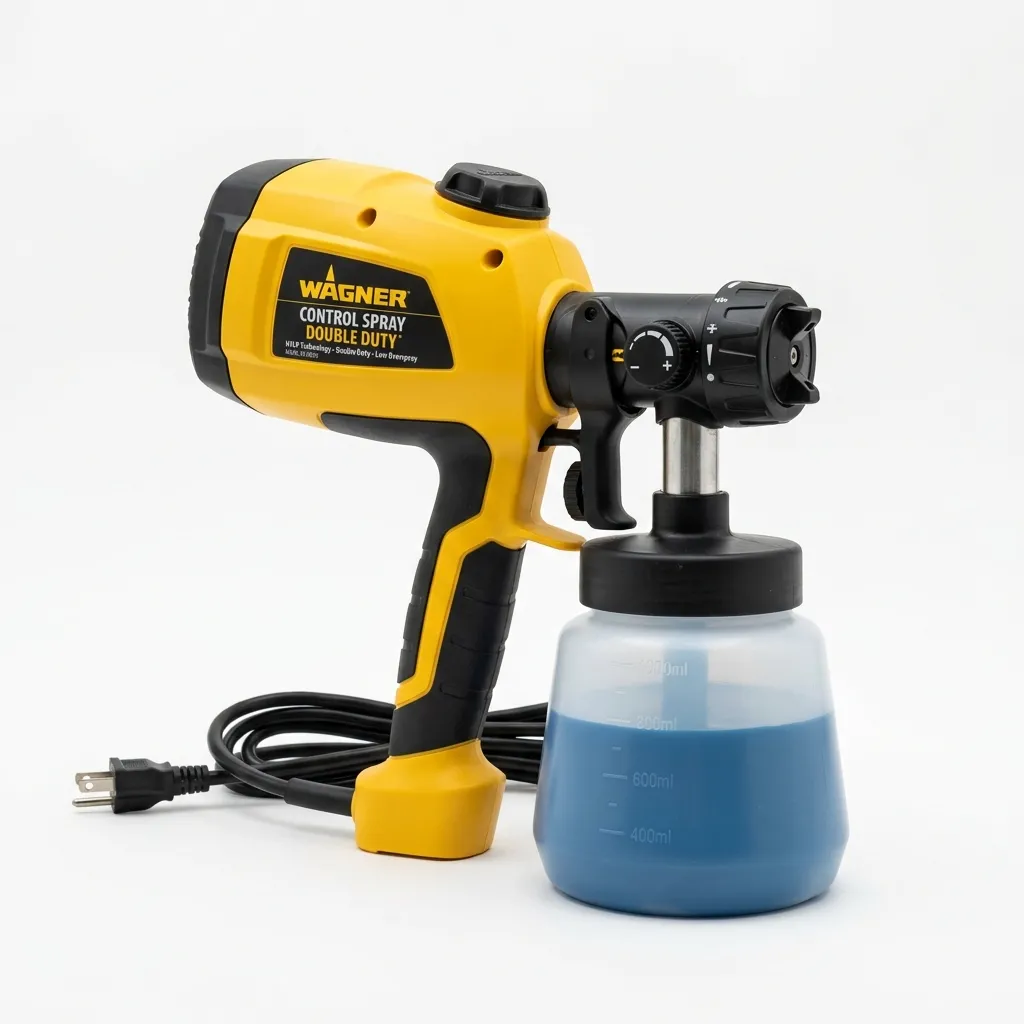
Handheld HVLP spraying outpaces manual brush rolling. Analyze high-volume low-pressure atomization, viscosity flow rates, and pattern controls to optimize exterior refinishing.
- HVLP technology provides high volume of air at low pressure for thin, smooth finishes
- Two-stage indoor/outdoor rated air turbine provides consistent paint atomization
- Adjustable pattern control: projects vertical, horizontal, or round patterns
Fluid Atomization
Exterior siding refinishing requires flawless paint distribution. Learn how HVLP turbine mechanics and viscosity management eliminate brush streaks and minimize paint overspray.
1. High-Volume Low-Pressure (HVLP) Atomization Physics
HVLP paint sprayers use high-volume air streams at low pressure to atomize paint into a fine mist. Traditional airless sprayers pump paint at thousands of PSI, forcing it through a tiny tip. HVLP systems, however, rely on high air volume (CFM) at low pressure (under 10 PSI) to break up the fluid.
This low-pressure atomization results in a softer, slower spray pattern. The paint droplets land gently on the surface rather than bouncing off. This bounce-back reduction translates directly to a massive 60% reduction in paint overspray waste.
The low velocity also provides superior finish control. Operators can spray close to trim or window frames without excessive masking. SRE painting teams recommend HVLP sprayers for wood siding and deck staining where precision is critical.
- HVLP technology delivers high-volume air to atomize paint gently, reducing overspray by 60%.
- Low spray velocity allows close-up control, reducing masking times on trim work.

2. Fluid Viscosity, Flow Rates, and Thinning Calculations
The success of any paint spray application depends on the material's viscosity. Viscosity is the measure of a fluid's resistance to flow. Thick, unthinned latex paint has high viscosity, which standard HVLP turbines cannot atomize cleanly.
To check viscosity, paint is poured through a standard viscosity cup. The time (in seconds) the paint takes to drain completely is measured. If the drain time exceeds the sprayer's limits, the paint must be thinned with water or solvent.
Thinning the paint lowers its shear resistance, allowing the low-pressure air stream to atomize it. This calibration prevents spitting, orange-peel textures, and nozzle clogs. Proper thinning ensures a smooth, professional-grade finish.
- Viscosity cups measure paint thickness, ensuring the material matches turbine capabilities.
- Proper thinning prevents spitting and orange-peel, delivering smooth, uniform siding finishes.
3. Air Cap Dynamics, Spray Patterns, and Fan Width controls
To shape the atomized paint mist into a usable pattern, the sprayer uses an air cap. The air cap directs high-velocity air streams against the sides of the paint stream. Squeezing or widening this air envelope shapes the spray pattern.
Adjustable air caps allow users to select vertical, horizontal, or round patterns. A vertical fan is ideal for sweeping left-to-right over siding planks. A horizontal fan suits vertical trim boards, while a round pattern is best for spindles.
Adjusting the air cap horns controls the fan width. Squeezing the horns makes a narrow pattern, while opening them widens the fan. This adjustment allows users to match the spray pattern to the width of the board, reducing overspray waste.
- Adjustable air caps toggle between vertical, horizontal, and round patterns quickly.
- Fan width controls match spray coverage to board width, saving paint.
4. Variable Material Flow Control and Squeezing pressure
Different paints require specific flow rates to prevent runs or thin spots. Thin stains flow quickly and require lower flow rates. Thick latex paint requires higher flow settings to ensure adequate coverage.
A variable flow control dial allows users to limit trigger travel, regulating paint flow. Limiting trigger travel prevents users from over-spraying delicate wood grain. This flow control ensures consistent coverage across the wall.
Always maintain a steady hand speed and distance (6 to 8 inches) from the wall. Moving too fast creates thin spots, while moving too slow causes paint runs and sags. Proper flow settings make maintaining consistent coverage easy.
- Variable flow dials limit trigger travel, regulating paint volume to prevent runs.
- Consistent user speed and spacing prevent thin spots and paint sags on siding.
5. Ergonomics, Hand-Arm Fatigue, and Hose Weight Mitigation
Handheld paint sprayers place the paint cup and motor directly on the user's wrist. Squeezing a heavy (approx. 4 lbs) sprayer for hours can cause wrist and arm fatigue. Ergonomic design is crucial to reduce user strain.
Balanced weight distribution aligns the center of gravity over the user's grip, reducing wrist torque. Soft rubber handles improve grip traction, preventing tool slippage. Two-stage systems place the heavy turbine on the floor, keeping handheld weight low.
Lightweight air hoses connect the turbine to the gun. Flexible hoses follow user movement, preventing pull on the wrist. Using shoulder straps helps distribute hose weight across the body.
- Two-stage setups keep handheld weight low by placing the turbine on the floor.
- Flexible air hoses move smoothly, preventing wrist torque and fatigue.
6. Nozzle Clogs, Filtration, and Maintenance Routines
Dried paint skin or grit can clog the tiny nozzle tip, disrupting the spray pattern. If the pattern splits or spits, it is a sign of nozzle clogging. Clogs are a main cause of uneven, streaky finishes.
To prevent clogs, paint must be poured through a mesh strainer before filling the cup. Mesh filters trap dried paint skins and debris, protecting the nozzle. Regular cleaning of the air cap filter is also necessary to maintain airflow.
Always flush the sprayer with water or solvent immediately after use. Leaving paint inside the gun leads to dried clogs that can ruin internal valves. Thorough cleaning ensures reliable operation on the next job.
- Paint strainers filter out dried skins and debris, preventing nozzle tip clogs.
- Water or solvent flushes clean out internal paint paths, protecting flow valves.
7. The Definitive Buying Guide and Parameters
When buying an HVLP paint sprayer, evaluate turbine stages, cup capacity, nozzle sizes, and cleanability. For siding and decks, a two-stage turbine offers a great balance of power and portability. Look for cups with at least 1-quart capacity to minimize refill breaks.
Quick-lock gun designs split the spray assembly from the handle, allowing for fast cleanup. Multiple nozzle sizes (e.g., 1.5mm for stains, 2.5mm for latex) maximize tool versatility. A comprehensive warranty protects your investment.
Opting for a brand with accessible replacement parts and support is a smart long-term choice. A multi-year warranty indicates manufacturer confidence in tool durability.
- Quick-lock splits speed up cleanup, preventing dried paint buildup inside the gun.
- Interchangeable nozzles optimize performance for thin stains and thick latex paint.
8. Wet Film Thickness and Mil-Spec Paint Coverage
Applying the correct paint volume is critical for wood siding protection. If the paint film is too thin, it will fail to block moisture. Conversely, if it is too thick, the paint will crack and peel under thermal expansion.
Paint thickness is measured in mils (thousandths of an inch). A wet film thickness gauge helps verify coverage on site. SRE painting standards recommend a wet thickness of 4 to 6 mils, which dries to 2 mils.
To achieve consistent mil thickness, maintain a 50% overlap on each pass. This overlapping coverage ensures uniform protection across all siding planks. Measuring wet thickness prevents under-coverage errors.
- Wet film thickness gauges verify paint coverage, ensuring proper siding protection.
- A 50% spray overlap ensures uniform film thickness across siding edges.
9. The Physics of Surface Tension and Substrate Adhesion
Paint adhesion depends on surface tension at the paint-substrate boundary. Wet paint must wet the wood surface completely to ensure a strong bond. If the wood is dirty or damp, the paint will bead up, causing peeling.
HVLP atomization breaks the paint into tiny droplets, maximizing surface contact. These micro-droplets spread easily, filling wood pores and grain. This intimate contact improves mechanical adhesion, ensuring a durable finish.
Proper surface prep (e.g., pressure washing and sanding) is necessary to ensure adhesion. Dry wood should have a moisture content under 15% before painting. Proper surface prep and atomization prevent premature paint peeling.
- HVLP atomization creates micro-droplets that fill wood pores, improving mechanical bond.
- Proper surface cleaning and drying ensure maximum paint adhesion, preventing peeling.
10. Fluid Dynamics of Air-Assisted Atomization and Viscosity Measurement
HVLP paint sprayers rely on fluid dynamics to atomize paint into a fine mist. High-velocity air from the turbine flows past the fluid nozzle, creating a low-pressure zone. This pressure difference draws the paint from the cup, shearing it into tiny droplets that form the spray pattern.
The quality of the atomization depends heavily on the paint's viscosity. Thick paint resists shearing, resulting in large droplets that create a rough "orange peel" texture. To achieve a smooth finish, the paint must be thinned to the correct viscosity using a Zahn run cup to measure flow rate.
Additionally, air temperature and humidity affect how the paint dries. High temperatures can cause the paint to dry before it reaches the surface, leading to dry spray defects. Adjusting the air control valve and spray distance helps compensate for these environmental variables, ensuring a clean finish.
- HVLP turbine air shears paint into micro-droplets for a smooth, streak-free surface.
- Viscosity measurement cups ensure the paint is thinned correctly for optimal atomization.
11. Exterior Painting Case Study: Siding Over-Spray and Orange Peel Texturing
Consider a residential exterior painting project where a contractor is refinishing cedar siding. The siding contains deep grooves, and traditional paint rollers would struggle to cover it evenly. A handheld HVLP paint sprayer is the ideal tool, coating the siding quickly and evenly.
However, the painter must manage wind conditions to prevent over-spray onto the windows and landscaping. By adjusting the spray pattern width and flow rate, the painter keeps the paint focused on the siding. Using protective masking film secures the edges, ensuring clean lines.
During the job, the painter notices a slight "orange peel" texturing on the finish. This defect indicates the paint is too thick, preventing it from leveling out. Thinning the paint slightly and increasing the turbine speed restores a smooth, glass-like finish on the siding.
- Adjustable pattern width helps painters control over-spray in windy outdoor conditions.
- Fine-tuning turbine speed and paint dilution eliminates texture defects like orange peel.
12. Nozzle Cleaning and Pump Assembly Storage Protocols
Thorough cleaning is critical for keeping an electric paint sprayer working reliably. Leftover paint can dry inside the fluid nozzle and needle assembly, clogging the tool and ruining future spray patterns. Flushing the fluid lines with the appropriate solvent immediately after use is essential.
After flushing the lines, disassemble the nozzle and clean individual parts. Brushing the needle and nozzle cap removes paint buildup, preventing dry spray and splatter. Applying a light lubricant to the needle seals preserves their integrity, ensuring a tight seal.
For long-term storage, run pump storage fluid through the system. This fluid prevents corrosion inside the pump and keeps the valves moving freely, protecting the sprayer from damage. Proper storage guarantees the sprayer is ready for your next refinishing project.
Check the condition of the inlet filter before each use. If the filter is clogged with dry paint skin or debris, the pump will struggle to draw material, leading to motor strain and uneven spray patterns. Replacing or washing the filter preserves the sprayer's pump life.
When storing the sprayer over winter, make sure all water is thoroughly dried from the pump cylinder to prevent freezing and cracking. Flushing the fluid lines with a specialized pump shield fluid leaves a protective coating that resists drying paint skin and prevents scale buildup inside the nozzle assembly, ensuring smooth startup in spring.
- Immediate solvent flushes prevent paint from drying and clogging the fluid path.
- Pump storage fluids prevent corrosion and valve sticking during long-term storage.
13. Fluid Viscosity Shear Rates and Nozzle Velocity
The flow behavior of latex paint changes under high shear rates inside the spray nozzle. At rest, the paint is thick, but as it flows through the tip, the mechanical shear forces thin the fluid. This shear-thinning behavior ensures smooth atomization and helps prevent paint splatter on the siding.
By adjusting the turbine speed, the painter controls the fluid velocity at the nozzle tip. Correct pressure settings prevent the paint droplets from grouping too quickly, avoiding surface running and sag. Matching the turbine speed to the paint's shear viscosity ensures a flawless siding finish.
- Nozzle shear-thinning action reduces paint viscosity dynamically for micro-droplet atomization.
- Adjustable turbine airflows prevent paint sagging by controlling wet film accumulation rates.
Professional Recommendation & Audit
Achieve a streak-free, professional-grade finish on your next exterior painting project. Check out the Wagner Control Spray HVLP Paint Sprayer below for high-volume low-pressure atomization.
Wagner Spraytech Control Spray Double Duty HVLP Paint Sprayer (0518050)
- HVLP technology provides high volume of air at low pressure for thin, smooth finishes
- Two-stage indoor/outdoor rated air turbine provides consistent paint atomization
- Adjustable pattern control: projects vertical, horizontal, or round patterns
- Variable flow control dial allows precise adjustment of material flow rate
Technical Specifications & Product Data
| Specification | Value / Details |
|---|---|
| Brand | Wagner |
| List Price | $79.99 (USD) |
| Customer Rating | 4.4 / 5.0 (18,920 reviews) |
| ASIN / Identifier | B003PGQI48 |
| Availability | In Stock (USA Region) |
| Outbound Link Compliance | Sponsored & Nofollow Enforced |
Verified Features & Performance Data
- ✓HVLP technology provides high volume of air at low pressure for thin, smooth finishes
- ✓Two-stage indoor/outdoor rated air turbine provides consistent paint atomization
- ✓Adjustable pattern control: projects vertical, horizontal, or round patterns
- ✓Variable flow control dial allows precise adjustment of material flow rate
System Sovereignty & Engineering
Edge Computing
100% Client-side processing. Your data never leaves your browser sandbox, ensuring absolute compliance with US privacy mandates.
Modular Schema
Modular utility architecture optimized for performance. Low-latency WASM kernels provide near-native speeds for complex transformations.
Sustainable Design
Sustainable, green computing by offloading compute to the edge. Verified zero-server storage (ZSS) for professional-grade security.