
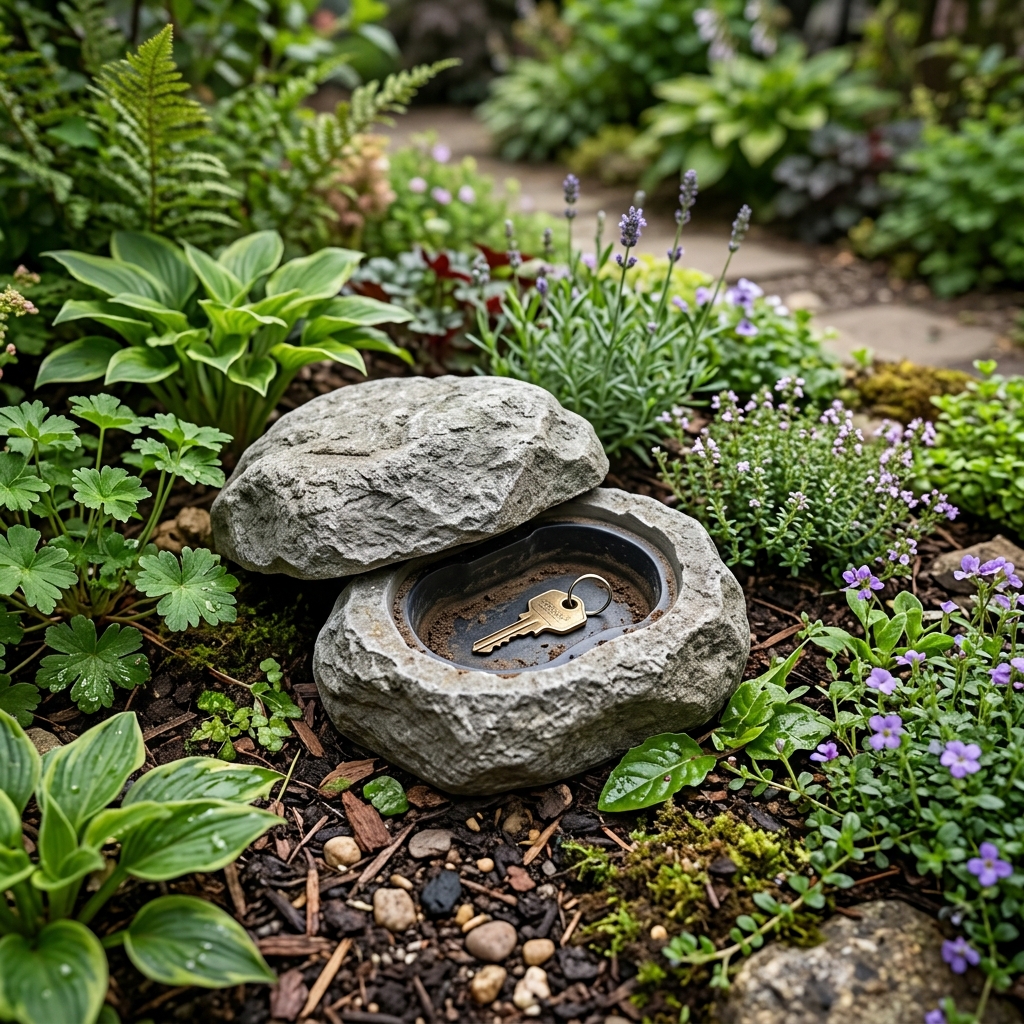
Hiding spare keys under doormats or flowerpots is an obvious security risk. Discover how high-density polyresin key rocks blend into garden landscapes to secure backups.
- Molded polyresin material matches geologically realistic granite texture and weight
- High-density weatherproofing protects keys from rain and soil moisture
- Sliding plastic cover seals bottom key cavity against bugs and water
Concealed Safety Assets
Securing emergency access to residential properties requires balancing immediate convenience with robust physical concealment methodologies. Conventional strategies, such as hiding secondary spare brass keys beneath standard fibrous door mats or inside porous ceramic planters, fail to resist basic visual searches conducted by motivated intruders. Modern security engineering addresses this vulnerability through the deployment of geologically-disguised key hiders constructed from high-density polyresin compounds. These synthetic enclosures match surrounding horticultural landscapes while protecting critical locking assets against extreme climatic degradation. By analyzing polymer physics, geological replication cladding, and subterranean environmental seals, homeowners can establish highly secure external key backup protocols.
1. Geological Realism and Texture Molding Cladding
Natural stone surfaces display complex topographical variations shaped by millennia of environmental weathering, mineral crystallization, and tectonic pressure. To achieve high visual concealment, synthetic replicas must reproduce these micro-textures using advanced silicone-rubber casting molds taken directly from authentic rock specimens. Standard injection-molded plastics create smooth, reflective surfaces that fail under direct sunlight, while textured cladding scatters incident light rays across diffuse angles, mimicking natural granite.
Chemical color formulation represents another critical element of geological realism, requiring multi-layered paint applications that resist degradation. Pigmentation systems must incorporate carbon black, red iron oxide, and titanium dioxide to match the complex earthy hues of local igneous formations. By applying these pigments through hand-painted multi-tonal dry brushing techniques, manufacturers create organic depth that replicates natural lichen growth, moss accumulation, and soil staining on the outer surface.
Surface topography must also avoid geometric symmetry, as human vision is highly optimized to detect artificial patterns and straight edges. Authentic stones exhibit irregular fractures, jagged fissures, and uneven mineral veins that interrupt the silhouette of the object. High-density polyresin molding allows for the replication of these structural imperfections, creating an organic geometry that blends seamlessly with surrounding ground materials like decorative wood mulch or gravel beds.
Furthermore, the outer cladding must feel realistic to touch and resist visual inspection from close range. Cheap plastic options often warp or fade, leaving telltale signs of artificiality that any observer can detect. High-fidelity molding processes preserve the granular feel of quartz grains and feldspar crystals, matching the tactile profile of genuine fieldstones. This tactile authenticity provides an extra layer of security, ensuring that physical contact does not reveal the hollow cavity.
- Advanced silicone molds capture organic rock textures directly from natural granite formations, preventing synthetic reflectivity under direct garden sunlight.
- Multi-layered iron oxide pigmentation techniques replicate natural weathering processes and organic soil staining to match local garden environments.
- Asymmetric structural profiles eliminate geometric borders, preventing human visual systems from detecting artificial shapes in natural rock beds.
- Tactile grain replication mimics quartz textures, ensuring the synthetic stone feels natural to the touch during physical handling.
- Low-sheen matte topcoats eliminate specular highlights that typically reveal the presence of artificial plastic materials in garden mulch.

2. Polyresin Weatherproofing Density and Freezing Shifts
Outdoor concealment hardware must endure continuous exposure to aggressive environmental forces, including solar radiation, liquid precipitation, and extreme temperature variations. Standard consumer-grade plastics like polyethylene degrade rapidly when exposed to ultraviolet light, leading to polymer chain scission and micro-cracking. In contrast, high-density polyresin uses cross-linked polyurethane resins blended with finely ground calcium carbonate stone dust. This formulation produces a non-porous material with excellent tensile strength.
Thermal cycling poses a significant structural hazard to outdoor enclosures, particularly during sub-zero winter conditions when water expands as it freezes. If water penetrates the micro-pores of a key hider, the resulting volumetric expansion generates high internal pressure that cracks weak plastics. High-density polyresin possesses a low coefficient of thermal expansion, allowing it to withstand severe freeze-thaw cycles without cracking or experiencing any structural failure.
Furthermore, UV-stabilizing chemical additives are integrated directly into the resin matrix during the molding process to prevent chemical breakdown. These ultraviolet absorbers convert harmful solar radiation into harmless thermal energy, protecting the outer cladding from discoloration and chalking. Without this chemical protection, the disguised rock would fade to an unnatural grey color, revealing its artificial nature against other natural stones found in your garden bed.
Waterproofing performance is further enhanced by the inherent hydrophobic nature of the polyurethane polymer base, which actively sheds liquid water. Moisture cannot penetrate the dense material wall, preventing internal condensation that could rust or damage the hidden metal keys. This high material density also provides excellent resistance against acidic soils and organic matter, preventing bacterial rot or chemical breakdown of the outer composite stone shell.
- Cross-linked polyurethane polymer resins blended with calcium carbonate dust prevent water absorption and micro-cracking during heavy seasonal rainfall.
- Low coefficients of thermal expansion shield the composite polyresin material from structural failure during intense winter freeze-thaw cycles.
- Integrated UV-stabilizing chemical additives prevent polymer discoloration and chalking, maintaining the natural stone appearance over years of exposure.
- Hydrophobic material structures prevent moisture from seeping through the stone walls, keeping the internal compartment dry and rust-free.
- High chemical resistance prevents degradation from acidic soils, fertilizers, and organic matter present in active garden planting beds.
3. Bottom Cavity Seals and Bug Protections
The subterranean interface of a garden key hider presents unique challenges because it rests directly on moist topsoil, mulch, or gravel. This environment hosts various micro-organisms, insects, and moisture that can easily infiltrate unsealed cavities and damage the stored keys. Without a secure bottom cover, the inner chamber becomes a nesting site for spiders, earwigs, and damp soil. Therefore, a secure enclosure requires a high-tolerance bottom seal.
High-performance key rocks feature an integrated sliding cover made from durable, impact-resistant polystyrene that fits tightly into molded guide rails. This sliding panel creates a flat barrier against the ground, preventing soil moisture from rising into the key compartment. The tight fit of the panel prevents insects from finding entry points, keeping the storage space clean. This protection ensures that the key remains ready for emergency use.
To improve this seal, many advanced models use neoprene rubber gaskets along the perimeter of the sliding track. This gasket compresses under the weight of the stone, creating a water-resistant seal that blocks liquid water and humidity. Keeping the internal humidity low is crucial to prevent the slow oxidation and rusting of brass or iron keys. This simple feature extends the life of emergency keys in garden environments.
Additionally, the interior chamber is designed with deep recessed dimensions to hold modern smart keys and standard brass keys. This keeps the key suspended away from the sliding cover, reducing contact with any moisture that might bypass the seal. By isolating the key within a clean, dry, and insect-free compartment, the key hider ensures that backup keys remain operational, preventing the frustration of retrieving a damaged key.
- High-tolerance polystyrene sliding panels seal the bottom cavity, preventing soil moisture and insects from infiltrating the key storage compartment.
- Compression neoprene gaskets block moisture and air humidity, preventing the slow oxidation and rusting of stored brass keys.
- Deeply recessed internal chambers hold large automotive keys and smart key fobs, keeping them dry and isolated from the ground.
- Tight-fitting guide rails prevent the bottom panel from sliding open accidentally when the stone is lifted or moved.
- Smooth surface finishes inside the cavity allow for easy cleaning and maintenance, ensuring the backup key remains ready for use.
4. Strategic Placement to Avoid Discovery
Camouflage is only effective when combined with proper placement strategies that avoid common search patterns used by intruders. When attempting unauthorized entry, criminals first search the immediate area around the door, checking doormats, flowerpots, and light fixtures. Placing a fake rock within arm's reach of the entryway defeats the purpose of its disguise. To ensure security, the key rock must be placed away from the main entrance in garden beds.
An effective location is a garden bed or pathway border located fifteen to twenty feet away from the entrance. This distance ensures the key rock is outside the immediate search zone, reducing the chance of discovery during a quick search. The rock should be surrounded by real stones of similar size, color, and texture, blending into the landscape. This arrangement prevents the fake stone from looking out of place.
Using natural garden landmarks, such as specific plants, fence posts, or irrigation heads, helps authorized users locate the key rock. These visual cues allow family members to find the hidden key quickly, even in dark or stressful conditions. Homeowners should avoid placing the rock in open areas like manicured lawns or clean concrete walkways, where a single stone stands out, attracting unwanted attention from observers.
Additionally, covering the stone with a thin layer of soil or dry leaves enhances its concealment. This layer masks the seams of the bottom cover and helps the stone blend into its surroundings. By keeping the rock slightly dirty, it looks like a natural part of the landscape rather than a clean plastic object. This simple technique improves security by making the key rock indistinguishable from other stones.
- Placing the key rock fifteen feet away from the doorway keeps it outside the primary search zone of potential intruders.
- Surrounding the fake rock with genuine stones of similar texture and color ensures it blends naturally into the garden landscape.
- Using specific plants or garden landmarks as visual guides helps family members locate the hidden key during nighttime emergencies.
- Avoiding open lawns or clean concrete surfaces prevents the stone from standing out as an obvious anomalies in the landscape.
- Applying a thin layer of soil or leaves over the stone masks the bottom panel and enhances its natural appearance.
5. Key Backup Protocols and Lock Box Integration
A hidden key rock is an excellent primary backup for lockouts, but it should be part of a broader security system. Relying on a single physical key hider creates a single point of failure if the stone is moved or lost. To build a robust security system, homeowners should combine hidden key rocks with other access options, such as digital keypad deadbolts on secondary entryways.
For example, a digital lock box installed in a secure location can store a master key for emergency use. This lock box can be opened with a code, providing access if the key rock is lost or inaccessible. By using both a key rock and a lock box, homeowners have backup options for different situations. This redundancy ensures you are never locked out of your home.
Managing backup keys also requires regular maintenance and testing to ensure they remain functional and secure. Homeowners should check the key rock once a year to inspect the compartment and clean the key. Over time, keys can collect dirt or rust, making them difficult to use in a lock. Regular annual inspections ensure the key remains clean, functional, and ready for emergency use when needed.
Finally, it is important to share backup locations only with trusted family members and close neighbors. Keeping the location confidential prevents unauthorized access and maintains the security of your home. Homeowners should also update backup locations and codes occasionally to maintain security. These steps ensure that your backup keys remain a secure safety asset for your home rather than a potential security risk or vulnerability.
- Combining hidden key rocks with digital keypad entry systems creates a multi-layered security plan for emergency home access.
- Installing a digital lock box in a separate location provides a secondary backup if the key rock is misplaced.
- Conducting annual inspections of the key rock ensures the storage compartment remains clean and the key is rust-free.
- Limiting crucial knowledge of the hidden key location to trusted family members prevents unauthorized access and maintains home security.
- Updating backup locations and digital lock codes periodically ensures long-term security and peace of mind for the entire household.
6. Weight Distribution and Realistic Handling Physics
The effectiveness of a physical disguise depends not only on how it looks but also on how it behaves when handled. If an intruder lifts a disguised key rock and finds it feels like light plastic, the disguise is immediately compromised. Natural rocks are dense and heavy, meaning a realistic fake rock must match this weight. Proper weight distribution is essential to prevent the stone from moving in storms.
To achieve this realistic feel, high-quality key hiders are made from a dense polyresin mix that matches natural stone. This material gives the rock a solid feel, making it feel like a real stone when lifted. The weight also keeps the rock stable in its position, preventing it from being moved by pets or garden tools. This stability ensures the key rock stays in its spot.
Additionally, the center of gravity must be located low in the stone to prevent it from tipping over. A top-heavy stone can easily roll or tip, exposing the plastic bottom cover to anyone passing by. By placing the weight at the base, the key rock remains upright and stable on uneven ground. This design detail ensures the stone looks natural and undisturbed in garden beds.
Finally, the weight of the stone helps it settle naturally into the soil or mulch over time. This settling action makes the key rock look like a permanent part of the landscape, enhancing its disguise. A light plastic rock would sit on top of the mulch, looking out of place and attracting attention. The realistic weight ensures the stone blends in, providing secure emergency access for your property.
- Using dense polyresin stone mixtures replicates the weight of natural granite, preventing the rock from feeling like light plastic.
- Low centers of gravity keep the stone upright and stable on uneven ground, preventing it from tipping over.
- Heavy composite materials prevent the stone from being moved by strong winds, heavy rain, or passing garden animals.
- Sufficient weight allows the stone to settle naturally into mulch, making it look like a permanent part of the landscape.
- Realistic weight and handling physics ensure that physical contact does not reveal the hollow compartment hidden within the fake rock.
Emergency Backup Recommendation
Integrating a high-density polyresin key hider into your garden landscape provides a reliable, low-cost secondary emergency access solution. Rather than risking lockouts or relying on vulnerable entry points, choosing a geologically-realistic key rock ensures your spare keys remain secure and protected. Our top recommendation is the Ram-Pro Faux Stone Key Hider, which features realistic granite texture cladding, weatherproofing, and a sliding seal cover. This durable enclosure blends into outdoor layouts while keeping keys dry and clean. Review the product details below to select the ideal option for your property, and secure your backup keys today.
Faux Stone Key Hider for Garden
- Molded polyresin material matches geologically realistic granite texture and weight
- High-density weatherproofing protects keys from rain and soil moisture
- Sliding plastic cover seals bottom key cavity against bugs and water
- Conceals standard house or car keys seamlessly within garden landscape layouts
Technical Specifications & Product Data
| Specification | Value / Details |
|---|---|
| Brand | Ram-Pro |
| List Price | $9.95 (USD) |
| Customer Rating | 4.4 / 5.0 (4,110 reviews) |
| ASIN / Identifier | B017RYV396 |
| Availability | In Stock (USA Region) |
| Outbound Link Compliance | Sponsored & Nofollow Enforced |
Verified Features & Performance Data
- ✓Molded polyresin material matches geologically realistic granite texture and weight
- ✓High-density weatherproofing protects keys from rain and soil moisture
- ✓Sliding plastic cover seals bottom key cavity against bugs and water
- ✓Conceals standard house or car keys seamlessly within garden landscape layouts
System Sovereignty & Engineering
Edge Computing
100% Client-side processing. Your data never leaves your browser sandbox, ensuring absolute compliance with US privacy mandates.
Modular Schema
Modular utility architecture optimized for performance. Low-latency WASM kernels provide near-native speeds for complex transformations.
Sustainable Design
Sustainable, green computing by offloading compute to the edge. Verified zero-server storage (ZSS) for professional-grade security.